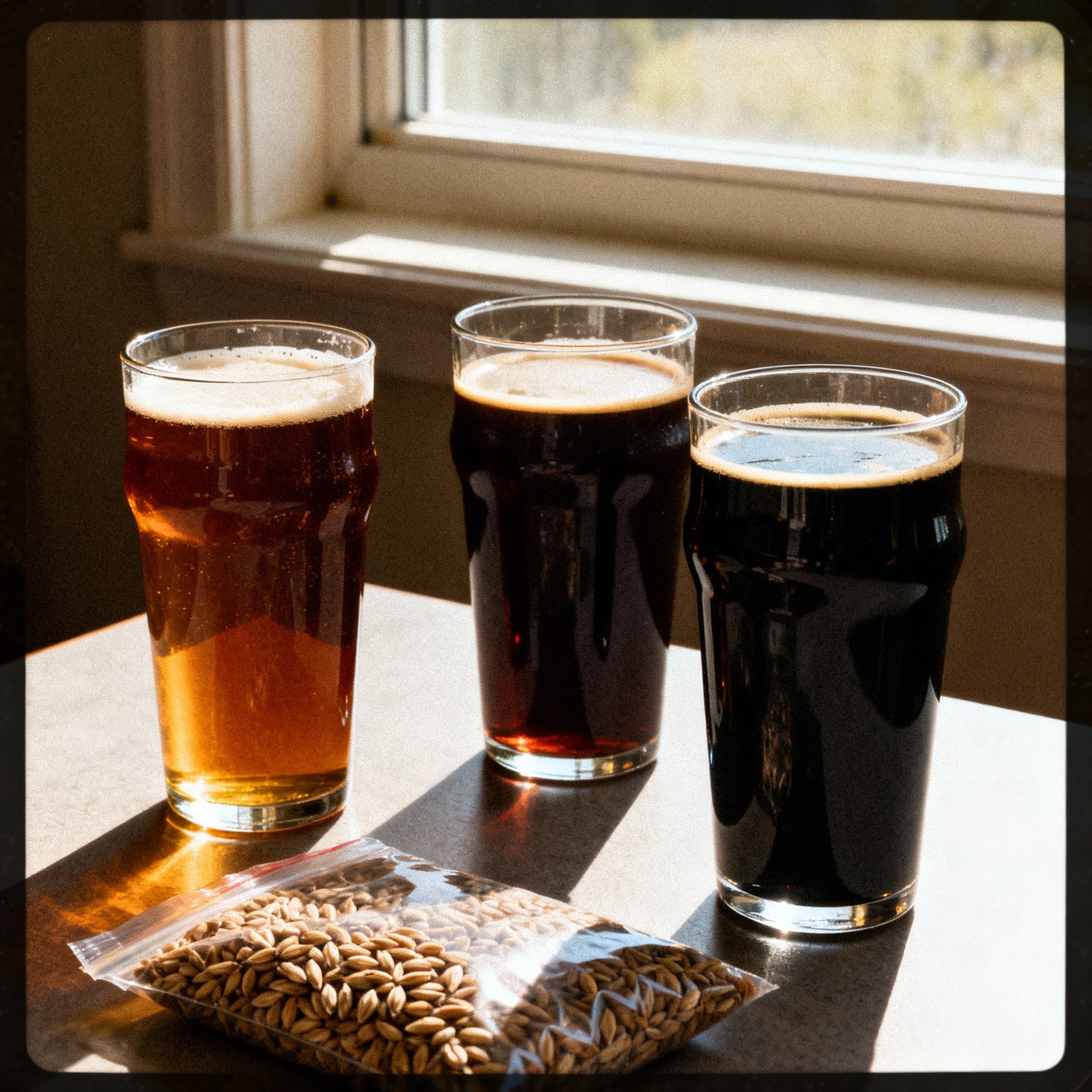
Dark Ales: Brewing Porters, Stouts, and Brown Ales.
I once brewed what I thought would be a smooth, chocolatey porter. I followed a recipe from a forum, roasted my grains just right, and fermented it at the perfect temperature.
Two weeks later, I cracked open a bottle and nearly spat it out. It tasted like I’d licked an ashtray mixed with battery acid.
The roast was there, sure, but it was sharp, acrid, and completely undrinkable. I dumped the entire batch down the sink.
What went wrong? I didn’t understand that dark grains are acidic little troublemakers.
When you add them to your mash, they drop the pH hard and fast. If you don’t buffer that mash acidity with the right water chemistry, you end up with a beer that tastes like burnt coffee grounds steeped in vinegar.
That batch taught me something critical: brewing dark ales isn’t just about piling on the roasted malt. It’s about managing the tension between roast character and acidity.
Dark beers occupy a wide spectrum. On one end, you have Brown Ales, which are nutty, malt-forward, and gentle.
In the middle sit Porters, balancing chocolate and bread crust flavors without crossing into harshness. At the far end are Stouts, dominated by roasted barley that brings coffee, char, and a dry finish.
Each style demands a different approach to grain selection, water chemistry, and mash pH. If you get it right, you’ll have a beer that’s rich and complex.
If you get it wrong, you’ll have something that tastes like charcoal soup.
This guide will walk you through the spectrum of dark ales. You’ll learn how to build a Brown Ale that showcases malt without sweetness, how to brew a Porter that has roast without bite, and how to craft a Stout with bold coffee notes that don’t turn astringent.
You’ll also learn why alkalinity is your best friend when brewing dark beers and how to keep your mash pH in the safe zone. Let’s start with the gentlest of the three: Brown Ale.
Brown Ale: The Nutty, Malt-Forward Balance
Brown Ale is where most homebrewers should start their dark beer journey. It’s forgiving, approachable, and it won’t punish you if you mess up the water chemistry.
The style is built on a foundation of pale malt with a supporting cast of crystal and brown malts that add color, sweetness, and a toasted, nutty character. There’s usually little to no roasted grain, which means you don’t have to fight the acidity battle as hard.
There are two main branches of the style: Northern English Brown Ale and Southern English Brown Ale. Northern versions, like Newcastle Brown Ale, are drier, nuttier, and more hop-forward.
They finish clean and have a slightly higher ABV (around 4.5 to 5.5 percent). Southern versions, on the other hand, are sweeter, fuller-bodied, and lower in alcohol (around 3 to 4 percent).
They lean into caramel and toffee flavors rather than roast. If you want to brew a Northern-style Brown Ale, start with Maris Otter or a similar English pale malt as your base.
Add about 10 to 15 percent medium crystal malt (60L to 80L) for color and a touch of sweetness, then throw in 5 to 10 percent brown malt for that signature nutty, toasted flavor. Brown malt is the secret weapon here.
It’s not roasted like chocolate malt or black malt, but it’s kilned at a high temperature, which gives it a dry, biscuity character. You want just enough to add complexity without making the beer taste like burnt toast.
For Southern-style Brown Ale, you’ll push the crystal malt percentage higher (15 to 20 percent) and use a darker crystal (like 120L) to get more caramel and toffee. You might also add a small amount of chocolate malt (1 to 2 percent) for color, but don’t overdo it.
The goal is sweetness and body, not roast. Hops should be restrained.
English varieties like Fuggles, East Kent Goldings, or Challenger work well. You’re aiming for 20 to 30 IBUs, just enough to balance the malt without overpowering it.
Fermentation should be clean and neutral. I prefer an English ale yeast like Wyeast 1968 (London ESB) or Safale S-04.
These strains will leave some residual sweetness and body, which is exactly what you want in a Brown Ale. Water chemistry for Brown Ale is straightforward.
You want moderate carbonate levels (50 to 100 ppm) to support the malt character without making the beer taste chalky. If your water is soft, add a small amount of baking soda (sodium bicarbonate) to raise the alkalinity.
If your water is already hard, you might not need to adjust it at all. The key is to avoid a low mash pH, which will make the beer taste thin and overly acidic.
If you’re brewing a Northern-style Brown Ale and it comes out too sweet, try adding a small amount of black malt (1 percent or less) in your next batch. It won’t add roast flavor, but it will dry out the finish and add a subtle coffee note that makes the beer more drinkable.
Porter: Roast Without the Bite
Porter is the middle child of dark beers. It sits between the gentle sweetness of Brown Ale and the aggressive roast of Stout.
The style was born in London in the early 1700s as a blend of different beers, but modern Porters are brewed as a single style with a focus on chocolate, bread crust, and mild roast flavors.
The challenge is to get that roast character without crossing into harshness or acidity. The secret to a good Porter is choosing the right roasted grains.
Chocolate malt is your primary tool. It’s roasted to a medium darkness (around 350L to 400L), which gives it a smooth, cocoa-like flavor without the sharp bitterness of black malt or roasted barley.
You want to use enough chocolate malt to get color and roast (5 to 10 percent of the grain bill), but not so much that it overwhelms the base malt.
Brown malt is the second key ingredient. It adds a toasted, biscuity flavor that bridges the gap between the sweetness of crystal malt and the roast of chocolate malt.
I typically use 5 to 10 percent brown malt in a Porter recipe. It’s subtle, but it adds complexity that you won’t get from chocolate malt alone.
Some brewers also add a small amount of black malt (1 to 2 percent) for color and dryness, but I’m cautious with it. Black malt is roasted to the point of carbonization, and it can contribute a sharp, acrid flavor if you’re not careful.
If you do use it, keep it under 2 percent and make sure your water chemistry is dialed in. Your base malt should be a clean, neutral pale malt like Maris Otter or US 2-Row.
Add 5 to 10 percent medium crystal malt (60L to 80L) for sweetness and body, then layer in the chocolate and brown malt for roast.
The result should be a beer that tastes like dark chocolate and toasted bread, with just a hint of coffee in the background. Hops should be moderate (25 to 35 IBUs) and neutral.
You want enough bitterness to balance the malt, but not so much that the beer tastes aggressive. English hops like Fuggles or East Kent Goldings work well, but you can also use American hops like Willamette or Cascade if you want a slightly brighter, more modern profile.
Fermentation should be clean and neutral, just like with Brown Ale. I use the same yeast strains (Wyeast 1968 or Safale S-04) and ferment at the low end of the recommended range (around 65 to 67 degrees Fahrenheit) to keep ester production in check.
You want the malt and roast to be the stars, not the yeast. Water chemistry is where things get interesting.
Porter needs more alkalinity than Brown Ale because the chocolate malt is acidic. If your water is soft (low in carbonates), you’ll need to add baking soda or calcium carbonate (chalk) to raise the alkalinity.
I aim for 100 to 150 ppm of carbonates in my brewing water for Porter. This buffers the acidity from the dark grains and keeps the mash pH in the target range (5.2 to 5.5).
If your Porter tastes too roasty or astringent, try cold steeping your chocolate malt instead of adding it to the mash. Soak the crushed chocolate malt in cold water for 12 to 24 hours, then add the liquid to your kettle at the end of the boil. This extracts color and flavor without pulling out the harsh tannins and acids.
Stout: Roasted Barley Dominance
Stout is the heavyweight of dark beers. It’s bold, roasty, and unapologetically dry.
The defining ingredient is roasted barley, which is unmalted barley that’s been roasted until it’s almost black. This gives Stout its signature coffee and char flavors, along with a sharp, dry finish.
Roasted barley is more aggressive than chocolate malt, and it requires careful handling to avoid a harsh, burnt taste. A classic Irish Stout (like Guinness) is built on a simple grain bill: pale malt, flaked barley for head retention, and 8 to 10 percent roasted barley.
That’s it. No crystal malt, no chocolate malt, just clean pale malt and roasted barley.
The result is a beer that’s dry, coffee-forward, and incredibly drinkable despite its dark color. If you want a richer, more complex Stout (like an American Stout or an Export Stout), you can add chocolate malt, crystal malt, or even oats for body and sweetness.
But the core of the beer should still be roasted barley. I typically use 8 to 12 percent roasted barley in my Stout recipes, depending on how aggressive I want the roast to be.
More than 12 percent and you risk crossing into acrid territory. Roasted barley is acidic.
Very acidic. If you add it directly to the mash without adjusting your water chemistry, your mash pH will drop below 5.0, and your beer will taste sharp and astringent.
You need high alkalinity to buffer that acidity. I aim for 150 to 200 ppm of carbonates in my brewing water for Stout.
This keeps the mash pH in the safe zone and prevents the roast from turning harsh. Some brewers cold steep their roasted barley to reduce acidity, just like with chocolate malt in Porter.
I’ve tried this, and it works, but I think you lose some of the intensity and complexity of the roast. I prefer to adjust my water chemistry and let the roasted barley do its thing in the mash.
Hops should be moderate to high (30 to 50 IBUs for an Irish Stout, 50 to 70 IBUs for an American Stout). The bitterness balances the roast and keeps the beer from tasting flat.
English hops work well for traditional Stouts, while American hops (like Cascade or Centennial) add a citrusy edge that complements the coffee notes. Fermentation should be clean and attenuative.
I use the same English ale yeasts I use for Brown Ale and Porter, but I ferment at the higher end of the range (68 to 70 degrees Fahrenheit) to encourage full attenuation. Stout should finish dry, not sweet.
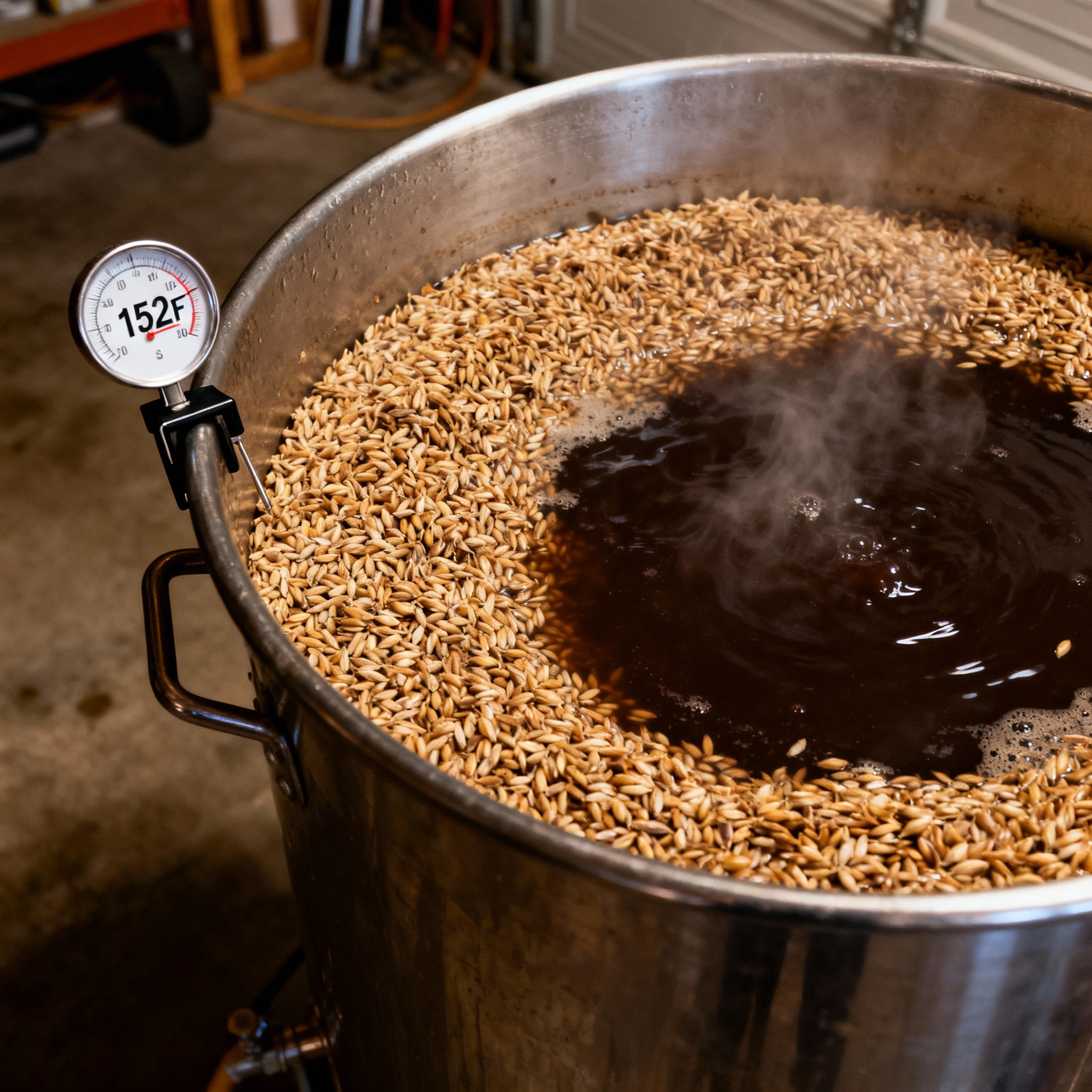
If you want a creamy, smooth mouthfeel in your Stout, add 5 to 10 percent flaked oats or flaked barley to the grain bill. Oats add silkiness without sweetness, and they help build a thick, stable head. Just make sure to mash at a higher temperature (154 to 156 degrees Fahrenheit) to preserve some body.
Water Chemistry: Alkalinity and Buffering
Water chemistry is the single most important factor in brewing dark ales. If you ignore it, you’ll end up with a beer that tastes harsh, thin, and astringent.
If you get it right, you’ll have a beer that’s smooth, rich, and balanced. The problem is that dark grains are acidic.
When you add chocolate malt, black malt, or roasted barley to your mash, they release acids that lower the pH. If your mash pH drops below 5.0, you’ll extract harsh tannins and astringent flavors from the grain husks.
The beer will taste sharp and unpleasant, no matter how good your recipe is. The solution is to add alkalinity to your brewing water.
Alkalinity is the ability of water to neutralize acids, and it’s measured in parts per million (ppm) of carbonates or bicarbonates. The more alkalinity you have, the better your water can buffer the acidity from the dark grains.
For Brown Ale, you need moderate alkalinity (50 to 100 ppm). For Porter, you need more (100 to 150 ppm).
For Stout, you need even more (150 to 200 ppm). If your water is soft (low in carbonates), you’ll need to add baking soda (sodium bicarbonate) or calcium carbonate (chalk) to raise the alkalinity.
Baking soda is the easier option. It dissolves quickly in water, and a small amount goes a long way.
I add 1 to 2 grams of baking soda per gallon of brewing water for Porter, and 2 to 3 grams per gallon for Stout. This raises the alkalinity and keeps the mash pH in the target range.
Calcium carbonate (chalk) is another option, but it’s harder to work with. It doesn’t dissolve well in water, so you need to add it directly to the mash.
It also takes longer to react with the acids in the mash. I prefer baking soda because it’s faster and more predictable.
If your water is already hard (high in carbonates), you might not need to add anything. In fact, you might need to dilute your water with distilled water to lower the alkalinity.
Too much alkalinity will make your beer taste chalky and flat. The key is to measure your mash pH.
You can buy pH strips or a digital pH meter for around 20 to 50 dollars. I use a cheap digital pH meter from Amazon, and it’s been accurate enough for homebrewing.
You want your mash pH to be between 5.2 and 5.5. If it’s lower than 5.2, add more alkalinity.
If it’s higher than 5.5, dilute your water or add a small amount of lactic acid to bring it down.
If you don’t have a pH meter, you can estimate your mash pH using brewing software like Bru’n Water or Brewfather. These programs let you input your water chemistry and grain bill, and they’ll predict your mash pH. It’s not as accurate as measuring it directly, but it’s better than guessing.
Mash pH: Preventing the Acrid Taste
Mash pH is the single number that determines whether your dark ale will be smooth and drinkable or harsh and astringent.
If your mash pH is too low (below 5.0), the enzymes in the mash will still convert starch to sugar, but you’ll extract harsh tannins and polyphenols from the grain husks. These compounds taste bitter and drying, and they’ll ruin your beer.
The target mash pH for all beers, regardless of color, is 5.2 to 5.5. This is the range where enzymes work most efficiently and where you get the best extraction of sugars and flavors without pulling out harsh compounds.
The problem is that dark grains are acidic, and they push the mash pH down. If you don’t adjust your water chemistry, your mash pH will drop below 5.0, and you’ll end up with an acrid, astringent beer.
Here’s what I do. I measure my water chemistry before I brew (or I use my city’s water report, which is available online).
I plug my water chemistry and grain bill into Bru’n Water, which predicts my mash pH. If the predicted pH is too low, I add baking soda to raise the alkalinity.
If it’s too high, I add lactic acid or dilute my water with distilled water. I also measure my mash pH 10 minutes after I add the grains.
If the reading is outside my target 5.2 to 5.5 window, I make small, incremental adjustments until it stabilizes. Mastering this tension is exactly how you turn charcoal soup into a world-class dark ale.
References
- Daniels, R. (1996). Designing Great Beers. Brewers Publications.
- Palmer, J., & Kaminski, C. (2013). Water: A Comprehensive Guide. Brewers Publications.
- Fix, G. (1999). Principles of Brewing Science. Brewers Publications.
- White Labs. Stout and Porter Yeast Strain Information.