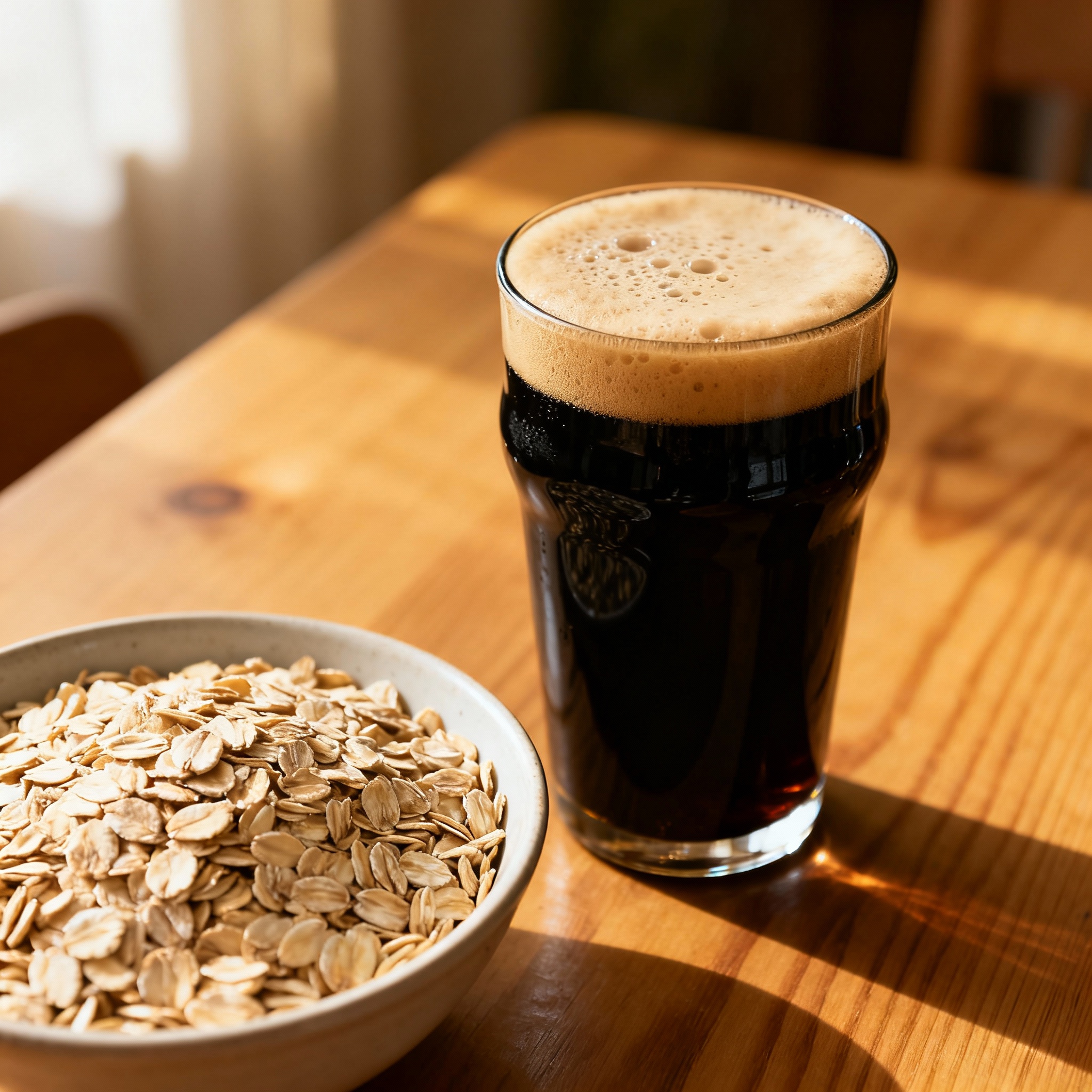
Oatmeal Stout: Texture and Roast
Introduction: Breakfast in a Glass
Oatmeal stout isn’t just dark beer with oats thrown in; it is a dedicated texture project. The oats are not there for primary flavor, but to coat the tongue and soften the impact of roasted malts.
When executed correctly, the oats turn a potentially harsh coffee profile into a silky, slow-sipping experience. However, oats are notoriously sticky and can gum up a mash tun if the process is not adjusted.
Building this style requires a deep understanding of beta-glucans and sugar management. This guide covers how to achieve that signature mouthfeel without turning your brew day into a plumbing disaster.
The Oats: Flaked vs. Golden Naked
You have two main choices for this style: flaked oats and Golden Naked Oats. While both add body, their enzymatic and flavor contributions differ significantly.
Flaked oats are pre-gelatinized and can be tossed straight into the mash. However, they possess zero enzymatic power and rely entirely on your base malt for starch conversion.
Golden Naked Oats are a malted, dehusked product that contributes biscuit flavors and some enzymatic activity. If I am performing a simple single-infusion mash, I prefer these for their reliability and flavor depth.
The “slick” mouthfeel in this style comes from beta-glucans, which are soluble fibers that do not ferment. The Master Brewers Association notes that these polysaccharides increase the viscosity of the finished beer but create a thick, gummy mash that can easily lead to a stuck sparge.
If using flaked oats, ensure your base malt (like Maris Otter) makes up at least 60% of the grain bill. You need a high diastatic power to convert the extra starches provided by the oats.
Beta-Glucan Rest: Preventing a Stuck Mash
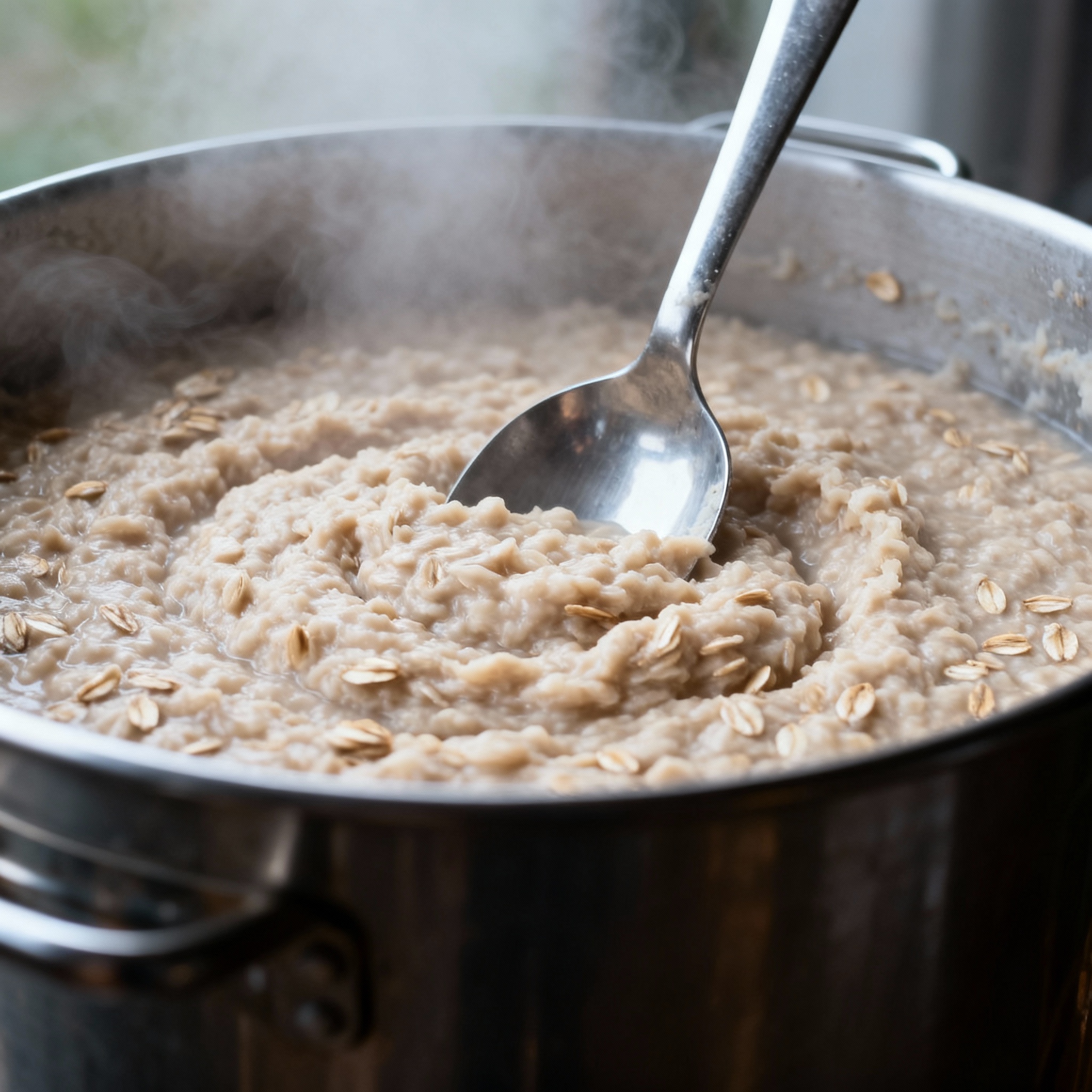
Using more than 15% oats without a beta-glucan rest often results in the flow of wort stopping entirely during the sparge. This rest activates enzymes that break down gummy fibers into smaller, less viscous chains.
I mash in at 95-113°F and hold for 20 minutes before raising the temperature to the main saccharification rest. This preserves the desired mouthfeel in the finished beer while preventing the mash from turning into wallpaper paste.
Beta-glucanase is the enzyme responsible for breaking down the cell wall components of the oats. It is most active between 95°F and 113°F; skipping this window leaves the high-molecular-weight beta-glucans intact, leading to excessive wort viscosity.
Always add rice hulls (about 5% of the grain bill by weight) if you are using more than 20% oats. They act as “scaffolding” in the grain bed, creating channels for the wort to flow freely.
Roast Balance: Coffee and Cream
Oatmeal stout can become cloying if the creamy texture isn’t balanced by a robust roast profile. I use a combination of Briess Roasted Barley for sharp coffee notes and chocolate malt for a softer, cocoa finish.
Aim for 8 to 10% roasted grains in the total grain bill to provide structural bitterness. To avoid harsh astringency, I often cold-steep the darkest grains overnight and add the liquid at the end of the boil.
Taste your roasted grains before mashing. If the roasted barley tastes like dark chocolate and coffee, proceed; if it tastes ashy or burnt, reduce your dosage to avoid a “charcoal” aftertaste.
Water Chemistry: Chloride Bias (Water Chemistry)
For oatmeal stout, the sulfate-to-chloride ratio is the most important chemical variable. Chloride enhances the perceived sweetness and roundness of the malt.
I shoot for a 1:3 sulfate-to-chloride ratio, such as 50 ppm sulfate and 150 ppm chloride. This reinforces the creamy oat texture and prevents the roasted grains from tasting too “sharp” or metallic.
Roasted grains are highly acidic and can cause the mash pH to crash below 5.2. I add calcium carbonate to the mash to maintain a pH of 5.4 to 5.5, which ensures the roast character remains smooth rather than acrid.
If you don’t have a pH meter, a lazy but effective shortcut is to use 50% distilled water and 50% tap water with 1 gram of calcium chloride per gallon.
Serving: The Nitro Effect
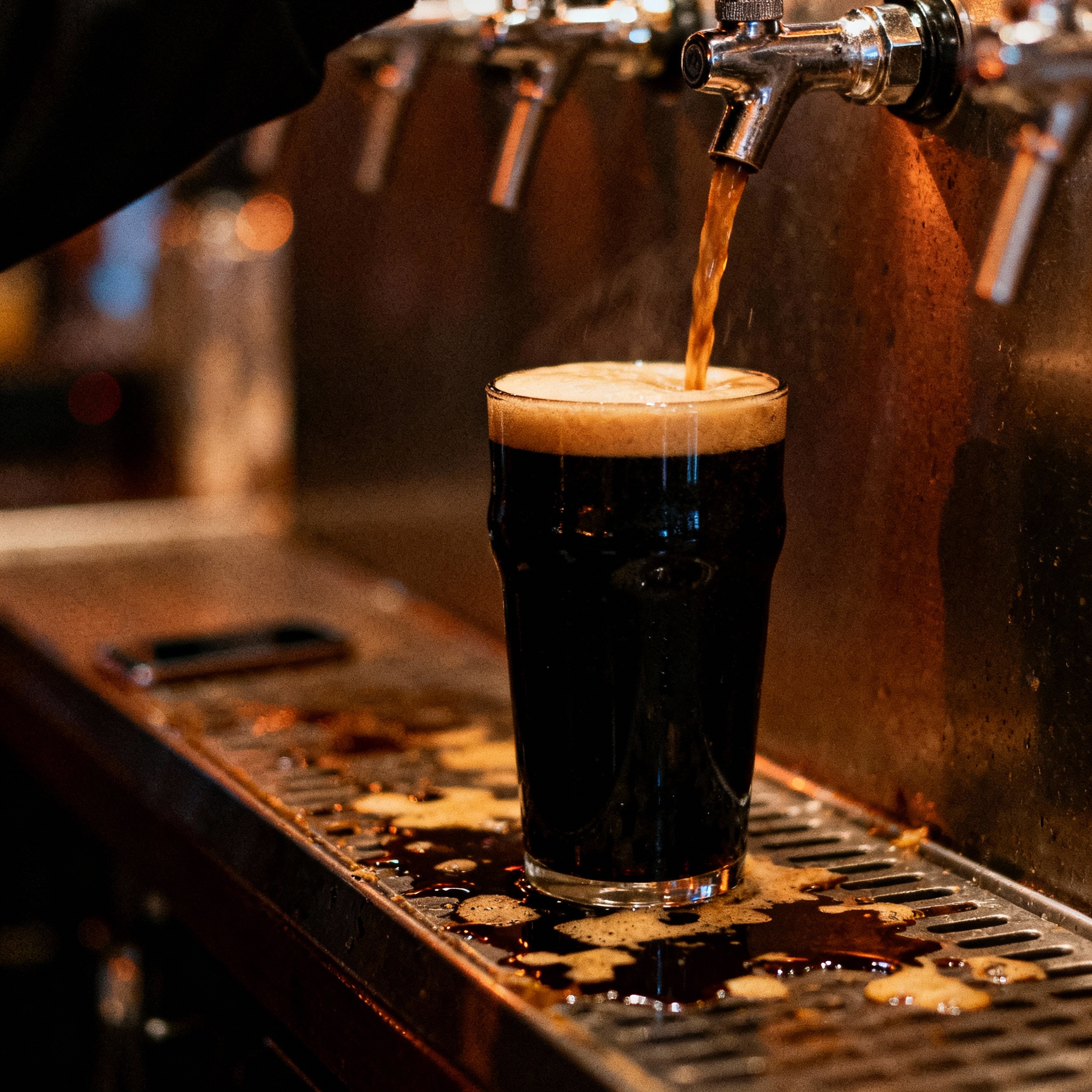
Nitrogenated service changes the experience of this style by replacing sharp CO2 bubbles with tiny, velvety nitrogen bubbles. This softens the roast character and makes the beer feel significantly thicker on the palate.
If you lack a full nitro system from Kegco or MoreBeer!, you can simulate this with a stout faucet and lower carbonation (1.8 volumes). Pouring hard through the restrictor plate aerates the beer and creates the iconic cascading effect.
A stout faucet contains a restrictor plate with tiny holes. As the beer is forced through under high pressure, it causes a “degassing” effect where dissolved nitrogen or CO2 forms a dense, creamy head of micro-bubbles.
Conclusion
Oatmeal stout is a study in tactile balance where the beta-glucan rest is non-negotiable for anyone using high oat percentages. The chloride-heavy water profile and cold-steeped roast grains ensure the beer feels rich without becoming cloying.
Respect the oats as a separate category of ingredient-a texture modifier-and adjust your process accordingly. The result is a smooth, balanced beer that stands as a highlight of dark ale brewing.
References
- Janish, S. The New IPA: Scientific Guide to Hop Aroma and Flavor. 2017.
- Palmer, J., & Kaminski, C. Water: A Comprehensive Guide for Brewers. Brewers Publications, 2013.
- Thomas Fawcett & Sons. Golden Naked Oats Product Specification. 2024.
- UC Davis. Beta-Glucan Reduction in Brewing Mashes. Department of Food Science, 2015.