Water Chemistry 101: pH, Sulfates, and Chlorides.
I ruined a batch of saison once because I ignored my water report. The beer tasted flat and papery, and the bitterness clung to my tongue in a weird, vegetal way.
I later found my mash pH had drifted to 5.9, causing sluggish enzymes and extracting unwanted tannins. Since water is roughly 95% of your beer, it serves as the foundation for everything you brew.
If your beer tastes thin or harsh despite following recipes, the answer is likely in your water chemistry. This guide explains how to move from good to great beer without a chemistry degree.
Removing Chlorine and Chloramine: The Absolute First Step
Before thinking about pH or sulfates, you must deal with chlorine and chloramine added by municipal systems. Chlorine reacts with malt phenols to form chlorophenols, which taste like band-aids or medicinal mouthwash.
Chloramine is even more problematic because it is stable and does not boil off. I learned this when an English bitter I brewed smelled like a hospital due to chloramine reactions.
Chlorophenols are formed when free chlorine or chloramine molecules bond with polyphenols derived from grain husks. Even at concentrations as low as 5 parts per billion, these compounds produce intense medicinal and plastic off-flavors.
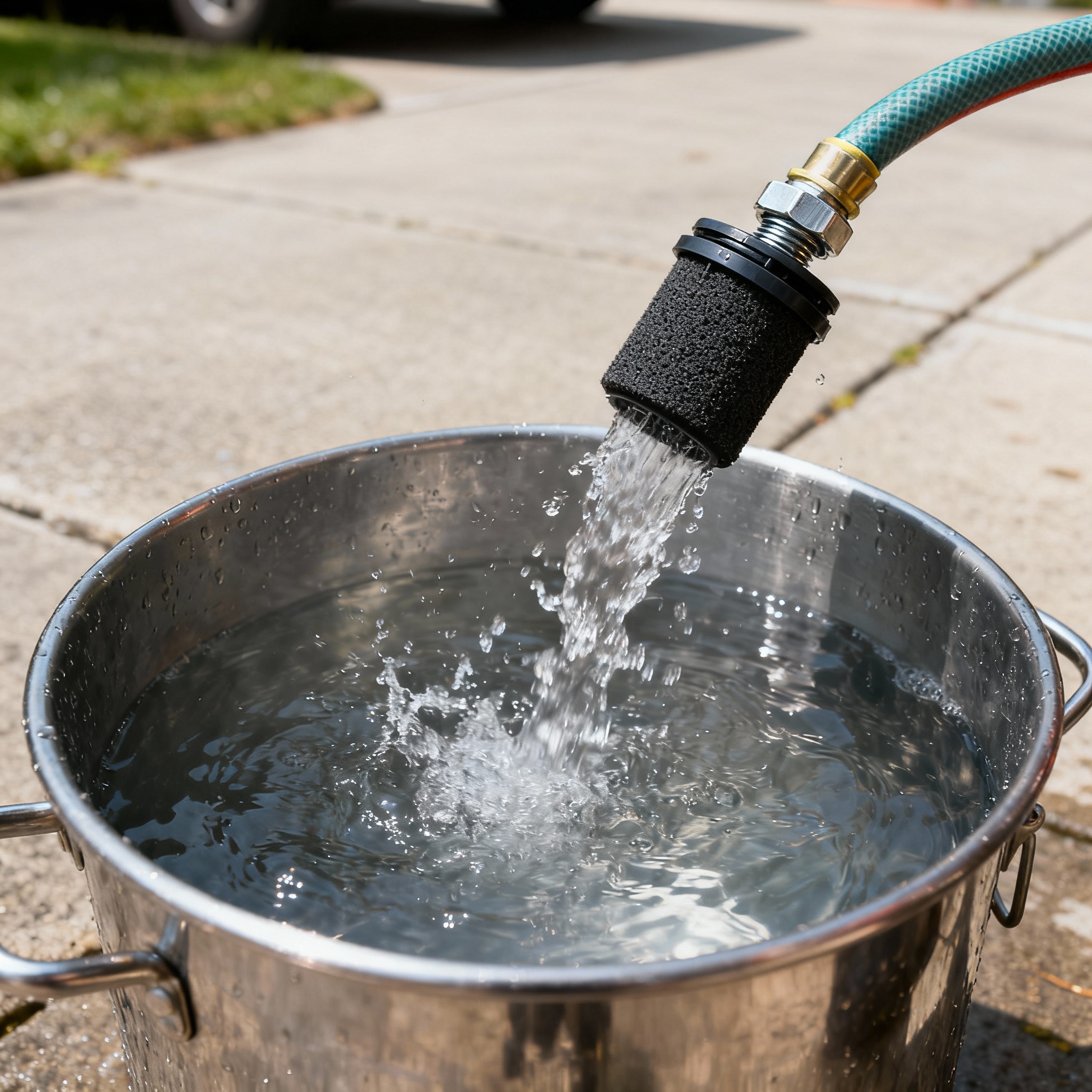
The first fix is using Campden tablets (potassium or sodium metabisulfite) to neutralize these chemicals in about five minutes. Alternatively, an inline carbon filter rated specifically for chloramine can be used when filling your kettle.
Check your city’s annual water quality report online to see if they use chlorine or chloramine. Most U.S. cities have switched to chloramine because it remains stable longer in the distribution system.
Mash pH: The Enzymatic Sweet Spot
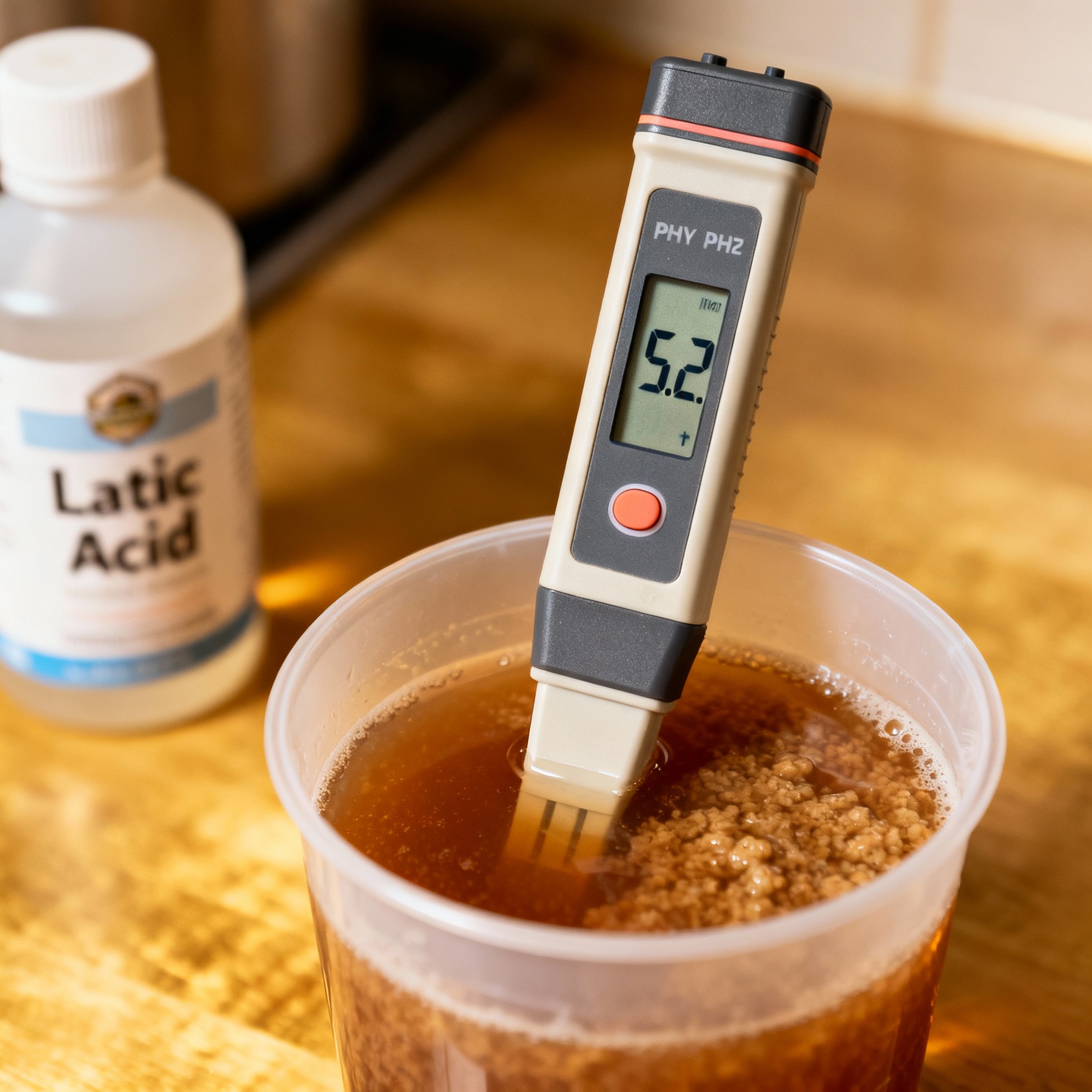
Mash pH controls enzyme efficiency during the conversion of starches into sugars. The target range is 5.2 to 5.6 when measured at room temperature.
If the pH is too high, enzymes slow down and harsh tannins are extracted from grain husks. If it is too low, you may end up with a thin, sour wort.
I use a digital pH meter to check a cooled sample about 10 minutes after dough-in. Lowering the pH is easily done by adding acid malt (1% to 3% of the grain bill) or liquid lactic acid.
Alpha and beta amylase enzymes have specific pH windows for optimal activity. Staying within the 5.2-5.6 range ensures maximum fermentability and protects the wort from the astringency associated with high-pH environments.
Raising pH is rare but can be done with calcium carbonate (chalk) or sodium bicarbonate (baking soda). This is usually only necessary when brewing dark beers with very soft water.
Dark malts like roasted barley and chocolate malt are naturally acidic. Always measure your pH before adding acid to a stout, as the grains may have already dropped the pH into the target range.
The Sulfate to Chloride Ratio: The Seasoning Lever
Sulfate and chloride ions shape the flavor profile of your beer by changing how you perceive bitterness and malt. They act as the “seasoning” that defines the final character of the style.
Sulfate enhances hop bitterness, making it sharper, drier, and more mineral-like. Chloride enhances malt fullness, making the beer taste rounder and softer with a thicker mouthfeel.
Sulfates accentuate the “crispness” of hop resins on the palate, while chlorides increase the perception of sweetness by interacting with malt proteins. Balancing these is the primary way brewers “tune” a beer’s finish.
The sulfate to chloride ratio (SO4:Cl) controls this balance. A 2:1 ratio emphasizes hops (West Coast IPA), while a 1:2 ratio emphasizes malt (New England IPA or Brown Ale).
Calcium and Magnesium: Yeast Health Requirements
Calcium and magnesium are critical for yeast health and fermentation performance rather than direct flavor. Yeast require calcium to flocculate properly and maintain cell wall integrity.
The minimum recommended calcium level is 50 ppm, though I often aim for 100 to 150 ppm. Without enough calcium, yeast may stay in suspension, leaving the beer cloudy and prone to diacetyl off-flavors.
Magnesium is needed in small amounts (10 to 20 ppm) for yeast metabolism. Most water sources provide this naturally, and exceeding 30 ppm can result in a metallic or bitter edge.
| Ion | Recommended Range | Purpose |
|---|---|---|
| Calcium | 50-150 ppm | Yeast health, flocculation, and protein precipitation. |
| Magnesium | 10-30 ppm | Yeast metabolism; provides a minor nutrient boost. |
| Sulfate | 50-300 ppm | Enhances hop bitterness and creates a dry finish. |
| Chloride | 50-200 ppm | Enhances malt sweetness and provides a round mouthfeel. |
Reading a Water Report
To adjust your water, you must first find your city’s annual water quality report. You need numbers for Calcium, Magnesium, Sodium, Sulfate, Chloride, and Bicarbonate (Alkalinity).
Input these numbers into brewing software like Bru’n Water or Brewfather. The software will calculate exactly how many grams of gypsum or calcium chloride you need to reach your target profile.
Asheville water, for example, is very soft and requires significant additions to reach a hoppy profile. I add gypsum and calcium chloride to ensure the hops pop and the mash pH stays within range.
Water chemistry can vary seasonally as cities switch sources. If you want precision, test your water once a year with a home kit to update your baseline numbers.
Conclusion
Water chemistry sounds intimidating, but it is simply about measuring and adding a few minerals. Start by removing chlorine, then focus on mash pH and the sulfate-to-chloride ratio.
These small adjustments lead to cleaner, more balanced, and professional-quality beer. Once you taste the difference in a side-by-side comparison, you will never brew with unadjusted water again.
References
- Palmer, J., & Kaminski, C. (2013). Water: A Comprehensive Guide for Brewers. Brewers Publications.
- Troester, M. (2018). Bru’n Water Spreadsheet.
- Asheville Water Resources Department. (2023). Annual Water Quality Report.
- American Society of Brewing Chemists. (2011). Mash pH and Enzymatic Activity.
- Daniels, R. (1996). Designing Great Beers. Brewers Publications.