Infection Protocol: Pellicles, Mold, and Vinegar
I walked into my garage lab on a Tuesday morning holding a cup of coffee, half-awake, ready to bottle a batch of ginger beer I’d been nursing for two weeks.
I popped the lid off the carboy and saw something that looked like a thin sheet of crumpled paper floating on top. My stomach dropped.
Was it mold? Was it ruined? Did I just waste 15 pounds of ginger and two weeks of my life?
That moment of panic is universal. You peek into your fermenter, see something unexpected, and your brain immediately screams “contamination.”
Sometimes it’s right. Sometimes it’s wrong.
The difference between dumping a perfectly good wild ferment and keeping a batch that’s quietly growing mycotoxins comes down to knowing what you’re looking at.
This guide exists because I’ve been on both sides of that coin. I’ve dumped batches that were probably fine because I panicked.
I’ve also kept one going way too long because I was in denial, and it ended up smelling like a gas station bathroom. Neither extreme is good.
You need a protocol. A checklist. A way to look at your fermenter, assess the situation calmly, and make the call without guessing.
Let me walk you through it.
Mold vs. Pellicle: The Visual Inspection
The first thing you need to do is look at the surface. Not smell it yet. Not taste it. Just look.
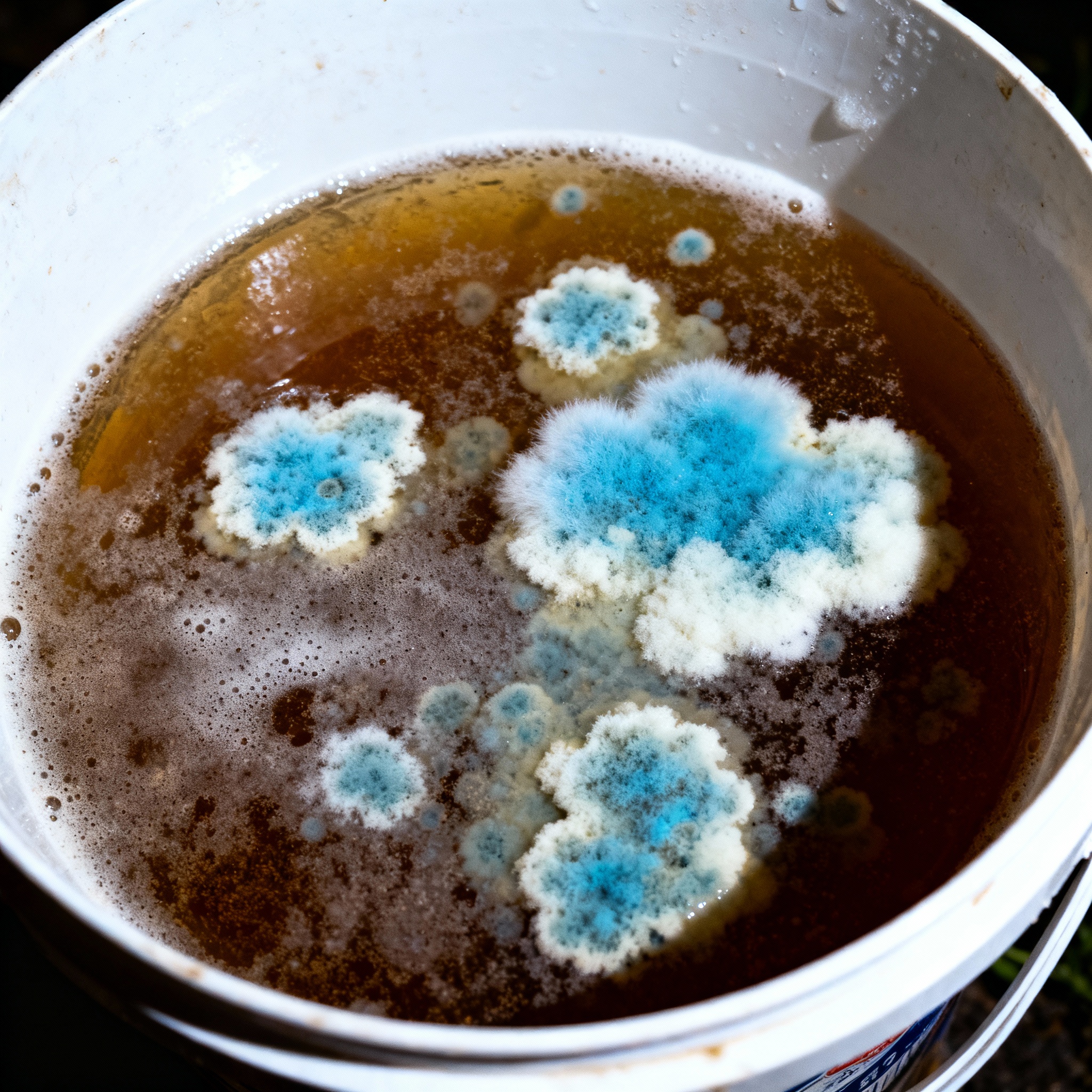
Mold is fuzzy and looks three-dimensional. If you could zoom in close, you’d see little hairs sticking up, almost like a tiny forest.
The colors vary, but they’re almost never pure white. You’ll see green, black, blue, gray, pink, or even orange.
Mold grows in isolated spots first, like little islands, and then spreads outward. It sits on top of the liquid and doesn’t integrate with it.
If you see anything that looks like the stuff growing on old bread or forgotten leftovers in your fridge, that’s mold. That’s a drain pour. No second chances.
Mold produces mycotoxins, and those don’t just disappear if you scoop the mold off the surface. They’re already in the liquid.
You can’t boil them out or filter them out. The batch is done.
I don’t care if it’s three gallons of expensive kombucha or a kvass you spent all weekend prepping. It goes down the drain.
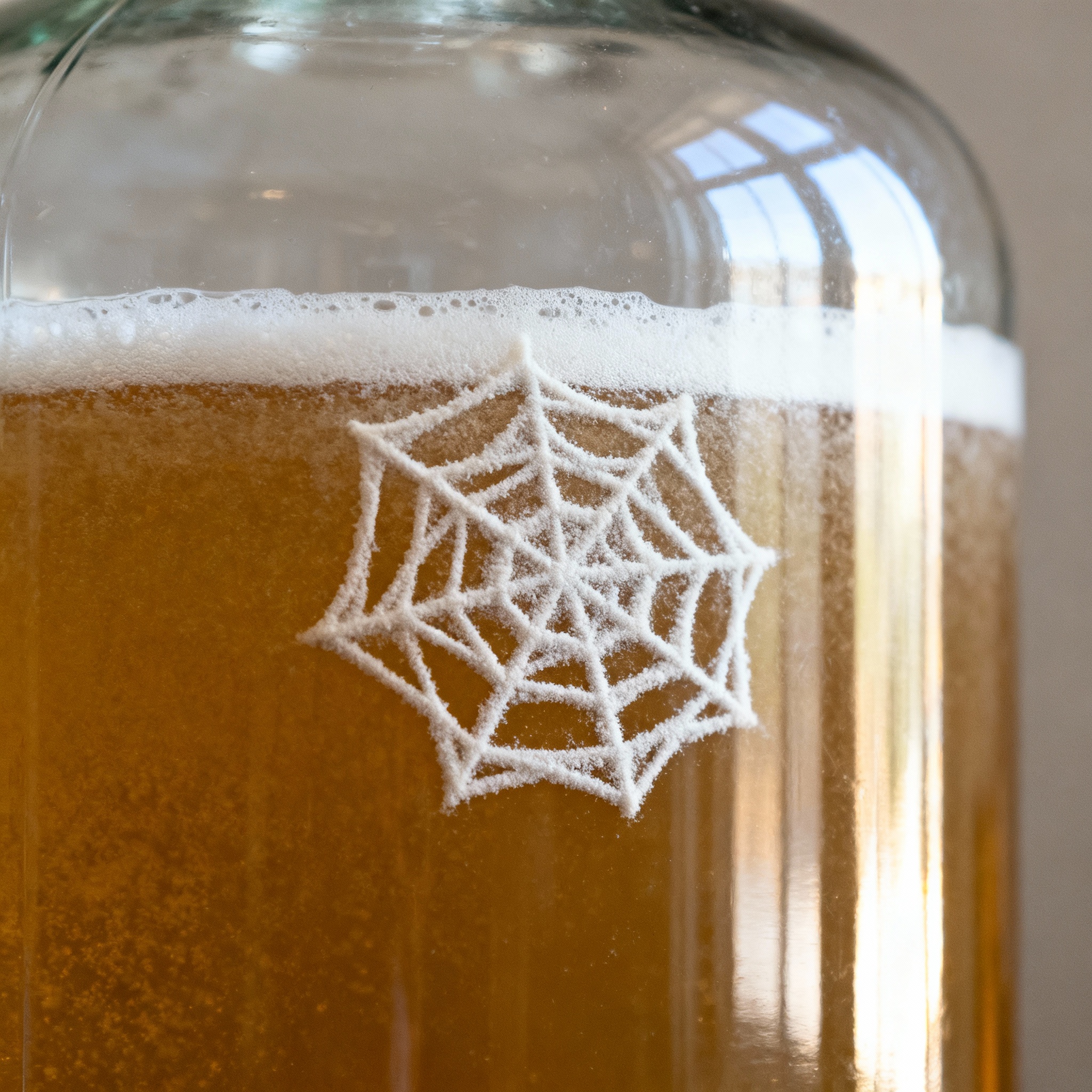
Pellicles are different. A pellicle is a biofilm made by wild yeast and bacteria, most commonly by organisms like Brettanomyces or Pediococcus.
It looks like a thin, wrinkled skin on top of the liquid. The texture is more like wax paper or a dried-out piece of fruit leather.
The color is usually white, cream, or very pale tan. It might have a dusty appearance, and it can look a little gross, but it’s not fuzzy.
There are no colored spots. It forms as a continuous layer, not in patches.
If you’re fermenting something intentionally wild, like a spontaneous beer, a Jun tea, or a lambic-style brew, a pellicle is a good sign. It means the wild cultures are active and doing their job.
Even if you weren’t trying to make a wild ferment, a pellicle doesn’t automatically mean the batch is ruined. It just means something uninvited moved in.
You need to smell it and taste it before you decide. I’ve had pellicles form on apple cider that turned out fantastic.
A little funky, a little tart, but totally drinkable. I’ve also had them form on a batch of mead that tasted like wet cardboard and regret.
The pellicle itself isn’t the problem. It’s what’s underneath that matters.
Take a photo of the surface before you do anything else. Compare it to reference images online from university brewing programs or wild fermentation forums. Your eyes can play tricks on you when you’re stressed, but a side-by-side comparison with a known mold infection will make the difference obvious.
The Smell Test: Vomit vs. Barnyard
Once you’ve determined it’s not mold, the next step is to smell it. Open the fermenter, lean in, and take a cautious sniff.
Do not stick your nose directly over the opening like you’re huffing paint. Just get close enough to catch the aroma.
If it smells like vomit, baby spit-up, or anything remotely enteric (that’s the polite word for fecal), dump it immediately. These smells come from butyric acid or other volatile compounds produced by contamination bacteria.
Butyric acid () is produced during anaerobic fermentation by bacteria such as Clostridium butyricum. While it is common in the production of certain cheeses, its presence in a standard ferment usually indicates a catastrophic failure in sanitation or a significant pH imbalance that allowed enteric bacteria to proliferate.
If it smells like a barnyard, wet hay, horse blanket, leather, or even a little bit like old cheese, that’s funk. Funk is not necessarily bad.
That’s the signature of wild yeast, particularly Brettanomyces. Some styles of beer and cider are supposed to smell like that.
Belgian farmhouse ales, for example, are built on that profile. If you weren’t expecting it, it can be off-putting, but it’s not dangerous.
The same goes for a vinegar smell. Vinegar means acetic acid, which is tart and sour but not harmful.
You might not want to drink it as-is, but you’re not going to get sick. The difference between “dump it” and “wait and see” comes down to this: vomit and sewage smells are non-negotiable fails.
Barnyard, funk, and sour smells are judgment calls. If you’re not sure, let it sit for another week and smell it again.
Sometimes wild ferments go through a rough-smelling phase in the middle and clean up later. I’ve had batches that smelled like gym socks on day 10 and like tart apples by day 21.
If you’re still not sure, take a tiny sample (like a tablespoon) and taste it. Spit it out. If it tastes sour, funky, or just weird but not disgusting, it’s probably safe. If it tastes like bile or makes you gag, trust your instincts and dump it.
Acetobacter: When Beer Turns to Vinegar
Acetobacter is everywhere. It’s in the air, on fruit skins, on your hands, and definitely in your garage.
It’s the bacteria responsible for turning alcohol into acetic acid, which is vinegar. If you leave a glass of wine or beer sitting out uncovered, Acetobacter will find it and start working.
In fermentation, Acetobacter needs two things to thrive: alcohol and oxygen. If your fermenter isn’t sealed properly, Acetobacter can move in and start converting your batch.
You’ll smell it before you taste it. It’s sharp, acidic, and unmistakable.
Is it dangerous? No. Vinegar is safe to consume.
Is it what you wanted? Probably not, unless you were planning to make vinegar in the first place.
But here’s the good news: you can save it. If your batch has gone vinegary, don’t dump it.
Bottle it and use it for cooking. Homemade fruit vinegar is fantastic for deglazing pans or making salad dressings.
I had a batch of pear cider that went too far in that direction, and I ended up using it to make a shrub. Mixed with soda water and a little honey, it was incredible.
If you want to stop the vinegar conversion, you need to cut off the oxygen supply. Transfer the liquid to a clean fermenter with a proper airlock and minimal headspace.
Acetobacter can’t work without oxygen, so sealing it up will halt the process. It won’t reverse the vinegar already formed, but it will prevent more from developing.
If you’re planning to make vinegar intentionally, use a dedicated fermenter for it. Acetobacter is incredibly persistent, and once it colonizes a piece of equipment, it’s hard to get rid of completely.
Glass vs. Plastic: Can You Save the Fermenter?
Let’s say you’ve confirmed the batch is infected and it’s going down the drain. The next question is whether your fermenter is salvageable.
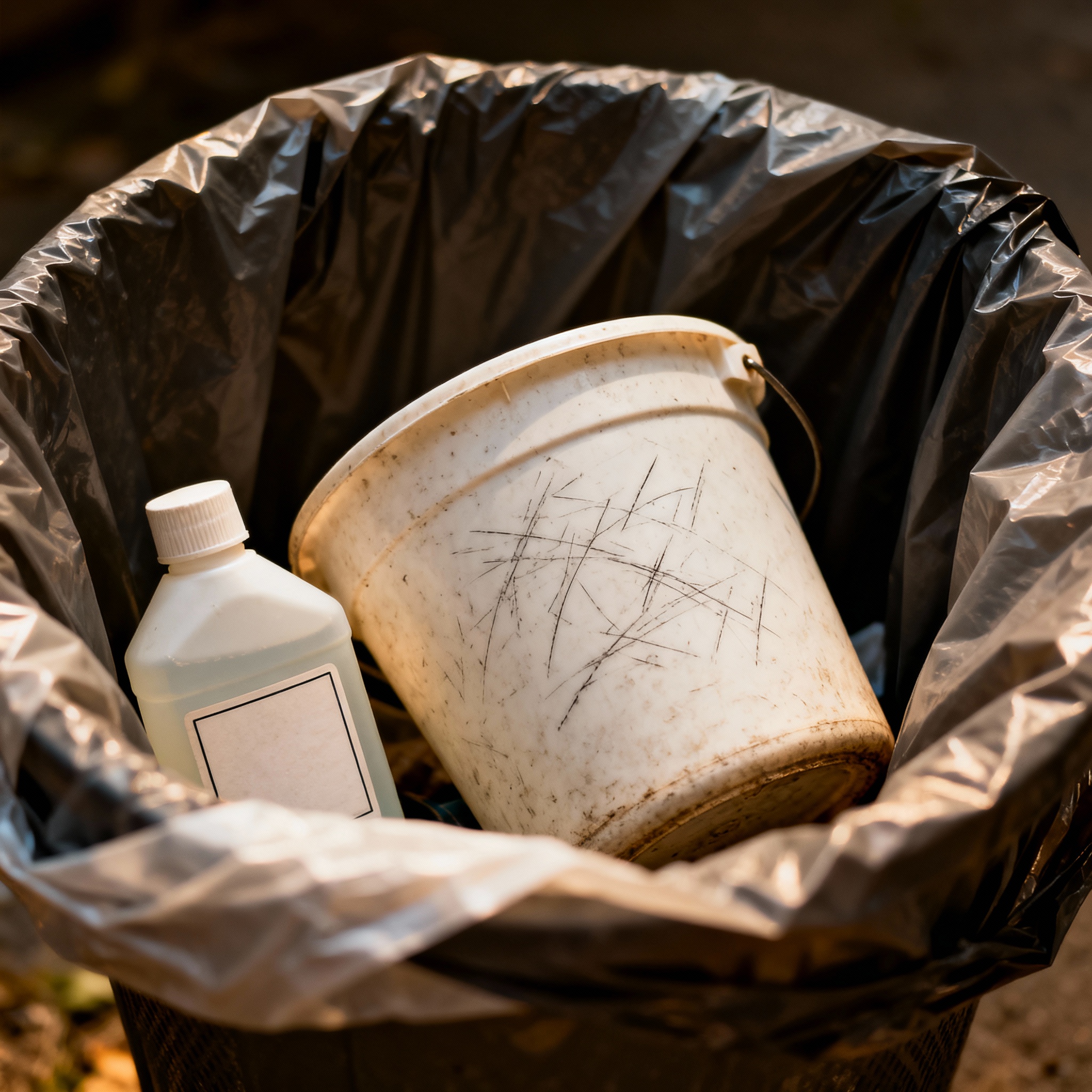
If you’re using plastic, I hate to break it to you, but it’s probably done. Plastic fermenters are porous at a microscopic level and develop tiny scratches over time.
Bacteria and wild yeast can hide in those scratches, and no amount of scrubbing will get them out. If you’ve had a serious infection, the safest move is to toss the plastic fermenter.
I know that sucks. I’ve been there.
I had a 5-gallon plastic bucket that I had to trash after a batch of kombucha went sideways. I tried bleaching it and soaking it in StarSan, but the next three batches all tasted faintly off.
Glass is a different story. Glass is non-porous, so it doesn’t harbor bacteria the same way plastic does.
If you have a glass carboy that’s been infected, you can save it with a deep clean. My protocol is a strong bleach solution soak for at least 30 minutes.
After soaking, dump the bleach and rinse the carboy thoroughly with hot water. Then, sanitize it with your normal sanitizer.
Let it air dry completely before using it again. Stainless steel falls somewhere in the middle.
It’s more durable than plastic and less porous, but it can still develop scratches. A thorough cleaning and sanitization should be enough, but inspect it carefully for any deep scratches.
Mark your fermenters. I use a label maker to tag any fermenter that’s had an infection, even after cleaning. If it throws another infection, it gets retired.
Deep Cleaning: Post-Infection Breakdown
An infection in your fermenter doesn’t just mean the fermenter is compromised. Anything that touched the liquid after the boil is suspect.
That includes airlocks, bungs, siphon hoses, bottling wands, and hydrometers. Here’s what I do after confirming an infection: I pull out every single piece of cold-side gear and give it the deep-clean treatment.
Airlocks and bungs go into a bleach soak. Siphon hoses get flushed with hot water, then soaked in sanitizer.
If they’re old or cheap, I just replace them. Silicone hoses are less than 10 bucks, and it’s not worth the risk.
Hydrometers can harbor bacteria in the seams or around the paper scale inside, so I give them a bleach bath as well. If you’re using wooden spoons or paddles, throw them out.
Wood is porous like plastic, and it’s impossible to fully sanitize. Finally, clean your workspace.
Wipe down counters, sanitize your sink, and wash any towels or rags you used. If you don’t break the cycle, you’ll keep seeing the same problem over and over again.
Keep a dedicated “infection kit” in your lab. Mine has a bottle of bleach, a jug of distilled white vinegar, a stiff-bristled brush, and a roll of paper towels.
Conclusion: Assessment Matrix
Infections happen. They’re part of the process, especially if you’re working in a home environment without a sterile hood.
The goal isn’t to never have an infection. The goal is to catch them early, assess them accurately, and respond appropriately.
| Visual/Aroma | Likely Organism | Verdict | Action |
|---|---|---|---|
| Fuzzy, 3D, Colored | Mold (Fungal) | FATAL | Dump & deep clean/discard gear |
| Waxy skin, flat, white | Pellicle (Wild Yeast) | SAFE | Taste test; proceed with caution |
| Vomit, Baby Spit-up | Butyric Bacteria | FATAL | Dump immediately |
| Barnyard, Leather | Brettanomyces | SAFE | ”Funk” is a style; keep going |
| Sharp Vinegar | Acetobacter | SAFE | Sealed? Move to vinegar production |
The equipment question comes down to material. Plastic is cheap but unforgiving, while glass and stainless are more resilient.
A proper deep clean after an infection is non-negotiable. I’ve lost count of how many ferments I’ve dumped over the years.
Some were definitely savable, and I was just too nervous to risk it. Others I held onto too long.
You’ll make both mistakes. That’s fine.
The important thing is that you learn to tell the difference between a drain pour and a happy accident. With time, you will.
References
- Bamforth, C. Brewing Materials and Processes: A Practical Guide to Beer Excellence. Academic Press, 2017.
- Bokulich, N. A., & Bamforth, C. W. “The microbiology of malting and brewing.” Microbiology and Molecular Biology Reviews, 2013.
- Steinkraus, K. H. Handbook of Indigenous Fermented Foods. CRC Press, 1996.
- UC Davis. “Safe Home Food Preservation.” UC ANR Publication, 2020.