Fermentation Vessels: Buckets vs. Carboys vs. Conicals.
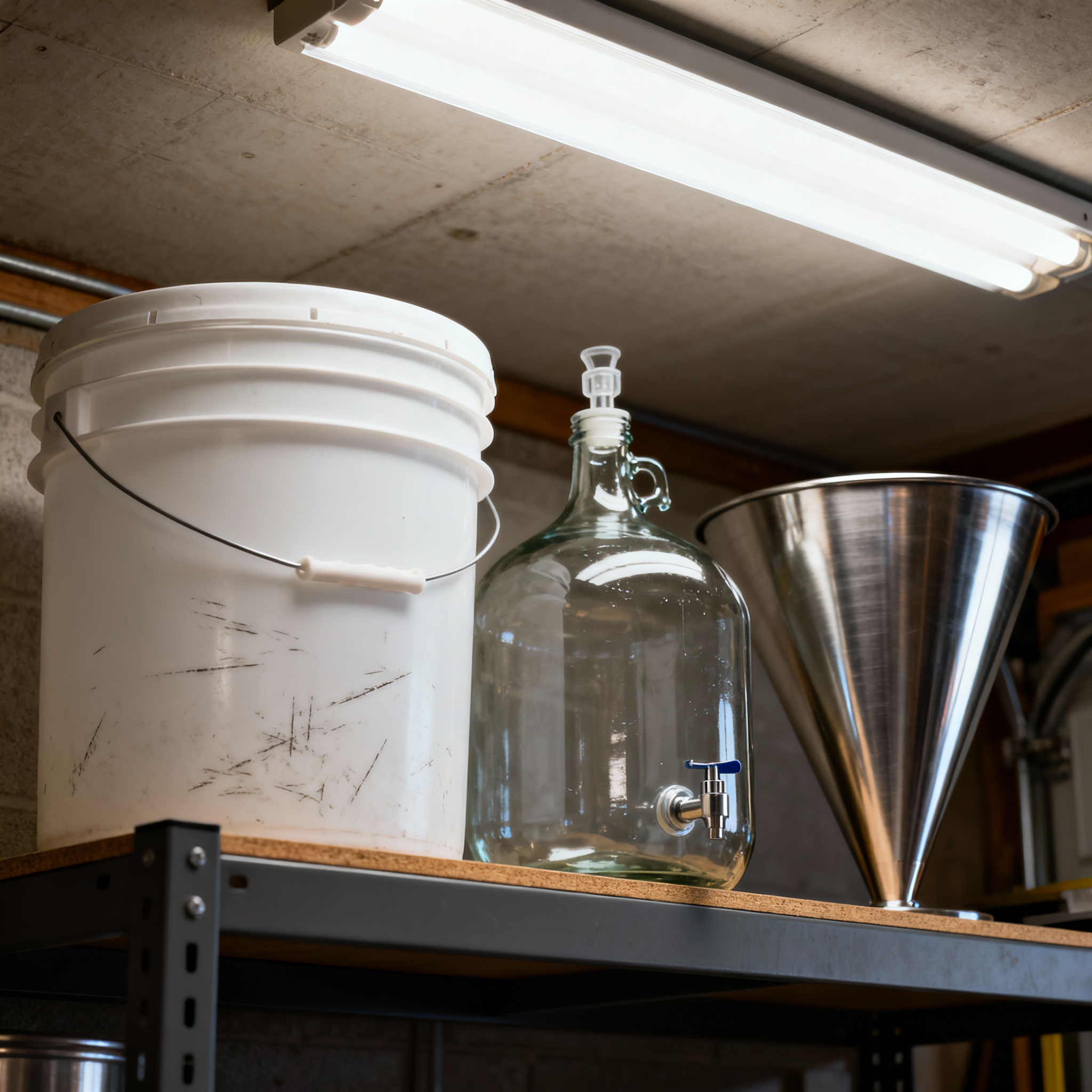
I still remember my first fermenter. It was a white plastic bucket with a snap-on lid that never quite sealed right.
I got it from a homebrew shop that smelled like grain dust and old hops. The owner said it would work fine for beer, and he was right.
That bucket gave me three years of decent batches before the inside started looking like a topographic map of scratches. Since then, I’ve tried glass carboys that made me nervous and stainless conicals that cost more than a car payment.
Each one taught me something different about what matters in fermentation and what is just marketing. The fermenter you choose affects more than just how your beer looks while it bubbles.
It changes how you clean, how you transfer, how much oxygen gets in, and whether you end up with a bad back from lifting awkward glass jugs. Let me walk you through what I’ve learned from using all three types over the years.
HDPE Buckets: The Cheap Workhorse
I keep coming back to buckets. Not because they’re fancy, but because they just work.
A standard food-grade HDPE (high-density polyethylene) bucket costs around fifteen to twenty dollars. The top is wide enough to fit your whole arm inside if you need to scrub something out.
I can wash a bucket in about two minutes with a sponge and some PBW (Powdered Brewery Wash) with no special tools. Buckets are also light when empty, making them easy to transport across the garage.
But buckets come with problems. The biggest one is scratches; every tiny groove in the plastic is a perfect hiding spot for bacteria and wild yeast.
I learned this the hard way when a pale ale started tasting like feet after using the same bucket for two years. The other issue is oxygen.
HDPE is slightly permeable to oxygen over time. Research from the University of California, Davis found that oxygen ingress through HDPE is minimal for typical timelines under four weeks.
However, it becomes a concern with long-term aging or sour beers that sit for months. If your bucket is translucent, it can also let in UV light, which breaks down hop compounds and creates skunky flavors.
Replace your plastic buckets every two to three years, even if they look fine. I mark the manufacture date on the bottom with a permanent marker so I know when it’s time to retire them.
Glass and PET Carboys: The Visibility Factor
I bought my first glass carboy because I wanted to watch fermentation happen. There is something satisfying about seeing the krausen rise and fall and knowing exactly when the beer is clear.
Glass carboys are chemically inert and don’t scratch easily. You can scrub them hard with a brush and not worry about creating hiding spots for bacteria.
They also don’t let any oxygen through, which makes them better than buckets for longer aging. But glass is dangerous; a full five-gallon carboy weighs around fifty pounds and is slippery when wet.
That’s where PET (polyethylene terephthalate) carboys come in. They are clear like glass but won’t shatter if you drop them.
The downside of PET is that it can scratch more easily than glass, though not as badly as HDPE. According to a study in the Journal of the Institute of Brewing, PET allows more oxygen through than glass but less than standard HDPE.
Cleaning remains the biggest problem. That narrow neck makes it hard to reach the bottom, and thick yeast cakes often require an overnight soak in cleaner.
If you use glass carboys, get a sturdy carboy carrier that straps around the base. Do not rely on the small glass handles molded into the neck, as they are a common point of failure.
Stainless Conicals: Are They Worth the Money?
I saved up for a stainless steel conical fermenter for about a year before I finally bought one. It cost around three hundred dollars for a seven-gallon model.
The main advantage of a conical is the dump valve. Yeast and trub settle into the cone at the bottom, and you can dump them out without disturbing the beer above.
This results in cleaner beer and less sediment in your final product. You can also harvest yeast from the dump valve to reuse in future batches, which saves money over time.
The other big benefit is closed transfers. My conical has a racking arm that allows me to push beer into a keg using CO2 pressure.
This means no exposure to oxygen and no splashing. For hoppy beers like IPAs, this makes a noticeable difference in preserving hop aroma.
But conicals have downsides, starting with the cost. They also have more parts like valves and gaskets that must be disassembled and cleaned separately.
And conicals take up more vertical space, often requiring a dedicated garage setup. However, conicals don’t automatically make better beer; temperature control and yeast health still matter more.
If you’re considering a conical, look for one with a rotating racking arm. This lets you pull beer from different heights in the fermenter to avoid the yeast cake while maintaining flexibility.
Oxidation Risk: Comparing Transfer Methods
Oxidation ruins beer, turning fresh IPAs into cardboard-flavored disappointments. Oxygen exposure during transfer is one of the biggest culprits.
Buckets with spigots make transfers easy, but they’re not oxygen-free. When beer flows out, air flows in through the top to replace the volume.
Carboys have the same issue if you’re siphoning. Every time you start a siphon, you’re exposing the beer to air.
Conicals are the best option for oxygen-free transfers. I push CO2 into the top and beer flows out the bottom into a purged keg.
Bucket transfers can add 500 to 1000 ppb (parts per billion) of oxygen, while a closed transfer adds less than 50 ppb. If you’re brewing hazy IPAs or pale lagers, you want to keep oxygen as low as possible.
Oxygen ingress occurs through both the material of the vessel and the surface area of the liquid exposed during transfer. While HDPE and PET have measurable oxygen transmission rates (OTR), the largest surge of oxygen typically occurs during manual siphoning where turbulent flow increases the surface-to-gas contact.
If you’re using a bucket or carboy and you can’t do closed transfers, purge your receiving container with CO2 first. Fill a corny keg with sanitizer, push it out with CO2, and then transfer your beer into that protected space.
Cleaning and Sanitation: Ease of Use
The fermenter you choose directly affects how much you dread cleanup. And when cleanup is a pain, you brew less often.
Buckets win here because the wide opening means you can reach every surface with a sponge. I’m usually done in under ten minutes.
Carboys take longer because of the narrow neck and the difficulty of rinsing. You have to find a safe place to prop it upside down to drain.
Conicals are somewhere in between. The cone shape helps gunk collect for easy dumping, but there are more parts to disassemble and clean individually.
I’ve had a batch get infected because I didn’t fully clean the dump valve threads. Stainless steel doesn’t scratch easily, but it can develop scale buildup if you use hard water.
Clean your fermenter the same day you transfer your beer. Don’t let the yeast cake dry out overnight. Dried yeast is ten times harder to remove than fresh yeast.
Conclusion
The right fermenter is ultimately the one that fits your workflow and the beer styles you love. Buckets remain my go-to for simple, quick turnaround ales due to their unmatched ease of cleaning.
Carboys offer the visual satisfaction and oxygen barrier needed for aging meads or sours. Stainless conicals, while expensive and labor-intensive to clean, provide the professional control over clarity and oxidation required for elite IPAs and lagers.
Start with a bucket to learn the basics without breaking the bank. As you develop a preference for specific styles or technical processes like yeast harvesting, you can invest in the hardware that supports those goals.
References
- University of California, Davis. “Oxygen Permeability of Common Fermentation Vessels.” UC Davis Extension Publications, 2018.
- Palmer, J. (2017). How to Brew. Brewers Publications.