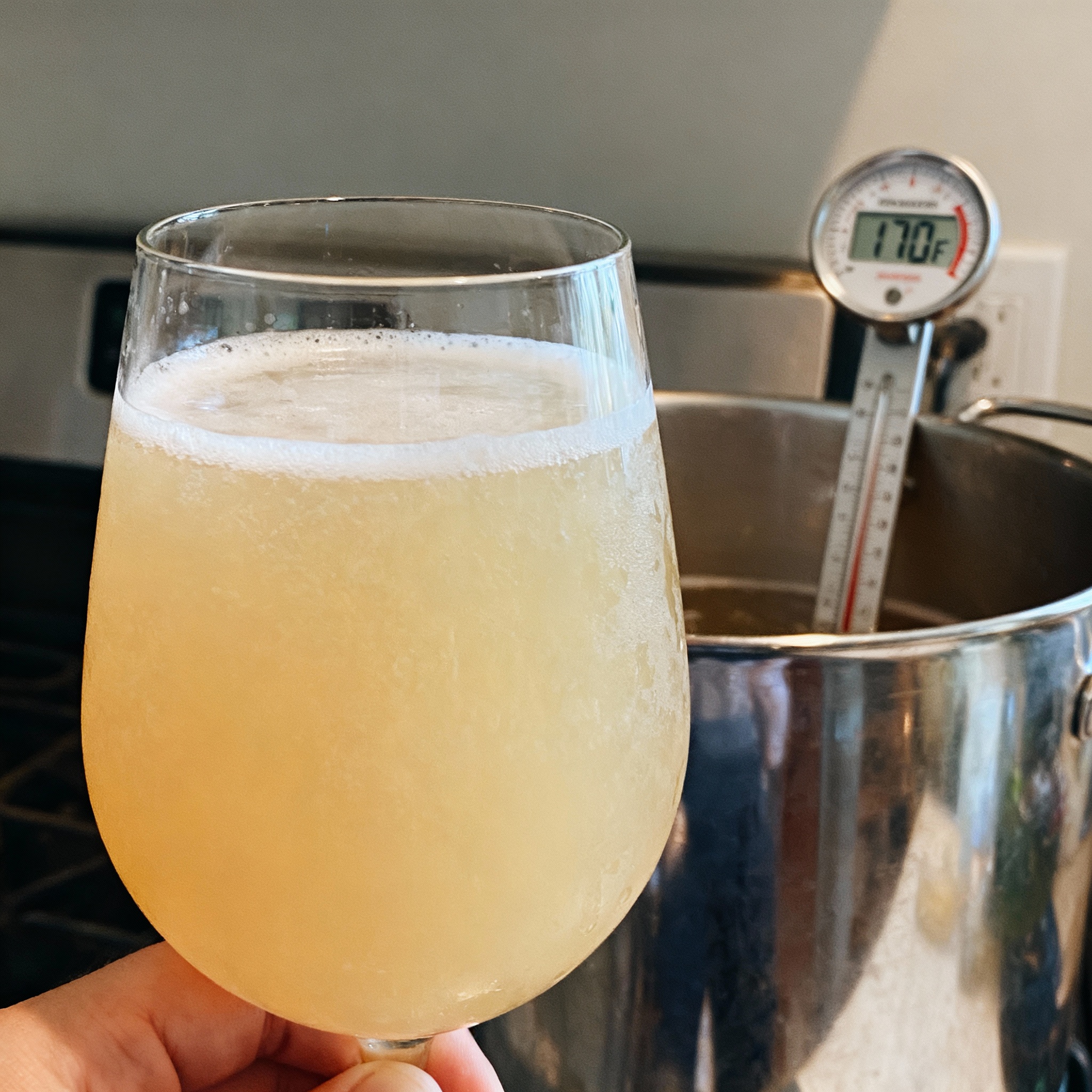
The Raw Ale Method: No-Boil Brewing
I turned off the burner halfway through my first raw ale batch because the method explicitly called for it. My neighbor saw the steam-less kettle and asked if I’d given up, but I told him I was making beer.
Three weeks later, he drank it and changed his mind. Raw ale is simply beer that skips the boil, trading the rolling boil for a specific pasteurization hold.
Instead of hitting 212°F, you heat the wort just enough to kill pathogens without coagulating the proteins that define the style. The result is a cloudy, doughy, protein-rich ale that tastes more like bread than a commercial lager.
Pasteurization Temperature: Holding Wort at 170°F
The boil typically sanitizes wort and drives off volatile compounds, but raw ale skips the evaporation phase. You don’t need 212°F to kill microbes; you simply need to hold the wort at 170°F for 15 minutes.
I heat my wort to 175°F and then cut the burner to let the temperature coast. I hold it between 170°F and 175°F for 15 to 20 minutes, stirring occasionally to maintain even heat distribution.
Pasteurization is a function of both temperature and time. At 170°F (77°C), the thermal death time for common brewery contaminants like Lactobacillus and wild Saccharomyces is reached within seconds, providing a sterile environment for your pitch, meeting guidelines similar to FDA Food Safety regulations.
This step is not optional, as skipping it gambles with wild bacteria that can turn your beer into vinegar or wet cardboard. Every time I have held the temperature for the full 15 minutes, I have achieved a clean fermentation profile.
Use a lid during the hold to keep the temperature stable, but crack it slightly to let some steam escape. A tight lid can trap too much heat and push you over 180°F, potentially extracting harsh tannins from any remaining grain husks.
The Protein Haze: Permanent Suspension
Raw ale brings back the ancient aesthetic of cloudy beer whether you want it or not. The proteins and starches that normally sink during a boil stay in permanent suspension.
This creates a mouthfeel that is thick and chewy, much closer to bread dough than water. While modern pilsners value clarity, raw ale values the structural body provided by these suspended proteins.
Because the wort never reaches a “hot break,” the high-molecular-weight proteins remain intact. These proteins provide excellent head retention and body but also react with polyphenols over time, leading to rapid flavor degradation.
The downside is shelf stability, as these proteins break down quickly in the bottle. Fresh raw ale tastes doughy and vibrant, but after three weeks, the flavor often fades into something flat and lifeless.
Store your bottles in the fridge from day one. Cold temperatures won’t stop the proteins from eventually breaking down, but they will buy you an extra week or two of peak freshness.
Hop Usage: Mash Hopping vs. Tea Hopping
Hops require heat to isomerize alpha acids into the bitter compounds that balance malt sweetness. When you skip the boil, you skip traditional isomerization, resulting in lower bitterness and massive hop aroma.
I use mash hopping, adding hops directly to the grain bed for 60 to 90 minutes at 150°F. This is too cool for isomerization but perfect for extracting delicate oils and herbal compounds.
Traditional isomerization requires temperatures above 175°F (79°C). In raw ale, your IBU yield will be near zero unless you utilize a separate “hop tea” boiled in a small amount of water before being added to the fermenter.
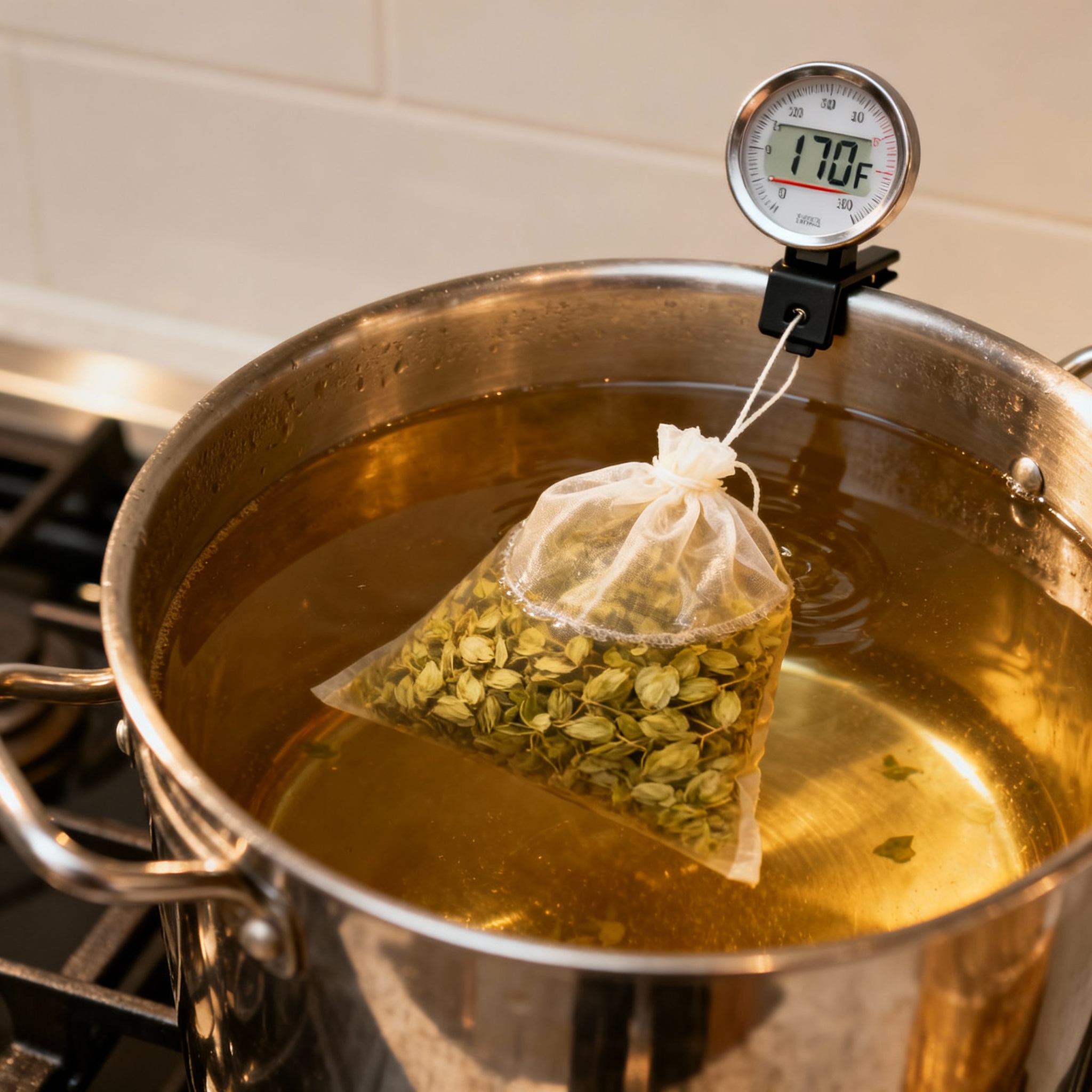
Tea hopping involves steeping hops in 170°F water for 10 minutes to extract oils without grassy notes. This gives you more control over the aroma profile, especially when using noble varieties like Hallertau or Saaz.
Use whole-cone hops instead of pellets for mash hopping. Pellets turn into sludge in the grain bed and can lead to a stuck sparge, whereas whole cones stay intact and assist with filtration.
Kveik Yeast: The Safety Net
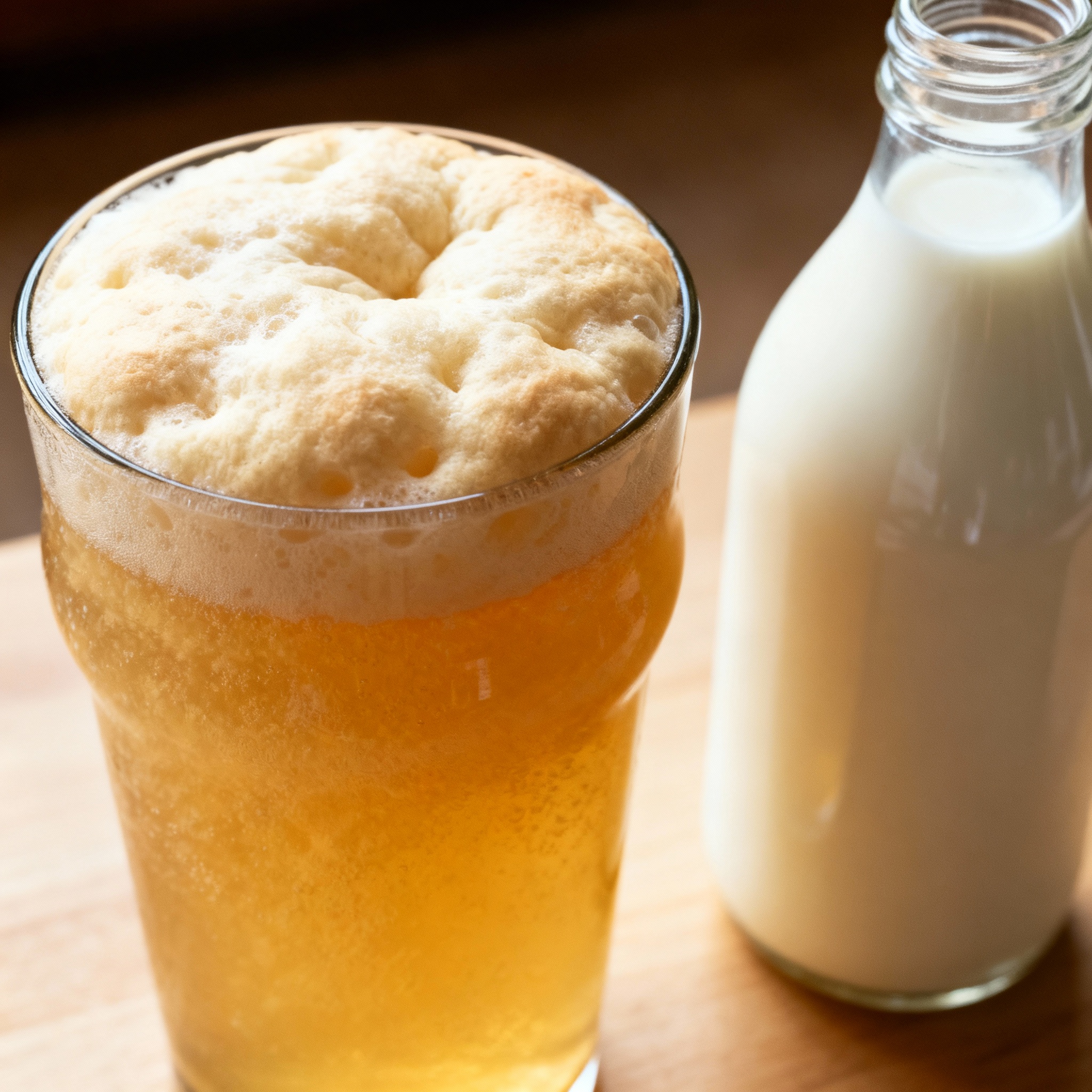
Kveik yeast solved the contamination worries I had with raw wort by fermenting incredibly fast at high temperatures. These Norwegian strains, available from White Labs, Omega Yeast and others, can finish fermentation in three to five days at 90°F.
This speed ensures that bacteria cannot establish themselves because the yeast dominates the environment almost immediately. By the time wild microbes try to grow, the alcohol level is too high and the pH is too low for them to survive.
Kveik strains are known for a rapid and significant drop in wort pH during the first 24 hours of fermentation. This biological acidification is a primary preservation mechanism in traditional raw ale production.
I pitch Kveik at 90°F and let the ambient heat of the garage do the work. The resulting flavor is remarkably neutral with a slight orange peel note, allowing the bready malt to remain the focal point.
Harvest and reuse your Kveik. It is famous for its viability; you can scoop a spoonful of slurry from one batch and pitch it directly into the next for consistent, violent fermentations.
Shelf Life: The Three-Week Rule
Raw ale does not age; it degrades as the suspended proteins break down. By week four, the hop aroma vanishes and the fresh doughy flavor turns stale and cardboard-like.
I treat this short shelf life as a feature that forces me to brew small batches and drink them immediately. The peak window is between day 7 and day 14 when the yeast has settled but the malt flavor is at its brightest.
Date your bottle caps with a Sharpie. Knowing the exact age of your raw ale allows you to prioritize the oldest bottles and ensures you never drink a batch that has passed its peak.
Conclusion
Raw ale is a specialized tool in the brewer’s arsenal, focusing on speed and a unique bready character. It is not a replacement for traditional methods, but a connection to a time before the boil became a sacred step.
Respect the 170°F pasteurization hold and use Kveik yeast to ensure a clean, rapid fermentation. If you drink it within three weeks, you will experience a beer that feels more alive and textured than anything available in a store.
Raw Ale vs. Traditional Ale
| Parameter | Raw Ale | Traditional Ale |
|---|---|---|
| Boil Time | 0 Minutes | 60-90 Minutes |
| Pasteurization | 15 Min @ 170°F | N/A (Boil Sanitizes) |
| Clarity | Permanent Haze | Clear / Bright |
| Shelf Life | 3 Weeks | 6-12 Months |
| Hop Bitterness | Near Zero | Moderate to High |
| Mouthfeel | Chewy / Doughy | Crisp / Balanced |
| Yeast Choice | Kveik (Recommended) | Any Ale/Lager Strain |
References
- Garshol, Lars Marius. Historical Brewing Techniques. Brewers Publications, 2020.
- University of California. “Thermal Death Time and Pasteurization Kinetics.” UC ANR Extension, 2022.
- Omega Yeast Labs. “Kveik Fermentation and Temperature Thresholds.” Technical Data Sheet, 2024.
- USDA. “Food Safety and Pasteurization Temperatures.” FSIS Guidelines, 2023.