The Kveik Revolution: High Temp Fermentation.
I used to think summer was my enemy because of what the heat did to my fermentation chamber. Every year, when Asheville hit 85°F in July, my garage lab turned into a sauna that my window AC unit couldn’t handle.
I’d open the fridge-based chamber, feel the wall of humid air, and realize another month of brewing was lost. Then I read about Kveik, a family of yeast strains from Norwegian farmhouse brewers that promised impossible results.
The claims sounded like homebrew mythology: ferment at 95°F and finish a beer in four days with no off-flavors. I was wrong to be skeptical; Kveik is real, and it has fundamentally changed how I brew in hot climates.
If you’re nervous about high-temp fermentation, start at 80°F for your first batch. You’ll still get fast fermentation and clean flavors, but it feels more controlled than jumping straight to 95°F.
The Yeast That Doesn’t Care About Heat
Most brewing yeasts are fragile, throwing esters that smell like nail polish remover if they drift past 75°F. Lager yeast is even worse, requiring strict temperatures near 50°F to avoid sulfur compounds that smell like rotten eggs.
Kveik doesn’t follow these rules because it adapted to survive in Norwegian farmhouse barns without temperature control. Over centuries, these strains learned to ferment cleanly at temperatures that would ruin or kill standard commercial yeasts.
The first time I pitched Voss Kveik at 85°F, I kept checking the airlock like I was waiting for an explosion. Within 12 hours, it was bubbling so fast I thought I’d miscalculated the pitch, and by day three, the beer was clear and ready.
Research from Escarpment Labs shows that Kveik strains produce fewer fusel alcohols at high temperatures compared to standard ale yeasts. Their metabolic pathways remain stable at 95°F, producing ester profiles similar to standard yeast at 68°F.
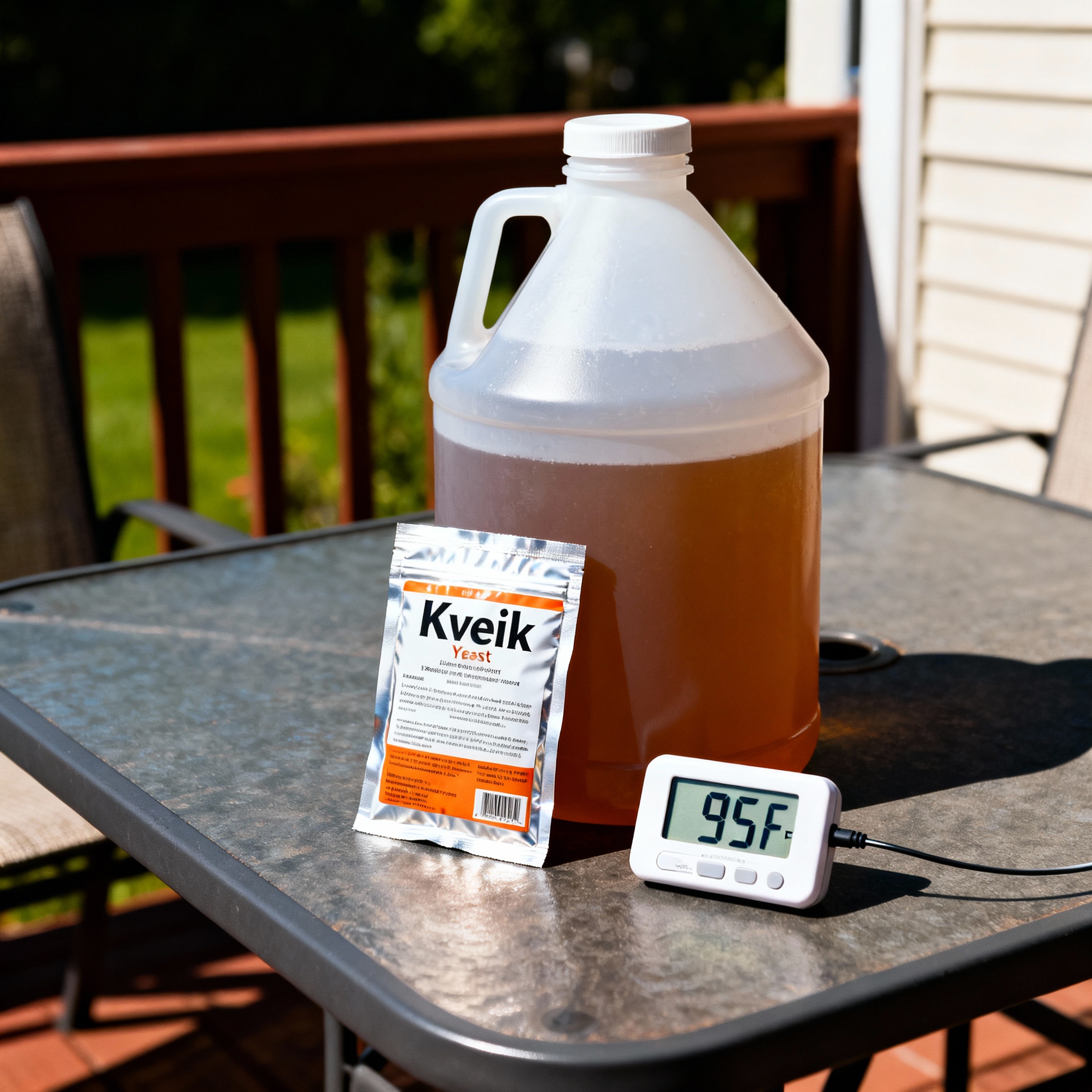
Fermenting at 95°F Without Off-Flavors
Standard yeasts produce off-flavors because heat accelerates their metabolism faster than they can physically handle. They panic, run out of resources, and dump garbage compounds into your beer.
Kveik stays calm and processes sugars efficiently even when the temperature pushes 100°F. I tested this during a power outage where my fermentation spiked to 92°F for a batch of Hornindal Kveik.
I expected disaster, but the beer turned out fine with a slight tropical fruit increase and zero fusel burn. Above 100°F, you may see stalled activity, but 95°F remains the sweet spot for clean, fruity esters.
If your garage or closet stays naturally between 85°F and 95°F, you don’t need a fermentation chamber. Pitch Kveik and let the ambient temperature do the heavy lifting for you.
Grain to Glass in Three to Four Days
Kveik collapses the traditional brewing timeline from weeks into just a few days. You can mash and boil on day one, watch fermentation finish by day three, and package on day four.
The first time I poured a glass after only four days, I expected it to taste “green” or underdeveloped. Instead, it was a perfectly finished beer with balanced bitterness and rounded fruity esters.
Kveik works so fast because it hits peak activity within 12 to 18 hours. While a normal yeast is still waking up, Kveik is already halfway through the fermentation process.
Kveik strains are highly flocculant, meaning they clump together and drop out of suspension very rapidly. This rapid clearing is why the beer can be packaged and carbonated so quickly after fermentation ends.
If you’re brewing a hoppy beer, dry hop on day two while the yeast is still active. This active fermentation helps with hop retention and creates a juicier flavor profile through biotransformation.
The Critical Need for Yeast Nutrients
Kveik is a hungry beast that burns through nutrients faster than standard yeasts due to its high-speed metabolism. If you don’t provide extra fuel, you’ll end up with stalled fermentation or flavors that taste like wet socks.
My second Kveik batch stalled at 1.020 because I didn’t realize these strains require extra Free Amino Nitrogen (FAN). I now double the recommended dose of Fermaid O, moving from 1 gram per gallon to 2 grams per gallon.
At 90°F, yeast metabolism is sprinting a marathon and needs constant replenishment of vitamins and minerals. Providing these nutrients 12 hours after pitching ensures the yeast doesn’t run out of gas halfway through.
In a pinch, you can use boiled bread yeast as a nutrient source. Boiling a tablespoon of bread yeast for 10 minutes releases nutrients that Kveik can easily utilize.

Voss vs. Hornindal vs. Lutra
Not all Kveik strains taste the same, so picking the right one depends on your specific beer style. Voss is the classic orange-citrus choice, while Hornindal is a tropical fruit bomb, and Lutra is the neutral specialist.
| Kveik Strain | Optimal Temp | Ester Profile | Best Styles | Attenuation |
|---|---|---|---|---|
| Voss | 85°F - 98°F | Orange Peel, Tangerine | IPA, Pale Ale | 75-82% |
| Hornindal | 85°F - 95°F | Pineapple, Mango | Hazy IPA, Wheat Beer | 70-78% |
| Lutra | 75°F - 95°F | Clean, Neutral | Pseudo-Lager, Cream Ale | 75-82% |
Lutra is my go-to for clean, drinkable beers when I don’t want the yeast to be the star. At 75°F, it tastes almost indistinguishable from a German lager yeast, even though it’s technically an ale strain.
Drying and Reusing Kveik
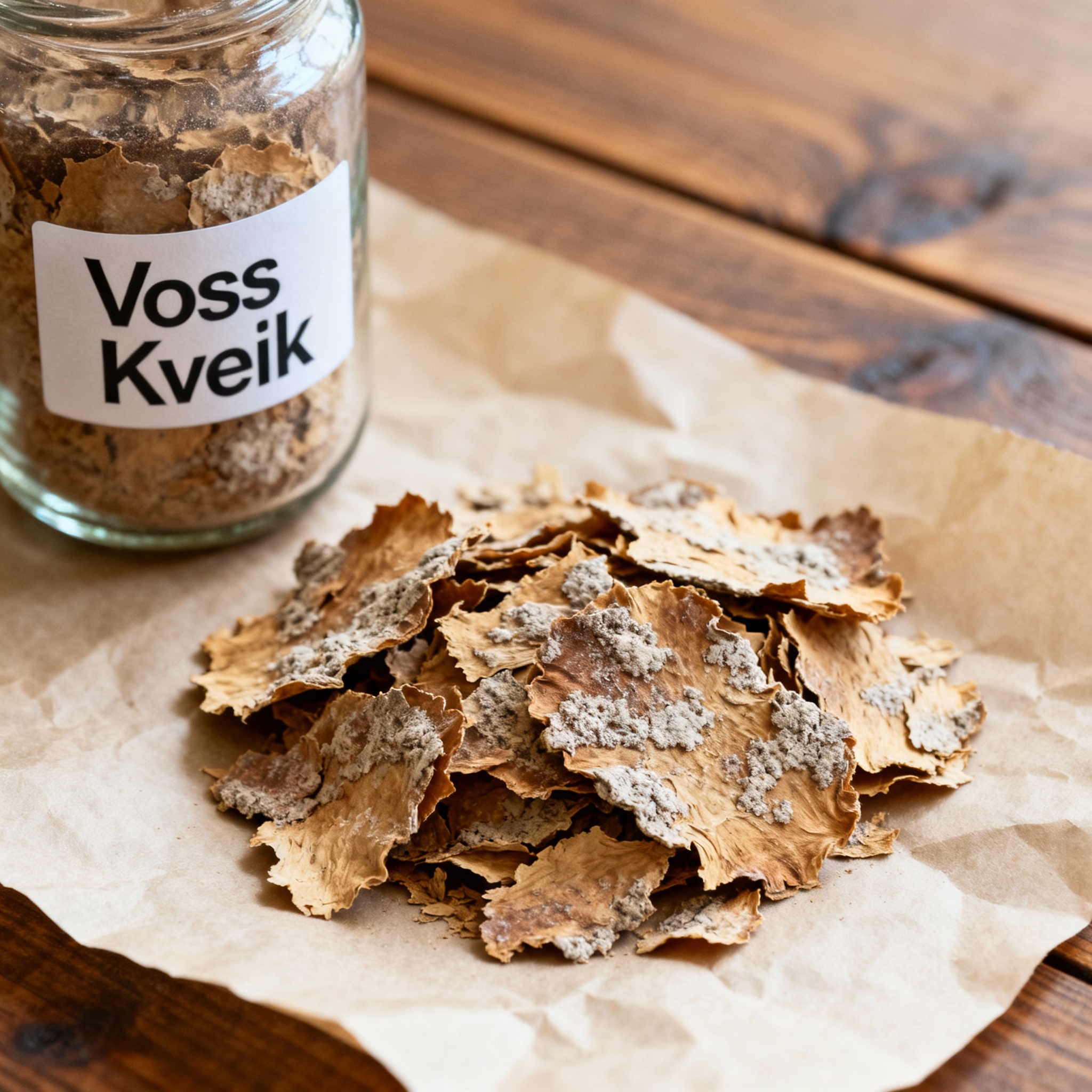
One of the coolest features of Kveik is its ability to be dried on parchment paper and reused indefinitely. Traditional Norwegian brewers would scoop the slurry out and let it dry until it turned into crumbly chips.
Kveik survives this process because it has thicker, more resilient cell walls than standard brewing yeast. I have dried and reused Kveik four times now, and it still ferments just as aggressively as the first pitch.
Spread the yeast thin on parchment paper-aim for about 2 to 3 millimeters-to ensure it dries completely without molding. Once it’s flaky, store it in a sealed jar in a cool, dark place for months of viability.
Always spread the slurry thin on the paper. If the layer is too thick, the inside won’t dry correctly, which invites mold and ruins your yeast culture.
Conclusion
Kveik has liberated my brewing schedule from the constraints of the weather and the clock. I no longer need to plan around the summer heat or wait two weeks for a simple ale to finish.
If you live in a hot climate, start with Voss at 85°F and witness the speed for yourself. You’ll save money, brew faster, and feel like a traditional Norwegian farmhouse brewer in the process.
References
- Preiss, R., et al. (2018). “Traditional Norwegian Kveik Strains.” Journal of the Institute of Brewing.
- Escarpment Laboratories. (2020). Kveik Fermentation Data Sheets.
- Omega Yeast Labs. Kveik Strain Comparison Guide.
- Garshol, L. M. (2020). Historical Brewing Techniques. Brewers Publications.