The Ultimate Brewery Maintenance Guide: Valves, Seals, and Stainless Care
I lost a 5-gallon batch of pumpkin ale last October because I didn’t fully disassemble a ball valve. The beer tasted fine going into the fermenter, but three days later it smelled like a wet basement.
I traced it back to a thin layer of wort that had dried inside the valve body during the previous brew. That sticky film became a buffet for wild yeast and lactobacillus.
I poured the whole batch down the drain. That moment changed how I think about brewery maintenance.
It’s not about cleaning after every brew; it’s about preventing the invisible failures that ruin your work two weeks later. A cracked gasket you can’t see or a sight glass you didn’t fully scrub can turn good wort into drain cleaner.
This guide is what I wish someone had handed me when I started brewing in my garage. It’s not glamorous work, but it stops you from losing batches to contamination.
Ball Valves: The Hidden Gunk
Ball valves are the most common failure point in a homebrew system. Most people don’t realize they need to be fully disassembled because the design creates a “dead zone” where wort and hop particles get trapped.
I didn’t understand this until I took apart a valve I thought was clean and found a brown ring of dried krausen coating the ball. It smelled sour, despite having been “cleaned” a dozen times with hot PBW and a rinse cycle.
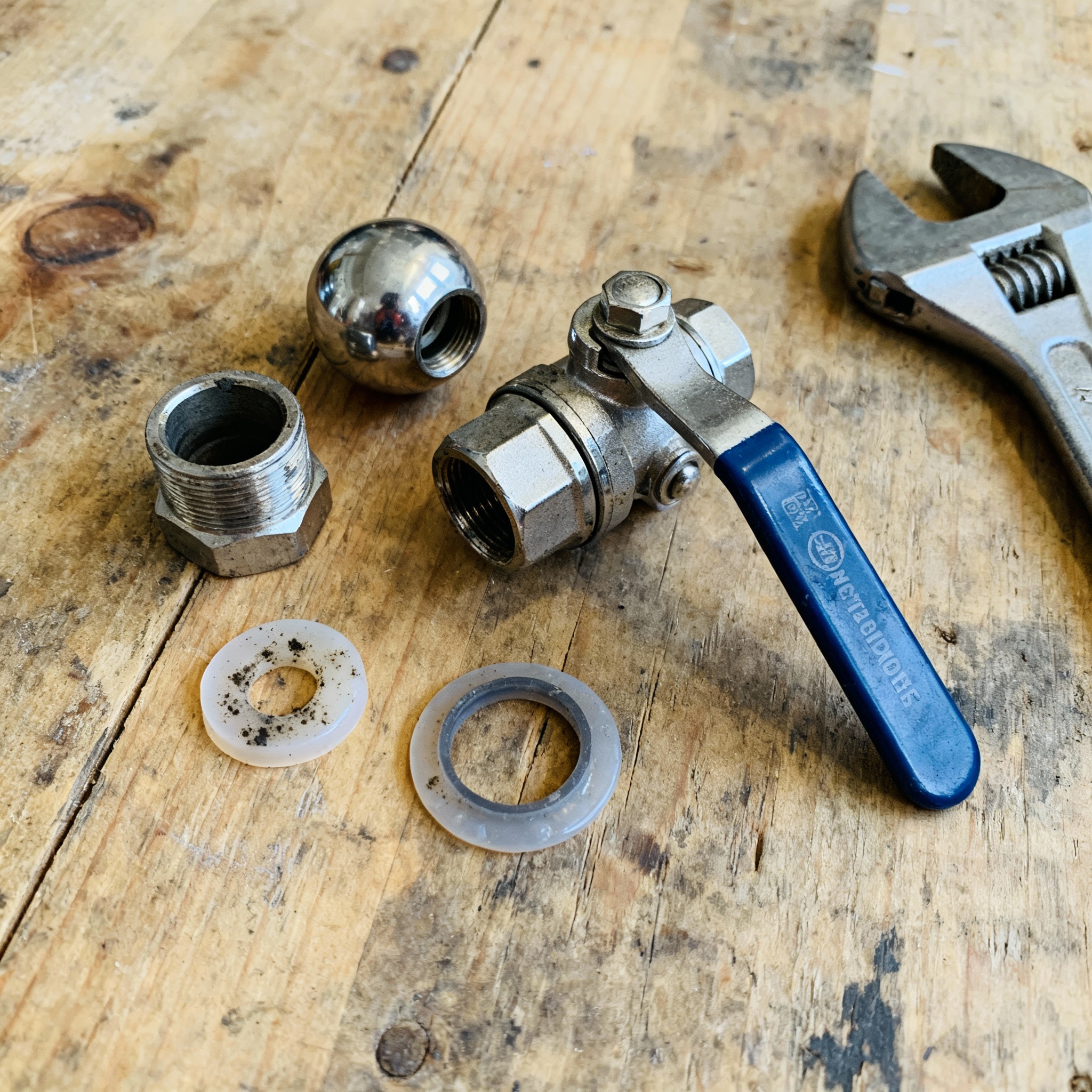
To clean a 3-piece ball valve, close it so the ball is perpendicular to the flow, then use two wrenches to unscrew the center section. Wash every part separately in hot water with an alkaline cleaner and use a bottle brush on the inside of the body.
Mark your valve disassembly schedule on a calendar. I use a dry-erase board in the garage and disassemble all valves after every three brew sessions regardless of how clean they look.
Passivating Stainless Steel
Stainless steel is rust-resistant because of a thin layer of Chromium Oxide () known as the passive layer. If you scratch the surface or expose the steel to chlorine (see Cleaning & Sanitation), that layer breaks down and allows rust to form.
I learned this the hard way when I left a kettleful of sanitizer with a splash of bleach sitting overnight. The next morning, I had orange streaks running down the inside of my brew kettle and had to chemically rebuild that oxide layer.
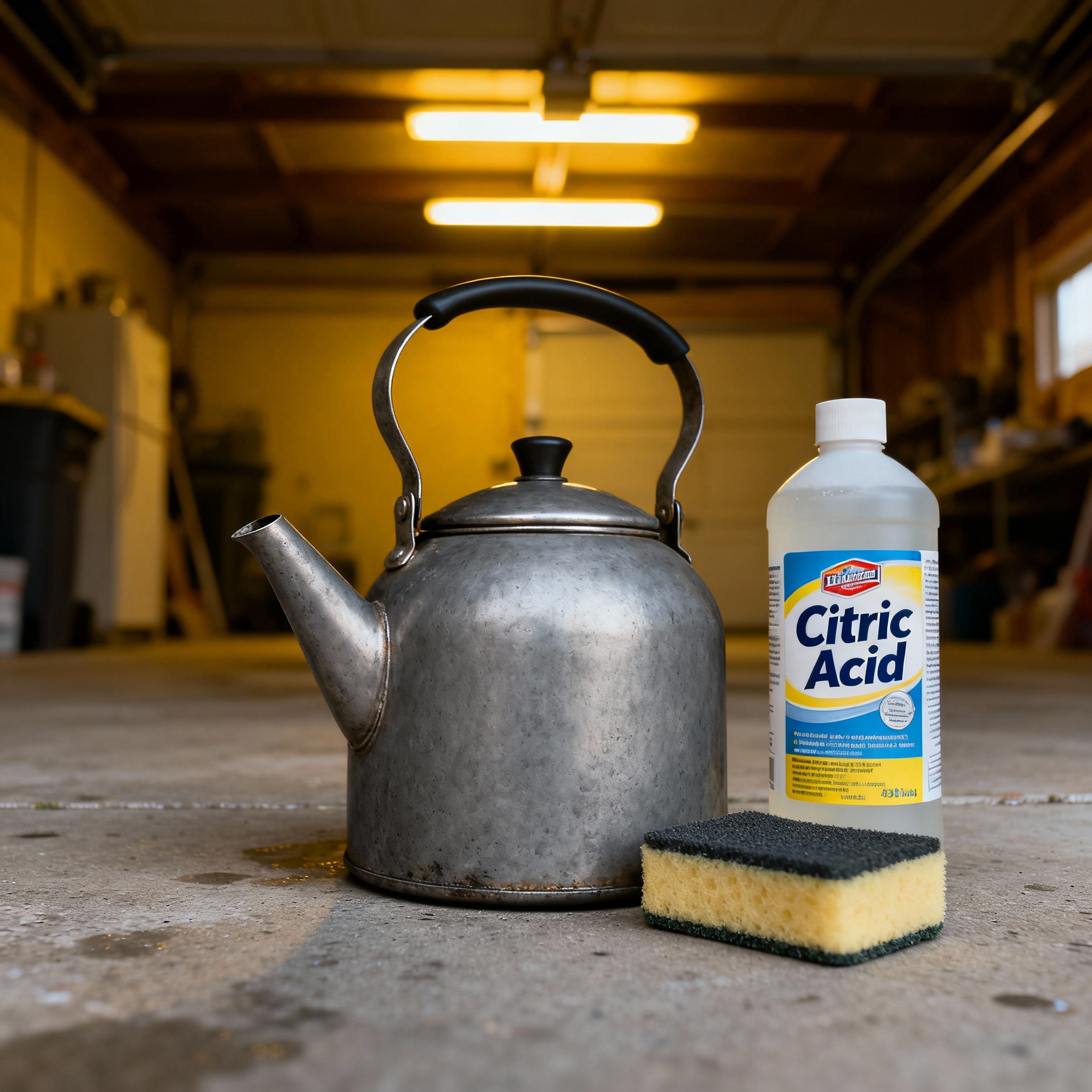
Passivation involves using Citric Acid () to dissolve free iron and allow the chromium to re-oxidize. I mix one ounce of citric acid per gallon of water, heat it to , and let it sit in the vessel for 30 minutes.
Passivation works by removing free iron from the surface of the alloy. This increases the ratio of chromium to iron at the surface, allowing a protective film of Chromium Oxide () to form when exposed to atmospheric oxygen.
If you’re cleaning with anything that contains chlorine, rinse immediately and thoroughly. Chlorine is one of the fastest ways to destroy the passive layer.
Gasket Care
Gaskets are the weak link in any closed system because heat and chemical exposure break down their polymer structure over time. A gasket that looks fine on the outside might be stiff or cracked on the inside, harboring bacteria.
I check every gasket before I brew by pinching and bending the material. If it doesn’t spring back, or if I see hairline cracks when stretching it, I replace it immediately.
I also sniff every gasket; if it smells sour or funky, it is likely harboring wild yeast. I hand-wash my silicone gaskets in hot soapy water and avoid the dishwasher, which can warp the material.
| Gasket Material | Flexibility | Heat Resistance | Best Use Case |
|---|---|---|---|
| Silicone | Very High | High | Tri-clamps, tubing, lids |
| EPDM | Moderate | Very High | High-pressure seals, pumps |
| PTFE (Teflon) | Low | Excellent | Ball valve seats |
Keep a spare set of gaskets in your brew kit. I’ve had gaskets tear mid-brew from overtightening a tri-clamp, and having backups saved the session.
Sight Glasses
Sight glasses are difficult to clean because krausen and hop oils can get trapped under the gaskets at either end of the narrow tube. I used to just rinse mine until I found a slimy biofilm coating the inside of the polycarbonate.
To clean them properly, remove the sight glass from the vessel by loosening the tri-clamps. Use a long, thin brush and hot soapy water to scrub the entire length of the tube.
If the tube is still cloudy, soak it in a PBW solution overnight. Be careful with polycarbonate tubes; avoid boiling water, as high heat can cause the material to warp or crack.
If you’re building a new system, consider using a stainless steel tube instead of glass. While opaque, it is far easier to clean and won’t shatter if dropped.
Pump Heads
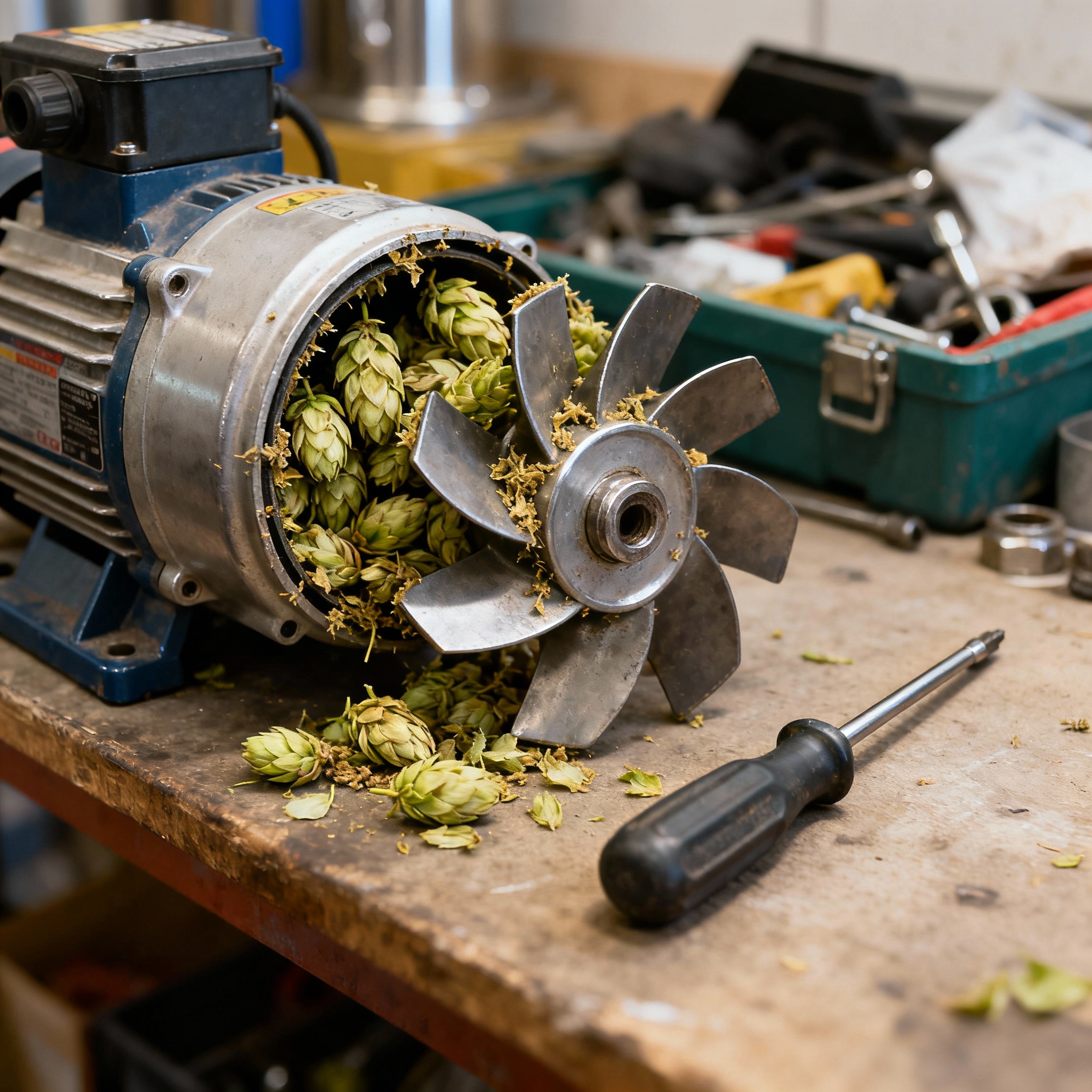
Homebrew pump heads are major contamination traps because hop debris and trub get wedged between the impeller blades. I didn’t open mine for a year until my beers developed a buttery diacetyl off-flavor.
When I finally disassembled the head, I found a paste of dried hops caked around the impeller that smelled like compost. I now disassemble the head after every session where I pump wort containing heavy trub.
Most heads are held together with four screws; once open, remove the impeller and gasket for separate scrubbing. Inspect the impeller for chips or cracks that could introduce plastic particles into your beer.
Before reassembling the pump, run a small amount of Star San through the head while it’s still open. This lets you visually confirm that the impeller spins freely and that no debris remains.
Conclusion
Maintenance separates people who lose batches from people who don’t. I used to think contamination was random bad luck, but now I know it’s almost always a maintenance failure.
A gasket I didn’t replace or a pump head I didn’t open can compound over time and eventually cost a batch. You don’t need expensive tools, just a schedule and the willingness to take things apart.
I keep a maintenance log in the garage to stay honest. If you’re struggling with off-flavors, start by checking these five hardware areas.
References
- Palmer, J., & Kaminski, C. Water: A Comprehensive Guide for Brewers. Brewers Publications, 2013.
- UC Davis Extension. “Passivation of Stainless Steel Surfaces.”
- American Homebrewers Association. “Cleaning and Sanitizing Homebrew Equipment.”
- Stainless Brewing. “Ball Valve Maintenance for Homebrewers.”