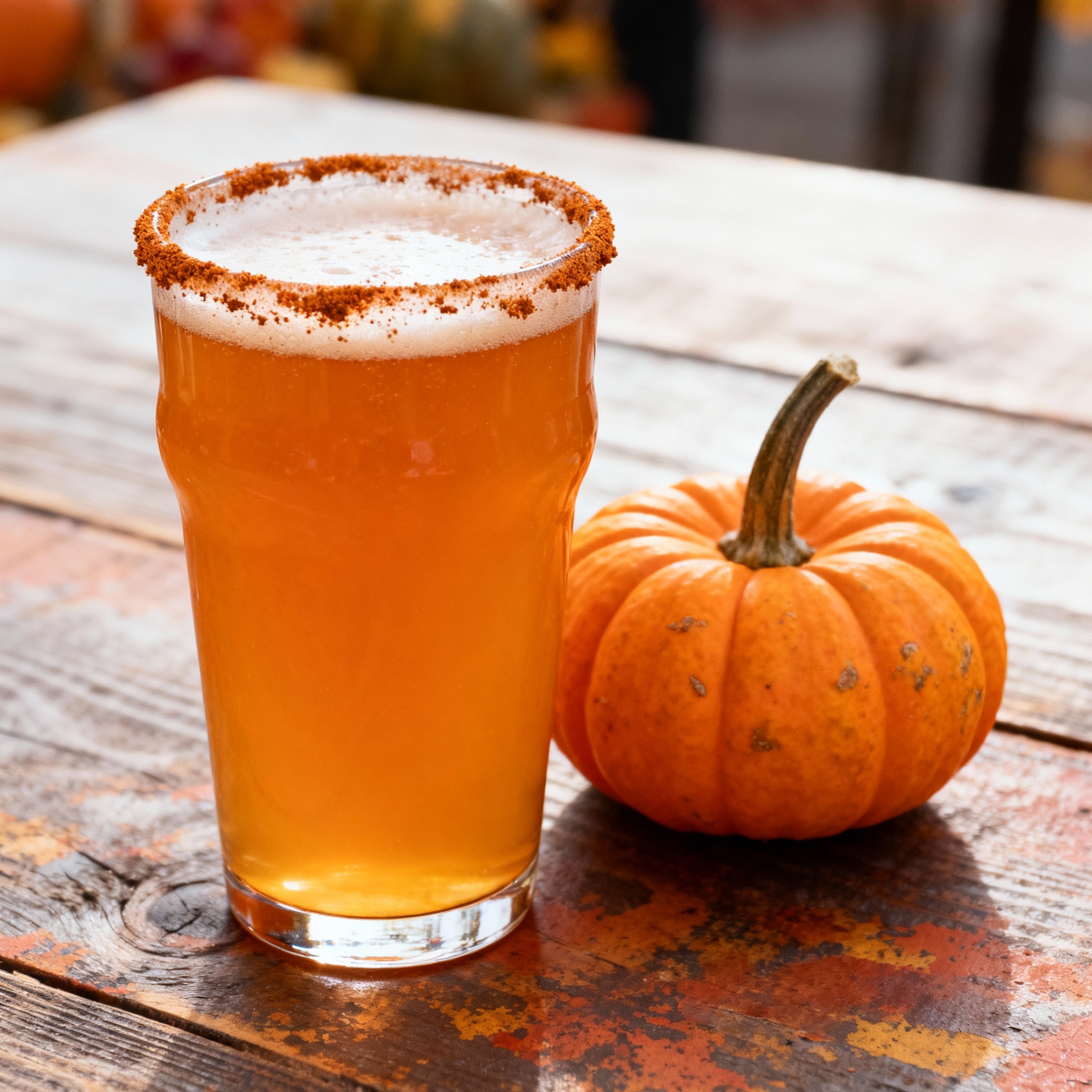
Pumpkin Ale: Gourd vs. Spice
I screwed up my first pumpkin beer so badly that my partner wouldn’t let me open the bottles indoors. The problem wasn’t infection. It wasn’t oxidation.
It was that I roasted eight pounds of sugar pumpkins, mashed them with pale malt, and ended up with something that tasted like wet cardboard soaked in nutmeg. The beer had zero pumpkin flavor and way too much spice.
I learned the hard way that pumpkin beer is a trick question. The pumpkin itself contributes almost nothing to the flavor. What you’re actually brewing is a spiced amber ale that happens to have gourd in it.
This style is polarizing because most commercial versions are either spice bombs that taste like candle wax or bland amber ales with a cartoon pumpkin on the label.
But when you get the balance right, pumpkin beer can be surprisingly drinkable. It just requires you to abandon the idea that pumpkin is the star of the show.
The Pumpkin Itself: Does It Even Matter?
Here’s the truth that took me three failed batches to accept. Pumpkin contributes almost no flavor to beer.
What it does contribute is fermentable sugar, a slight earthy background note, and a massive pain in the ass during the mash.
If you’re expecting that sweet, caramelized pumpkin flavor you get from roasting squash for dinner, you won’t find it in the glass. The boil destroys most of the delicate aromatics, and the yeast eats the sugars that carry what little flavor remains.
I’ve tried fresh roasted pumpkin, canned puree, and even butternut squash (which has more sugar and a cleaner flavor). The fresh roasted version gave me the most complexity, but only barely.
I cut sugar pumpkins in half, scooped out the seeds, brushed the flesh with a thin layer of brown sugar, and roasted them at 350°F for about 90 minutes until the edges caramelized. Then I scraped out the flesh and added it directly to the mash.
The result was a faint, earthy sweetness that you could only detect if you were looking for it.
Canned puree is easier and honestly produces similar results. I’ve used Libby’s 100% Pure Pumpkin (not the pie filling, which has spices already added) at a rate of about one 15-ounce can per gallon of beer.
It blends into the mash better than fresh pumpkin because it’s already pureed, and you avoid the stringy mess of roasted gourd. Some brewers roast the canned puree on a sheet pan for 20 minutes to add a bit of caramelization, and I think that’s worth doing.
It doesn’t add much flavor, but it does darken the color slightly and might contribute a hint of Maillard complexity.
The real question is whether you should use pumpkin at all. I know brewers who skip it entirely and just make a spiced ale. They argue that the pumpkin is a gimmick, and they’re not wrong.
But I still use it because it does add body and a faint earthiness that makes the beer feel more like autumn in a glass. It’s subtle, but it’s there.
If you’re going to leave it out, at least be honest about what you’re making. Call it a spiced harvest ale, a recognized category in the BJCP Style Guidelines, and move on.
If you’re using fresh pumpkin, add it at the end of the mash, not the beginning. Pumpkin flesh turns gelatinous when it hits hot water, and it can gum up your grain bed if you add it too early. I add mine during the last 15 minutes of the mash to minimize the mess.
The Spice Blend: Where the Actual Flavor Lives
This is where pumpkin beer either works or turns into a drinkable candle. The classic “pumpkin pie” spice blend is cinnamon, allspice, clove, and ginger.
The problem is that most homebrewers dump in way too much. I did this on my second batch.
I added two tablespoons of cinnamon stick, a tablespoon of whole cloves, and a thumb-sized piece of fresh ginger to a five-gallon batch. The result tasted like I’d dissolved a Yankee Candle into an amber ale.
My partner took one sip and said it smelled like a craft store in October. // … note: minor text change to flow better used to be “said it smelled like a craft store in October”
The key is restraint. Spices are potent, and they get more intense over time as the beer conditions.
I now aim for a blend that you can detect but not identify immediately. You want the drinker to think “this tastes like fall” without being able to pinpoint exactly why.
For a five-gallon batch, I use about one cinnamon stick (broken into pieces), a quarter teaspoon of ground allspice, three or four whole cloves, and a teaspoon of freshly grated ginger. That’s it.
If you want more spice character, you can always add it later. You can’t take it out once it’s in.
I prefer whole spices over ground because they’re easier to remove and they don’t leave sediment in the finished beer. Cinnamon sticks, whole cloves, and whole allspice berries can be tied up in a muslin bag and pulled out after a few days.
Fresh ginger root (grated or sliced thin) has a cleaner, brighter flavor than ground ginger, which can taste dusty and harsh. I’ve also experimented with nutmeg, but I find it overpowering.
A tiny pinch is fine, but it’s easy to cross the line into eggnog territory.
The ratio matters more than the total amount. Cinnamon should dominate, with allspice and ginger as support. Clove should be barely detectable.
I think of clove as the volume knob on the whole blend. A little bit makes everything else pop.
Too much and the beer tastes medicinal. I’ve had commercial pumpkin beers where the clove was so strong it tasted like I was drinking mouthwash.
Toast your whole spices in a dry pan for 30 seconds before adding them to the beer. It wakes up the essential oils and gives you a deeper, rounder flavor. Don’t overdo it or they’ll taste burnt.
Timing: When to Add the Spices
This is the part that took me the longest to figure out. I tried adding spices at the beginning of the boil, at flameout, during fermentation, and even in the keg.
Each method gave me wildly different results. Adding spices early in the boil drove off most of the volatile aromatics and left behind a harsh, one-dimensional flavor.
Adding them during fermentation gave me a cleaner spice character, but it was harder to control the intensity. Adding them in the keg gave me the most control, but it required tasting and adjusting multiple times.
I’ve settled on a two-stage approach. I add about half of my spice blend at flameout (right after I turn off the heat and before I start chilling the wort).
This gives me a base layer of spice flavor that integrates into the beer during fermentation. Then I add the other half in a muslin bag during the last few days of conditioning (either in the fermenter or in the keg).
I taste the beer every 12 hours and pull the bag when the spice level is where I want it. This method gives me a more complex spice profile, similar to methods discussed on the AHA Forum, because the flameout addition contributes deeper, roasted notes, and the conditioning addition contributes bright, fresh aromatics.
I know brewers who add all their spices in secondary and just let them sit for a week. That works, but it’s less precise.
Spices keep extracting as long as they’re in contact with the beer, and it’s easy to overshoot. I’ve also heard of people making a spice tincture (soaking spices in vodka for a few days and then adding the liquid to the keg), but I haven’t tried it.
It sounds like a good way to dial in the exact flavor you want, especially if you’re kegging.
One thing I learned from a paper published by the American Society of Brewing Chemists (ASBC) is that clove and cinnamon compounds (eugenol and cinnamaldehyde) are more soluble in alcohol than in water, which means they extract more aggressively as fermentation progresses.
That’s why a beer that tastes balanced right after fermentation can taste like a spice bomb two weeks later. If you’re bottling, go lighter on the spices than you think you need.
They’ll develop as the beer carbs up.
The ethanol produced during primary fermentation acts as a solvent for non-polar flavor compounds found in spices. This means that even if a room-temperature wort sample tastes under-spiced, the final 6% ABV beer may present those same spices much more aggressively.
If you’re adding spices during conditioning, use a weighted muslin bag so it stays submerged. I use a sanitized stainless steel hop spider weight. Spices that float on top don’t extract evenly.
Malt Bill: Building the Pie Crust
Pumpkin beer needs a malt backbone that can support the spices without getting lost. I think of the malt bill as the pie crust.
It should be lightly sweet, slightly toasty, and just rich enough to give the beer some body. Pale malt alone won’t cut it.
You need specialty grains that add bready, biscuit, and caramel notes to mimic the flavor of an actual pumpkin pie.
My base is usually 70 to 75 percent pale malt (I use two-row because it’s clean and neutral). Then I add about 10 percent Munich malt for a touch of malty sweetness and a deeper golden color.
The real magic happens with Victory malt and biscuit malt. Victory gives you that fresh-baked bread crust flavor, and biscuit malt adds a toasty, cookie-like note that pairs perfectly with cinnamon.
I use about eight percent Victory and five percent biscuit. That ratio gives me enough complexity without making the beer taste like a loaf of bread.
I also add a small amount of crystal malt (around five percent) for body and a hint of caramel sweetness. I prefer Crystal 60 because it’s not too dark and it doesn’t add raisin or prune flavors.
Some recipes call for Crystal 120 or even Special B, but I think those are too intense. They push the beer into brown ale territory, and I want this to stay in the amber range.
The total gravity should land somewhere between 1.055 and 1.065. You want enough alcohol to carry the spice oils, but not so much that the beer feels heavy.
I usually shoot for around 6 percent ABV. That’s enough to make it a sipper without turning it into a dessert beer.
One thing I avoid is adding lactose or other unfermentable sugars. Some commercial breweries do this to boost body and sweetness, but I think it makes the beer cloying.
Pumpkin beer should finish relatively dry so the spices don’t get buried under residual sugar. My target final gravity is around 1.012 to 1.015.
If you want a richer mouthfeel without adding lactose, mash at 154°F instead of the usual 150°F. The higher temperature produces more unfermentable dextrins, which add body without sweetness.
Mashing: Surviving the Gelatinous Nightmare
If you’ve ever added pumpkin to a mash, you know what I’m talking about. Pumpkin flesh contains a lot of pectin and starch, and when it hits hot water, it turns into a slimy, sticky mess.
The first time I tried it, my mash turned into something that looked like wallpaper paste. The grain bed stuck together, and my sparge took over an hour because the liquid couldn’t flow through.
I ended up with terrible efficiency and a beer that tasted thin and watery.
The fix is rice hulls. I add about a pound of rice hulls to a five-gallon batch if I’m using pumpkin.
Rice hulls don’t add any flavor, but they create tiny channels in the grain bed that let the wort flow through. They’re cheap, reusable (I rinse and dry mine after every batch), and they completely solve the stuck mash problem.
Without them, you’re going to have a bad time.
I also recommend adding the pumpkin late in the mash, as I mentioned earlier. If you add it at the beginning, the starches gelatinize and gum up the works.
If you add it in the last 15 minutes, the enzymes have already done most of their work on the barley, and the pumpkin just contributes sugar and flavor without wrecking your efficiency.
Another trick is to use a protein rest if you’re doing a multi-step mash. I start at 122°F for 20 minutes to break down some of the proteins and pectins in the pumpkin, then raise the temperature to 154°F for the main saccharification rest.
This is more work, and it requires a brew system that can handle temperature ramps, but it does improve efficiency. I only do this when I’m using fresh roasted pumpkin.
If I’m using canned, I skip the protein rest because the puree is already processed and doesn’t have as much intact protein.
One last thing. If you’re using a cooler-based mash tun, add the pumpkin slowly and stir constantly. It clumps if you dump it all at once.
I add mine in small handfuls, stirring between each addition to make sure it’s evenly distributed.
If you don’t have rice hulls, you can substitute oat hulls or even a small amount of flaked oats. Flaked oats add a tiny bit of body and silkiness, which actually works well in pumpkin beer.
Conclusion: Balancing the Gourd
Ultimately, pumpkin beer is a technical exercise in restraint. The pumpkin provides the texture and a faint rustic earthiness, but the spices provide the personality. By treating the malt bill like a pie crust and the spices like a layered aromatic addition, you can create an autumn beer that is sophisticated rather than kitschy.
Remember that you can always add more spice at kegging, but you can never take it out. Trust your process, use your rice hulls, and aim for a balance that invites a second pint.
References
- American Society of Brewing Chemists. “Flavor Compound Solubility in Ethanol Solutions.” Journal of the ASBC, vol. 68, no. 3, 2010.
- Palmer, John, and Colin Kaminski. Water: A Comprehensive Guide for Brewers. Brewers Publications, 2013.
- Strong, Gordon, and Kristen England. Beer Judge Certification Program Style Guidelines. BJCP, 2015.