The Gray Water Enemy: Preventing Oxidation in Hoppy Beers
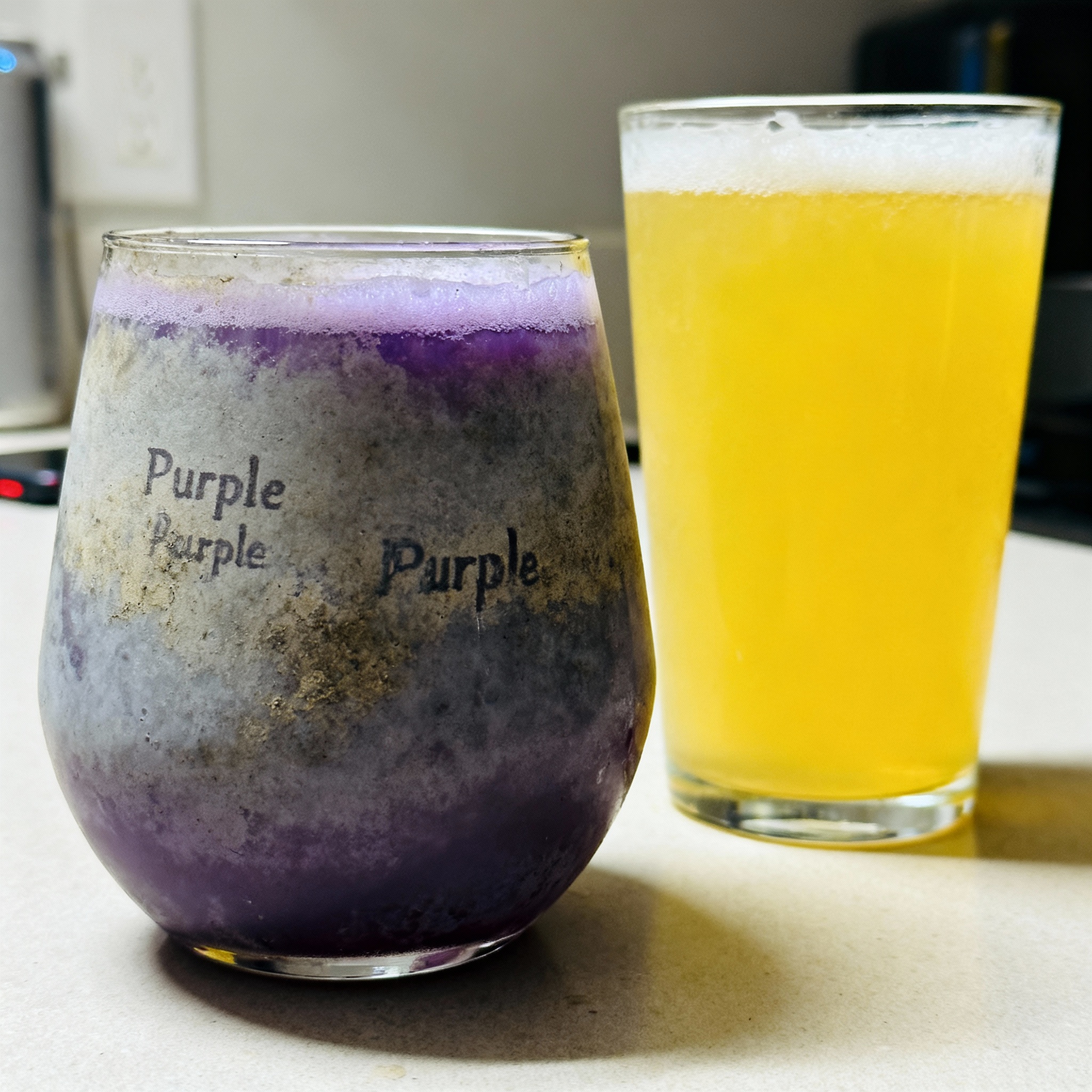
I opened a bottle of my New England IPA three weeks after I brewed it and it looked like dishwater. The bright yellow-orange juice bomb I’d kegged had turned grayish-brown and smelled like oxidation-induced cardboard.
Despite nailing the water chemistry and using London Ale III, I had siphoned it with a standard plastic hose. I didn’t realize that every gurgle was introducing oxygen into the system, effectively erasing all the hop work I had done.
Oxygen is the silent killer of hoppy beers; it doesn’t make your beer sour, it simply erases it. Tropical fruit aromas become paper, haze turns muddy, and bright bitterness becomes harsh and stale.
Hot Side vs. Cold Side Aeration
In the past, brewers obsessed over “hot side aeration” (HSA), fearing that splashing hot wort would lead to premature staling. However, current research suggests that HSA is largely a myth for homebrewers because yeast consumes the initial dissolved oxygen during the growth phase.
The real enemy is cold side oxidation. Once fermentation is complete, your beer lacks the protection of active yeast to scrub out introduced oxygen.
Oxygen reacts with hop-derived polyphenols and lupulin oils (like myrcene) to create oxidized compounds that contribute to a “cardboard” or “sherry” off-flavor. This reaction also triggers the polymerization of polyphenols, which causes the beer to shift from a pale yellow to a muddy brown color.
Every molecule of oxygen that dissolves into finished beer will eventually destroy it. Focus your paranoia on the post-fermentation stage where the beer is most vulnerable.
Don’t worry about splashing hot wort. Save your energy for the cold side transfers where oxygen exposure is irreversible.
Closed Transfers: The CO2 Push
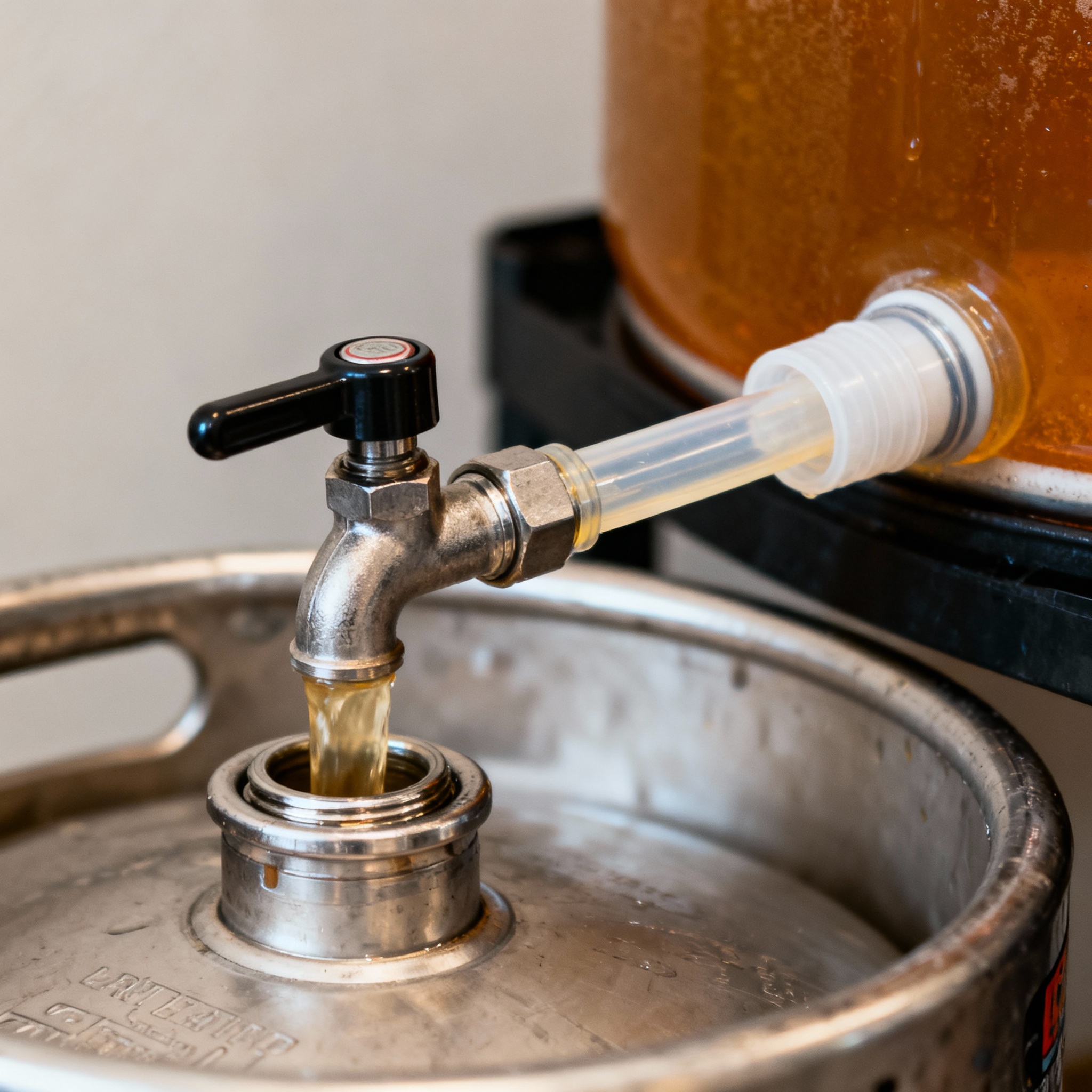
Using a standard gravity siphon is a disaster for hazy IPAs because it relies on air pressure and open vessels. Every splash and every gurgle dissolves oxygen directly into the finished product.
The solution is a closed transfer, where you use carbon dioxide to push the beer from the fermenter to the keg. In this setup, the beer never touches the atmosphere.
Utilizing a pressure-rated fermenter like a FermZilla or a stainless conical from suppliers like MoreBeer! allows for a “true” closed transfer. By equalizing the pressure between the fermenter and the keg, you can move beer through a liquid line using only 2-5 PSI of gas.
If you don’t have a pressure-rated vessel, you can modify a standard bucket lid with a carbonation cap. While not as robust as a conical, it still provides a significant barrier against atmospheric oxygen.
If you are using a bucket, consider a floating dip tube. It allows you to draw beer from the top of the vessel under pressure, ensuring you leave the sediment behind while keeping the system sealed.
Purging Kegs: Liquid vs. Gas
Many brewers on the Homebrew Talk Forum believe that “purging” a keg means hitting it with a few bursts of CO2 and venting. This is inefficient because CO2 and oxygen mix, meaning you are never removing 100% of the air.
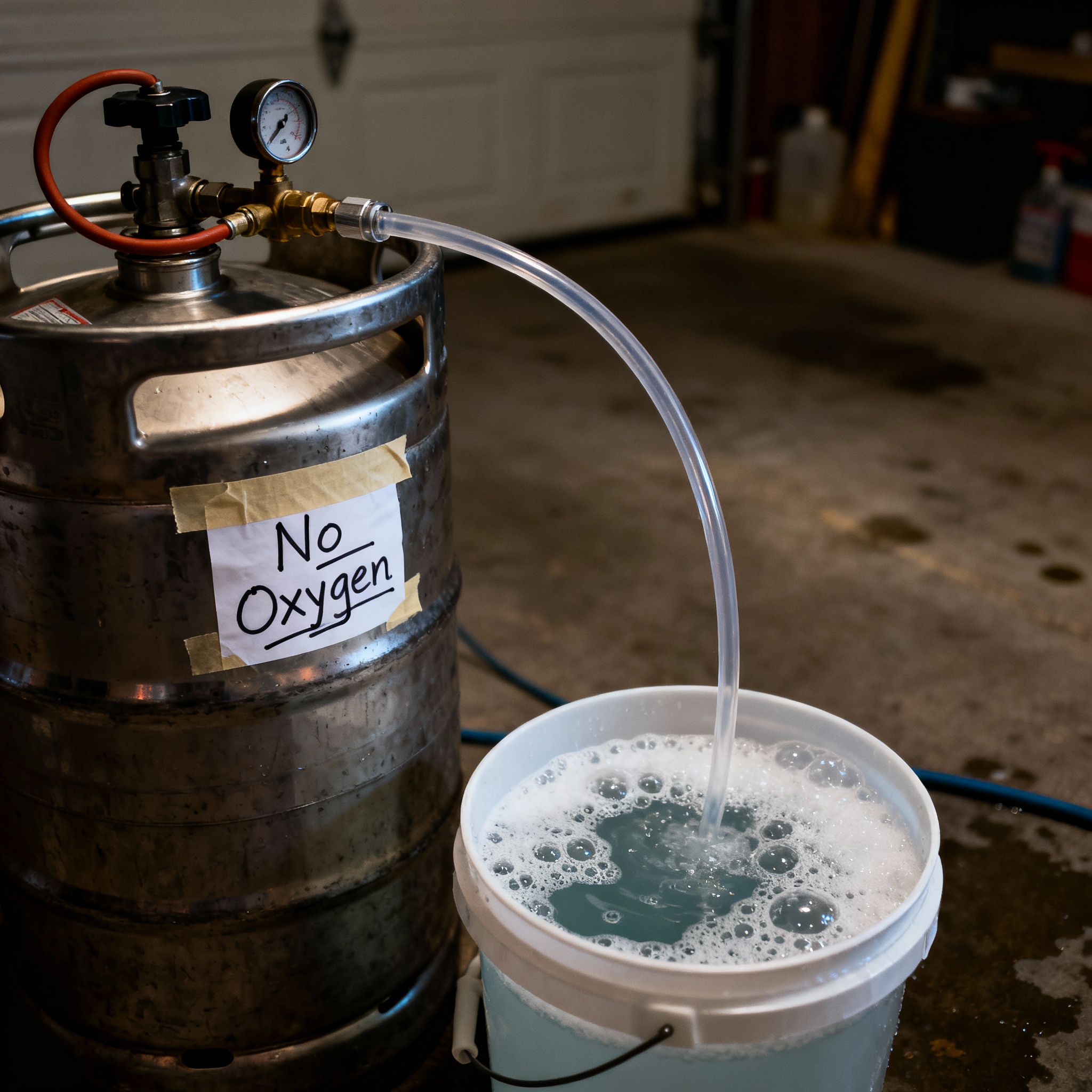
The most effective method is “purging under liquid.” Fill your keg completely with Star San or distilled water so there is no headspace, then push the liquid out with CO2.
Testing with dissolved oxygen meters shows that a gas-purged keg can still harbor 500 ppb of oxygen. A liquid-purged keg drops that level to below 50 ppb, which is the gold standard for commercial hop stability.
This method ensures the keg is filled with near-pure CO2 before the beer enters. Utilizing a Grainfather unit can also help in moving liquids efficiently. To save money, you can push the sanitizer from one keg into the next, reusing the solution for months.
Packaging Barriers: Why Bottling Fails
Bottling New England IPAs with a standard wand is almost impossible without causing oxidation. The beer displaces air in the bottle, but the turbulence dissolves enough oxygen to cause the beer to fade within two weeks.
Commercial-grade results require a counter-pressure filler or a “beer gun.” These tools allow you to purge the bottle with CO2, fill from the bottom under pressure, and “cap on foam” to exclude oxygen.
If you absolutely must use a standard wand, fill the bottle until it slightly overflows and cap it immediately. This small spillover ensures minimal headspace under the cap.
Antioxidants: Chemical Insurance
I use antioxidants like sodium metabisulfite (SMB) or ascorbic acid at packaging as a final layer of protection. These chemicals act as oxygen scavengers, reacting with any stray DO before it can damage the beer.
SMB is particularly effective; I add about 50 milligrams per five-gallon batch. This is enough to neutralize stray oxygen without introducing a noticeable sulfur aroma.
Sodium metabisulfite (SMB) releases sulfur dioxide () in the beer, which binds to dissolved oxygen to form sulfates. This reaction occurs much faster than the reaction between oxygen and hop oils, effectively sacrificing the SMB to protect the flavor.
Always add antioxidants at the point of packaging. If you add them during fermentation, the yeast will metabolize the compounds, rendering them useless for long-term protection.
Conclusion
Oxidation is a slow rot that dulls aroma and muddies color over days and weeks. The only defense is a technical one: keeping oxygen away from cold beer through closed transfers and liquid-purged kegs.
While perfection is difficult in a garage lab, these steps will significantly extend the life of your hoppy beers. Aim for a better process, less waste, and brighter pints.
References
- Janish, Scott. The New IPA: Scientific Guide to Hop Aroma and Flavor. Brewers Publications, 2019.
- Barth-Haas Group. “Hop Aroma and Flavor in Beer: The Role of Antioxidants.” Research Report, 2018.
- HomeBrewTalk Forum. “Dissolved Oxygen Testing in Homebrewed Beer.” 2020.
- Personal Research. Correspondence with Green Man Brewery, Asheville, NC, 2023.