Beyond the Brew: Wreaths, Candy, and Fried Shoots.
I’ve been growing hops in my backyard for seven years. For the first three years, I thought the plant existed for only one reason: to make beer.
I would harvest the cones in late August, dry them, and toss them in the freezer. I used to hack the remaining bines down and drag them to the curb like I was disposing of evidence.
Then one spring, I was walking through a farmer’s market in Belgium and saw a vendor selling “hop shoots” for 80 euros per kilo. They looked like skinny asparagus, and the vendor called them the “white asparagus of spring.”
I realized I’d been composting a small fortune every April. That was the turning point where I began asking what else this plant could do.
Hops are more than a brewing ingredient. You can wear them, eat them, sleep on them, and hang them on your front door. This is a guide to using every part of the hop plant without wasting a single fiber.
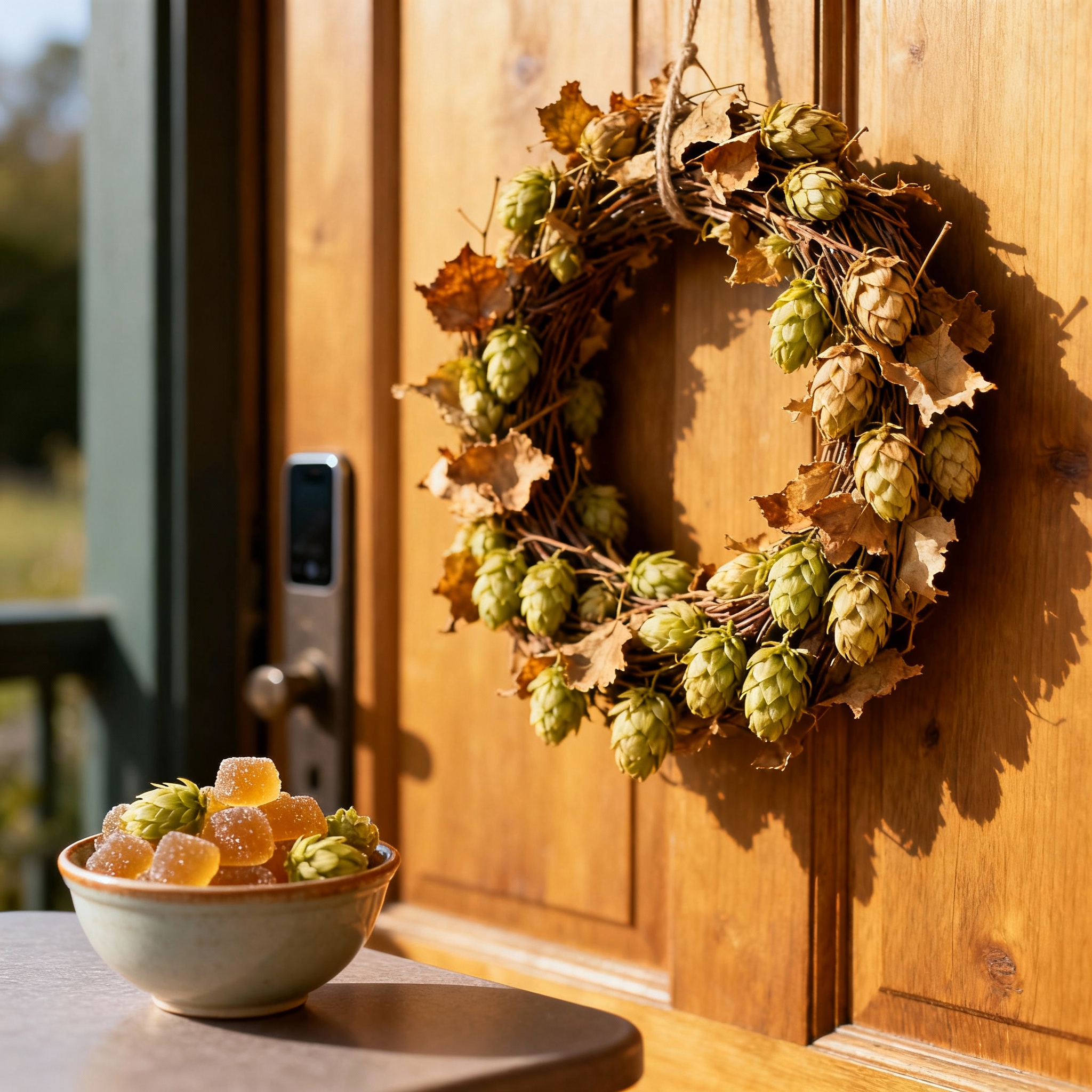
Hop Wreaths and Garlands: The Green Door Hanger
Hop bines are long, twining stems that can grow 20 feet in a single season. When you cut them down in the fall, they are still green, pliable, and covered in papery cones.
I used to toss them until I saw a photo of a rustic hop wreath. It looked incredible, smelled like a brewery, and saved 40 feet of plant matter from the landfill.
Harvest your bines in the morning when they are at their most flexible. As the sun rises, the moisture content drops, making the bines brittle and difficult to coil without snapping.
To make one, secure the green bines to a wire frame or simply twist them into a circle with twine. I hang mine in the garage where there is plenty of airflow but no direct sun to preserve the color.
The cones will fade to a pale yellow, but the stems stay a beautiful greenish-brown. Just remember that died hops are flammable due to their volatile oils.
If your wreath starts to smell musty from the rain, mist it with a 50/50 mix of water and white vinegar. Let it dry in the sun for an hour to kill mildew without damaging the plant fibers.
Hop Candy: The Hard Crack Experiment
I decided to reverse-engineer “hopped caramels” after tasting them at a festival in Portland. The candy features a piney, citrus bite that cuts through the intense sweetness of the sugar.
The base involves cooking sugar, water, and corn syrup to the “hard crack” stage (300°F to 310°F). At this temperature, the mixture will harden into glass once it cools.
At 300°F, the sugar concentration reaches 99%. This prevents the formation of large crystals, resulting in a brittle, glass-like texture rather than a chewy or soft taffy.
Once the sugar hits the target temperature, I turn off the heat and add 10 to 15 drops of hop oil extract. I prefer Citra for its bright citrus profile, but any aromatic hop works.
Pour the mixture onto parchment paper and let it cool for 30 minutes. Once it is hard, crack it into pieces with the back of a spoon for a sweet, bitter, and resinous treat.
If you don’t have hop oil, steep a handful of dried cones in 1/4 cup of boiling water for 10 minutes. Use this tea in place of some of the water in your candy recipe for a milder flavor.
Fried Hop Shoots: The Backyard Delicacy
Every spring, I thin out my hop plants to keep only the strongest bines. I used to discard the excess shoots until I realized they are a high-end delicacy in Europe.
You want to harvest these when they are six to eight inches tall and still tender. If you wait too long, they become woody, bitter, and inedible.
Ensure you are harvesting shoots directly from the hop rhizome. In early spring, many climbing weeds look similar, so verify that the shoot is emerging from your established hop crown.
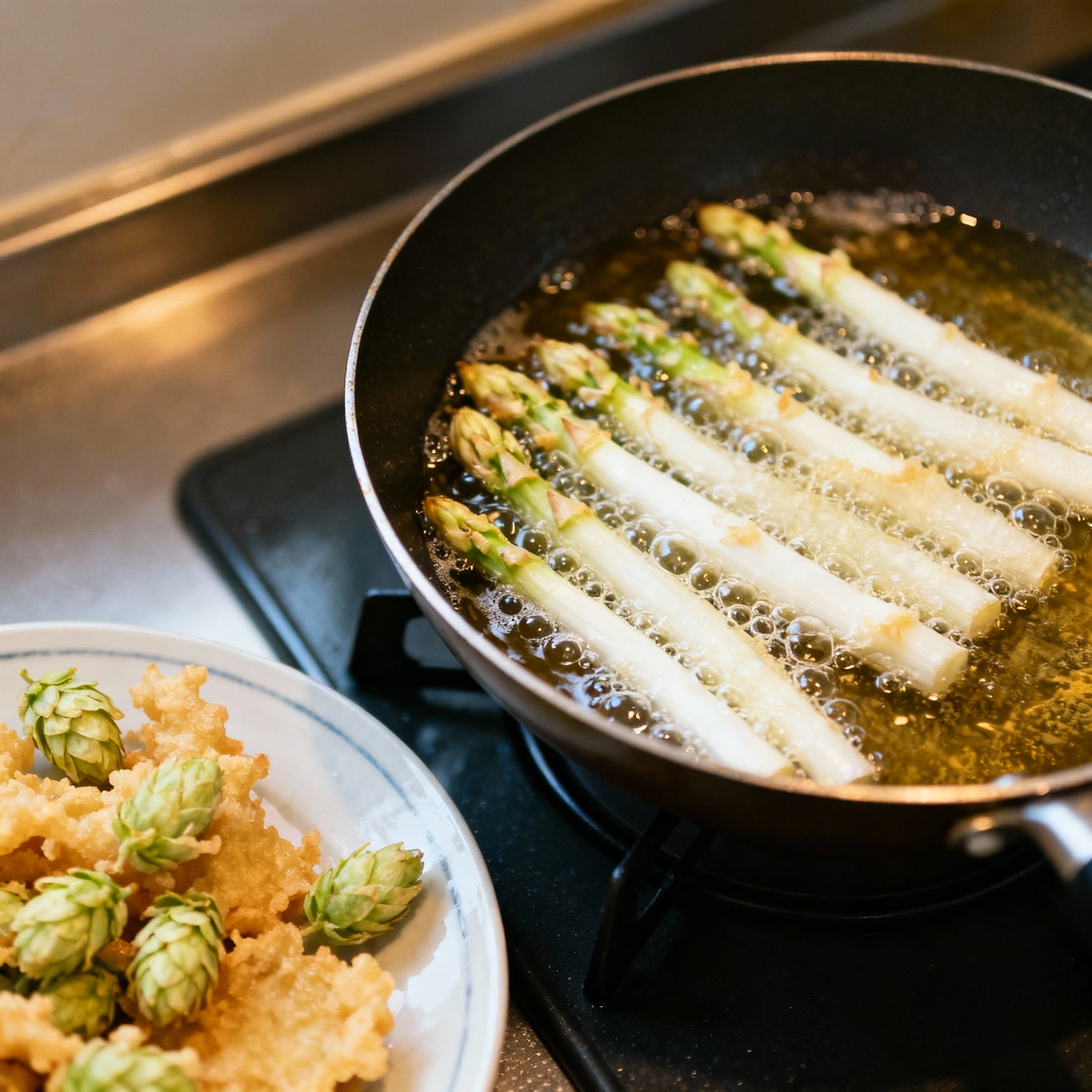
I prefer to prepare them as tempura using cold sparkling water and flour. Fry them in 350°F oil for about 90 seconds until the coating is crisp and pale gold.
The flavor is vegetal and earthy, very similar to a bitter asparagus. It is a fantastic way to get free food from your garden before the brewing season even begins.

Hop Pillows and Tinctures: Natural Sleep Aids
I started making hop pillows during a high-stress period at work. Hops have been used as a mild sedative since the Middle Ages, primarily due to the active compounds in the lupulin.
Lupulin contains humulone and lupulone, which are thought to improve sleep quality. I stuff about two cups of dried, oxidized cones into a small muslin bag.
Place the bag inside your regular pillowcase near your head. The heat from your body releases the aromatic oils, providing a calming, herbal scent throughout the night.
To reactivate an old hop pillow, spritz it lightly with water and microwave it for 10 seconds. This gently warms the internal oils and refreshes the sedative aroma.
For a non-alcoholic bitter, you can also make a hop tincture by soaking cones in 80-proof vodka for two weeks. A few drops in seltzer water tastes remarkably like a light version of Campari.
Compost Safety: Nitrogen and Dog Toxicity
Spent hops are a fantastic nitrogen source for your compost pile. They have a carbon-to-nitrogen ratio of about 15:1, making them a “green” material that breaks down quickly.
However, spent hops are extremely toxic to dogs. Ingesting them can cause a dangerous rise in body temperature known as malignant hyperthermia. (See hop toxicity).
I switched to a closed tumbler-style bin to keep my neighbor’s dogs safe. If you don’t have a secure bin, it is better to dispose of them in the trash than to risk a local pet’s life.
| Hop Part | Best Use | Season | Benefit |
|---|---|---|---|
| Spring Shoots | Frying/Tempura | Early Spring | Culinary delicacy |
| Bines | Wreaths/Garlands | Late Summer | Rustic décor |
| Old Cones | Sleep Pillows | Year-round | Natural sedative |
| Spent Hops | Compost | Brewing days | Nitrogen source |
Conclusion
I still brew beer, but I no longer view the hop plant as a single-use ingredient. It provides a spring vegetable, autumn décor, and a winter sleep aid if you know how to harvest it.
None of these projects require expensive equipment or a chemistry degree. They simply require a little curiosity and a willingness to use what is right in front of you.
Stop hacking your bines down and dragging them to the curb. Next season, try frying the shoots or coiling a wreath, and you’ll find a new appreciation for this versatile plant.
References
- University of Minnesota Extension. “Growing Hops in Minnesota.”
- Schiller, H., & Forster, A. (2006). “Sedative Effects of Hops and Valerian.” Phytomedicine.
- Duncan, K. (2012). The Hop Grower’s Handbook.
- ASPCA Animal Poison Control. “Hops Toxicity in Dogs.”