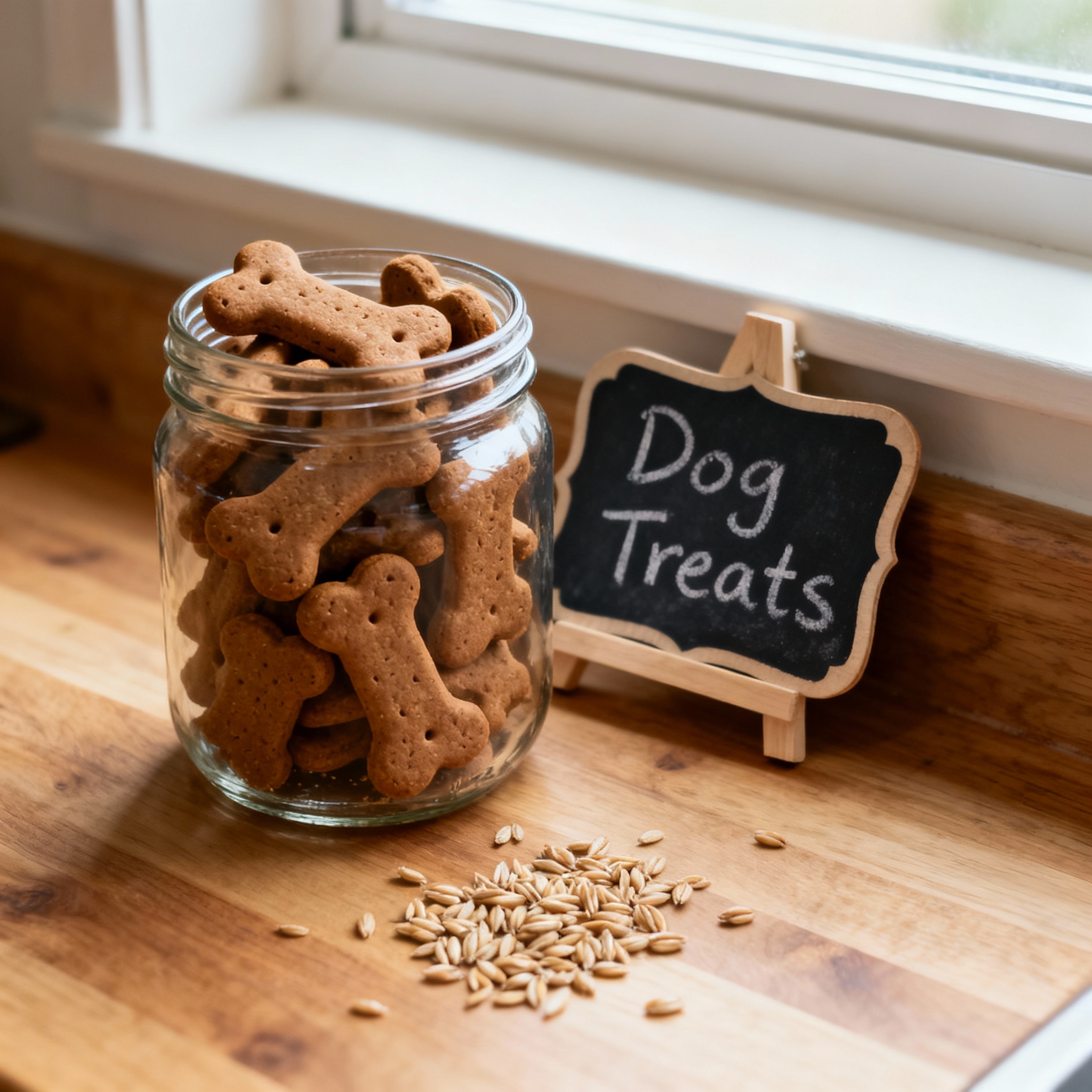
The Brewer's Best Friend: Safe Spent Grain Dog Treats.
My dog, Moose, knows the sound of the grain mill better than his own name. The second I fire up the Monster Mill in the garage, he positions himself exactly where he thinks the grain might fall.
For years, I tossed spent grain into the compost or fed it to a neighbor’s chickens. Then Moose snagged a wet handful off the garage floor, and I realized I was ignoring ten pounds of potential treats after every batch.
Brewing and dogs don’t always mix safely, however. Hops are toxic, grain can mold, and selling these treats requires understanding complex Cottage Food Laws.
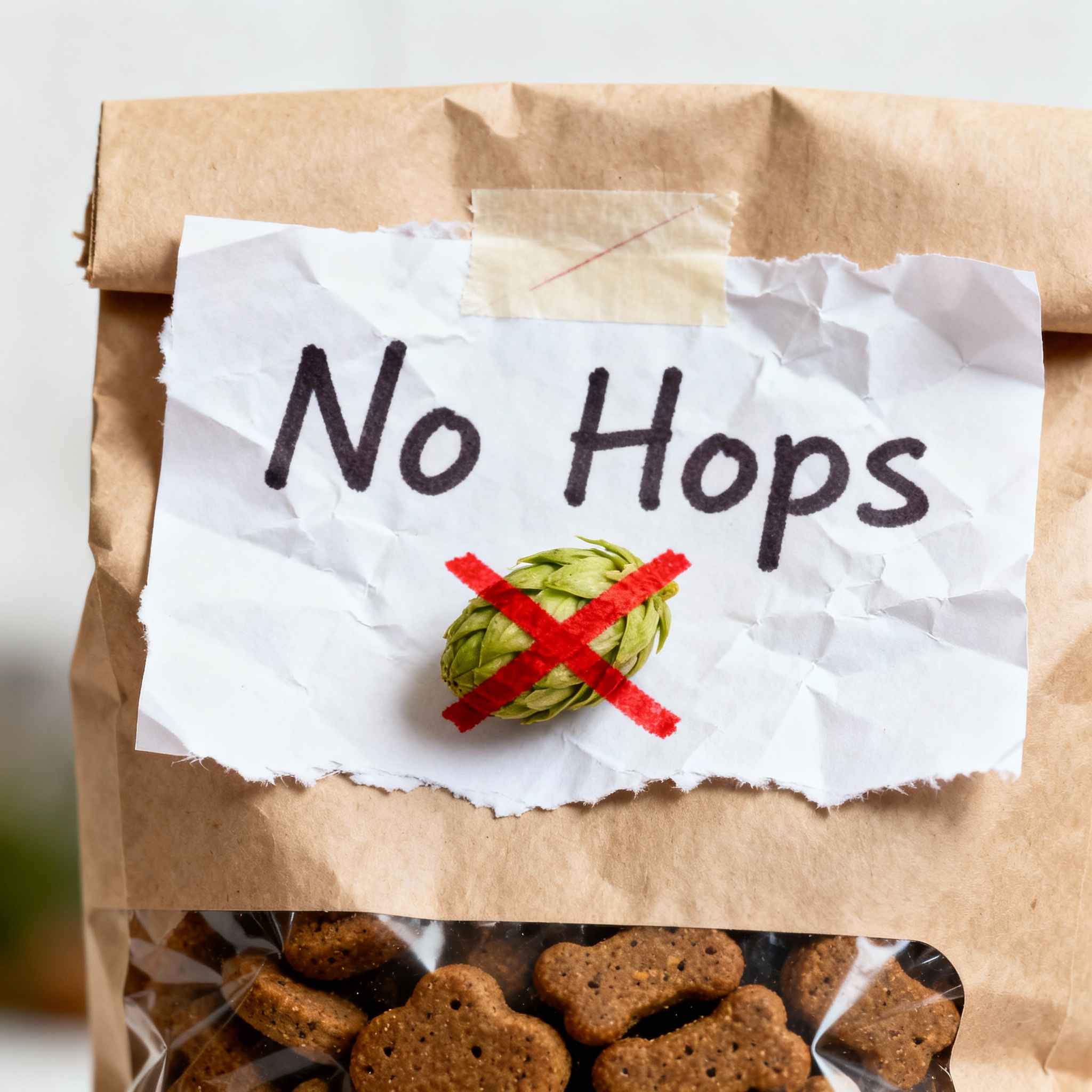
The Golden Rule: NO HOPS
Hops are poisonous to dogs and can cause a fatal condition called malignant hyperthermia. This causes a dog’s body temperature to spike dangerously high, often exceeding 108°F.
Symptoms include heavy panting, seizures, and vomiting; in severe cases, death can occur within six hours. Hops contain compounds that dogs simply cannot metabolize safely.
Ingesting hops triggers an uncontrolled increase in skeletal muscle metabolism. This rapid metabolic rate generates heat faster than the dog can dissipate it, leading to systemic organ failure if not treated immediately by a veterinarian.
I separate my spent grain immediately after the mash and before any hops are added to the boil kettle. I store this grain in a sealed bucket labeled “DOG SAFE” in permanent marker to avoid any confusion during a busy brew day.
If you use the “no-boil” method or add hops to your mash for bittering, that grain is strictly off-limits for treats. If you aren’t 100% sure your grain is hop-free, throw it out.
Instructive Diagram: The “Brewery Safety Zone” workflow for separating safe spent grain from hop-contaminated waste.
Peanut Butter & Bacon Recipe
This is Moose’s favorite recipe because it is savory, crunchy, and uses peanut butter as a binder. Spent grain is mostly fiber and protein, so you need fat and starch to create a dough that holds together.
| Ingredient | Amount | Notes |
|---|---|---|
| Spent Grain | 2 Cups | Squeezed dry |
| Flour | 1 Cup | Whole wheat or oat flour |
| Peanut Butter | 1/2 Cup | Xylitol-free only |
| Egg | 1 Large | Acts as a binder |
| Bacon | 2 Strips | Cooked and chopped fine |
Mix the dry ingredients first, then stir in the egg and peanut butter until a sticky dough forms. Roll it to a 1/4 inch thickness and use a cookie cutter to create the desired shapes.
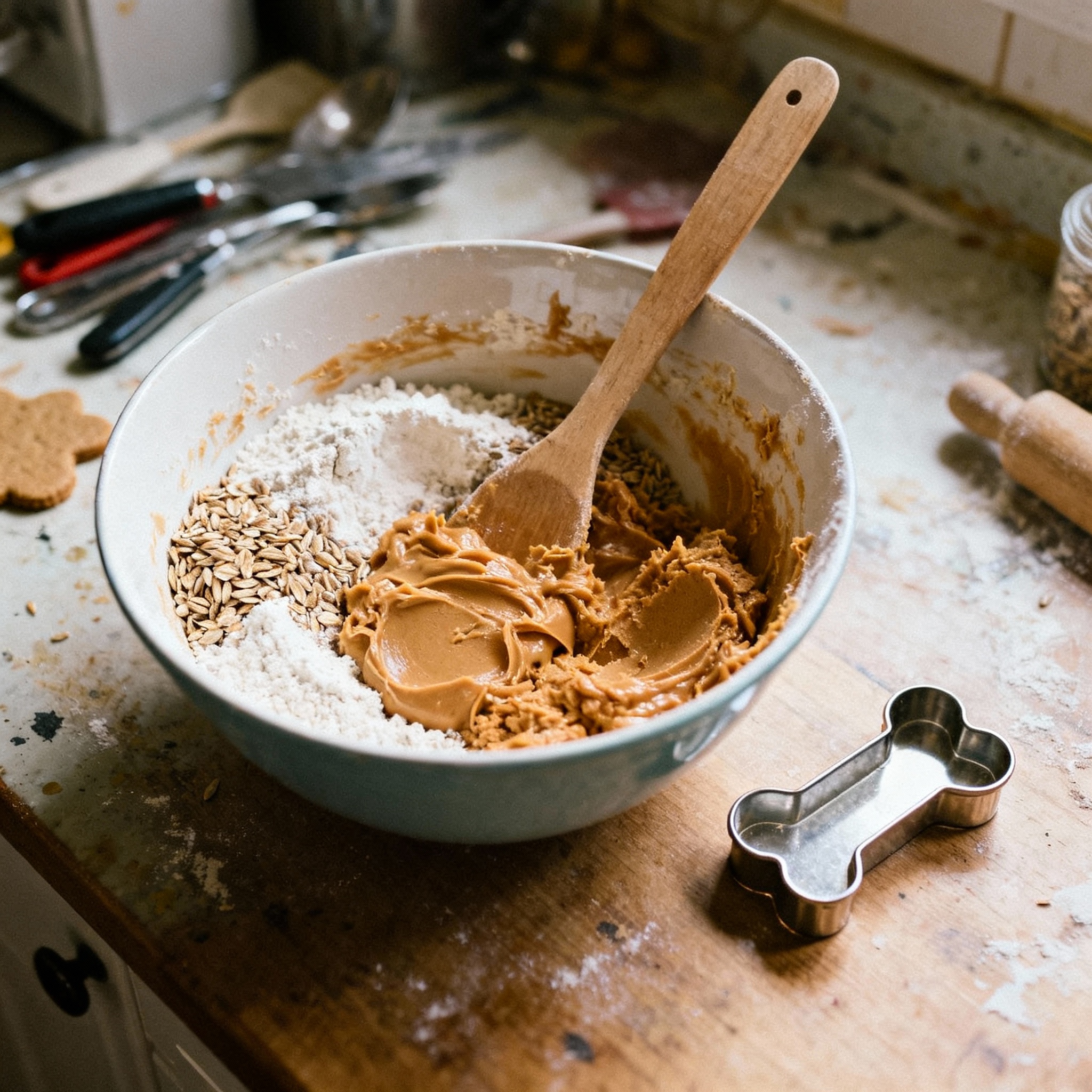
Pumpkin & Turmeric Recipe
This version is designed for dogs with sensitive stomachs or older pups with joint issues. Canned pumpkin is easy to digest, while turmeric acts as a natural anti-inflammatory agent.
I developed this specifically for my neighbor’s senior Beagle, Daisy, who has a history of pancreatitis. The low-fat profile of the pumpkin replaces the bacon and peanut butter from the previous recipe.
Freeze leftover canned pumpkin in ice cube trays for future batches. One cube is typically two tablespoons, which is the perfect measurement for a single batch of treats.
Mix two cups of spent grain with one cup of oat flour, 1/2 cup of pure pumpkin, one egg, and 1/2 teaspoon of turmeric. Bake these exactly like the peanut butter version to ensure a consistent crunch.
Baking for Crunch: Preventing Mold
The secret to a shelf-stable treat is removing as much moisture as possible to prevent mold growth. Wet treats can produce aflatoxins, which are highly toxic to both dogs and humans.
Bake your treats at 300°F for 30 minutes, then flip them and bake for another 30 minutes. This “low and slow” method ensures the center is dry without burning the edges.
Aflatoxins are poisonous carcinogens produced by certain molds (Aspergillus flavus) that grow on damp grains. Proper dehydration below a 10% moisture threshold is the only way to ensure the treats are safe for long-term storage in a jar.
Once baked, let the treats cool on a wire rack for at least an hour. Never bag them while they are warm, as condensation will form and trigger mold growth within 48 hours.
Turning Treats Into a Side Hustle
Many brewers consider selling these at farmers markets, but dog treats often fall into a regulatory gray area. In many states, pet food is regulated more strictly than human “cottage foods”.
You may need to register with your state’s Department of Agriculture and provide a “guaranteed analysis.” This involves lab testing to confirm the exact percentages of protein, fat, fiber, and moisture.
I also recommend looking into liability insurance if you plan to sell to the public. Dogs can have unexpected allergies, and insurance provides peace of mind in case a customer’s pet has a reaction.
Start by gifting treats to friends and neighbors to gauge interest. Don’t invest in lab testing and registration fees until you are certain you have a high enough volume to offset the costs.
Conclusion
Spent grain dog treats are the perfect way to close the loop on your brewery waste. Your pup gets a high-protein reward, and you get to feel better about using every ounce of your malt.
Always remember the golden rule: keep the hops in the kettle and out of the treats. By following these safety protocols and baking low and slow, you’ll have the happiest dog on the block.
Moose is currently snoring under my desk after a successful “tasting session.” That kind of enthusiasm makes every extra minute in the kitchen worth it.
References
- ASPCA Animal Poison Control Center. “Hops Toxicity in Dogs.” 2019.
- Brutlag, A., & Hovda, L. “Hops Ingestion in Dogs: A Retrospective Study.” 2012.
- North Carolina Department of Agriculture. “Pet Food Registration Requirements.”
- Cline, M., & Murphy, M. “Nutritional Benefits of Turmeric in Canine Diets.” 2020.