Irish Red Ale: Malt, Roast, and Dryness
Introduction: More Than Just Food Coloring
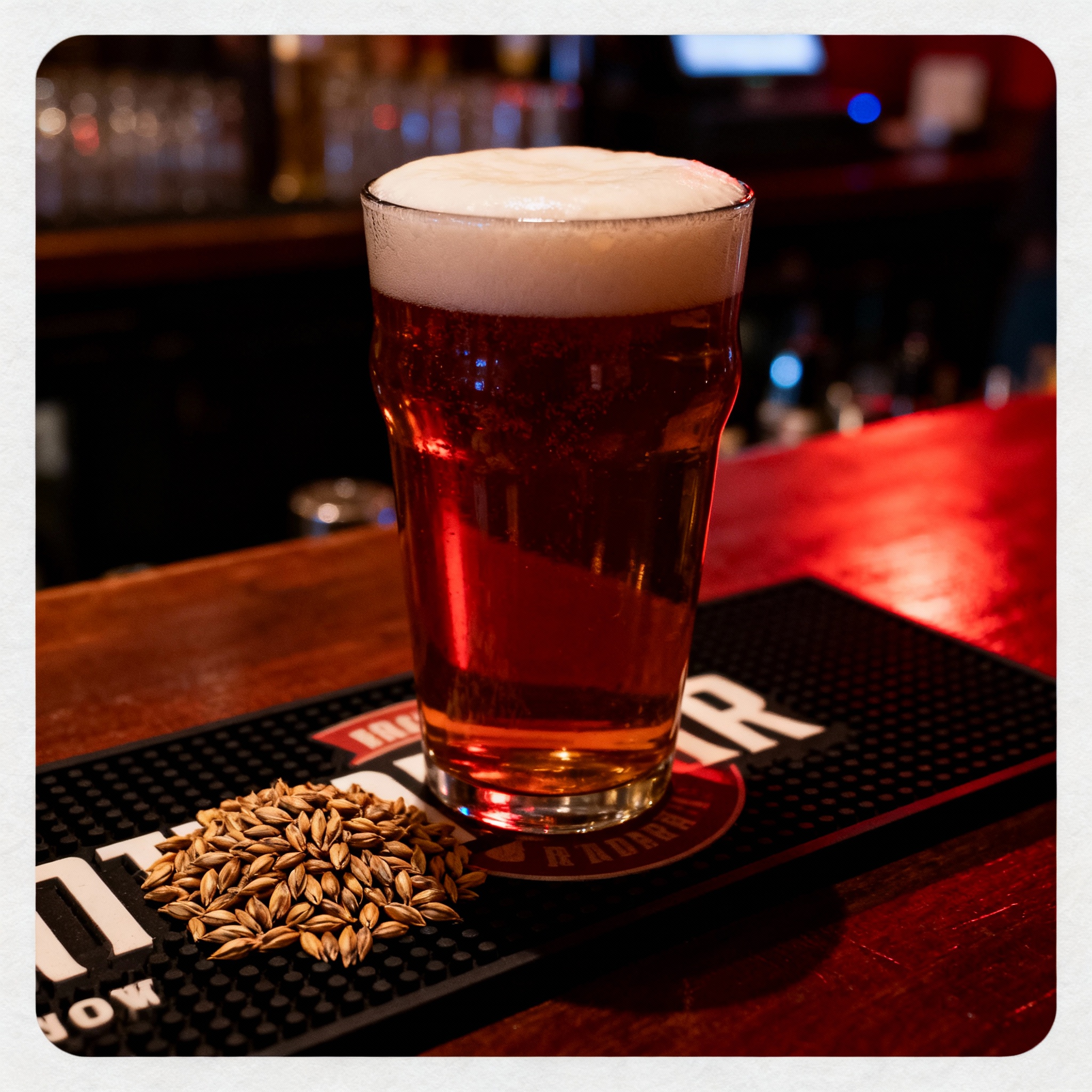
The color in a proper Irish Red doesn’t come from piling on sweet malts or fancy crystal blends. It comes from a trace amount of roasted barley, the same grain that makes Guinness black.
You use so little that it doesn’t turn the beer into a stout, but just enough to provide a deep ruby color. This creates a dry, biscuity finish that makes the beer highly sessionable and clean.
This isn’t a sweet beer or a caramel bomb; it is a working-class ale meant to be consumed in pints. If you have been treating Irish Red like amber ale with red dye, this guide will correct your technical approach.
The Color: Roasted Barley vs. Crystal Malt
Most homebrewers mistakenly assume that red color must come from heavy crystal malt additions. The problem is that crystal malts contain non-fermentable sugars that make the beer overly sweet and heavy.
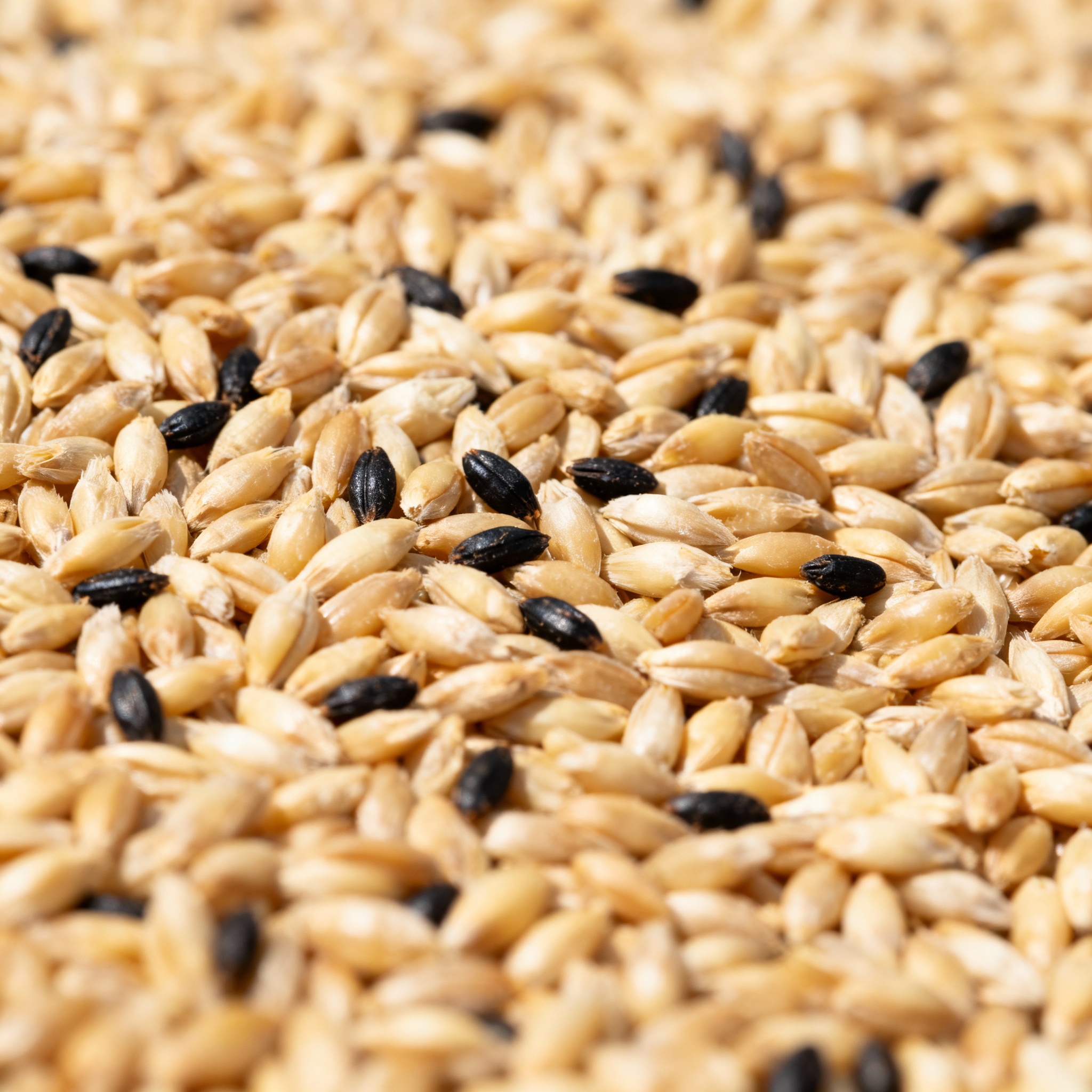
The secret to a authentic Irish Red is using roasted barley for exactly 2 to 3 percent of the total grain bill. In a five-gallon batch, this equates to roughly 4 ounces of grain.
Roasted barley undergoes intense pyrolysis during the roasting process, creating dark pigments that are highly soluble in wort. Even at 2% of the grist, these pigments provide a brilliant red highlight without adding the coffee or acrid flavors found in stouts.
Roasted barley contributes almost no sweetness because the sugars have been carbonized at high heat. This provides the signature “dry” finish that allows for high drinkability and a clean palate.
If you cannot find roasted barley, you can substitute with Carafa Special II (dehusked). Cut the amount in half, as Carafa is smoother and more concentrated in its color contribution.
The Yeast: Clean Irish Strains
Irish ale yeast is designed to stay out of the way of the malt profile. It is clean, neutral, and ferments the beer without throwing off the fruity esters found in English strains.
Common strains like Wyeast 1084 or WLP004 are supposedly descended from the Guinness strain. They produce a slight minerality and a soft, chalky finish that fits the style’s crisp profile perfectly.
Fermenting Irish strains at 62-65°F (17-18°C) suppresses the production of ethyl acetate and isoamyl acetate. This prevents the “peachy” ester profile of an English Bitter from developing in your Irish Red.
Attenuation is critical for this style, with targets usually sitting between 1.008 and 1.012. This dryness is intentional, ensuring the beer remains light enough for sequential pint consumption.
Pitch a full starter or two packs of yeast to avoid sulfur production. Underpitching stresses the yeast, leading to phenolic off-flavors that are difficult to age out of a session ale.
Bitterness: Restrained Hopping
Irish Red is not a hoppy beer, and your hopping rate should reflect that with a target of 18 to 28 IBUs. This is just enough to balance the malt without drawing any attention to the hop character itself.
I recommend a single 60-minute bittering addition using neutral varieties like East Kent Goldings or Fuggle. Avoid late-hop additions or dry hopping, as citrusy or piney aromas will clash with the delicate malt profile.
For a standard 1.050 OG Irish Red, an IBU/OG ratio of roughly 0.4 to 0.5 is ideal. This ensures the bitterness is functional (preventing a cloying finish) rather than a primary flavor driver.
If you are extract brewing, use light liquid malt extract and steep your own roasted barley. Avoid amber or dark extracts, as they contain unknown amounts of caramel malts that reduce your control over the final sweetness.
Caramel Notes: Body and Toffee
While roasted barley provides the color, a small amount of Crystal 40 or 60 is essential for mouthfeel. This provides a soft toffee sweetness and a fuller body without making the beer syrupy.
Limit these additions to 5 to 8 percent of the grain bill. This provides unfermentable sugars that give the beer enough structure to prevent it from feeling thin or watery.
Crystal malts provide complex dextrins that are not fermentable by standard ale yeast. These molecules increase the viscosity of the beer, providing a “chewy” mid-palate that balances the dry finish provided by the roasted barley.
Serving: Carbonation and Nitrogen
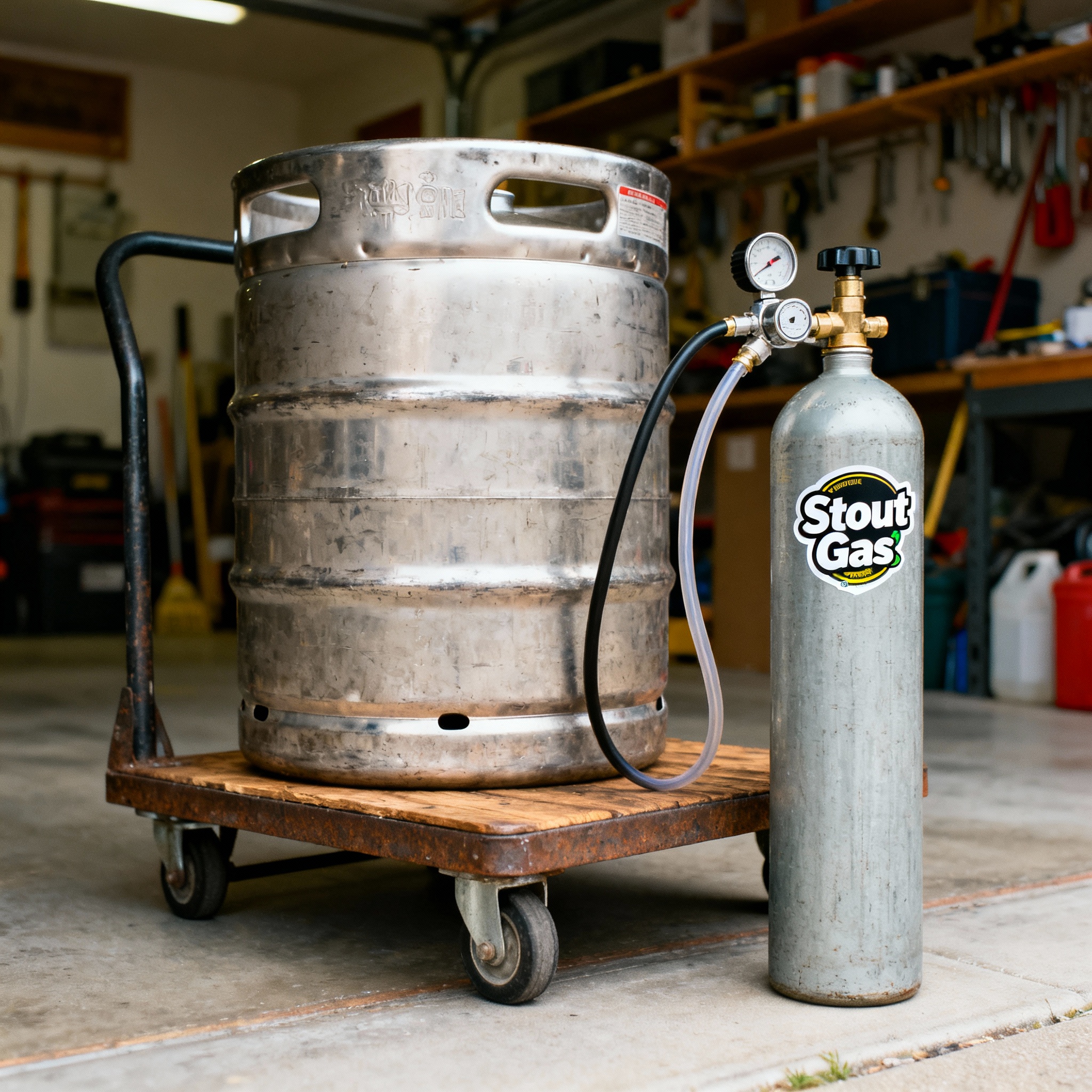
How you serve an Irish Red changes the sensory experience entirely. While standard CO2 carbonation is fine, the style truly shines when served on a nitro system.
Nitrogen gas creates smaller bubbles and a creamy, velvety mouthfeel that softens the perception of bitterness. If you are using CO2, aim for a lower carbonation level of 2.2 to 2.3 volumes to keep the mouthfeel smooth.
Serve Irish Red cool (50-52°F) rather than ice-cold. Serving at 38°F mutes the delicate malt flavors and makes the beer taste watery and one-dimensional.
Grain Bill Example (5-Gallon Batch, 1.050 OG)
| Ingredient | Amount | Percentage |
|---|---|---|
| Maris Otter | 8.5 lbs | 87% |
| Crystal 40 | 4 oz | 2.5% |
| Crystal 60 | 4 oz | 2.5% |
| Roasted Barley | 4 oz | 2.5% |
| Victory Malt | 5 oz | 3.2% |
- Mash: 152°F for 60 minutes.
- Hops: 1.2 oz East Kent Goldings (5% AA) at 60 minutes.
- Target IBU: 22-24.
- Target FG: 1.010-1.012.
Conclusion
Irish Red is a study in restraint and technical balance. The roasted barley provides color and dryness, while the yeast and hops stay in the background to let the malt shine.
It is a difficult style to master because there are no bold flavors to hide mistakes. When executed correctly, however, it remains one of the most satisfying and sessionable beers in a brewer’s repertoire.
References
- Palmer, J. (2017). How to Brew. Brewers Publications.
- Hieronymus, Stan. For the Love of Hops: The Practical Guide to Aroma, Bitterness and the Culture of Hops. Brewers Publications, 2012.
- BJCP Style Guidelines. 2021 Edition.
- Zainasheff, J., & Palmer, J. Brewing Classic Styles. Brewers Publications, 2007.