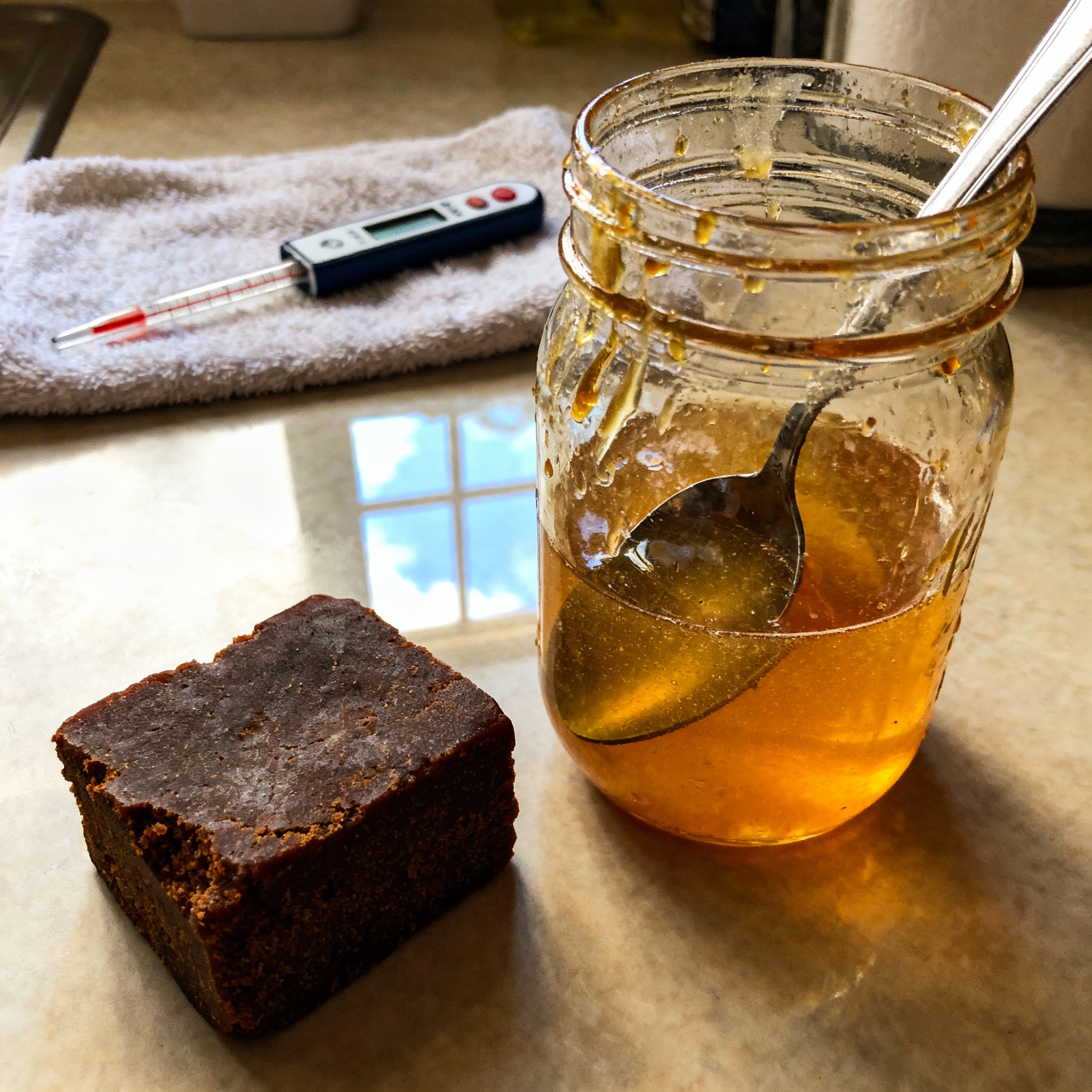
Brewing Sugars: Golden Syrup, Jaggery, and Candi.
I ruined a perfectly good batch of English Bitter once. It was supposed to be malty, rich, and balanced.
Instead, it tasted like watered-down apple juice with a fizzy finish. The culprit?
I dumped in a pound of white table sugar because it was cheap and sitting in my pantry. The yeast ate it up, spiked the ABV, and left nothing behind except regret and a thin, cidery mess.
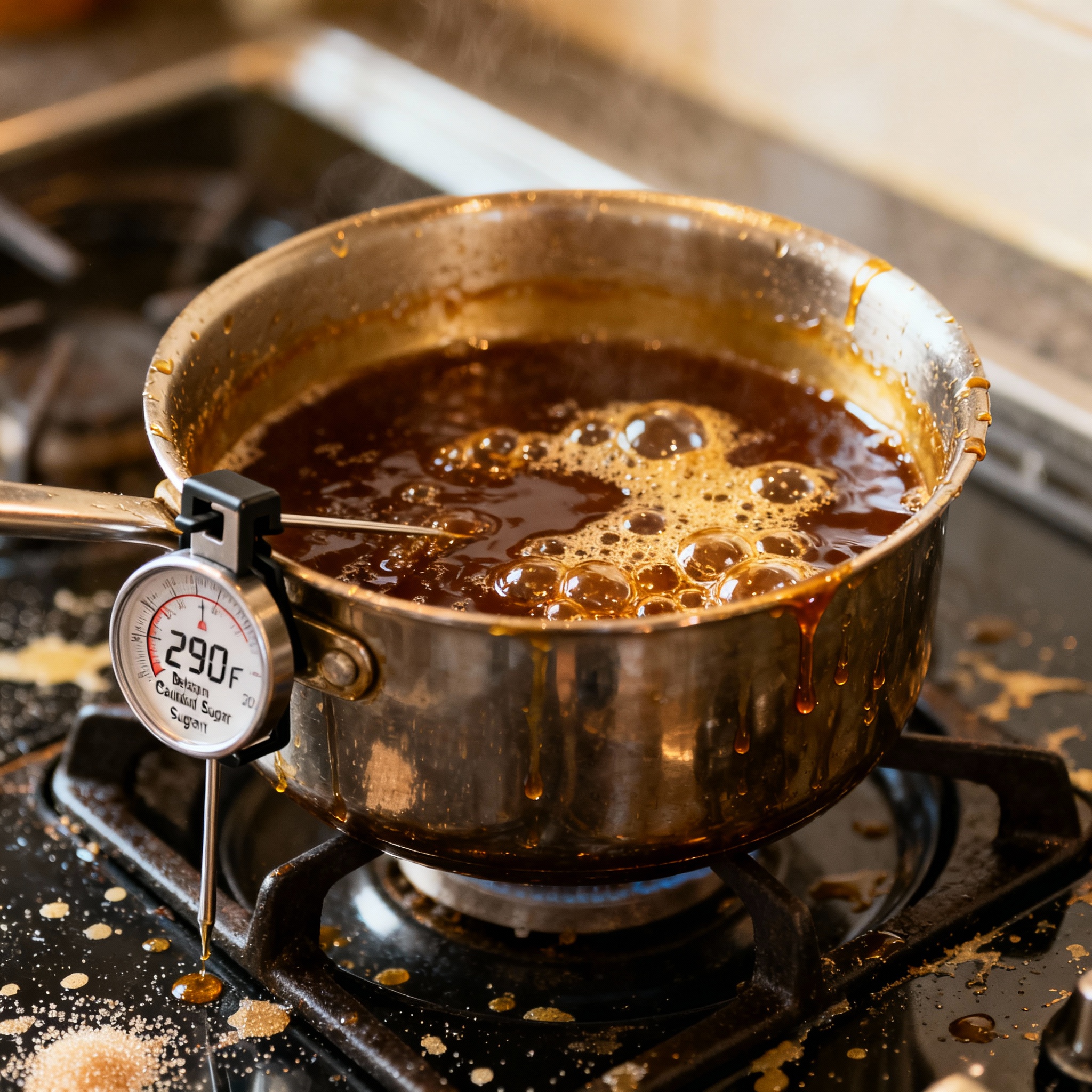
That was the day I learned sugar isn’t just sugar. It’s not just a tool to push alcohol higher.
It’s an ingredient. And like any ingredient, the type of sugar you choose changes everything.
Use the wrong one, and you get a hollow brew. Use the right one, and you unlock flavors you didn’t even know were possible.
This guide is about those sugars. The ones that do more than just feed yeast.
The ones that add complexity, body, or a specific finish you can’t get from malt alone. I’m talking about golden syrup, jaggery, Belgian candi, honey, molasses, and the technical players like dextrose and lactose.
I’ll walk through what each one does, when to use it, and how to avoid the mistakes I made in my garage lab.
The British Secret: Golden Syrup (Invert Sugar) vs. Corn Sugar
If you’ve ever brewed an English Bitter or a Barleywine, you’ve probably seen recipes call for “invert sugar” or golden syrup. For years, I ignored it.
I thought, “Why pay extra for fancy syrup when I have corn sugar sitting right here?” Big mistake.
Golden syrup is invert sugar. That means the sucrose (table sugar) has been broken down into glucose and fructose through an acid or enzymatic process.
Chemically, it’s already partially digested for the yeast. But the magic isn’t just in the chemistry.
It’s in the flavor. Golden syrup has a gentle, toasty sweetness that corn sugar (dextrose) just doesn’t have.
Corn sugar is clean and neutral. It ferments completely and adds alcohol without adding character.
That’s great if you’re making a Saison or a Pilsner and you want to keep things crisp. But in a traditional English ale, you want that subtle caramel note.
You want the roundness. I finally tested this side by side.
I split a batch of ESB into two fermenters. One got corn sugar; the other got Lyle’s Golden Syrup (the stuff in the green and gold tin).
Same malt bill, same hops, same yeast. The corn sugar version finished dry and sharp.
It was drinkable, but forgettable. The golden syrup version had a soft, biscuity finish that tied the whole beer together.
It didn’t taste sweet (the yeast ate all the sugar), but it left behind this impression of richness.
Golden syrup is also more forgiving than table sugar. Because it’s already inverted, it ferments smoothly without stressing the yeast.
I’ve used it in Belgian Dubbels, too, and it blends beautifully with dark malts. You can make your own invert sugar at home by heating table sugar with water and a bit of lemon juice or cream of tartar.
Honestly, a tin of Lyle’s is cheap enough that I don’t bother. I keep one in the cupboard at all times.
Add golden syrup during the last 15 minutes of the boil. It’s thick and sticky, so I warm the tin in hot water first to make it easier to pour. For a 5-gallon batch of Bitter, I use about 8 ounces (half a pound).
Unrefined Sugars: Using Jaggery and Piloncillo
Here’s where things get earthy. Jaggery (Indian unrefined cane sugar) and piloncillo (Mexican unrefined cane sugar) are both minimally processed.
They’re made by boiling down sugarcane juice or palm sap until it solidifies into blocks. No refining, no bleaching, no stripping of minerals.
What you get is a sugar that tastes like molasses, caramel, and sometimes a little bit like soil (in a good way). I first used jaggery in a dark ale after a trip to an Indian grocery store.
I was looking for interesting fermentables, and I found a brick of palm jaggery for two dollars. The label was half in Tamil, and I had no idea what I was doing.
But I thought, “If this works in chai, maybe it works in beer.” It did. Sort of.
Jaggery is intensely flavorful. It has this deep, almost smoky sweetness that pairs beautifully with roasted malts.
I used about 12 ounces in a 5-gallon Porter, and it added a layer of complexity that reminded me of dark rum. The problem is that it doesn’t dissolve easily.
I had to chop it into chunks with a knife and simmer it in a small pot of water before adding it to the boil. Even then, it left some sediment in the kettle.
But the flavor was worth the hassle. Piloncillo is similar, but it’s made from cane sugar instead of palm.
It has a lighter, more caramel-forward profile. I used it in a Mexican-inspired Lager (basically a Vienna Lager with a twist), and it added a gentle sweetness that didn’t overpower the malt.
Both jaggery and piloncillo ferment out almost completely, so they don’t leave residual sweetness. They just leave flavor.
One thing to watch out for: these sugars contain minerals and impurities that can stress yeast if you use too much. I’ve had sluggish fermentations when I went overboard.
Stick to 5 to 10 percent of your total fermentables, and make a healthy starter if you’re using liquid yeast. Also, because they’re unrefined, the flavor can vary batch to batch depending on where the sugar was made.
I’ve had some jaggery that was mild and others that tasted like burnt toffee. It’s part of the charm, but it also means you need to taste it first.
Dissolve jaggery or piloncillo in a small pot of boiling water before adding it to your kettle. This prevents clumps and makes sure it mixes evenly. I usually aim for 8 to 10 ounces per 5-gallon batch.
Belgian Candi Syrup: The Maillard Reactions in D-45 to D-180
Belgian Candi Syrup is the crown jewel of brewing sugars. It’s also the most misunderstood.
A lot of homebrewers think it’s just caramelized table sugar. It’s not.
Real candi syrup (the kind made by companies like Dark Candi Inc.) undergoes Maillard reactions, not just caramelization. That’s the difference between making beer that tastes like a Trappist ale and beer that tastes like burnt sugar water.
Maillard reactions happen when sugars and amino acids interact under heat. It’s the same chemistry that makes bread crust brown and steak develop a crust.
In candi syrup, this creates dark, raisin-like, rum-forward flavors that you can’t get from caramel alone. Caramelization is just the breakdown of sugar (sucrose) into simpler sugars under heat.
I learned this the hard way. I tried making my own “candi syrup” by heating table sugar in a pan until it turned dark brown.
I added it to a Dubbel, and the result was… okay. It had color, but the flavor was flat.
It tasted like burnt sugar, because that’s exactly what it was. When I finally bought a bottle of D-90 candi syrup, the difference was night and day.
The beer had layers: dried fruit, dark chocolate, and a hint of cherry. It was everything I wanted.
Candi syrups come in different grades based on color and intensity. D-45 is light and mildly sweet, good for Tripels or Golden Strongs.
D-90 is darker and works well in Dubbels. D-180 is the nuclear option, almost black, with intense molasses and raisin flavors.
I use it sparingly in Quads because it can dominate the malt if you’re not careful. The other thing to know is that candi syrup is expensive.
A pound of D-90 costs about ten dollars. For a 5-gallon batch, I usually use 8 to 16 ounces.
There’s no real substitute if you want authentic Belgian character. I’ve tried making it at home using various methods, and none of them come close.
I treat it like a specialty ingredient, the same way I’d treat expensive hops or a rare yeast strain.
Add candi syrup during the last 10 minutes of the boil. It’s already sterile, so you don’t need to boil it for long. For a Dubbel, I use 12 ounces of D-90 per 5 gallons.
Honey and Molasses: Managing Dryness vs. Metallic Notes
Honey and molasses sit on opposite ends of the flavor spectrum. Honey ferments out almost completely, leaving behind a dry, sometimes floral finish.
Molasses is rich, heavy, and can taste metallic if you use too much. Both are tricky, but both have their place.
I love using honey in Saisons and Belgian Blondes. It’s a clean fermentable that adds alcohol without heaviness.
The problem is that most of the honey flavor disappears during fermentation. Yeast eats the sugars and leaves almost nothing behind except a faint floral note.
If you want honey flavor in the finished beer, you need to add it late or use a lot of it upfront. I made a honey Saison last summer using wildflower honey from a local farm.
I added 2 pounds during the boil. The beer finished bone dry (1.002 specific gravity), but the honey character was subtle.
It worked, but it wasn’t the “honey bomb” I was hoping for. If I do it again, I’ll add some honey post-fermentation to boost the aroma.
Molasses is the opposite problem. It has a strong, assertive flavor that can turn metallic or acrid if you overdo it.
I learned this the hard way with a Pumpkin Ale. I added a full cup of blackstrap molasses (the darkest, most mineral-rich kind) to a 5-gallon batch.
The result was unpleasant. The beer had a burnt, almost rusty aftertaste.
Since then, I’ve learned to use light or medium molasses and keep the amount under 4 ounces per 5 gallons. It’s enough to add a rich, toffee-like depth without crossing into metallic territory.
Molasses works well in Porters, Stouts, and winter ales where you want that dark, earthy sweetness.
For honey, choose a variety with a strong aroma like orange blossom. For molasses, add it early in the boil so the harshness has time to mellow.
Dextrose vs. Lactose: The Tool for Drying Out IPAs vs. Sweetening Milk Stouts
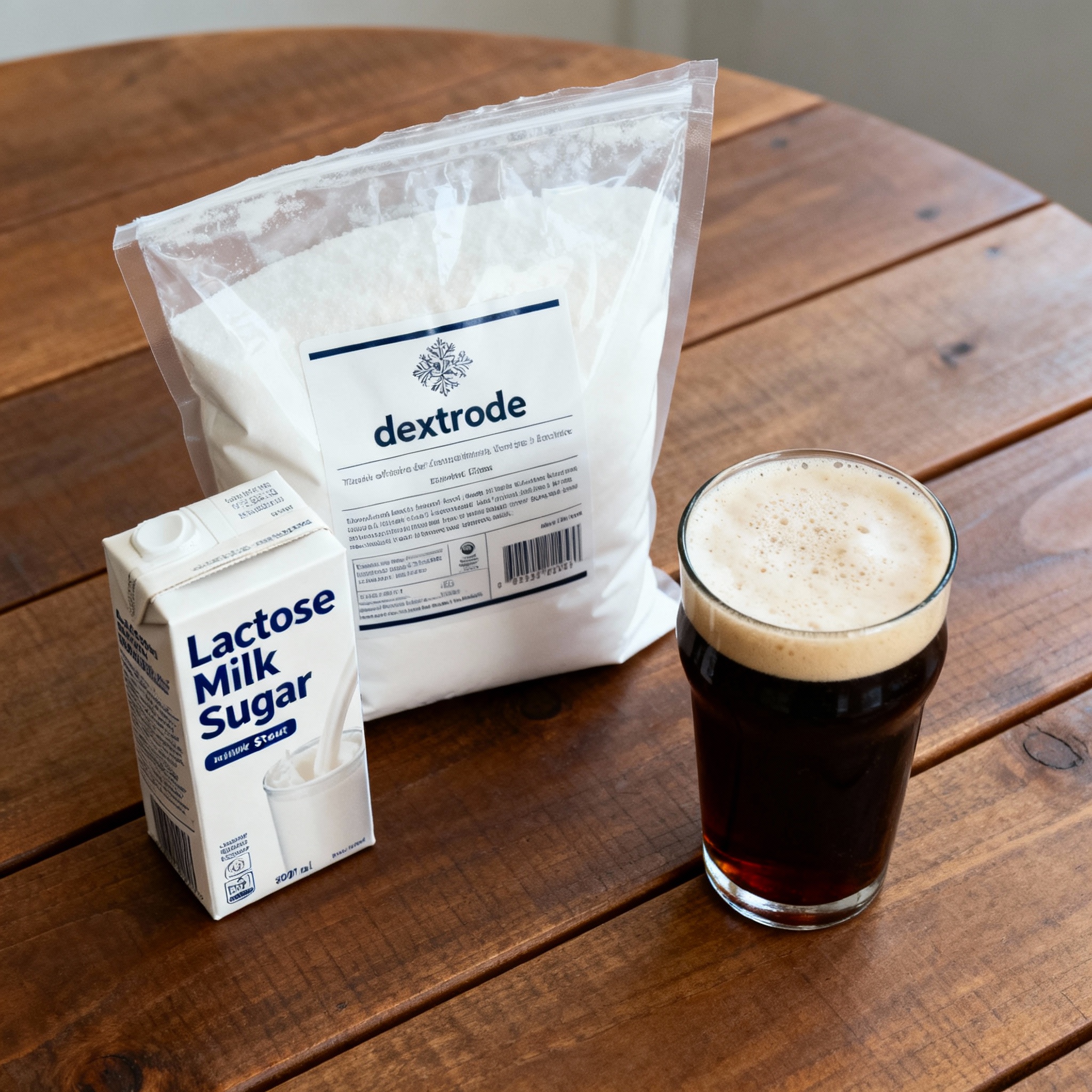
These two sugars are polar opposites. Dextrose (corn sugar) is 100 percent fermentable.
Lactose (milk sugar) is 0 percent fermentable. One dries out your beer. The other sweetens it.
Both are incredibly useful if you know when to use them. I use dextrose in IPAs, Saisons, and Belgian Strongs when I want to boost alcohol without adding body.
Yeast ferments it completely, which drops the final gravity and makes the beer feel lighter on the palate. This is especially important in hazy IPAs where you want a juicy mouthfeel but not a syrupy finish.
I’ll add 8 to 12 ounces of dextrose to a 5-gallon batch, usually during the last 10 minutes of the boil. It’s cheap, it dissolves instantly, and it doesn’t add any flavor.
Lactose is the opposite. It’s a non-fermentable milk sugar derived from milk, and brewer’s yeast can’t ferment it.
That means it stays in the beer as residual sweetness. I use it in Milk Stouts, Pastry Stouts, and fruited sours where I want a creamy, soft finish.
The classic ratio is about 8 ounces (half a pound) per 5 gallons. This gives you a gentle sweetness without making the beer cloying.
One thing to watch out for: lactose can settle out during fermentation, so make sure you stir it in thoroughly. I add it during the last 15 minutes of the boil and give it a good stir.
Also, lactose isn’t vegan. If you’re brewing for someone with dietary restrictions, label it clearly.
I once made a Coffee Milk Stout with 12 ounces of lactose, and it was dangerously good. The sweetness balanced the roasted bitterness of the coffee, and the mouthfeel was like velvet.
My only complaint was that it was too easy to drink. I finished a growler in one sitting and regretted it the next morning.
For dextrose, add it in the last 10 minutes of the boil to reduce scorching risk. For lactose, dissolve it fully in boiling water before adding to the kettle to prevent clumping.
Conclusion
Sugar is not filler. It’s not just a cheap way to push ABV higher.
It’s a tool, and like any tool, it works best when you choose the right one for the job. Golden syrup brings richness to English ales, while jaggery adds earthy depth.
Belgian candi syrup unlocks Maillard magic, and honey dries things out beautifully. Dextrose lightens the body, and lactose adds creaminess where you need it most.
I’ve wasted batches by treating sugar like an afterthought. I’ve also saved batches by choosing the right sugar and using it thoughtfully.
The key is understanding what each sugar does, not just chemically, but flavor-wise. Measure it. Taste it. Track the results.
That’s how you go from making “pretty good” beer to making something worth sharing.
Quick Reference Table
| Sugar Type | Fermentability | Flavor Profile | Best Use | Typical Amount (5 gal) |
|---|---|---|---|---|
| Golden Syrup | High | Toasty, biscuity | English Bitters, Barleywine | 8-12 oz |
| Jaggery | High | Earthy, molasses, rum | Porters, Dark Ales | 8-10 oz |
| Piloncillo | High | Caramel, toffee | Vienna Lager, Amber Ales | 8-10 oz |
| Candi D-45 | High | Light caramel | Tripels, Golden Strongs | 8-12 oz |
| Candi D-90 | High | Raisin, dark fruit | Dubbels | Belgian Candi Syrup |
| Candi D-180 | High | Molasses, raisin | Quads | 12-16 oz |
| Honey | Very High | Floral, dry | Saisons, Blondes | 1-3 lbs |
| Molasses | High | Toffee, earthy | Porters, Stouts | 3-4 oz |
| Dextrose | 100% | Neutral | IPAs, Saisons | 8-12 oz |
| Lactose | 0% | Creamy, sweet | Milk Stouts, Sours | 8-12 oz |