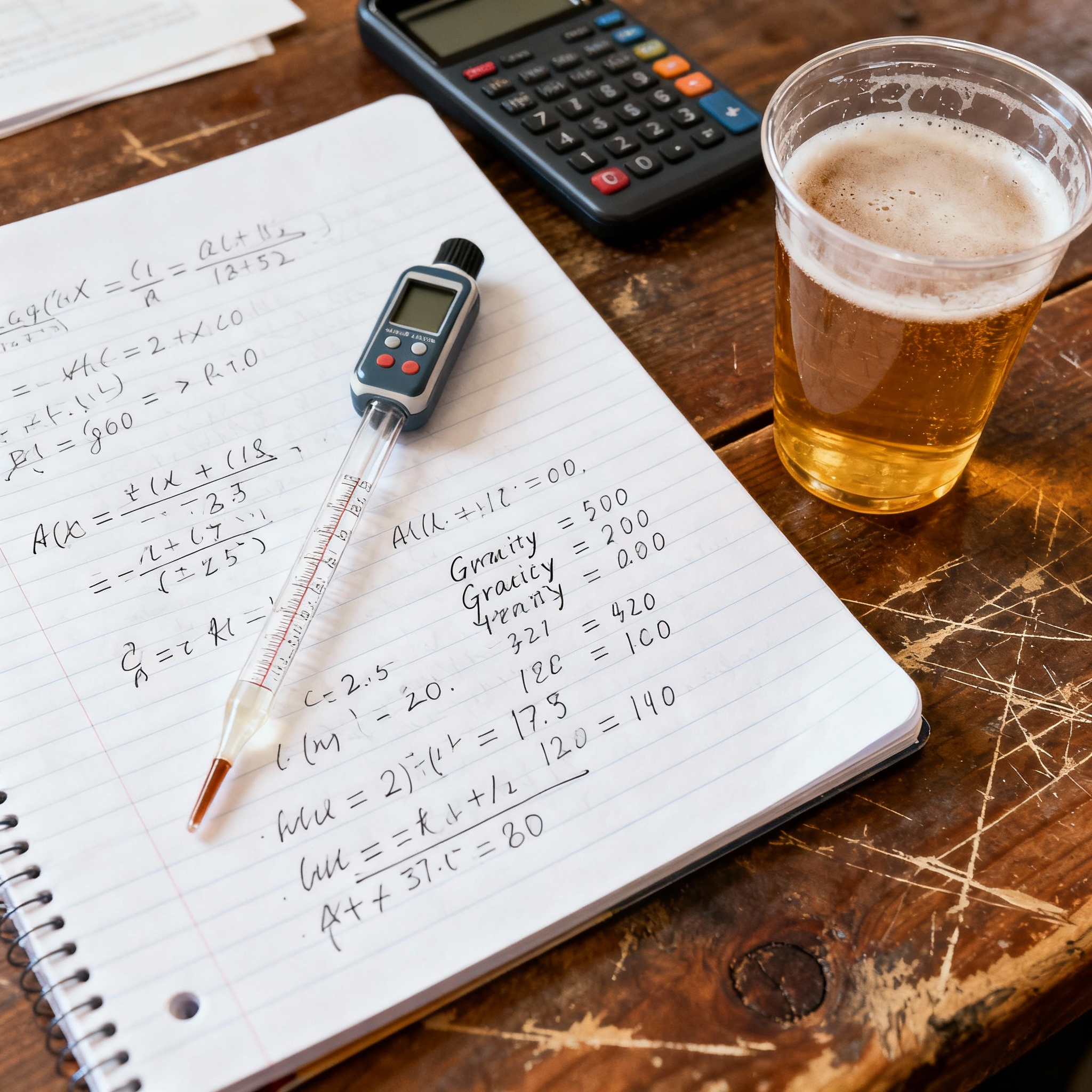
The Brewer's Math Handbook: ABV, Attenuation, and IBU.
I ruined my first batch of beer because I thought brewing was an art, not a science. I followed a recipe for a pale ale, pitched the yeast, waited two weeks, and bottled it without checking gravity. The result? Bottle bombs. Three exploded in the closet at 2 a.m. My roommate thought someone was breaking in.
Turns out, I bottled at 1.030 instead of 1.010. The yeast kept working in the bottles, built up pressure, and turned my closet into a glass grenade range. That’s when I learned: you don’t need to be a math genius to brew good beer, but you do need to understand the numbers. You don’t need calculus. You just need algebra and a hydrometer.
This guide is for people who want to stop guessing and start measuring. I will walk you through the formulas that matter: alcohol by volume (ABV), attenuation, bitterness units (IBU), dilution math, and efficiency. These aren’t abstract concepts. They’re tools that tell you whether your beer is safe to bottle, how strong it is, and whether you hit your target.
ABV Calculation: How Strong Is This Thing?
The most common question anyone asks about homebrew is, “How much alcohol is in it?” The standard formula is simple:
ABV = (OG - FG) × 131.25
OG is your original gravity (the sugar content before fermentation). FG is your final gravity (the sugar content after fermentation). The difference between them tells you how much sugar the yeast ate, and that difference converts roughly to alcohol.
Here’s an example. Let’s say your OG is 1.050 and your FG is 1.010.
ABV = (1.050 - 1.010) × 131.25 = 0.040 × 131.25 = 5.25%
That’s a standard beer. The formula works well for beers under 6% ABV. But if you’re brewing something bigger (like a barleywine or an imperial stout), the standard formula breaks down. Alcohol is less dense than water, so as the alcohol content rises, the final gravity reading gets thrown off. The hydrometer assumes you’re measuring sugar, but it’s also measuring alcohol now.
For high-gravity beers (above 6%), I use the alternate ABV formula:
ABV = (76.08 × (OG - FG)) / (1.775 - OG) × (FG / 0.794)
This formula accounts for alcohol density. It’s more accurate for big beers. If your OG is 1.090 and your FG is 1.020, the standard formula gives you 9.19% ABV. The alternate formula gives you about 9.5%. The gap widens as gravity increases.
I haven’t invested in a refractometer yet (they’re around 100, which is reasonable, but I keep spending money on fermentation vessels instead). A refractometer measures sugar concentration directly and doesn’t get confused by alcohol. If you brew a lot of high-gravity beers, it’s worth it. For now, I stick with the hydrometer and the alternate formula.
Always take gravity readings at the same temperature (ideally 60°F/15°C). Hydrometers are calibrated to a specific temperature. If your sample is warm, the reading will be low. If it’s cold, the reading will be high. I keep a conversion chart taped to my fermentation fridge.
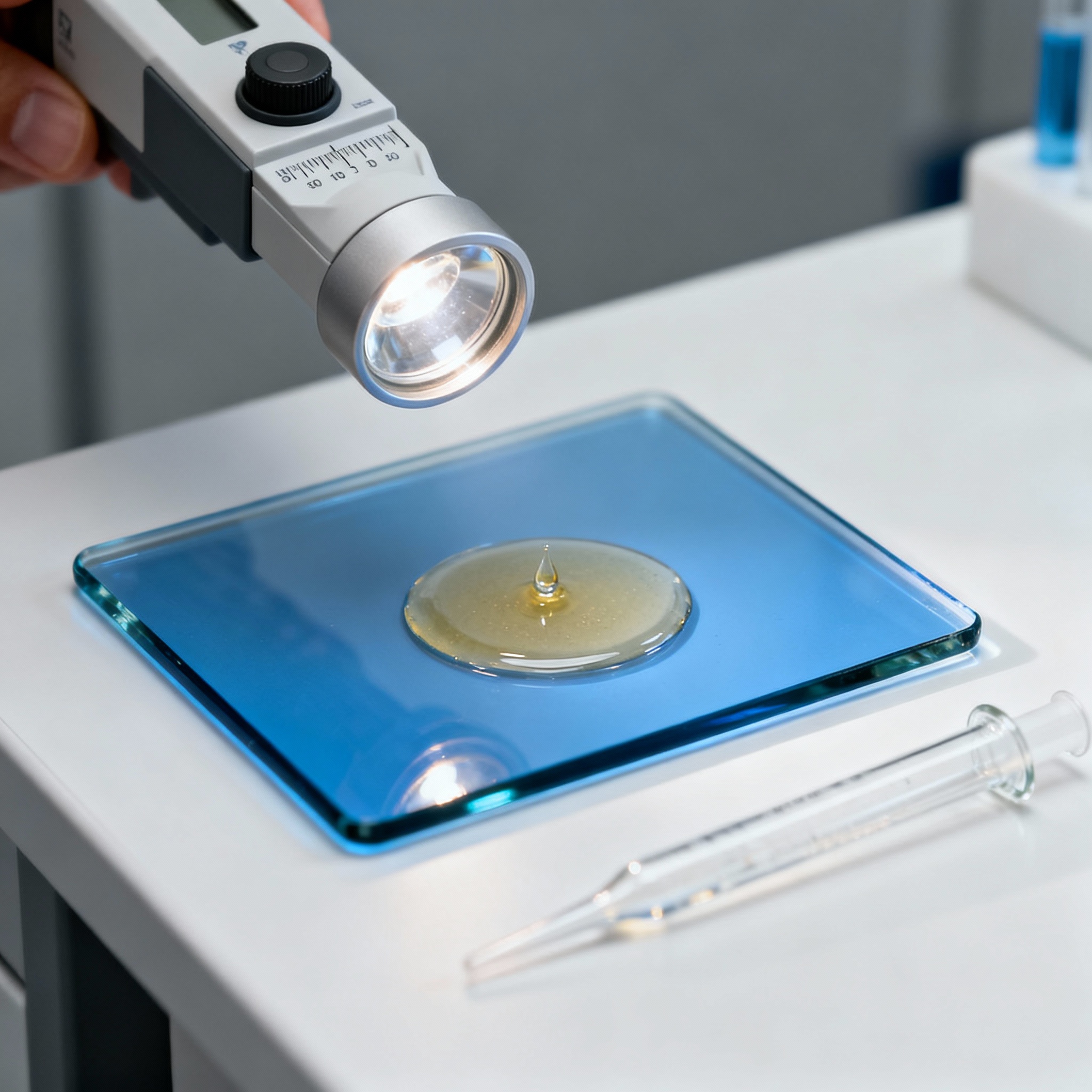
Attenuation: Why Your Hydrometer Lies
Attenuation is the percentage of sugar the yeast consumed. It tells you how “dry” your beer is. High attenuation means most of the sugar is gone. Low attenuation means there’s residual sweetness.
The formula is:
Apparent Attenuation (AA) = ((OG - FG) / (OG - 1.000)) × 100
Let’s say your OG is 1.050 and your FG is 1.010.
AA = ((1.050 - 1.010) / (1.050 - 1.000)) × 100 = (0.040 / 0.050) × 100 = 80%
That’s good attenuation. The yeast did its job. Most ale yeasts fall between 70% and 85%. Saison yeasts can hit 90% or higher because they’re monsters that eat everything.
But here’s the trick: apparent attenuation is a lie. The hydrometer measures density, not sugar. Alcohol is less dense than water, so when sugar turns into alcohol, the final gravity drops more than it should based on sugar alone. The hydrometer thinks there’s less sugar left than there actually is.
To get the real attenuation (RA), you need to correct for alcohol:
Real Attenuation = 0.1808 × (OG in Plato) + 0.8192 × (FG in Plato)
Plato is a different scale (basically percent sugar by weight). Converting gravity to Plato is annoying without a calculator. Most homebrewers don’t bother with real attenuation because apparent attenuation is close enough for practical purposes. I only calculate real attenuation when I’m trying to match a commercial beer’s recipe or troubleshooting a stuck fermentation.
Here’s what matters: if your apparent attenuation is way lower than expected (like 50% when the yeast is rated for 75%), something went wrong. Maybe your mash temperature was too high and you made unfermentable sugars. Maybe your yeast was old or underpitched. Maybe you didn’t aerate the wort enough. Low attenuation is a red flag.
I had a batch of Irish stout finish at 1.024 when it should have finished at 1.012. The apparent attenuation was only 52%. I tasted it. Sweet, cloying, unbalanced. I roused the yeast (swirled the fermenter gently to wake them up), raised the temperature a few degrees, and waited another week. It dropped to 1.014. Still not perfect, but drinkable.
Yeast starters matter. If you’re brewing a big beer (OG above 1.060), pitch more yeast. A simple starter (made 24 to 48 hours ahead) can double or triple your yeast count and prevent stuck fermentations.
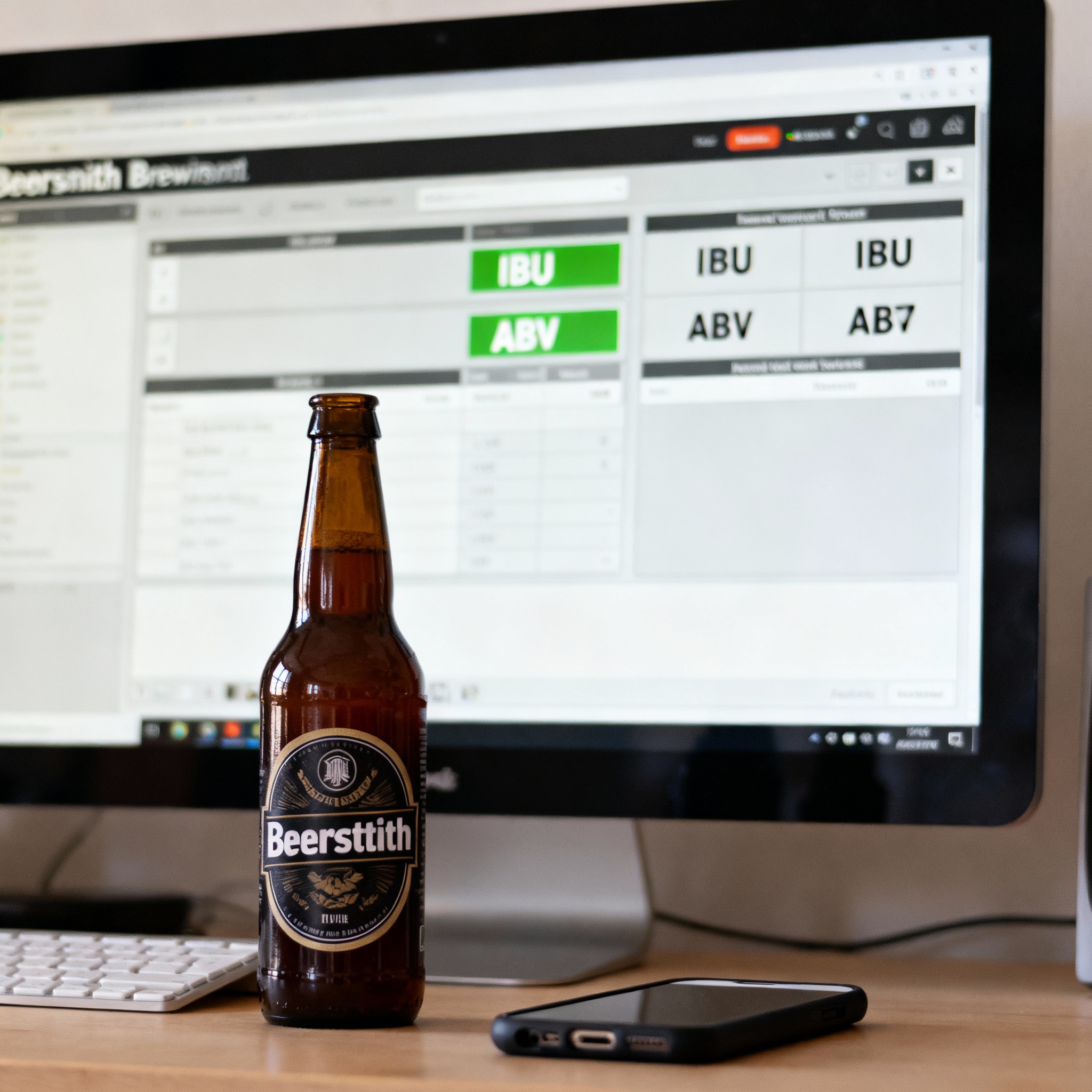
IBU Formulas: Why Bitterness Is Weird
IBU stands for International Bitterness Units. It’s a measure of the alpha acids (the bitter compounds) dissolved in your beer from hops. The higher the IBU, the more bitter the beer (in theory).
There are two common formulas for calculating IBU: Tinseth and Rager. Both are approximations. Neither is perfect.
Tinseth Formula
This is the most widely used formula in homebrewing software. It accounts for boil time, hop amount, alpha acid percentage, and wort gravity.
IBU = (AAU × U × 75) / (Volume in gallons)
Where:
- AAU = (ounces of hops × % alpha acids)
- U = Utilization factor (based on boil time and gravity)
The utilization factor is a table. For a 60-minute boil at 1.050 gravity, utilization is about 0.24 (24%). For a 10-minute boil, it drops to 0.12. Higher gravity worts extract fewer alpha acids because the sugars interfere with isomerization (the chemical process that makes hops bitter).
Let’s say you add 1 ounce of Cascade hops (6% alpha acids) to 5 gallons of 1.050 wort for 60 minutes.
AAU = 1 × 6 = 6
U = 0.24 (from the table)
IBU = (6 × 0.24 × 75) / 5 = 21.6 IBU
That’s a moderately bitter beer.
Rager Formula
This is an older formula. It’s simpler but less accurate for very high or very low gravities.
IBU = (AAU × Utilization % × 7489) / (Volume in gallons × (1 + Gravity Adjustment))
The gravity adjustment compensates for worts above 1.050. If your OG is 1.050, the adjustment is 0. If it’s 1.070, the adjustment is 0.2.
Rager tends to give slightly higher IBU values than Tinseth for the same recipe.
Here’s the problem: neither formula predicts perceived bitterness. I’ve brewed two beers with the same calculated IBU (around 40), and one tasted like licking a pine tree while the other was balanced and pleasant. Why? Because bitterness perception depends on malt sweetness, hop variety (some hops taste harsh, others smooth), water chemistry (sulfate enhances bitterness), and yeast (some strains emphasize hops, others mute them).
I use IBU calculations as a guideline, not gospel. If I’m brewing a West Coast IPA, I aim for 60 to 70 IBU. If I’m brewing a porter, I aim for 25 to 35. But I always taste and adjust.
Use brewing software like BeerSmith or Brewfather to calculate IBU. Doing it by hand is tedious, and the software handles the utilization tables for you. I still check the math occasionally to make sure the software isn’t broken (it rarely is, but I trust spreadsheets more than apps).
Dilution and Boil-Off: Fixing Mistakes Mid-Brew
You’re 30 minutes into your boil and you check your pre-boil gravity. It’s supposed to be 1.045, but it reads 1.038. You screwed up. Maybe you didn’t crush the grain fine enough. Maybe your mash efficiency was low. Maybe you added too much water.
Here’s the good news: you can fix it with basic chemistry. The formula is C1V1 = C2V2 (concentration times volume equals concentration times volume).
Let’s say your pre-boil volume is 6.5 gallons at 1.038 gravity, but you need 5 gallons at 1.050 gravity post-boil.
C1 = 1.038 (your current gravity in points, which is 38)
V1 = 6.5 gallons
C2 = 1.050 (your target gravity, 50 points)
V2 = unknown (your final volume)
Rearrange the formula:
V2 = (C1 × V1) / C2 = (38 × 6.5) / 50 = 4.94 gallons
So you need to boil off 1.56 gallons. If your normal boil-off rate is 1 gallon per hour, extend your boil by 30 to 40 minutes.
This formula also works in reverse. If your pre-boil gravity is too high (say, 1.055 instead of 1.045), you can add water to dilute it.
I use this trick constantly. My efficiency fluctuates because I don’t have a mill at home. I buy grain pre-crushed from the homebrew shop, and the crush consistency varies. Some batches hit my numbers perfectly. Others miss by 5 points. Instead of accepting a weaker or stronger beer, I adjust the boil or add water.
Last month, I brewed a saison and my pre-boil gravity was 1.042 instead of 1.050. I extended the boil by 45 minutes and hit 1.049. Close enough. The saison turned out great.
Measure your kettle’s boil-off rate. Boil 3 gallons of water for an hour and measure how much you lost. My kettle boils off about 0.9 gallons per hour on my propane burner. Your stove might be different. Knowing your rate makes the math easier.
Efficiency: Are You Getting Your Money’s Worth?
Efficiency is the percentage of potential sugar you extracted from the grain. Grain has a theoretical maximum sugar yield (measured in points per pound per gallon, or PPG). Two-row barley is about 37 PPG. Munich malt is 35 PPG. Roasted grains are lower (20 to 25 PPG) because kilning destroys some of the starches.
The formula for efficiency is:
Efficiency = (Actual Points / Potential Points) × 100
Let’s say you used 10 pounds of two-row malt (37 PPG) in a 5-gallon batch. Your pre-boil gravity is 1.050 (50 points).
Potential Points = 10 pounds × 37 PPG = 370 total points
Actual Points = 50 points × 5 gallons = 250 points
Efficiency = (250 / 370) × 100 = 67.6%
That’s typical for a basic homebrew setup. Commercial breweries hit 85% to 95% because they have mills, lauter tuns, and sparging systems. You’re working with a cooler and a grain bag. You’re doing fine.
I track efficiency in a spreadsheet. My average is 68% to 72% depending on the grain bill. If I use a lot of adjuncts (like oats or wheat), efficiency drops because those grains have less fermentable sugar. If I crush the grain finer or mash longer, efficiency goes up slightly, but not by much.
Here’s why efficiency matters: it tells you how much grain to buy. If a recipe assumes 75% efficiency and you only get 65%, you’ll miss your target gravity unless you add more grain. Most brewing software lets you set your system efficiency. I set mine to 70% and adjust recipes accordingly.
I haven’t bothered optimizing efficiency beyond 70% because the cost difference is small. An extra pound of grain costs $2. The time and effort to squeeze out another 5% efficiency isn’t worth it for me. I’d rather spend that time cleaning my fermenters.
Don’t obsess over efficiency. Hit 65% to 75% and you’re in the ballpark. Focus on consistency instead. If you get 70% every time, you can plan around that. If your efficiency swings from 60% to 80%, you’ll never hit your targets.
Conclusion
Brewing math isn’t complicated. It’s just multiplication and division. But it gives you control. You can predict your alcohol, troubleshoot fermentation problems, adjust bitterness, fix gravity mistakes mid-brew, and buy the right amount of grain. You don’t need fancy equipment. You need a hydrometer, a scale, a calculator (or a phone), and the willingness to write down your numbers.
I still make mistakes. Last week, I forgot to account for boil-off and ended up with 4 gallons of beer instead of 5. The ABV was higher than planned, but it wasn’t a disaster. I logged it, noted what went wrong, and moved on. That’s the point. The math doesn’t prevent errors. It just makes them visible so you can learn.
If you take one thing from this guide, let it be this: measure everything. Write it down. Run the formulas. Over time, you’ll stop needing the formulas because you’ll internalize the patterns. But until then, trust the math. It’s more reliable than intuition.
References
- Palmer, J. (2006). How to Brew. Brewers Publications.
White, C., & Zainasheff, J. (2010). Yeast: The Practical Guide to Beer Fermentation. Brewers Publications.
-
Daniels, R. (1996). Designing Great Beers. Brewers Publications.
-
Tinseth, G. (1997). “Glenn’s Hop Utilization Numbers.” The Hop Page.
Rager, J. (1990). “Calculating Hop Bitterness in Beer.” Zymurgy, 13(4), 53-54.
- American Homebrewers Association. “Brewing Resources and Calculators.”