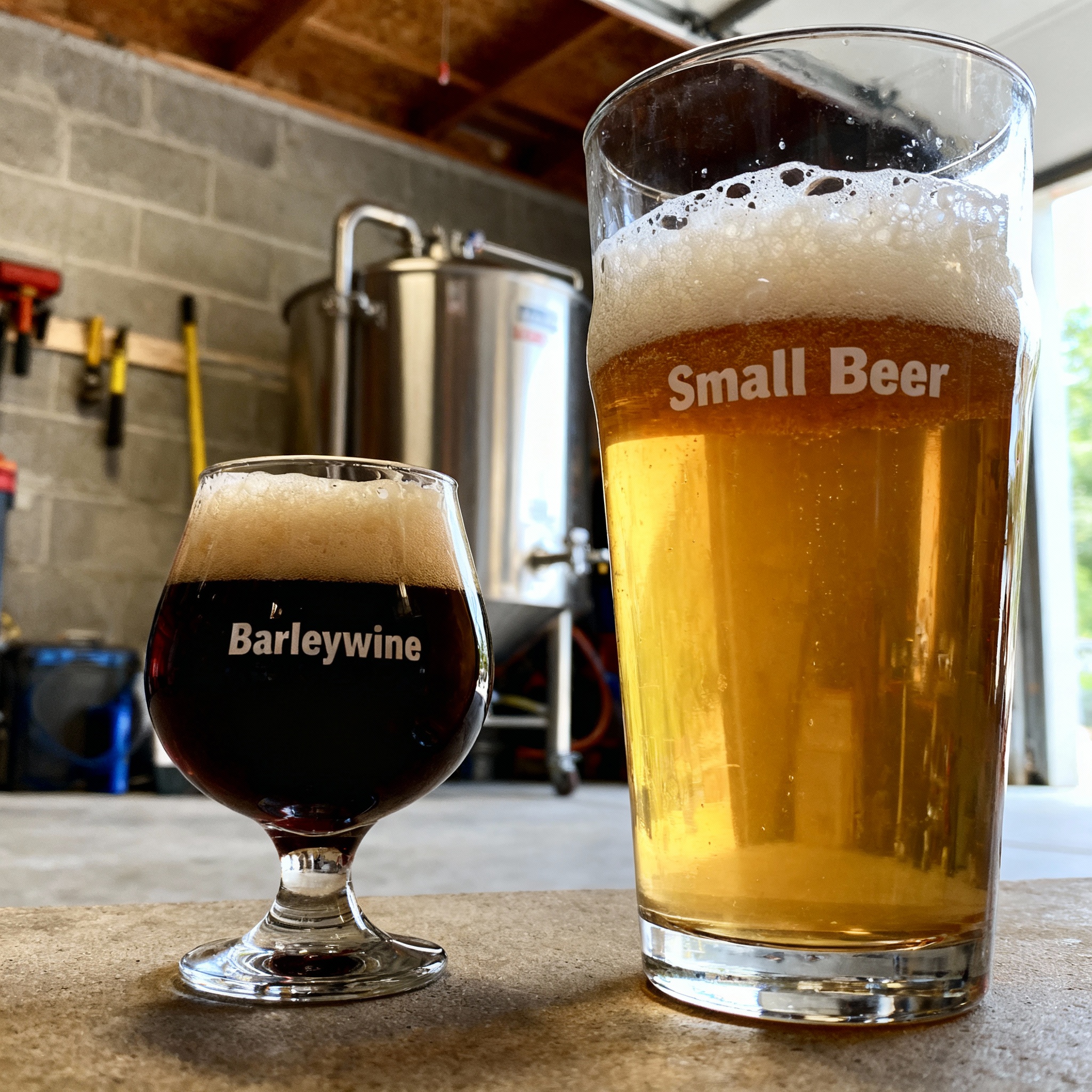
Parti-Gyle Brewing: Two Beers from One Mash
I found out about parti-gyle brewing the hard way three years ago while making a barleywine. After draining the first runnings of a 22-pound mash, I realized the leftover grain was still incredibly sweet.
I ran hot water through it, measured the gravity with my refractometer - a critical tool available from suppliers like MoreBeer! and others - and found a potential 1.032 session ale sitting in my mash tun. Medieval brewers called this parti-gyle brewing: the first runnings for the strong beer, and the later runnings for the “table beer.”
This guide explains how to make a barleywine and a small beer in a single day. You will learn to maximize grain value without doubling your workload or requiring a second mash tun.
The Split: High-Gravity First Runnings
When you mash grain, the sugars do not extract evenly across the sparge. The first runnings are dense and syrupy, often hitting 1.090 or higher in high-gravity recipes.
In a normal brew day, you mix these runnings together to reach an average target. In parti-gyle brewing, you keep them separate to preserve the high-density wort for your “big” beer.
The highest concentration of maltose and dextrins is held in the initial liquid surrounding the grain. As you introduce sparge water, you dilute the solution, which is why the gravity profile of a mash follows a steep downward curve.
I mash 20 pounds of Maris Otter at a thick 1.25 quarts per pound ratio. When the mash is complete, I drain exactly three gallons of first runnings without sparging to ensure maximum density.
Measure the gravity of your first runnings immediately. If you are below 1.080, you need a thicker mash or more base grain; if you are above 1.100, you can likely stretch the runnings into four gallons instead of three.
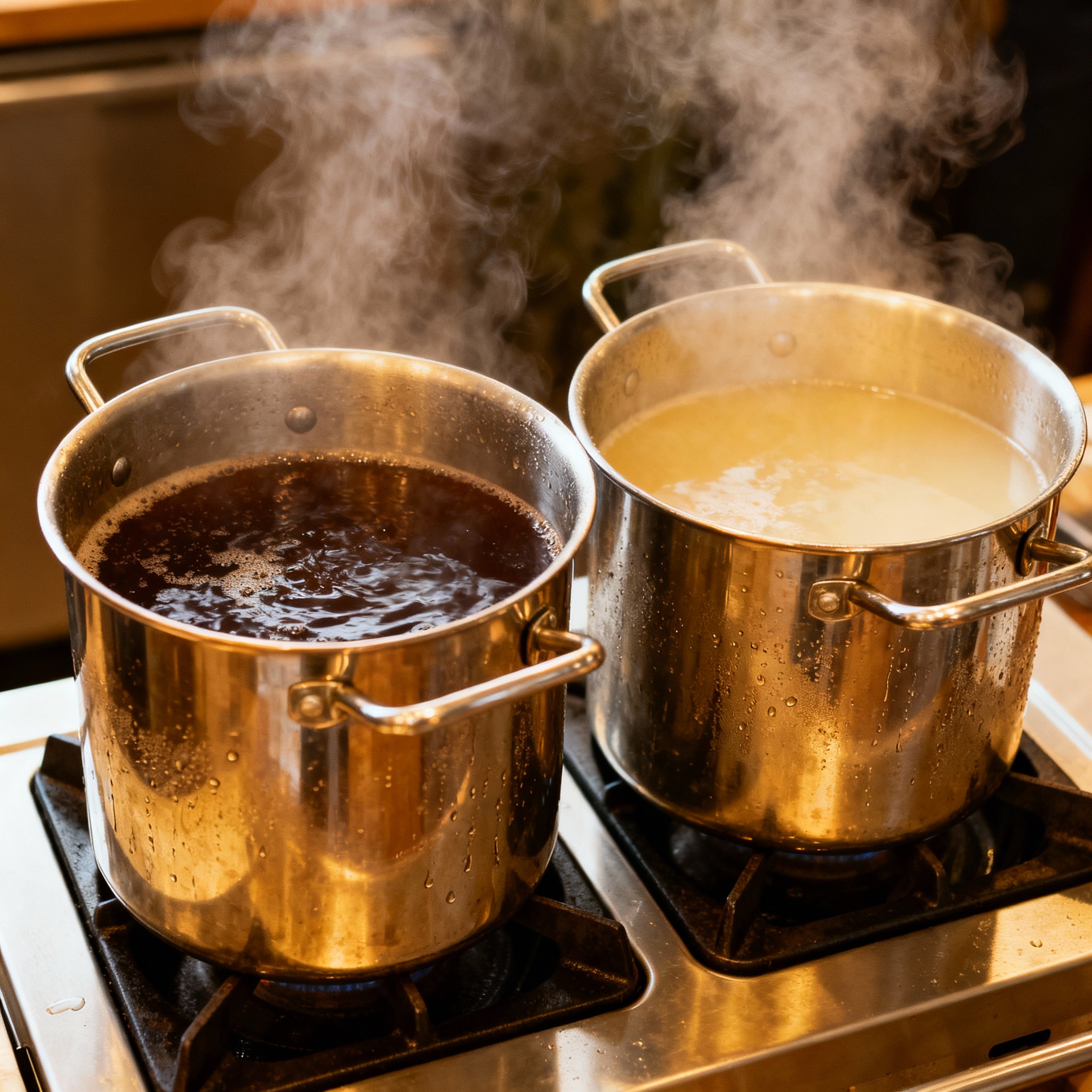
The Remix: Creating the Small Beer
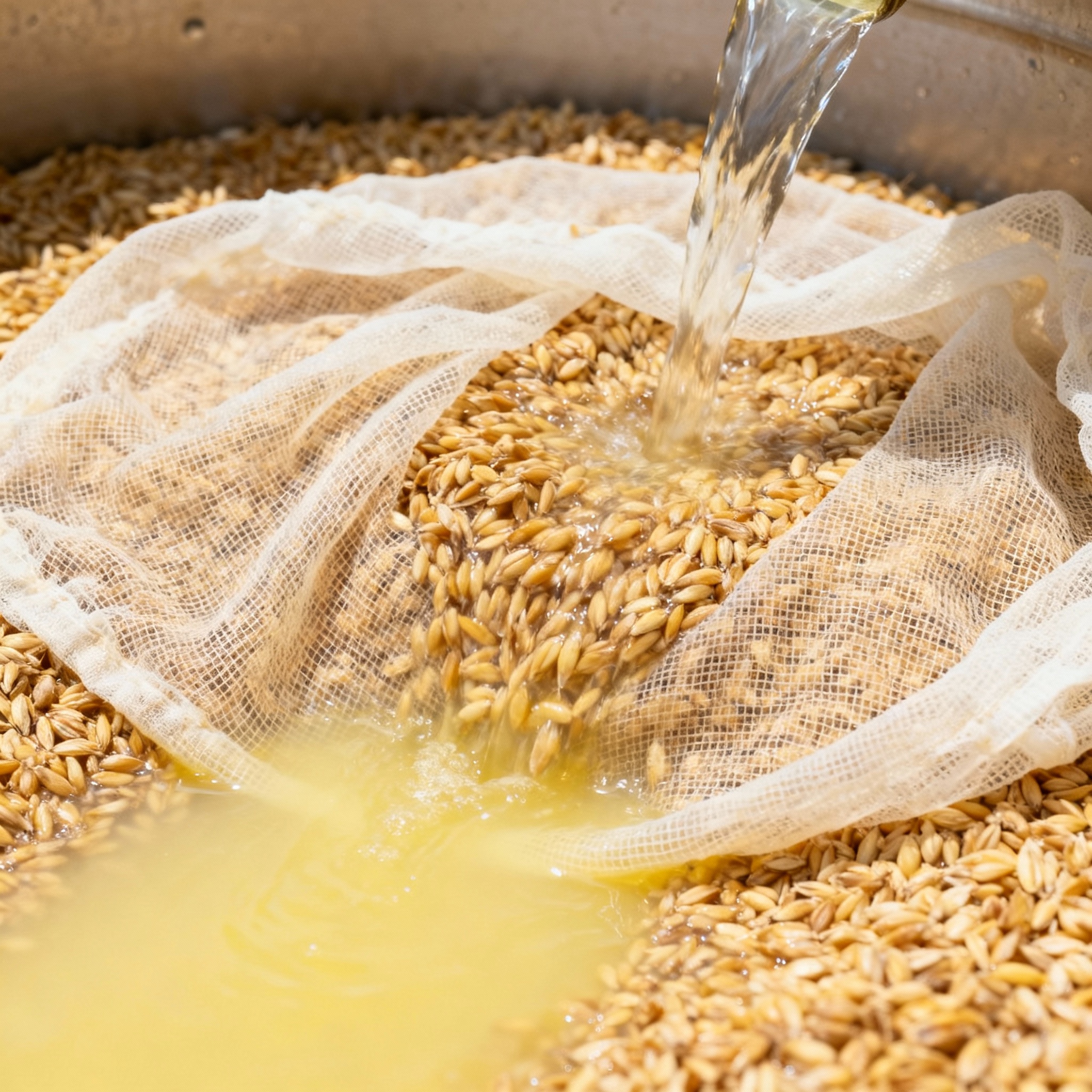
After pulling the first runnings, the grain bed still contains a significant amount of fermentable sugar. This sweetness is the foundation for your second, lower-gravity beer.
I sparge with 170°F water, adding one gallon at a time and allowing it to sit for ten minutes. I repeat this until I collect five gallons of wort, usually landing between 1.028 and 1.035.
As the gravity of your runnings drops below 1.010, or your mash pH rises above 5.8, you risk extracting polyphenols (tannins). Always stop collecting second runnings before the gravity hits 1.008 to prevent an astringent, tea-like finish.
Slow sparging is critical for extracting remaining sugars without disturbing the grain bed too aggressively. If you dump the water in too fast, you risk channeling, which leaves sugar trapped in the grain.
You are in total control of the second beer’s strength. Using tools such as the Calculators by Brewer’s Friend, you can adjust your volumes. If you want a 1.040 session ale instead of a 1.030 table beer, simply collect less volume during the second sparge.
Capping the Mash: Adding Variety
The first and second runnings inherently taste similar because they share the same base malt. To differentiate them, you can “cap the mash” by adding specialty grains before the second sparge.
I add one to two pounds of crystal malt or roasted grain directly on top of the grain bed after the first drain. The hot sparge water extracts color and flavor from these grains only for the small beer.
Since the specialty grains are added after the primary starch conversion, they act as a “steep.” You are extracting color and flavor (caramel/roasted notes) rather than additional fermentable sugars from these late additions.
This technique allows you to turn one Maris Otter mash into a Golden Barleywine and a Brown Ale simultaneously. The first runnings stay clean, while the second runnings take on the caramel and toffee notes of the cap.
Be conservative with roasted grains when capping. A half-pound of black malt in a 1.030 small beer is much more potent than it is in a high-gravity stout.
Boil Logistics: Staggered Boils
Managing two separate worts is the most intimidating part of the process for homebrewers. If you only have one kettle, you must utilize a staggered boil schedule.
I start the barleywine boil first. While the 90-minute boil is running, I finish collecting the second runnings into a sanitized bucket.
Once the barleywine is chilled and in the fermentor, I clean the kettle and immediately start the 60-minute boil for the small beer. This extends the brew day to about eight or nine hours, so plan accordingly.
Use the downtime during the barleywine boil to sanitize your second set of hoses and fermentors. By the time the small beer is ready to chill, most of your cleanup should already be finished.
Yeast Selection and Fermentation
You can pitch the same yeast strain into both beers or use different strains to further differentiate the styles. I typically split a single two-liter starter of English Ale yeast between both batches.
Because the barleywine is high-gravity, it requires the bulk of the yeast cells to prevent a stalled fermentation. The small beer is much more forgiving and will ferment rapidly even with a smaller pitch.
High-gravity fermentations produce more heat and metabolic stress, which can lead to higher ester production. The American Homebrewers Association (AHA) suggests fermenting the barleywine at the lower end of the yeast’s range (65°F) helps keep the alcohol “clean” and prevents solvent-like notes.
If you want the beers to taste unrelated, try pitching a clean American strain (US-05) into the small beer. This will provide a crisp, citrus edge that contrasts with the fruity, malty profile of the English-style barleywine.
Conclusion
Parti-gyle brewing is a study in efficiency and historical brewing archaeology. It allows you to extract every gram of value from your grain bill while producing two distinct styles for your cellar.
The first runnings provide the luxury of a long-aged barleywine, while the second runnings give you a sessionable ale ready to drink in weeks. It is the ultimate “garage lab” method for the resource-conscious brewer.
Parti-Gyle Data: Dual Batch Example
| Component | Barleywine (3 Gallons) | Small Beer (5 Gallons) |
|---|---|---|
| Grist | 20 lbs Maris Otter | Second Runnings + Cap |
| Target OG | 1.090 | 1.030 |
| Boil Time | 90 Minutes | 60 Minutes |
| Bitterness | 50-60 IBU | 20-25 IBU |
| Yeast | English Ale (High Pitch) | English Ale (Std Pitch) |
| ABV Target | 9.0% - 10.0% | 3.0% - 3.5% |
References
- Palmer, J. How to Brew: Everything You Need to Know. 4th ed., Brewers Publications, 2017.
- Daniels, R. Designing Great Beers. Brewers Publications, 1996.
- Foster, T. Pale Ale: History, Brewing Techniques, Recipes. Brewers Publications, 2014.
- Hieronymus, S. “Historical Brewing Techniques.” Journal of the Institute of Brewing, 2018.