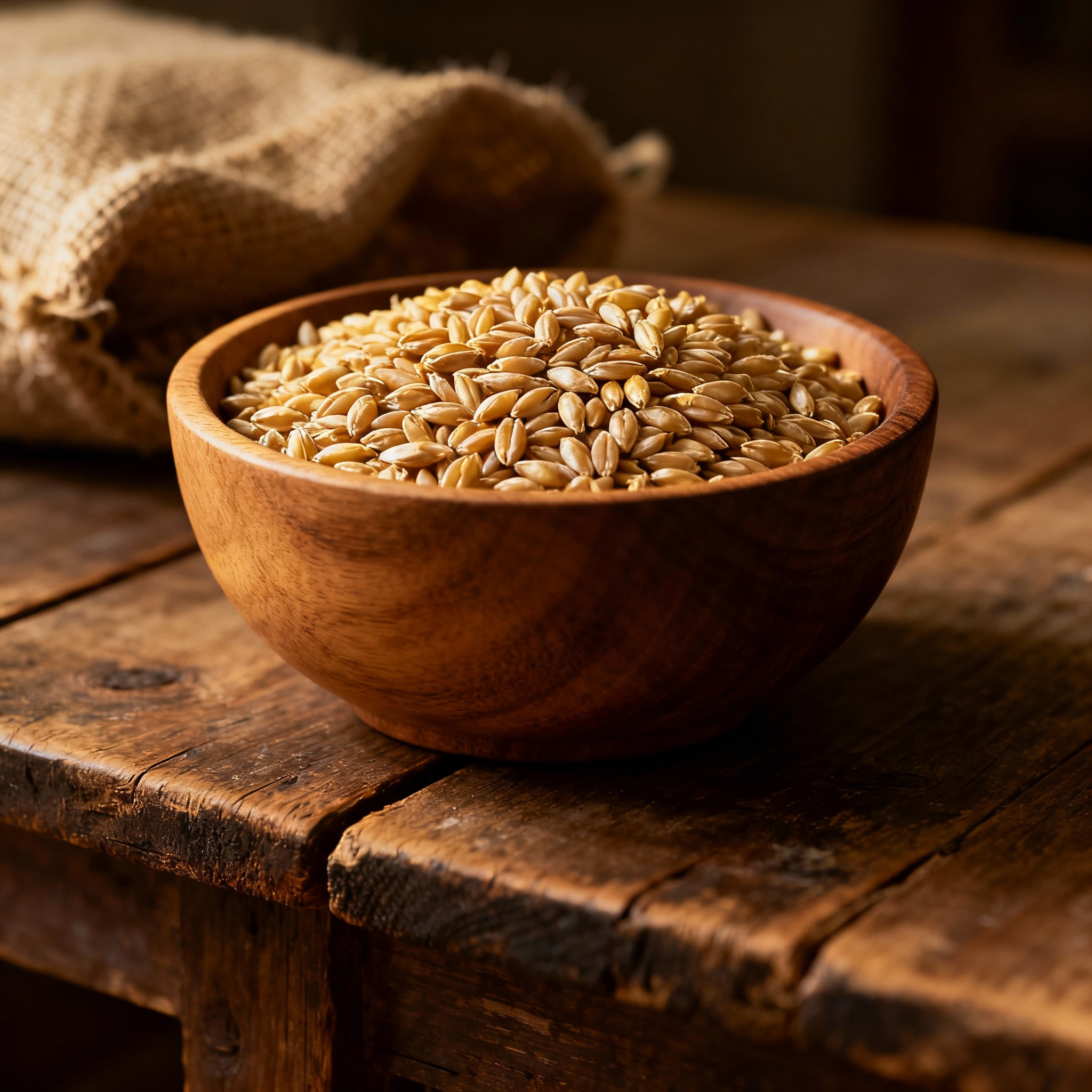
Ancient Grains: Spelt, Emmer, and Einkorn.
Introduction: Bringing Bronze Age Flavor to Modern Glass
I found my first bag of einkorn at a farmer’s market in Belgium three years ago.
The vendor told me it was the same wheat the Romans fermented into beer.
I bought two kilos, hauled it back to Asheville, and promptly ruined the batch because I treated it like modern malted barley.
The mash turned into wallpaper paste.
I had to dump eight gallons of proto-beer down the drain.
But I kept trying.
Because these grains-spelt, emmer, and einkorn-are not just ingredients.
They are time machines.
Every sip you brew with them connects you to people who lived 10,000 years ago.
They drank beer made from these same seeds.
They didn’t have pH meters or refractometers; they just knew that when you mixed crushed grain with water and let it sit, something magical happened.
Modern wheat has been bred for yield and consistency.
Ancient grains were bred for survival.
They taste different, they behave different, and if you want to brew with them, you need to throw out half of what you know about mashing.
This guide will walk you through the three main ancient grains you can actually buy and malt yourself or find pre-malted.
I will explain why they are hard to work with, why they are worth the effort, and how to avoid turning your mash tun into a science experiment gone wrong.
Spelt: The Hull-Heavy Wheat
Spelt is the gateway grain.
It is ancient enough to feel rustic but forgiving enough that you won’t ruin your brew day.
People have been growing it in Europe since the Bronze Age.
It fell out of favor in the 1900s because it is harder to thresh than modern wheat, but it never disappeared.
Small farms kept growing it and organic bakers kept buying it.
And brewers, eventually, rediscovered it.
The flavor hits you first.
Spelt brings a nutty, slightly spicy character that modern malted barley just doesn’t have.
It is more like a background hum that makes the whole beer feel rounder and older.
If you close your eyes and taste a spelt saison, you can almost imagine drinking it out of a wooden bowl in a drafty farmhouse.
But the real reason brewers love spelt is the hull.
Spelt kernels are covered in a tough, papery shell that stays attached even after threshing.
[Image showing a cross-section comparison of a spelt kernel versus modern wheat kernel hulls]
Most modern grains lose their hulls during processing, but spelt keeps them.
Those hulls act like a natural filter bed during lautering.
If you have ever had a stuck sparge with wheat or rye, you know how frustrating it is to watch your runoff slow to a drip.
Spelt helps prevent that.
The hulls create little channels in the grain bed so the wort can flow through without clogging.
I use spelt at around 20 to 30 percent of the grain bill.
Any more than that and the spice character can get a little too forward.
Any less and you lose the texture it brings to the mouthfeel.
The spelt adds complexity without overwhelming the yeast or the hops.
One warning: spelt has more protein than barley.
That means more haze.
If you are chasing crystal-clear beer, this is not your grain, but if you are brewing farmhouse ales, haze is part of the charm.
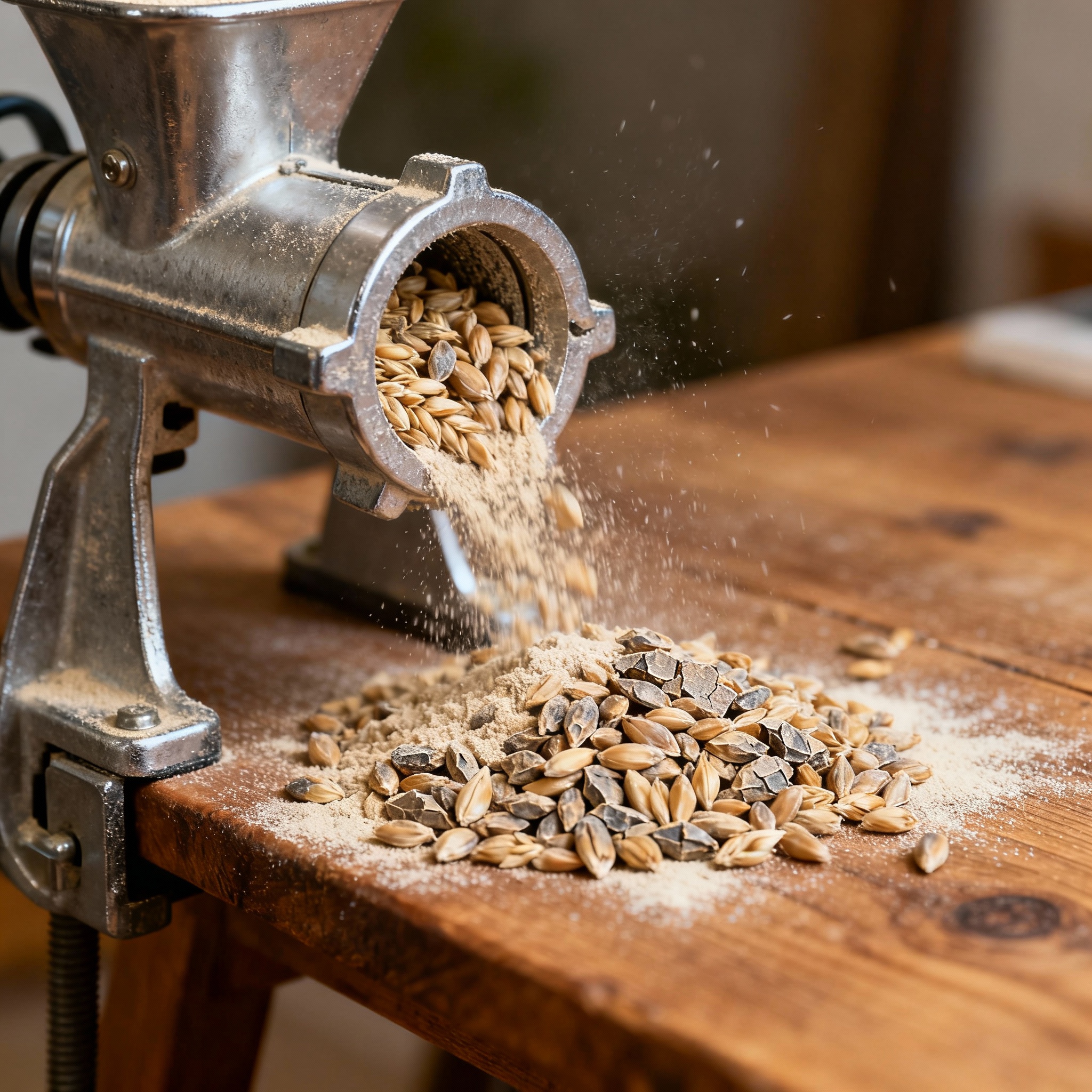
If you are milling spelt yourself, set your mill gap a little wider than you would for barley. The hulls are tough and you don’t want to shred them into dust. You want them intact so they can do their job as a filter.
Emmer and Einkorn: The Ancestors of Wheat
Emmer and einkorn are older than spelt.
They are the grains that Neolithic farmers grew when agriculture was still new.
Einkorn is the oldest and has been found in archaeological sites dating back 10,000 years.
Emmer came later but still predates most of what we think of as “ancient” history.
If spelt is the gateway grain, einkorn and emmer are the deep end.
They are harder to find, harder to mill, and harder to mash.
But the flavor is worth it.
Einkorn tastes earthy and almost sweet, like wet stone and honey.
Emmer is deeper, more bread-like, with a faint tang that reminds me of sourdough starter.
The problem is yield.
Modern wheat produces tons of grain per acre, while einkorn and emmer produce a fraction of that.
Farmers stopped growing them because they couldn’t compete economically.
The kernels are small and the stalks are tall and prone to lodging in the wind.
The threshing process is a pain.
But that low yield also means the grain is dense and packed with protein and minerals.
When you mash it, you get a thick, viscous wort that feels almost oily on the tongue.
I haven’t been able to source malted einkorn locally, as most of what I find is raw grain.
You can malt it yourself if you have the patience by soaking it for 12 hours and letting it sprout for three to four days.
Once the shoots are about as long as the kernel, dry it in a low oven or a food dehydrator.
High protein means high beta-glucan content.
Beta-glucans are long-chain sugars that turn your mash into glue if you don’t break them down properly.
If you are buying raw einkorn or emmer to malt at home, test a small batch first. Not all grain sold as “einkorn” is viable for sprouting. Some suppliers heat-treat it to extend shelf life, which kills the seed.
Milling Challenges: The Hardness of Ancient Kernels
Ancient grains are hard.
I mean “this might break my mill” hard.
The first time I tried to mill einkorn, I heard a grinding sound that made me wince.
Modern barley is bred to have a soft endosperm that crushes easily.
Ancient grains are bred to survive.
Their kernels are tough because they had to sit in storage for months or years without rotting.
I mill ancient grains separately from my base malt.
I run the spelt or emmer through the mill first on its own with a slightly wider gap.
Then I mill the barley.
If I try to mill them together, the barley gets pulverized while the ancient grain barely cracks.
You want a good crush on ancient grains because incomplete milling means lower extraction efficiency.
But you also don’t want to shred the hulls into powder because that will give you a stuck sparge.

If your mill is struggling with ancient grains, try running them through twice. First pass at a wide gap just to crack the kernels. Second pass at your normal setting to get a finer crush.
Step Mashing Requirements: Handling the Gummy Proteins
This is where most people screw up.
You cannot mash ancient grains the way you mash barley.
If you just dump them into 150-degree water, you will end up with a sticky, gummy mess.
The problem is beta-glucan.
It is a type of polysaccharide that makes wort viscous.
Ancient grains have way more of it than modern varieties.
The solution is a beta-glucan rest.
You need to hold your mash at a lower temperature, around 95 to 115 degrees Fahrenheit, for 15 to 20 minutes.
At that temperature, an enzyme called beta-glucanase breaks down the beta-glucan.
Once the rest is done, you raise the temperature to your normal saccharification range.
I learned this the hard way when my first emmer batch sat in the mash tun for two hours and I still couldn’t get the wort to run clear.
Now I always do a step mash with ancient grains.
I start by heating my strike water to around 110 degrees and let it sit for 20 minutes.
Then I raise the temperature to 150 degrees and hold it there for 60 minutes.
The whole process adds maybe 30 minutes to brew day, but the wort runs clean and efficiency is better.
If you don’t have a way to heat your mash tun directly, you can do a decoction. Pull out a third of the mash, boil it, and add it back to raise the temperature. This is how traditional farmhouse brewers did it.
Style Applications: Saisons and Farmhouse Ales
Ancient grains belong in farmhouse ales.
Saisons are built on grain-forward profiles that are dry, spicy, and rough.
Ancient grains amplify all of that.
I brewed a spelt saison last summer using 40 percent spelt malt and 60 percent pilsner malt.
I kept the hop additions light and fermented it with a Belgian saison yeast at 85 degrees.
The spelt gave it a nutty backbone that paired perfectly with the yeast character.
Emmer works well in darker farmhouse ales.
I made a brown saison with 30 percent emmer, 50 percent Munich malt, and 20 percent rye.
The emmer added a bread-like quality that made the beer feel like drinking liquid sourdough.
Einkorn is trickier because the flavor is subtle.
I have had the most success using it in low-ABV table beers around 3 to 4 percent alcohol.
You can also use ancient grains in historical recreations of what the Romans drank.
Ancient grains dry out fast during fermentation. If you want a beer with some residual sweetness, mash high, around 156 degrees, or add some Carapils to the grain bill.
Conclusion
Brewing with ancient grains is not convenient.
The grain is expensive, the milling is hard, and the mashing is complicated.
But every time I pour a glass of spelt saison, I remember why I started doing this.
I didn’t get into brewing to make another IPA that tastes like every other IPA.
I got into it because I wanted to make something that felt connected to the past.
These grains are part of that story.
You don’t need a degree in archaeology to brew with spelt or emmer or einkorn.
You just need patience and a willingness to adjust your process.
The batches that worked were worth every failed attempt.
Ancient Grain Brewing Characteristics
| Grain | Protein Content | Beta-Glucan Level | Recommended Usage | Flavor Profile | Rest Temp (Beta-Glucan) |
|---|---|---|---|---|---|
| Spelt | 12-15% | Moderate | 20-30% of grain bill | Nutty, spicy | 100-110°F for 15 min |
| Emmer | 13-17% | High | 20-40% of grain bill | Earthy, bread-like | 95-105°F for 20 min |
| Einkorn | 14-18% | Very High | 10-30% of grain bill | Sweet, earthy | 95-105°F for 20 min |
References
- Delcour, J.A., & Hoseney, R.C. (2010). Principles of Cereal Science and Technology. AACC International.
- Shewry, P.R., & Hey, S.J. (2015). “The contribution of wheat to human diet and health.” Food and Energy Security, 4(3), 178-202.
- Zohary, D., Hopf, M., & Weiss, E. (2012). Domestication of Plants in the Old World. Oxford University Press.
- Brew Your Own Magazine. (2018). “Brewing with Ancient Grains.”
- Briggs, D.E., et al. (2004). Brewing: Science and Practice. Woodhead Publishing.