Belgian Yeast Families: Trappist, Saison, and Wit.
I forgot a batch of saison in the garage last summer. I’d pitched Wyeast 3724 (Dupont strain) into a half-barrel of wort on a Thursday night and planned to check the gravity Sunday morning.
Then work happened. A client deadline blew up, I spent the weekend writing Python scripts in my pajamas, and I didn’t walk into the garage for eight days.
When I finally cracked the airlock, the temperature strip read 91°F. The garage smelled like a petting zoo crossed with a fruit stand, and I thought I’d made vinegar.
Instead, I pulled a sample and tasted black pepper, lemon pith, and something vaguely barnyard that made me think of hay bales. The beer had fermented bone dry (1.002 final gravity) and tasted better than anything I’d brewed on purpose.
That’s Belgian yeast. It doesn’t just convert sugar; it makes decisions and rewrites the recipe based on how hot you let the room get.
If you want predictable, go buy US-05. If you want a yeast that acts like a living thing with opinions, you’re in the right place.
Belgian strains are not one family; they are three completely different personalities crammed under the same flag. Trappist strains make dark, boozy ales while Saison strains eat everything to create dry, peppery farmhouse beers.
Witbier strains stay cloudy on purpose and throw citrus-coriander notes even if you forget the spices. The only thing they share is a trait called POF+ (Phenolic Off-Flavor Positive).
These yeasts make phenols on purpose, providing clove, smoke, and spice. In a German wheat beer, that’s a flaw, but in a Belgian beer, it’s the whole point.
Managing these yeasts means managing the balance between phenols (spicy) and esters (fruity). Get it right and your beer tastes like a monastery; get it wrong and it tastes like a head shop.
Trappist Strains: Banana, Clove, and the High-Gravity Hustle
Trappist yeast (also sold as “Abbey Ale” yeast) comes from the brewing tradition of monks who needed yeast that could survive in strong beer.
These are the strains used to make Chimay, Westmalle, and Rochefort. Most commercial versions, like Wyeast 1214 or WLP530 Abbey Ale Yeast, can ferment up to 12% ABV without gasping for air.
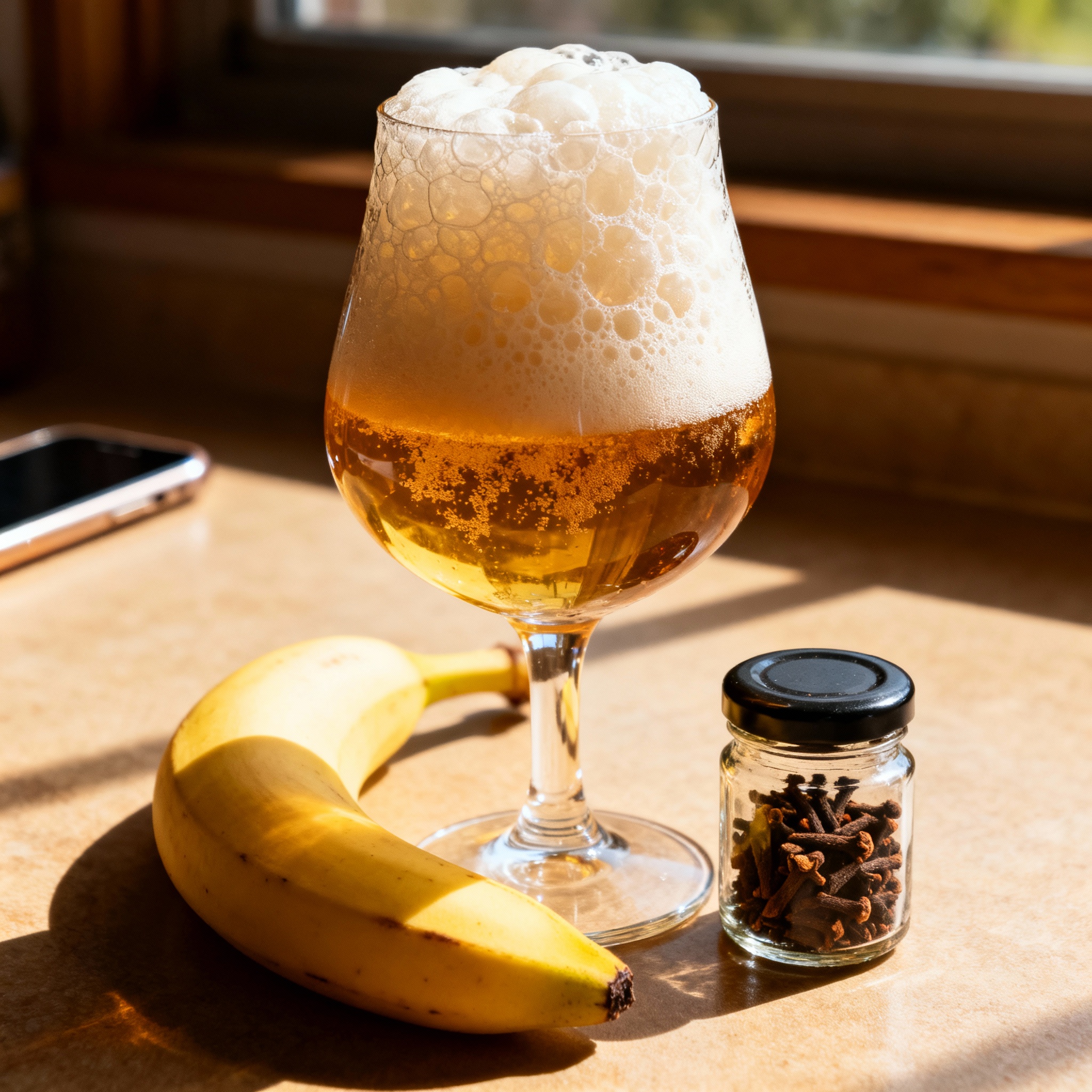
I’ve pushed WLP530 to 13.2% in a dark strong ale and it kept chugging until there was no sugar left. The flavor profile is a tug-of-war between isoamyl acetate (banana) and 4-vinyl guaiacol (clove).
The ratio depends almost entirely on temperature. Ferment at 65°F and you get more clove, but at 75°F you get more banana.
If you hit 80°F, you get bubblegum, which can make your dubbel taste like a gas station air freshener. I learned this the hard way during a cold January fermentation where my beer tasted like pumpernickel bread soaked in clove tea.
The next batch, I held it at 72°F for three days before letting it free-rise to 76°F. That batch achieved the perfect balance of ripe banana and a dry, peppery finish.
Trappist strains also throw a lot of hot, solvent-like fusel alcohols if you stress them. The trick is to pitch enough yeast and provide organic yeast nutrients like Fermaid O at the start.
One more thing: Trappist yeast flocculates hard. After seven days, it drops like a rock and the beer clears, so don’t expect haze here.
If your Trappist strain is throwing too much banana, add 0.25 grams of zinc sulfate per five gallons. Zinc suppresses ester production and shifts the balance back toward spicy phenols.
Saison Strains: The Dupont Stall and the 80°F Rule
Saison yeast is the most temperamental thing I’ve ever worked with. The classic strain is Wyeast 3724 Belgian Saison™, rumored to come from Brasserie Dupont.
It ferments incredibly dry, sometimes finishing at 1.001. It creates black pepper, lemon zest, and hay, making it perfect for farmhouse ales, but it is also a nightmare to manage.
The problem is the “Dupont Stall.” The yeast rips through the wort for two days, then stops cold at around 1.030.
The airlock goes silent and you panic. A week later, it typically starts again and finishes at 1.004, but only if you provide enough heat.
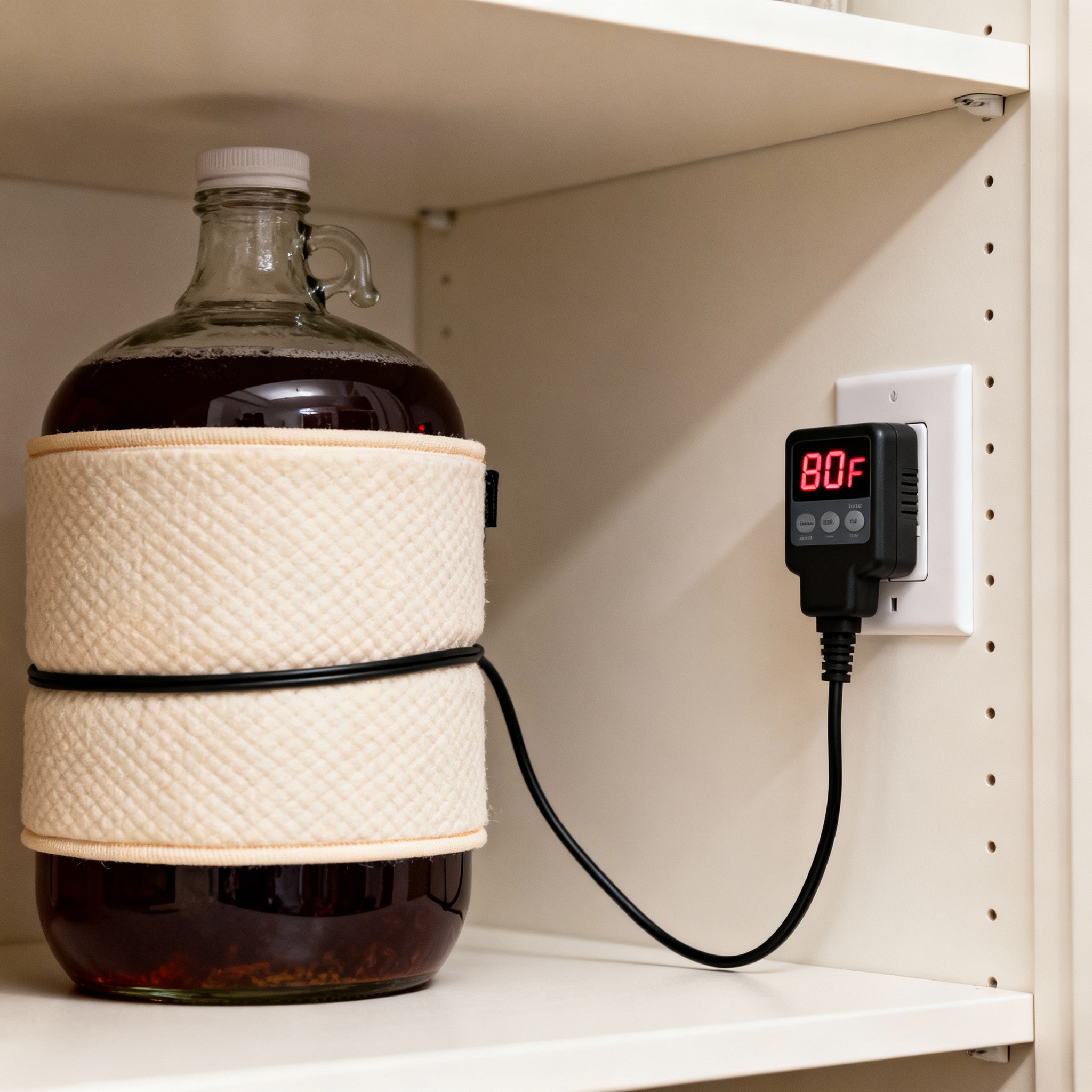
Saison yeast is temperature-dependent and needs heat as high as 80°F to 85°F. The first time I used 3724, I kept it at 70°F and it stalled for two weeks.
I finally moved the fermenter to a warm room at 82°F and it finished immediately. Now I start at 72°F and let it free-rise in the garage during summer.
[Image showing a fermentation graph of Wyeast 3724 with a visible gravity plateau at 1.030]
The flavor is worth the effort because high temps create unique esters like pear, apricot, and lemon. If you want to avoid the stall, use Wyeast 3711 or Omega Saisonstein’s Monster.
They are more reliable but often lack the deep character of the Dupont strain. Finally, remember that saison yeast is a poor flocculant, so hazy beer is the traditional result.
If your saison stalls, don’t add more yeast. Just raise the temperature to 85°F and wait three days; the yeast will restart on its own.
Witbier Strains: Haze, Tartness, and the Coriander Question
Witbier yeast is the easiest of the three families. It doesn’t stall and doesn’t need excessive heat.
It just sits at 68°F and makes cloudy, tart, citrus-forward beer. Classic strains like Wyeast 3944 are low flocculators, ensuring the signature haze remains in suspension.
The tartness traditionally comes from wild lactic bacteria on unmalted wheat. Modern homebrewers usually skip the risk and just add 10 mL of 88% lactic acid post-boil.
This drops the pH and gives the beer a soft, yogurt-like tartness. The yeast itself makes esters that smell like orange peel, which is why some skip coriander entirely.
I still add a half-ounce of crushed coriander at flameout, but I keep the dosage light. Witbier yeast ferments fast, usually finishing in five days.
It is the only Belgian style I would call “low-maintenance.” The downside is that it struggles with high-gravity worts above 1.055.
I once tried to make a “wit strong ale” at 1.070, and the yeast gave up at 1.020. Stick to standard gravity ranges and you’ll be fine.
If your witbier is too clear, add 1 lb of flaked wheat or flaked oats to the grain bill. The beta-glucans create a permanent haze that won’t drop out.
POF+ Explained: Why These Yeasts Make “Spicy” Beer
POF+ stands for Phenolic Off-Flavor Positive. It’s a misleading name because the flavor is a core requirement for the style.
These strains produce 4-vinyl guaiacol (4VG), which tastes like clove or smoke. In German wheat beers, you want a little; in Belgian beers, you want a lot.
The compound comes from ferulic acid found in barley and wheat. During fermentation, the yeast converts ferulic acid into 4VG using a specific enzyme.
The amount of 4VG depends on the strain, the temperature, and the amount of ferulic acid available. You can increase the spice by adding wheat malt or performing a ferulic acid rest at 113°F to 122°F.
I tested this with WLP530 and found the batch with the rest had noticeably more clove character. Higher fermentation temps shift the balance toward fruitier esters, while lower temps favor the clove-like phenols.
If the beer smells like a dentist’s office, you likely fermented too cold or used too much wheat.
The POF1 gene in Belgian yeast encodes for ferulic acid decarboxylase. This enzyme facilitates the decarboxylation of ferulic acid into 4-vinyl guaiacol (4VG), providing the characteristically spicy and phenolic profile of Trappist and Farmhouse ales.
Underpitching for Stress: The Controversial Technique
Most advice tells you to pitch enough yeast to stay clean, but Belgian brewers often underpitch on purpose. Stressed yeast produces more metabolic byproducts, including esters.
I’ve tested this by splitting a batch of dubbel and underpitching one half. The underpitched batch took longer to finish but had much more banana and pear character.
The fully pitched batch was cleaner and drier by comparison. The risk is that stress also increases “hot” fusel alcohols and buttery diacetyl.
I don’t recommend this for beginners. It’s a fine-tuning tool that only works well with specific Belgian strains.
Some breweries even use open fermentation to encourage ester production. I tried this once with a towel over a bucket, but the contamination risk was stressful.
If you want to experiment with underpitching, start with a 0.75x pitch rate and add Fermaid O. If the beer tastes like paint thinner, go back to a full pitch.
Conclusion
Belgian yeast is not a background player; it is the lead actor of your brew. The malt and hops provide the stage, but the yeast dictates the final performance.
You can brew two identical worts and get two completely different beers based on the strain alone. Variation is the whole point of these styles.
The Dupont stall and the banana-clove seesaw are not bugs-they are features of a living organism reacting to its environment. If you want to master these styles, you must understand how to manage that reaction.
Track your temps, measure your pitch rates, and don’t be afraid of a little bit of funk. The best Belgian beers are the ones where the brewer lets the yeast have the final word.
Belgian Yeast Comparison Table
| Family | Flocculation | Ideal Temp | Primary Flavors | F.G. Target |
|---|---|---|---|---|
| Trappist | High | 68°F - 76°F | Banana, Clove, Plum | 1.008 - 1.012 |
| Saison | Low | 75°F - 85°F+ | Black Pepper, Lemon, Hay | 1.001 - 1.004 |
| Witbier | Very Low | 66°F - 70°F | Orange Peel, Tartness, Haze | 1.010 - 1.014 |
References
- Palmer, J., & Kaminski, C. (2013). Water: A Comprehensive Guide for Brewers. Brewers Publications.
- White, C., & Zainasheff, J. (2010). Yeast: The Practical Guide. Brewers Publications.
- Hieronymus, S. (2005). Brew like a Monk. Brewers Publications.
- Dupont, M. “The Technical Management of Saison Yeast Stalls.” Internal Laboratory Memo.