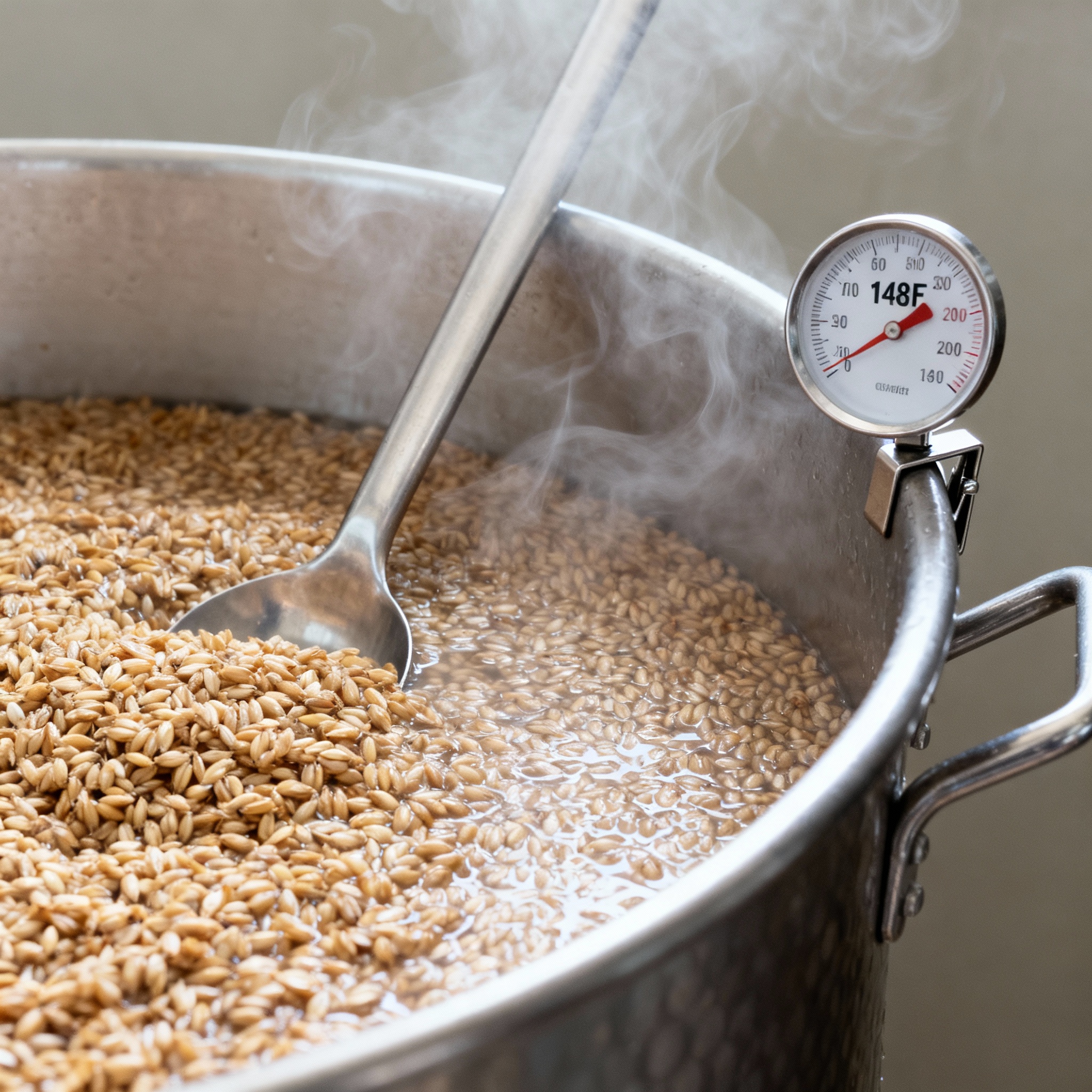
Advanced Mashing: Decoction and Step Mashes Explained.
I used to think mashing was boring. You heat water to 152°F, dump in grain, wait an hour, and drain. That worked fine for my first twenty batches of pale ale.
Then I tried brewing a German pilsner using the same lazy method. The beer tasted thin. The head collapsed in thirty seconds. It lacked that round, bready depth I remembered from the pils I drank in Prague.
That failure sent me down a rabbit hole. I started reading old technical brewing resources and realized I had been ignoring the most important variable in brewing: time and temperature manipulation.
Single infusion mashing is efficient, but it treats all starches and proteins the same. If you want control over body, foam, flavor, and fermentability, you need to understand step mashing and decoction. These techniques are not relics. They are tools for solving specific problems.
This guide covers why and how to use advanced mashing schedules. I will walk through the enzyme targets, explain the logic behind decoction, introduce the chaos of turbid mashing, and address whether modern malts have made all of this obsolete.
Why Single Infusion Isn’t Always Enough
Single infusion mashing works because modern malts are highly modified. Modification refers to how much the grain’s endosperm has broken down during malting. High modification means the proteins and cell walls are already degraded. You can mash at one temperature (usually 150 to 154°F) and get decent conversion.
But single infusion has limits. It does not give you control over protein breakdown, beta versus alpha amylase activity, or melanoidin development.
If you are brewing with undermodified malt (common in Europe), high percentages of adjuncts (like corn or rice), or trying to replicate traditional styles (German lagers, Belgian lambics), single infusion will not cut it.
I learned this the hard way when I tried making a Munich dunkel with a grist that included 15% Munich malt and 10% CaraMunich. I mashed at 154°F for 60 minutes.
The beer had good color but tasted one dimensional. It lacked the biscuit and toast notes I wanted. A friend who brews commercially in Bavaria told me I needed a decoction mash. He was right.
The boiled portion of the mash creates melanoidins, which add depth and color you cannot fake with crystal malts.
Step mashing and decoction are not about following tradition for tradition’s sake. They are about using heat to unlock specific enzymes and reactions that single infusion skips.
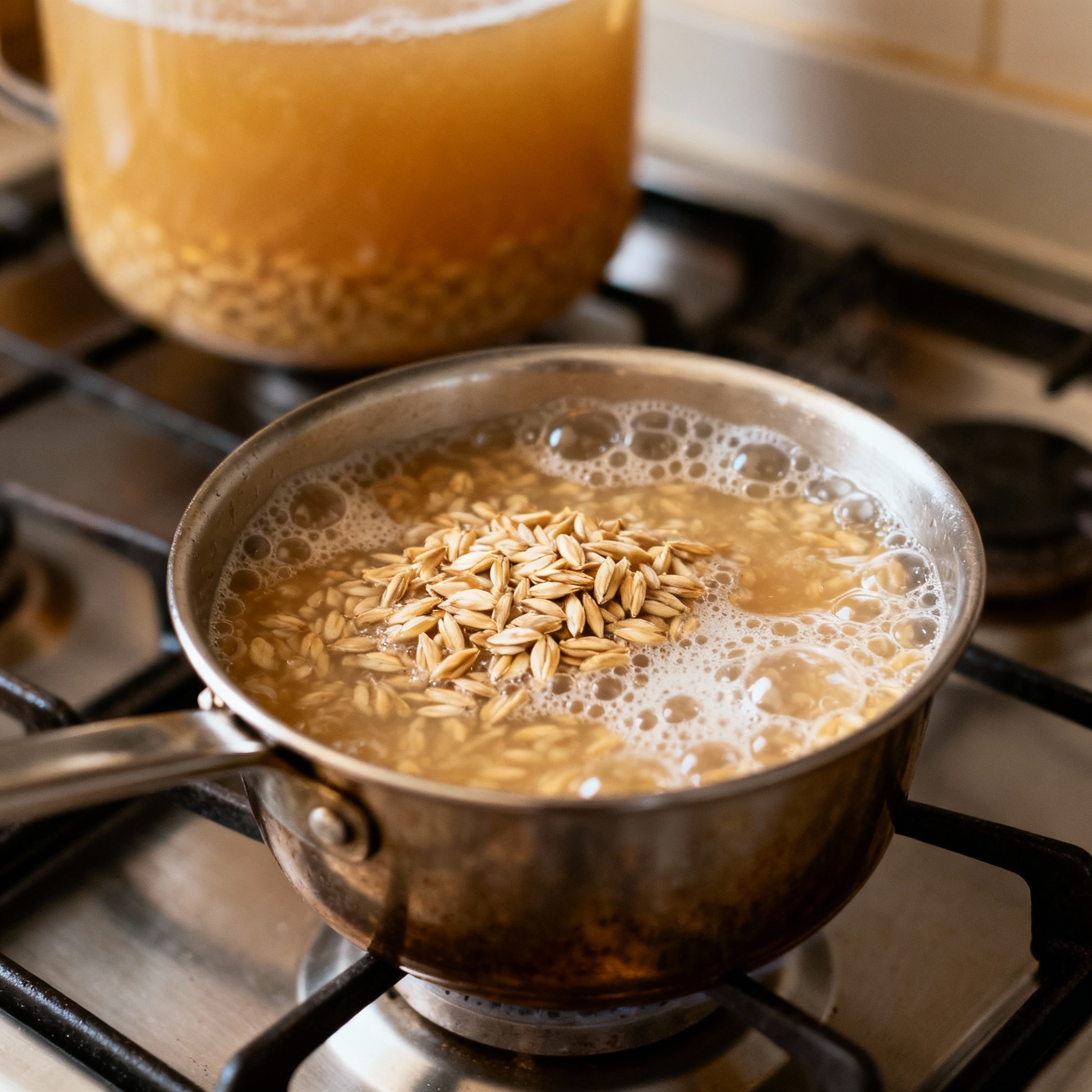
Step Mashing Targets: Protein Rest, Beta-Amylase, and Alpha-Amylase
Step mashing means holding the mash at multiple temperature plateaus. Each rest activates different enzymes. You are essentially programming the mash to prioritize certain outcomes.
The Protein Rest (122°F)
The protein rest happens between 113°F and 131°F. This range activates proteolytic enzymes (proteases and peptidases), which break long-chain proteins into shorter amino acid chains and free amino nitrogen. This improves head retention, yeast health, and body.
Modern highly modified malts do not need a protein rest because the proteins are already broken down during malting. But if you are using undermodified malt (like floor-malted Bohemian pilsner malt) or a high percentage of unmalted adjuncts (wheat, rye, oats), a protein rest can prevent haze and stuck sparges.
I ran into this when I brewed a witbier with 50% raw wheat. I skipped the protein rest and the mash turned into porridge. The proteins gummed up the grain bed.
I could not lauter without adding rice hulls. The next time, I did a 20-minute rest at 122°F before raising the temperature. The mash stayed fluid and I got better extraction.
One warning: excessive protein rests (longer than 30 minutes) can damage head retention. You can break down too many foam-positive proteins. I keep protein rests short (15 to 20 minutes) unless I am dealing with seriously undermodified grain.
If you are using more than 30% adjuncts (raw grain, flaked oats, or torrified wheat), always include a brief protein rest. It prevents a sticky mess and improves fermentability.
Beta-Amylase (145°F)
Beta-amylase works best between 140°F and 150°F. This enzyme chops starch chains from the ends, creating maltose (a fermentable sugar). If you want a dry, highly attenuated beer, you hold the mash in this range.
I use a beta rest when I brew saisons or brut IPAs. I mash in at 146°F and hold for 45 minutes. This produces a wort that ferments down to 1.002 or lower with the right yeast strain. The beer finishes bone dry.
Beta-amylase is fragile. It denatures (dies) quickly above 160°F. If you mash too hot or take too long to reach your beta rest, you lose activity. I measure my strike water temperature carefully and preheat my mash tun to avoid heat loss during dough-in.
If you want maximum fermentability, mash in at 145°F and hold for 30 minutes before stepping up. This gives beta-amylase a head start before the more heat-stable alpha-amylase takes over.
Alpha-Amylase (156°F)
Alpha-amylase works between 154°F and 162°F. Unlike beta, it cuts starch chains randomly, creating both fermentable sugars and longer dextrins (unfermentable sugars). Dextrins add body and mouthfeel.
If I want a fuller-bodied beer (like a Scottish ale or a doppelbock), I mash high in the alpha range (158°F to 160°F). The resulting wort has more residual sweetness and a thicker texture.
Alpha-amylase is more heat stable than beta. It survives longer at high temperatures, which is why decoction mashing (which involves boiling part of the mash) does not completely destroy enzyme activity. Some alpha survives in the main mash.
If you are brewing a big beer (over 1.070 OG) and want body, extend your alpha rest to 45 minutes at 158°F. The extra time ensures full conversion of large starch molecules.
Decoction Mashing: The German Art of Boiling Grain
Decoction mashing is the practice of removing a portion of the mash, boiling it, and returning it to the main mash to raise the temperature. This technique dates back to a time when thermometers were rare and malt modification was inconsistent. Brewers used decoction to ensure full starch conversion.
Today, decoction serves a different purpose. Boiling the mash creates melanoidins, which are complex browning compounds formed through Maillard reaction research. Melanoidins add color, maltiness, and a subtle toasted flavor. They also improve foam stability.
I first tried decoction when I brewed a Czech pilsner. I followed a double decoction schedule. I mashed in at 122°F (protein rest), pulled one-third of the thick mash (mostly grain), boiled it for 15 minutes, and returned it to hit 145°F (beta rest). Then I repeated the process: pulled another third, boiled it, and returned it to reach 158°F (alpha rest).
The result was noticeably different from my single infusion attempts. The beer had a deeper gold color, a richer malt profile, and a creamy, long-lasting head. The melanoidins gave it a complexity I could not achieve with specialty malts.
Decoction is labor intensive. You need two heat sources (one for the main mash, one for the decoction kettle) or a very attentive eye on a single burner.
The process adds at least 90 minutes to your brew day. But for styles like Märzen, bock, or traditional pilsner, the effort is worth it.
There are three common decoction schedules: single, double, and triple. Single decoction is the easiest (one boil to raise the mash from beta to alpha range). Triple decoction is traditional but exhausting (three separate boils, often used for very undermodified malt).
I stick with double decoction for most German styles. It gives me the melanoidin character I want without turning brew day into a marathon.
When pulling a decoction, take the thick portion (more grain, less liquid). This maximizes melanoidin formation and minimizes enzyme destruction in the main mash.
Turbid Mash: The Complex Schedule for Lambic Brewing
Turbid mashing is the strangest mash schedule I have ever encountered. It is used exclusively for lambic production and is designed to create a starchy, under-converted wort.
This starch provides long-term food for wild yeast and bacteria during the multi-year fermentation process. The turbid mash involves multiple temperature rests, thick and thin mash pulls, and even boiling portions of the liquid wort.
The goal is to gelatinize starches without fully converting them. You want a turbid (cloudy) wort full of dextrins and unfermentable material.
I have only attempted a turbid mash once, and it was chaos. I mashed in at 113°F, held for 10 minutes, then pulled the thin (liquid) portion and set it aside. I raised the thick mash to 122°F, held, then pulled another thin portion and boiled it. I repeated this process at 145°F and 158°F, adding back the boiled liquid to raise temperatures.
The entire process took over four hours. My notes look like a science experiment gone wrong. But the wort I collected was exactly what I wanted: cloudy, low in fermentable sugars, and full of long-chain starches.
Turbid mashing is not practical for most brewers. You need a lot of equipment (multiple kettles, precise temperature control) and a lot of patience. But if you want to brew an authentic lambic, there is no shortcut. The starch profile is critical for feeding Brettanomyces and Pediococcus over years of aging.
I sent a sample of my turbid mash wort to a lab for brewing analysis. The fermentability was only 55%, compared to 75% for a normal wort. That low fermentability is the whole point.
If you attempt a turbid mash, use at least 30% unmalted wheat. The raw starch is essential for achieving the right turbidity. Also, label everything. You will have multiple kettles with different mash fractions, and it is easy to mix them up.
Mash Out: Why Raising to 168°F Helps Lautering
Mash out is the final step in many mash schedules. You raise the mash temperature to 168°F (or higher) to halt enzyme activity and improve lautering efficiency.
At 168°F, alpha-amylase denatures. Conversion stops. This locks in your fermentability and prevents the mash from continuing to convert during the sparge. If you do not mash out, you risk over-attenuation (if enzymes keep working) or inconsistent results batch to batch.
The second benefit of mash out is physical. Hot water is less viscous than cooler water. A 168°F mash flows more easily through the grain bed. You get faster runoff and better extraction.
I always mash out when I am brewing high-gravity beers or using a lot of adjuncts. The improved flow rate saves me 20 to 30 minutes during lautering. On a long brew day, that matters.
Some brewers skip mash out, especially if they are doing BIAB (brew in a bag). The argument is that modern malts convert so quickly that enzyme activity is already done by the time you lauter. I disagree. I have measured residual enzyme activity in mashes that sat at 154°F for 90 minutes. There is still some beta-amylase working. Mash out gives me certainty.
If you do not have direct heat on your mash tun, you can mash out by adding near-boiling water. Calculate the volume needed to raise your mash to 168°F without diluting it too much. I use brewing software to do this math.
Modern Malts: Do Highly Modified Malts Even Need Step Mashing?
This is the question that divides brewers. Many argue that step mashing and decoction are obsolete because modern malts are so highly modified. The enzymes are already there. The proteins are already broken down. Why bother with the extra work?
The “no” argument is strong. I have brewed excellent German pilsners using single infusion and modern traditional German malts. The beer had good body, decent head retention, and clean malt flavor. I did not need a protein rest or decoction.
But here is what I lose with single infusion: melanoidin complexity. You cannot create those toasted, bready flavors without heat. Specialty malts (like Melanoidin malt) try to replicate this, but they do not taste the same. A decoction mash creates melanoidins in situ, integrated with the base malt. The flavor is smoother and more cohesive.
I also lose precision. Step mashing lets me target specific enzyme ranges. If I want a dry saison, I can hold at 145°F. If I want a chewy stout, I can hold at 158°F. Single infusion is a compromise. You pick one temperature and hope it balances fermentability and body.
So my answer is: it depends. For most American ales (pale ale, IPA, amber), single infusion is fine. For traditional European lagers, decoction adds something real. For high-adjunct beers or undermodified malt, step mashing is necessary.
I use advanced mashing techniques when I care about authenticity or when I am solving a specific problem (poor attenuation, thin body, weak head). I do not use them just to be difficult.
If you want to try decoction without the full commitment, do a mini-mash experiment. Take 500 grams of base malt, mash it, pull half, boil it, and taste the difference. You will immediately understand what decoction does.
Conclusion
Advanced mashing is not for every brew day. Single infusion works for most styles, and modern malts make it easy. But if you want to push past “good enough” and start controlling the fine details of your beer, you need to understand step mashing and decoction.
I now use step mashing for any beer with significant adjuncts or when I want precise control over fermentability. I use decoction for traditional German lagers when I care about melanoidin character. I have never used turbid mashing outside of lambic experiments, and I probably never will again (it was exhausting).
The key is matching the technique to the goal. Do not decoct a hazy IPA. Do not turbid mash a stout. But if you are brewing a Märzen and you want that deep, bready maltiness, decoction is the only way.
Here is a summary table of mash schedules and their targets:
| Mash Schedule | Temperature Range | Enzyme Target | Primary Benefit | Best For |
|---|---|---|---|---|
| Protein Rest | 113-131°F | Proteases | Improved head retention, prevents haze | Undermodified malt, high adjuncts |
| Beta Rest | 140-150°F | Beta-Amylase | High fermentability, dry finish | Saisons, brut IPAs, light lagers |
| Alpha Rest | 154-162°F | Alpha-Amylase | Body, residual sweetness | Stouts, Scottish ales, doppelbocks |
| Decoction (Single) | Boil + Return | Melanoidin formation | Malt complexity, color, foam | German lagers (pils, helles) |
| Decoction (Double) | Boil + Return (2x) | Melanoidin formation | Deep malt character, traditional flavor | Märzen, bock, Czech pils |
| Turbid Mash | Multiple steps + boils | Partial conversion | Starchy wort for wild fermentation | Lambic only |
| Mash Out | 168-172°F | Denatures enzymes | Improved lautering, locks in fermentability | All styles (optional but recommended) |
If you try any of these techniques, take notes. Measure your efficiency, taste the results, and compare them to your single infusion baseline. That is the only way to know if the extra work is worth it for your system and your palate.
References
Noonan, G. (1996). New Brewing Lager Beer. Brewers Publications.
Fix, G