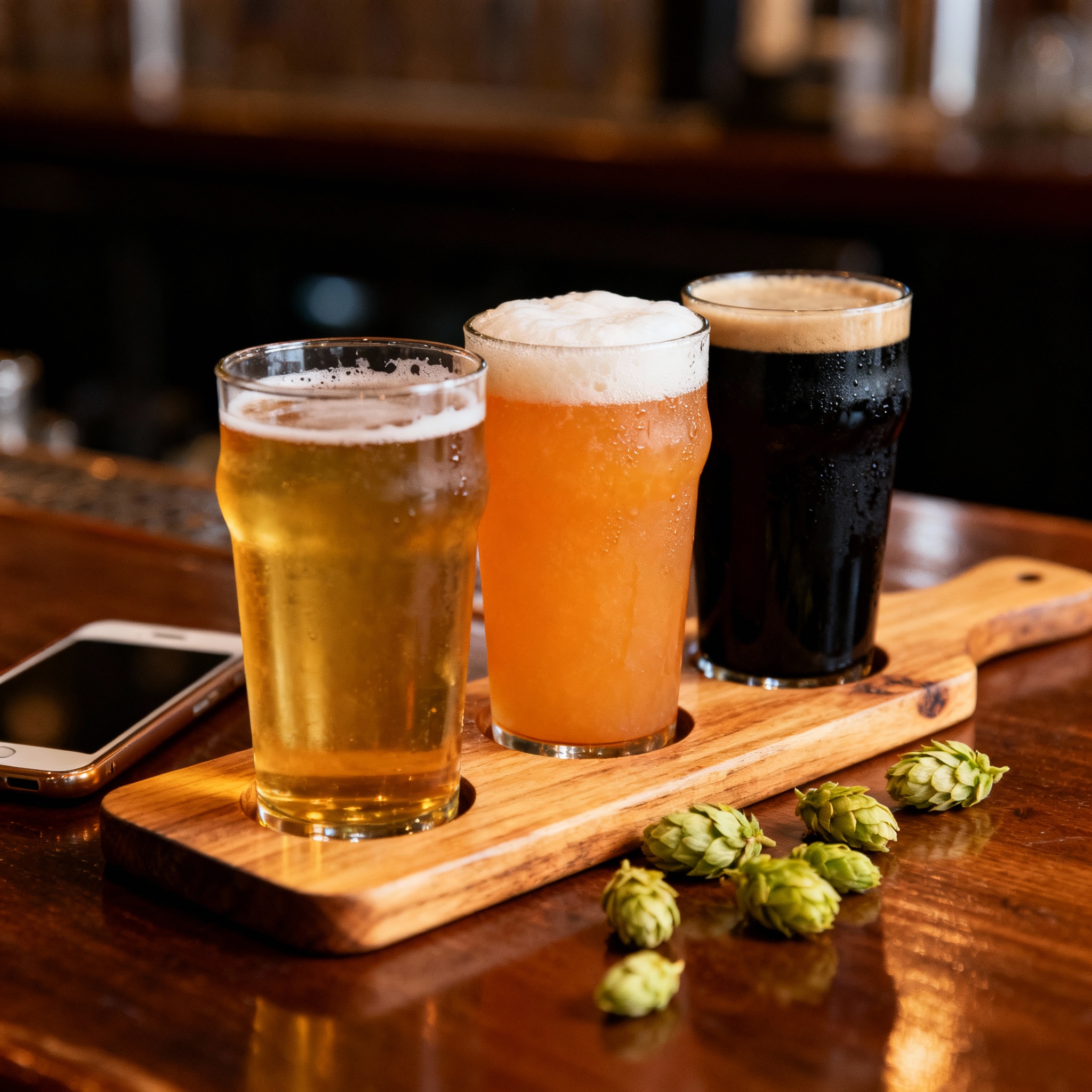
IPA Variations: Session, Black, and Rye
I spent years tweaking West Coast versus Hazy recipes in my garage, obsessing over dry hop timing. However, I realized I had ignored an entire universe of IPA variations that didn’t fit the binary.
Session IPAs offer hop saturation in a low-alcohol package, while Black IPAs provide visual roast without the expected sweetness. Rye IPAs introduce a unique peppery bite that amplifies resinous hop characters in ways a standard grain bill cannot.
The India Pale Ale is not a single recipe but a framework for delivering intense hop character in a clean, dry package. Understanding the levers you can pull-from grain choice to water chemistry-allows you to create entirely different sensory experiences.
Session IPA: Hop Saturation Without the Malt Backbone
My first Session IPA tasted like hop-flavored seltzer because I simply scaled down a regular IPA recipe. I learned that when you drop the original gravity, you also lose the residual malt sugars that give the beer structure.
The trick to a successful Session IPA is building perceived fullness without increasing the alcohol content. This is achieved by manipulating mash temperatures to create unfermentable dextrins.
Mashing at 158°F (70°C) favors alpha-amylase while quickly deactivating beta-amylase. This results in a higher concentration of long-chain dextrins, which the yeast cannot ferment, preserving body and mouthfeel in low-gravity wort.
Adding 8-10% flaked oats also contributes beta-glucans, creating a silky texture that prevents the beer from feeling thin. This provides the necessary “clinging” point for a heavy hop load.
If your Session IPA feels watery, check your final gravity. Aim for a terminal gravity of 1.012 or higher; mashing at 158°F for 90 minutes is the best way to hit this target without increasing ABV.
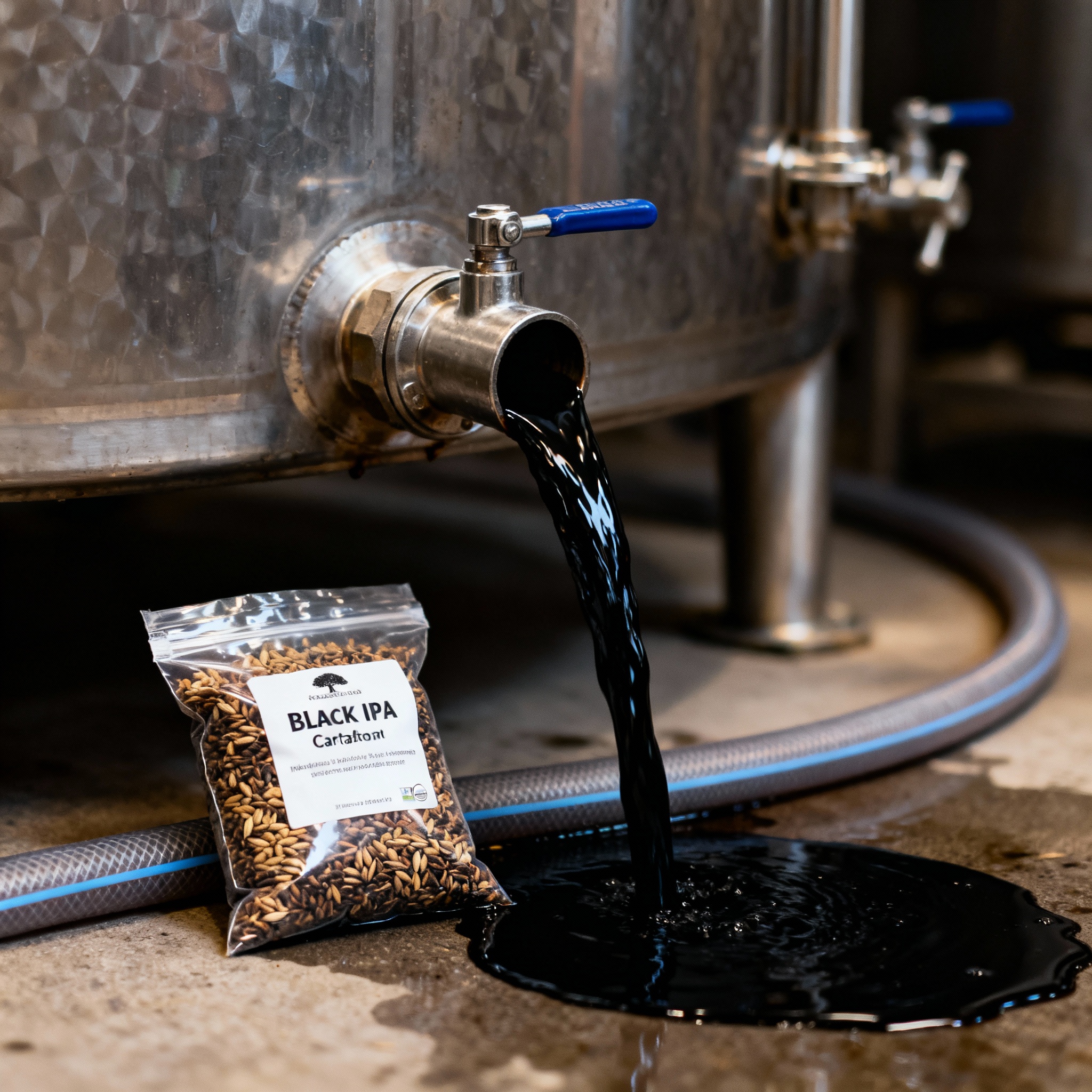
Black IPA (Cascadian Dark Ale): Visual Roast, Liquid IPA
Black IPA is a sensory contradiction: it looks like a porter but smells like a forest of Citra and Simcoe. The secret to this style is using dehusked Carafa malt (Carafa Special II or III) to provide color without acridity.
Regular roasted malts derive their harsh, ashy bitterness from the husk. Dehusked Carafa is roasted without the husk, offering deep black color and mild chocolate notes without the burnt-coffee flavor that clashes with hops.
By removing the husk before roasting, maltsters eliminate the source of astringent polyphenols and harsh pyrazines. This allows brewers to reach 30+ SRM while maintaining the clean, hop-forward palate required for the style.
I use 3-4% Carafa III and a maximum of 1% chocolate malt for a subtle cocoa note. The base malt should remain neutral, like domestic 2-row, to ensure the hop expression is not muddied by malt complexity.
Keep your roasted malt addition below 4% total. The goal is a sensory disconnect where the eyes see a stout but the tongue identifies a dry, bitter IPA.
Rye IPA: The Spicy Interplay
Rye adds a dry, spicy, and almost peppery edge that amplifies resinous hop flavors like Chinook or Centennial. It contains higher levels of beta-glucans and pentosans than barley, creating a unique slick mouthfeel.
However, rye is physically difficult to work with as it absorbs massive amounts of water and makes the mash incredibly sticky. I have found that 15% rye malt is the “sweet spot” for flavor without causing a stuck sparge.
Rye’s high pentosan content significantly increases wort viscosity. If mashing with more than 20% rye malt, you must use rice hulls to provide structural channels for the wort to flow through during the lauter.
Rye is also more acidic than barley, which can unexpectedly drop your mash pH. If the pH falls below 5.2, you risk extracting harsh tannins that make the finished beer taste astringent.
Monitor your mash pH closely when using rye. A small addition of calcium carbonate (chalk) can keep you in the ideal 5.3-5.5 range, preventing the “pine sap” harshness often found in poorly made Rye IPAs.
Water Profile: Adjusting Sulfate Ratios
Water chemistry determines whether your IPA tastes bright and crisp or flat and muddy. The sulfate-to-chloride ratio is the primary tool for tuning these sub-styles.
Sulfate emphasizes hop bitterness and dryness, while chloride emphasizes malt sweetness and fullness. For these variations, I use specific target ratios:
| Style | Sulfate (ppm) | Chloride (ppm) | Ratio |
|---|---|---|---|
| Session IPA | 150 | 50 | 3:1 |
| Black IPA | 200 | 50 | 4:1 |
| Rye IPA | 150 | 75 | 2:1 |
In Session IPAs, pushing sulfate too high makes the beer feel watery. In Rye IPAs, a 2:1 ratio is better because the rye grain already provides its own perceived dryness and spice.
If your IPA bitterness feels harsh, your sulfate level may be too high for the style. Drop the sulfate to 150 ppm and increase chloride slightly to smooth out the rough edges.
Hop Scheduling: The Power of the Whirlpool
Most volatile aroma compounds, such as myrcene and linalool, are destroyed during a hard 60-minute boil. If you want true hop flavor and aroma, you must add hops when the wort is below 180°F.
I skip the 60-minute bittering addition entirely for many IPAs. Instead, I add a small amount at 170°F for smooth bitterness, followed by a large addition during a 20-minute whirlpool steep.
Isomerization of alpha acids for bitterness occurs rapidly at boiling, but so does the volatilization of essential oils. Whirlpooling at 165°F (74°C) allows for slow isomerization while keeping the aromatic oils in solution.
For Session IPAs, I use exclusively whirlpool and dry hop additions. This prevents the bitterness from feeling too sharp in a light-bodied beer and maximizes the aroma needed for perceived fullness.
If your IPAs have a grassy or vegetal character, you are likely boiling your late-addition hops too long. Move all flavor and aroma additions to a whirlpool below 180°F for a cleaner profile.
Conclusion
Each IPA variation requires unique adjustments to mash temperature, water chemistry, and hop timing. You cannot brew a Session IPA like a scaled-down West Coast IPA and expect success.
By mastering the levers-mash temp for body, dehusked malts for color, and sulfate ratios for emphasis-you can engineer the exact hop experience you desire. The rest is simply experimentation and careful documentation.
References
- Oregon State University. “Hop Aroma and Flavor: Proceedings of the 1st International Brewers Symposium.” OSU Fermentation Science, 2013.
- Kunze, W. (2014). Technology Brewing and Malting. VLB Berlin, 5th Edition.
- Daniels, Ray. Designing Great Beers: The Ultimate Guide to Brewing Classic Beer Styles. Brewers Publications, 1996.
- Palmer, J., & Kaminski, C. Water: A Comprehensive Guide. Brewers Publications, 2013.