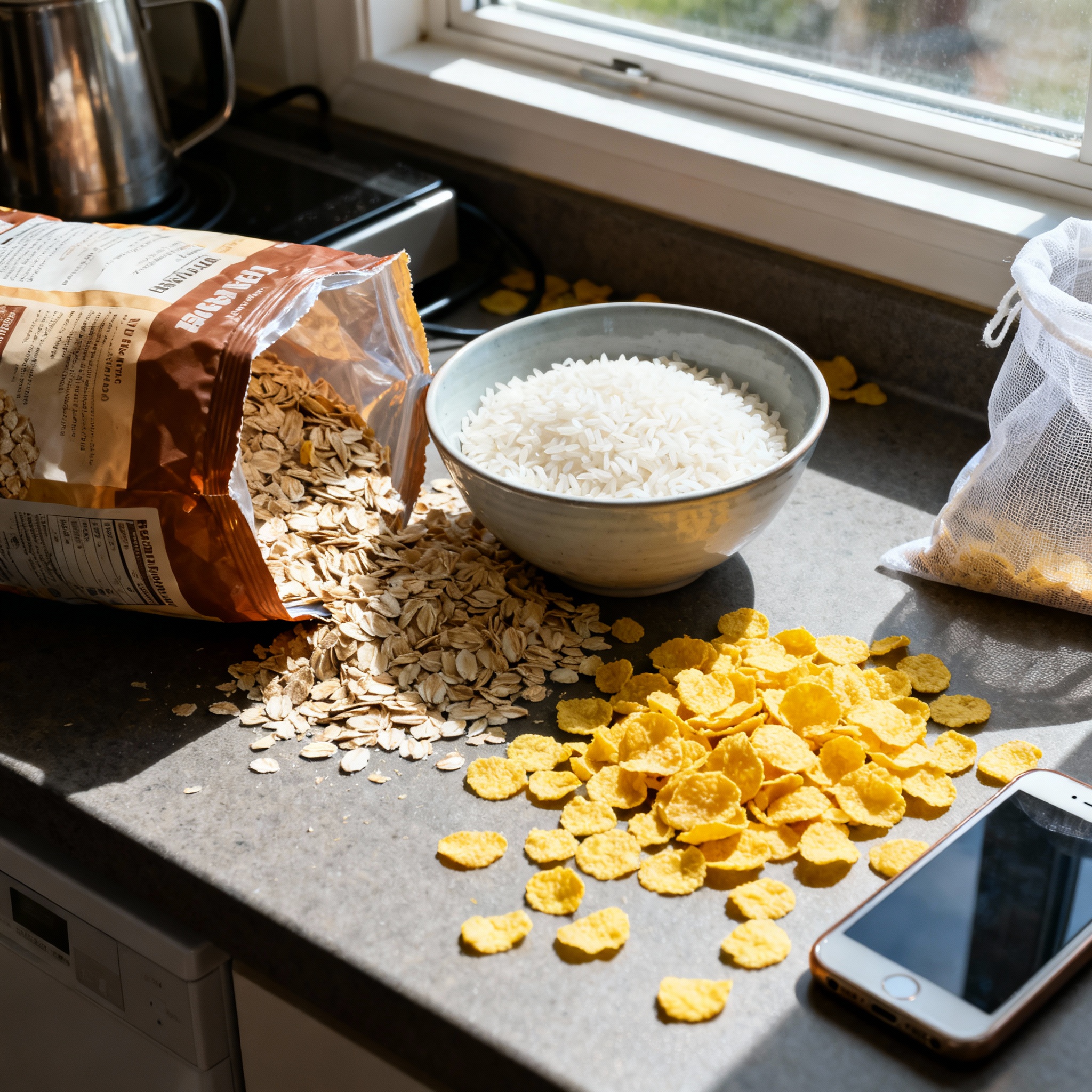
Brewing with Adjuncts: Rye, Corn, Rice, and Oats
I remember the first time I threw a handful of flaked oats into a stout recipe. I was standing in my garage in Asheville, staring at a bag I’d bought from the homebrew shop on impulse.
The guy behind the counter said it would make the beer “silky.” I didn’t believe him.
Barley does the work, right? Everything else is filler. I was wrong.
That stout came out with a mouthfeel so smooth it felt like drinking velvet. It wasn’t thicker in the way that sugar makes things thick; it was textural.
This is the kind of thing you can’t fake with malt extract or a higher mash temperature. That batch taught me that adjuncts are not just cheap substitutes.
They are tools. When you understand what they do at a structural level, you can build beers that barley alone cannot make.
Adjuncts are any non-malted grain or fermentable source used in brewing. While often associated with cost-cutting, they are essential for achieving specific stylistic textures.
Adjuncts get a bad reputation because of the macro lagers that use corn and rice to cut costs. But those breweries are not wrong to use them.
They are just optimizing for a different goal. Corn and rice strip flavor and body to make a clean, light beer.
Oats add creaminess, while rye adds spice and complexity. Wheat builds foam, though rye can gum up your mash tun.
Each one changes the beer in a specific, measurable way. If you know what you are doing, you can hit textures and flavors that all-malt recipes will never reach.
This guide covers the chemical and practical standpoint of the “big four”: oats, rye, corn, and rice. I will show you how to use them without screwing up your brew day.
Flaked Oats: The Silkiness
Oats are the secret weapon in New England IPAs and oatmeal stouts. If you have ever had a hazy IPA that felt soft and pillowy, you were tasting oats.
They do not add much flavor. What they actually add is beta-glucans.
Beta-glucans are long-chain polysaccharides that do not ferment. Yeast cannot break them down, so they stay in the finished beer.
![Diagram showing beta-glucan polysaccharide chains trapping water molecules] Shutterstock
These molecules trap water and create a gel-like texture. This makes the beer feel thicker and smoother, even if the final gravity is not especially high.
This is why oatmeal stouts feel creamy without being sweet. The beta-glucans are providing mouthfeel rather than sugar.
Flaked oats are pre-gelatinized, meaning they have been steamed and rolled flat. You can toss them directly into your mash without milling them.
I usually add them at around 10 to 20 percent of the total grain bill for a noticeable effect. If you go higher than 25 percent, you risk a stuck sparge.
The beta-glucans turn into a slimy porridge that clogs your grain bed. I learned this the hard way when I tried a 40 percent flaked oat recipe.
The runoff slowed to a drip, and I ended up scooping the mash into a brew bag to squeeze it out. It worked, but it was not fun.
Oats also increase haze because beta-glucans stay suspended and scatter light. This is perfect for a NEIPA but should be avoided if you want clarity.
According to research from Oregon State University, beta-glucans also improve head retention. The long-chain molecules create a network that traps CO2 bubbles.
If you are getting a stuck sparge with oats, add rice hulls to your grain bill. They create channels for the wort to flow through. Use half a pound of hulls for every five pounds of oats.
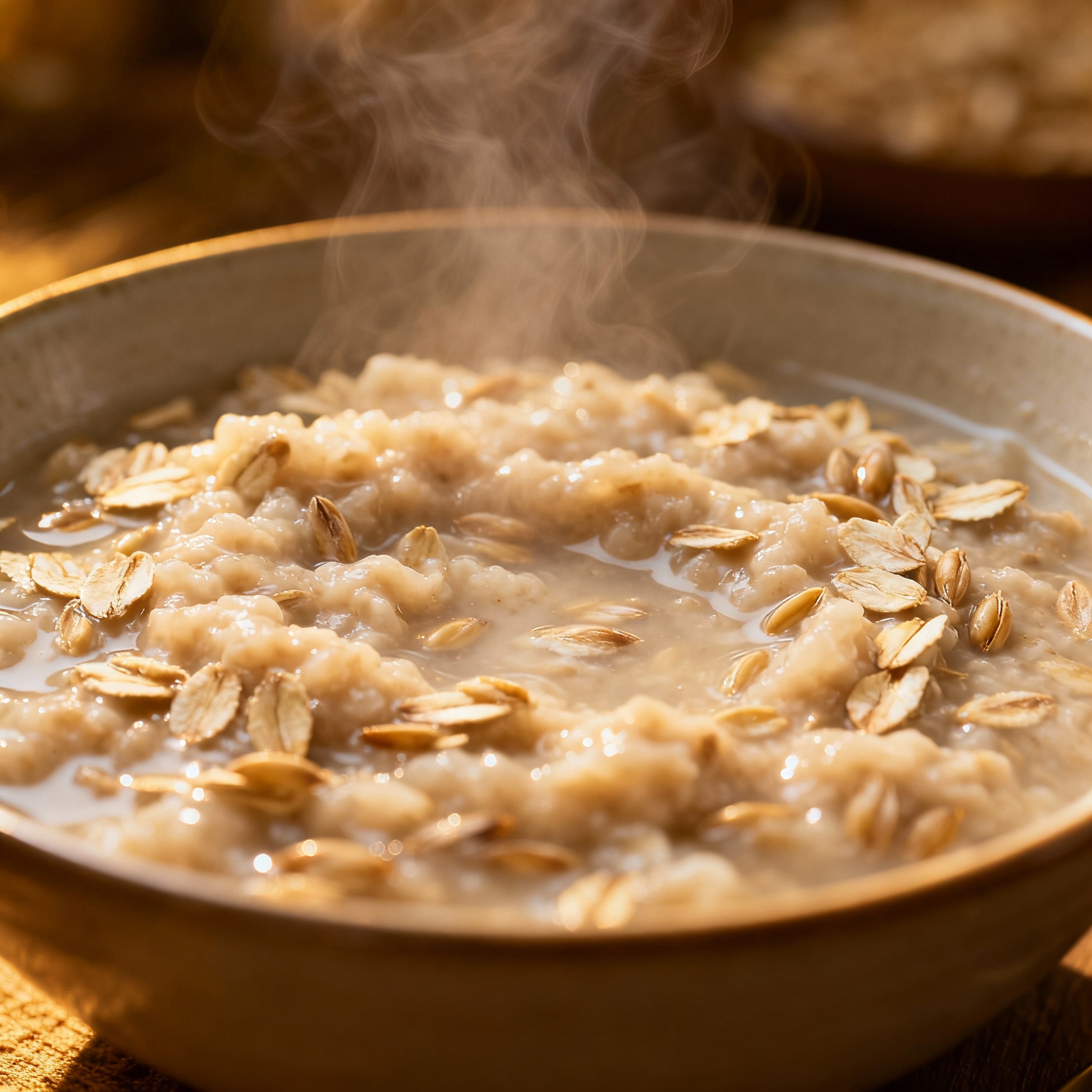
Rye Malt: The Spicy Stickiness
Rye is my favorite adjunct, but it is also the most annoying. It adds a dry, peppery spice that you cannot get from hops or yeast.
When I first used rye in a saison, I expected a rye bread flavor. It didn’t taste like that at all.
It tasted sharper and almost astringent in a good way. The finish was bone dry, and the spice lingered on the tongue.
The problem with rye is that it is loaded with beta-glucans and pentosans. These gummy compounds turn your mash into a gelatinous mess.
Rye has no husk, so it does not create a filter bed like barley. Above 15 percent rye, you are almost guaranteed a stuck mash without precautions.
I usually keep rye at 10 to 15 percent of the total grain bill. This level provides spice and dryness without turning the mash tun into a tar pit.
For a 20 percent rye beer, I throw in a full pound of rice hulls. It feels like overkill, but it works.
Rye malt is different from raw or flaked rye. Because it has been kilned, the starches are already gelatinized and the enzymes are active.
Flaked rye is pre-gelatinized but has no enzymes, so it must be mashed with base malt. Raw rye is ungelatinized and requires a cereal mash.
The flavor of rye is often described as spicy or earthy. I think it tastes dry and sharp with a faint sourdough-like tang.
Note that it does not taste like caraway seeds. That is a common misconception based on rye bread recipes.
Rye also contributes to haze because of its high protein and beta-glucan content. In a roggenbier, the haze is part of the style.
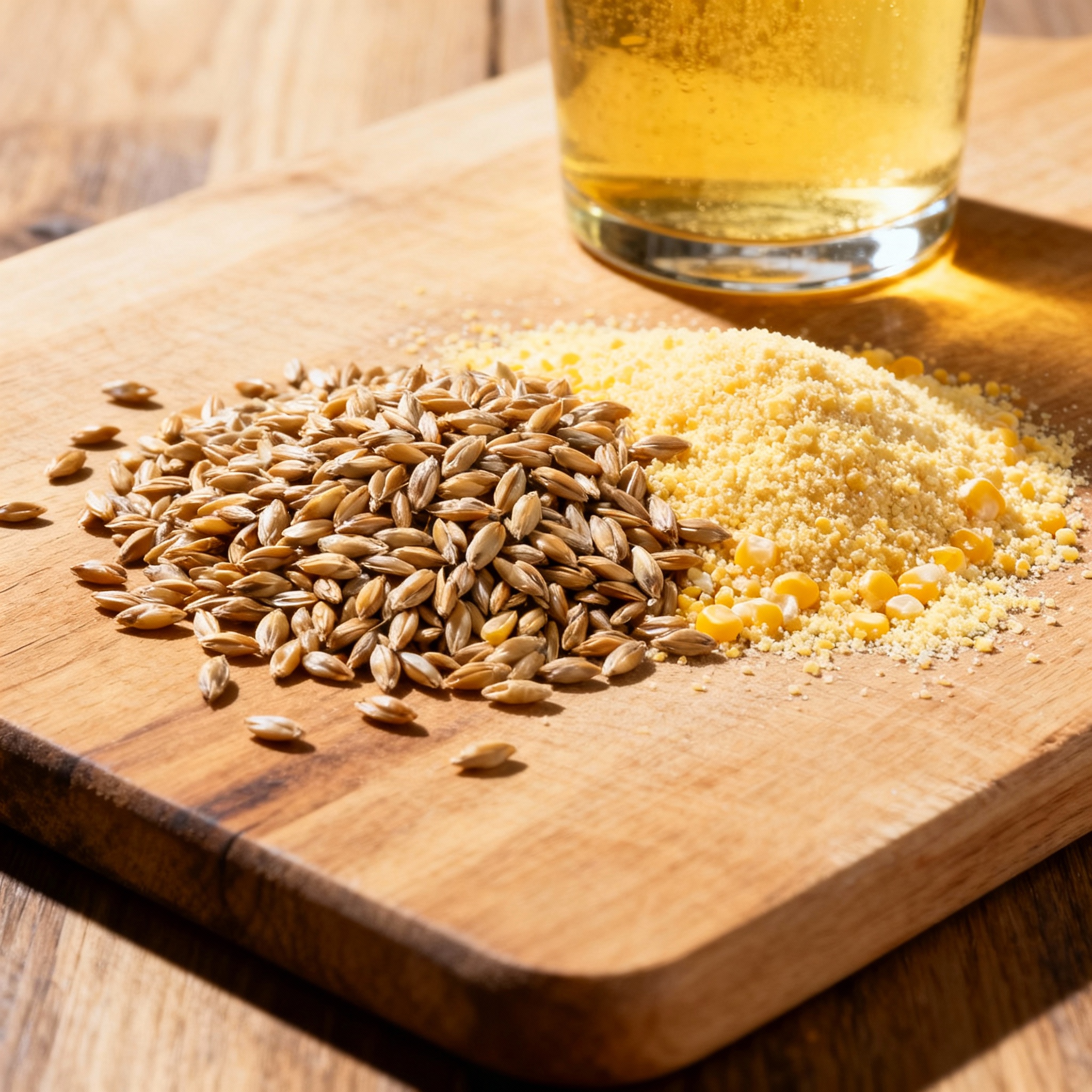
Corn and Rice: The Lighteners
Corn and rice are the adjuncts people love to hate. Because they appear in macro lagers, craft brewers often assume they are “bad” ingredients.
They are not bad; they are just neutral. They add fermentable sugars without adding flavor or body.
This is exactly what you want for a light, crisp lager. Budweiser uses rice, while Miller uses corn.
They use these ingredients because they want a beer that is clean, dry, and refreshing. Corn and rice deliver that perfectly.
Flaked maize (corn) is the easiest to work with. It is pre-gelatinized, so you can add it directly to the mash.
I use it in cream ales at 20 to 30 percent of the grain bill. It thins the body without dropping the alcohol content.
The result is a beer that drinks easy and does not fill you up.
Rice is trickier because brewer’s rice is not gelatinized. You need a cereal mash to convert it.
Flaked rice is pre-gelatinized and works just like flaked maize. I used it in a Japanese-style lager, and the result was bone dry and incredibly clean.
The rice stripped out the malt flavor, leaving only a faint grainy sweetness.
Be careful not to dilute the overall enzyme content of your mash. Corn and rice have no diastatic power.
If you go above 40 percent adjuncts, you may not have enough enzymes to convert the starches. Ensure at least 60 percent of your grain bill is a high-enzyme base malt like Pilsner malt.
Wheat: Head Retention
Wheat is technically an adjunct, though it feels like a base malt in styles like hefeweizen. It adds two primary things: protein and foam.
Wheat has more protein than barley. While protein creates haze, it also stabilizes foam.
When CO2 bubbles rise, they get trapped in a network of proteins and hop compounds. More protein means a thicker, longer-lasting head.
I usually use wheat at 30 to 50 percent for wheat-specific styles. Below 30 percent, you don’t get the full bready character.
Above 50 percent, you risk a stuck sparge because wheat has no husk. It turns into a sticky paste if overused.
Wheat adds a soft, bready flavor similar to fresh dough. In a hefeweizen, this pairs with the banana and clove esters from the yeast.
Malted wheat has been kilned and has enzymes. Raw wheat (or torrified wheat) has no enzymes and must be mashed with base malt.
Cereal Mashing: When You Need to Boil Raw Grains
Some adjuncts like raw corn grits or raw rice have not been gelatinized. Their starches are locked in granules that enzymes cannot reach.
If you mash them with barley directly, they will not convert. You will end up with starchy, cloudy beer.
The solution is a cereal mash. This is a separate mini-mash where you boil the raw adjuncts to gelatinize the starches.
![Infographic showing the step-by-step process of a cereal mash: Mixing, Boiling, and Adding to Main Mash] Shutterstock
You mix the raw adjunct with about 10 percent base malt for enzymes. Add water and bring the mixture to a boil.
Boiling turns the mixture into a thick porridge. Then you add this hot porridge to your main mash for conversion.
I did this for a pre-Prohibition lager using raw corn grits. The smell was incredible, like fresh cornbread.
When I added the porridge, it raised the main mash temperature by about 10 degrees. I had to account for that in my strike water calculations.
Cereal mashing adds time and complexity. You need a second pot and must monitor two mashes at once.
For most homebrewers, flaked adjuncts are a better choice. They give you 90 percent of the same result with none of the hassle.
Summary Table: Adjunct Comparison
| Adjunct | Typical % | Flavor | Mouthfeel | Common Issues | Pre-Gel? |
|---|---|---|---|---|---|
| Flaked Oats | 10-25% | Grainy | Silky, creamy | Stuck sparge >25% | Yes |
| Rye Malt | 10-15% | Dry, spicy | Thin, dry | Stuck mash, gummy | Yes |
| Flaked Maize | 20-40% | Neutral | Lighter body | Dilutes enzymes | Yes |
| Flaked Rice | 20-40% | Neutral | Very light | Dilutes enzymes | Yes |
| Wheat Malt | 30-50% | Bready | Fuller | Stuck sparge, haze | Yes |
| Raw Corn | 20-40% | Neutral | Light body | Needs cereal mash | No |
| Raw Rice | 20-40% | Neutral | Crisp | Needs cereal mash | No |
Conclusion
Adjuncts are not shortcuts; they are structural ingredients. Understanding their chemical properties allows you to manipulate the texture of your beer with precision.
Oats provide the beta-glucans for a silky mouthfeel. Rye delivers spice and dryness but requires careful handling of its gummy compounds.
Corn and rice are essential for creating the light, refreshing finish of a classic lager. Wheat is your best tool for building a persistent, pillowy head.
The key is intentionality. Don’t use adjuncts because a recipe tells you to. Use them because you understand how they will transform your finished product.