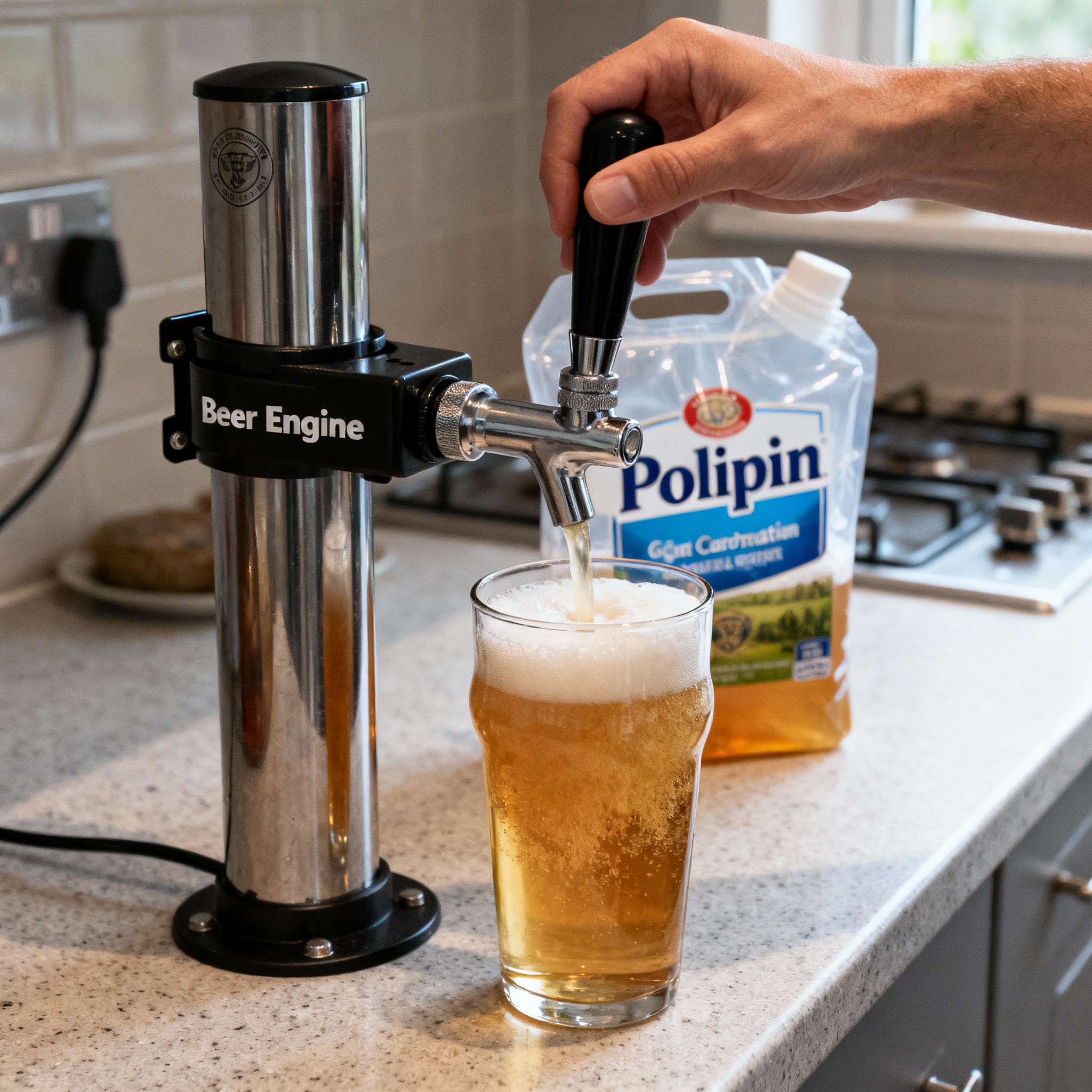
Cask Ale at Home: Beer Engines and Polipins
I used to think Real Ale was just “flat beer.” Then I spent three weeks in Yorkshire drinking cask ale pulled through a hand pump, and I realized I had been lied to my entire life.
That soft, velvety texture, the way the beer blooms in your mouth without the aggressive fizz, and the subtle yeast character still working in the glass-it wasn’t flat. It was alive.
When I got back to Asheville, I wanted that experience at home. I wanted the gentle pull of a beer engine, the low carbonation, and the secondary fermentation happening right in the vessel.
This isn’t a simple setup. You need the right vessel, the right carbonation level, and the right dispense method.
But if you want to taste beer the way it was meant to be tasted before modern kegging took over, this is the way.
The Vessel: Polipins and Cornelius Kegs
Real Ale is traditionally served from a cask, which allows the beer to condition and breathe. At home, you have two practical options: a polypin or a Cornelius keg fitted with a cask breather valve.
I started with a 5-liter polypin because they are cheap and collapsible. The beauty of a polypin is that it collapses as you drink, ensuring the beer stays in contact with less oxygen.
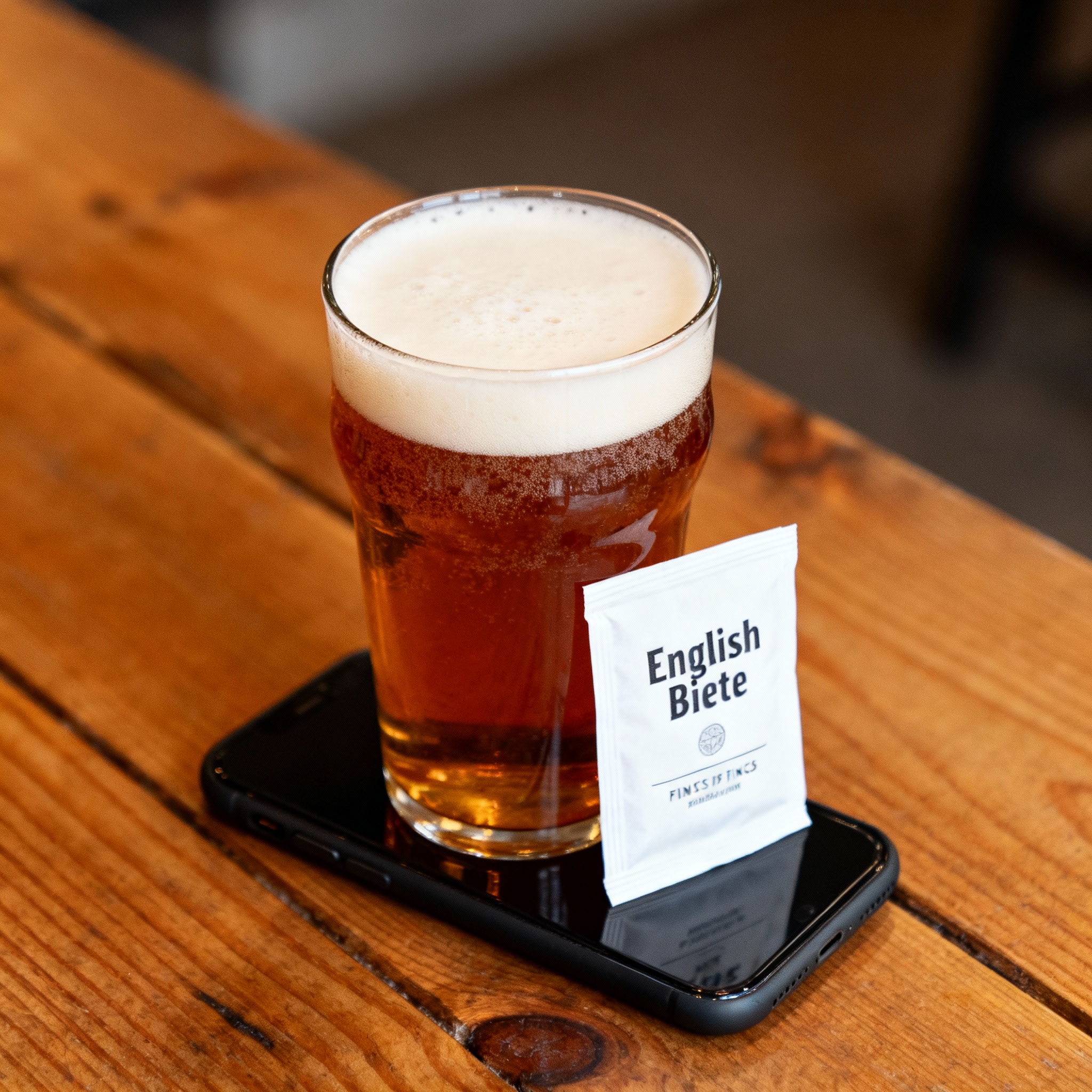
The second option is a Cornelius keg with a cask breather valve. This is what I use now because I already had the kegs.
A breather valve allows air to enter the keg as you draw beer out, but it filters the air through a one-way membrane to prevent contamination. You are letting it carbonate naturally from priming sugar, just like in a polypin.
If you use a Corny keg, label it clearly as your “cask keg” and never force-carbonate it. Switching between high-pressure carbonation and cask service confuses your process and risks over-carbing your next batch.
Secondary Fermentation: Priming for Soft Carbonation
Real Ale is not flat, but it is not fizzy either. The target carbonation level is around 1.0 to 1.2 volumes of CO2.
For reference, most American ales are carbonated to 2.4 to 2.6 volumes. British cask ale sits much lower because the carbonation happens naturally from residual yeast activity, not from a tank.
Standard carbonation follows Henry’s Law, where the amount of dissolved CO2 is proportional to its partial pressure. In a cask, we target a very low equilibrium of roughly 1.1 volumes. This requires only 2.0 to 2.1 grams of sucrose per liter, compared to the 5.0 to 6.0 grams required for standard bottle conditioning.
I use table sugar because it is predictable. For 19 liters (5 gallons), I use about 38 to 40 grams.
The yeast slowly works through the sugar over the course of a week or two at cellar temperature. If you tap the cask too early, the carbonation will be too low; if you wait too long, you will get more foam than liquid.
If you are brewing a low-gravity session bitter (under 4% ABV), reduce your priming sugar slightly to 8 grams per 5 liters. Lower-alcohol beers hold carbonation differently, and you risk over-carbing if you use the standard formula.
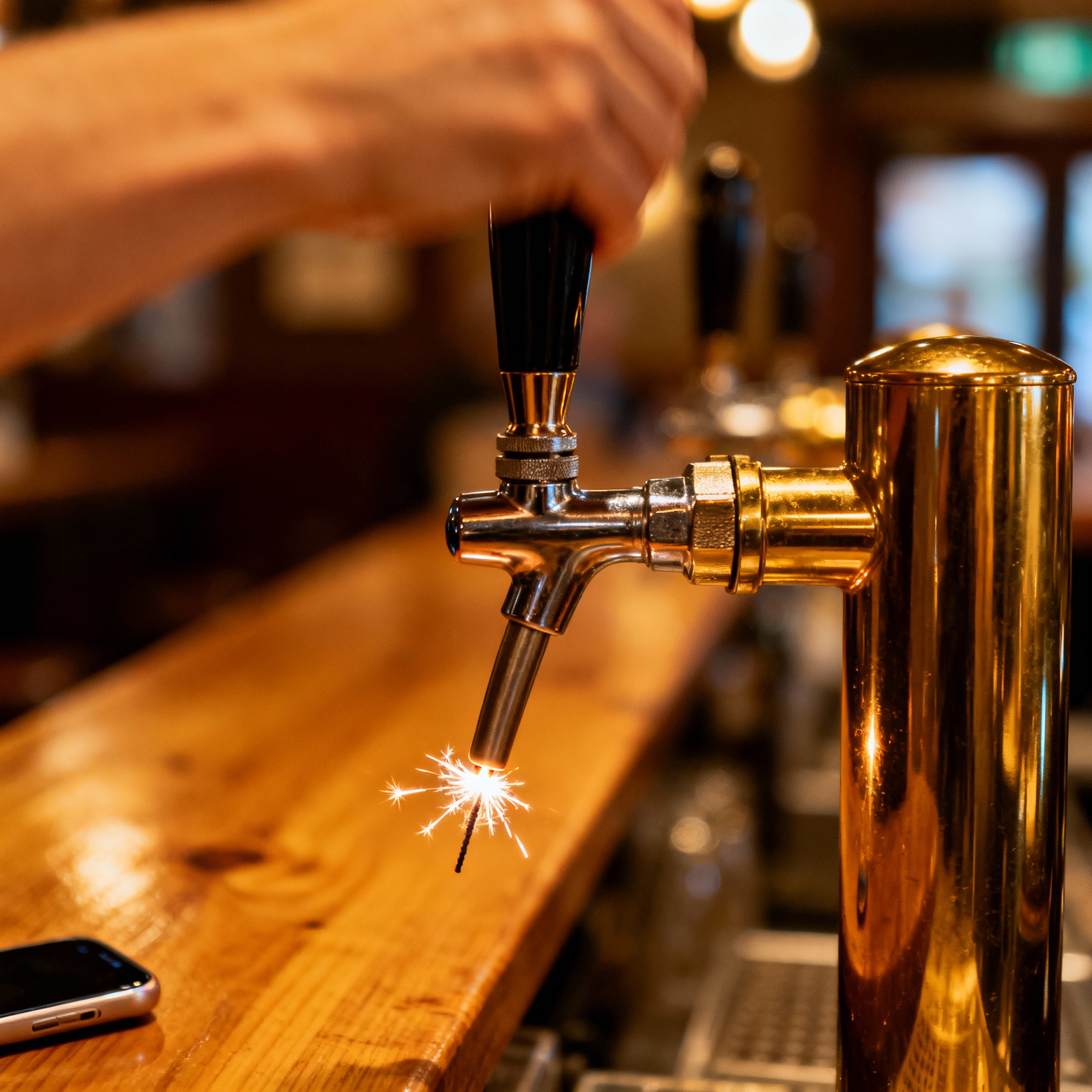
The Beer Engine: How the Hand Pump Works
A manual beer engine is a manual pump that pulls beer from the cask up to the tap. It does not push the beer with CO2 pressure; you pull the handle, and the piston inside the pump creates suction.
Each pull of the handle moves about half a pint. This is completely different from a standard kegerator setup because there is no gas pressure involved in the dispense.
The critical part is the check valves inside the pump. These valves allow beer to flow in one direction only.
Cleaning the beer engine is non-negotiable. After every cask, I flush the pump with warm water and then run a mild alkaline cleaner through the line.
If your beer engine starts pulling slowly, check the check valves first. Nine times out of ten, they are crusted with beer stone or yeast; soak the assembly in PBW overnight to restore suction.
Sparklers: The Northern vs. Southern Debate
The sparkler is a small restrictor plate that screws onto the end of the beer engine’s spout. It forces the beer through tiny holes, which aerates it and creates a dense, creamy head.
In Northern England, sparklers are mandatory for that thick, whipped-cream head. In Southern England, they are considered heresy because they can strip out delicate hop aromas.
I choose based on the style. If I am pouring a malty best bitter, I use the sparkler; if it is a late-hopped pale ale, I leave it off.
If you do use a sparkler, clean it after every session. The tiny holes clog with yeast and protein, and a dirty sparkler will spray beer everywhere instead of producing a clean head.
Shelf Life: The 3-Day Rule
Once you tap a cask, the clock starts because Real Ale is a living product. Once you introduce air into the system, oxidation and contamination become real risks.
In a pub, a cask is consumed within three to five days. At home, a 5-liter polypin can be finished in two sessions, but a 5-gallon keg is harder to move.
This is where the cask breather valve helps. By preventing unfiltered air from entering the keg, you can extend the shelf life to about five days.
If your cask ale starts to taste flat or stale after a few days, do not try to “fix” it by adding CO2. You will ruin the texture and turn it into a weird hybrid that is neither cask ale nor proper carbonated beer.
Closing Thoughts
Serving Real Ale at home is not convenient, but the reward is a drinking experience you cannot replicate with a standard keg system.
The soft carbonation, the living yeast character, and the ritual of the hand pull create a completely different beer.
You do not need a commercial cellar. You just need the right tools, the right process, and the willingness to drink your beer before it spoils.
References
- Oregon State University. “Home Brewing Techniques and Equipment.” Extension Service.
- Institute of Brewing & Distilling. “Cask Ale Conditioning and Service Standards.”
- CAMRA. “Guide to Real Ale.” Campaign for Real Ale.
- Kegland. “Cask Breather Valve Technical Documentation.”