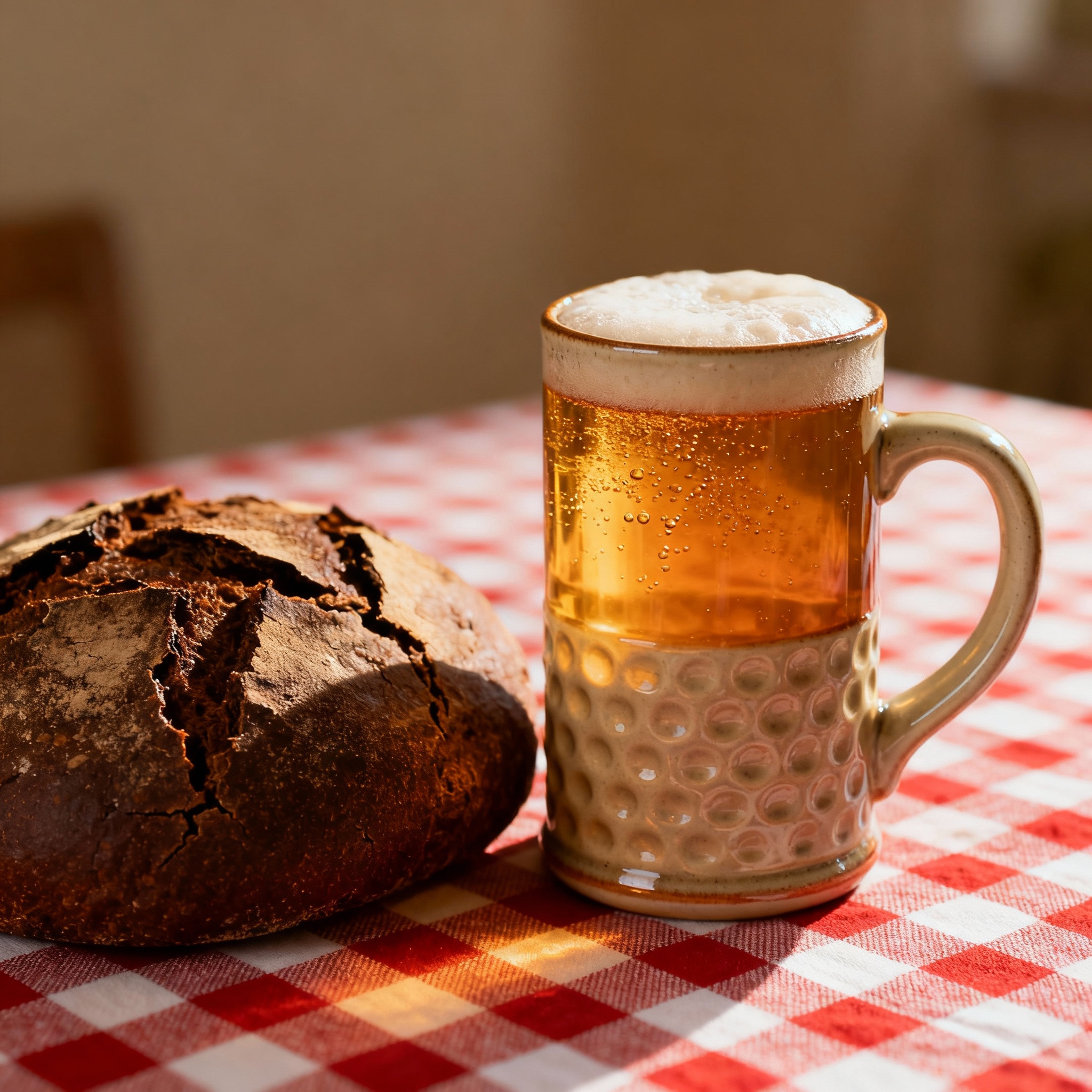
Lager Families: Helles, Dunkel, and Bock
I used to think lager meant cold, fizzy, and forgettable. Then I spent three weeks in Munich during Starkbierzeit, and I realized I’d been drinking the wrong lagers my entire life.
I stopped chasing hops and started paying attention to malt. Bavarian lagers coax sweetness, toast, and bread out of barley without burying it under bitterness or fruit esters.
These beers are clean, but clean doesn’t mean boring. It means you can taste every nuance of the grain itself.
Munich Helles: The Malt-Accented Golden Lager
Helles is the beer that made me stop comparing everything to Pilsner. While Pilsner leans on Saaz hops and a snappy finish, Helles leans on malt sweetness and a gentle, rounded body.
The grain bill is usually 100% Pilsner malt or a mix with a small percentage of Munich Type I. This adds bread crust and sweetness without pushing the color beyond a pale gold (3-5 SRM).
In a Helles, a chloride-heavy water profile is essential to enhance the perceive sweetness and “roundness” of the Pilsner malt. Target a 2:1 chloride-to-sulfate ratio to prevent the hops from becoming too sharp.
The bitterness usually sits between 16 and 22 IBUs, which is low compared to a classic Pilsner. Using a clean lager strain like Wyeast 2308 ensures the final product tastes like grain and water, not fermentation byproducts.
If your Helles tastes too thin, increase your mash temperature to 152-154°F. This creates more residual dextrins, providing the soft mouthfeel required for the style.
Munich Dunkel: Bread Crust in Liquid Form
Dunkel is proof that dark beer doesn’t have to mean roasty or bitter. Its color comes from Munich malt rather than roasted malts like chocolate or black malt.
The grain bill is built on Munich malt, providing flavors of bread crust, light chocolate, and nuttiness. These flavors are the result of intense Maillard reactions during the kilning of the Munich malt.
Munich malt is kilned at higher temperatures than Pilsner malt, which develops melanoidins. These compounds provide the characteristic “toasty” flavor and amber-to-brown color without the astringency of highly roasted malts.
I recommend a long lagering period of at least six weeks at 34°F. This allows the rough edges of the malt to disappear, resulting in a smooth, integrated finish.
If your Dunkel feels too sweet, you likely overused Caramunich malt or mashed too high. Stick to Munich malt as your base and mash no higher than 154°F to ensure it remains rich but not sticky.
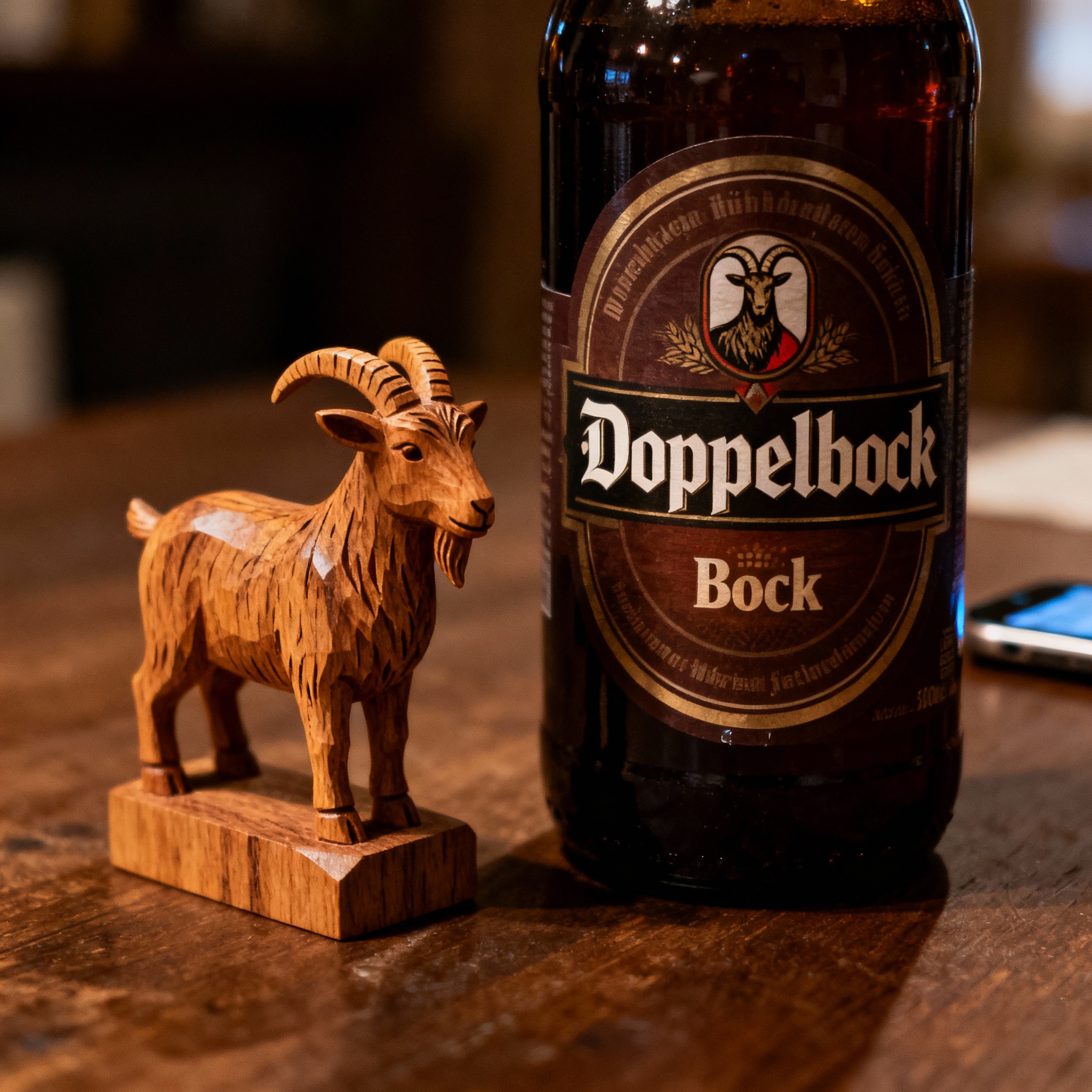
Bock and Doppelbock: Liquid Bread
Bock is a serious beer, originally brewed by monks to sustain them during Lenten fasts. Doppelbock, or “double bock,” is the stronger version, with ABVs running from 7% to over 10%.
The malt complexity here is immense, featuring notes of raisins, molasses, and toasted bread. Because the original gravity is so high (often 1.080+), fermentation can take three weeks or longer.
High-gravity worts create osmotic stress, which can cause yeast cells to leak intracellular components or stall. A massive pitch of healthy yeast is required to handle the sugar concentration in a Doppelbock.
Lagering time for these heavy beers is not optional. I cold-condition my Doppelbocks for at least 10 to 12 weeks to allow the complex alcohols and malt flavors to meld cohesively.
To boost malt complexity without adding dark grains, use 3-5% Melanoidin malt. This adds a deep, bready flavor that mimics the effects of traditional decoction mashing.
Decoction: The Physics of Flavor
Decoction mashing involves pulling a portion of the mash, boiling it, and returning it to the main vessel. While modern malts are well-modified, decoction still offers unique flavor benefits for German lagers.
Boiling the thick portion of the mash intensifies the malt character through additional Maillard reactions. It provides more depth and a slightly darker color that single-infusion mashes often lack.
Boiling a portion of the grain physically ruptures the starch granules, making them more accessible to enzymes. This can improve mash efficiency and contribute to the “chewy” malt texture found in authentic Bavarian lagers.
Lagering Times and Gravity
There is a direct correlation between a lager’s gravity and its required conditioning time. Higher gravity beers contain more residual compounds that require time for the yeast to reabsorb.
A traditional German rule of thumb is one week of lagering for every degree Plato of original gravity. A 12°P Helles needs 12 weeks, while a 19°P Doppelbock technically requires nearly five months.
If you lack space for months of lagering, perform a diacetyl rest. Raise the temp to 60-65°F for 48 hours at the end of fermentation to speed up the reabsorption of buttery off-flavors.
Conclusion
Helles, Dunkel, and Bock taught me that lager isn’t defined by what is missing, but by the presence of malt flavor and clean fermentation. These styles require the patience to let time do the heavy lifting in the cellar.
By focusing on Munich malts and cold-conditioning kinetics, you can produce beers with immense depth. Lager brewing is a study in precision, and these three families are the ultimate reward for a patient brewer.
References
- Noonan, Greg. New Brewing Lager Beer. Brewers Publications, 1996.
- Fix, George. Principles of Brewing Science. Brewers Publications, 1999.
- Palmer, John. How to Brew. Brewers Publications, 4th Edition, 2017.
- Kunze, W. (2014). Technology Brewing and Malting. VLB Berlin.
- Weyermann Malts. “Munich Malt Specification Sheets.”