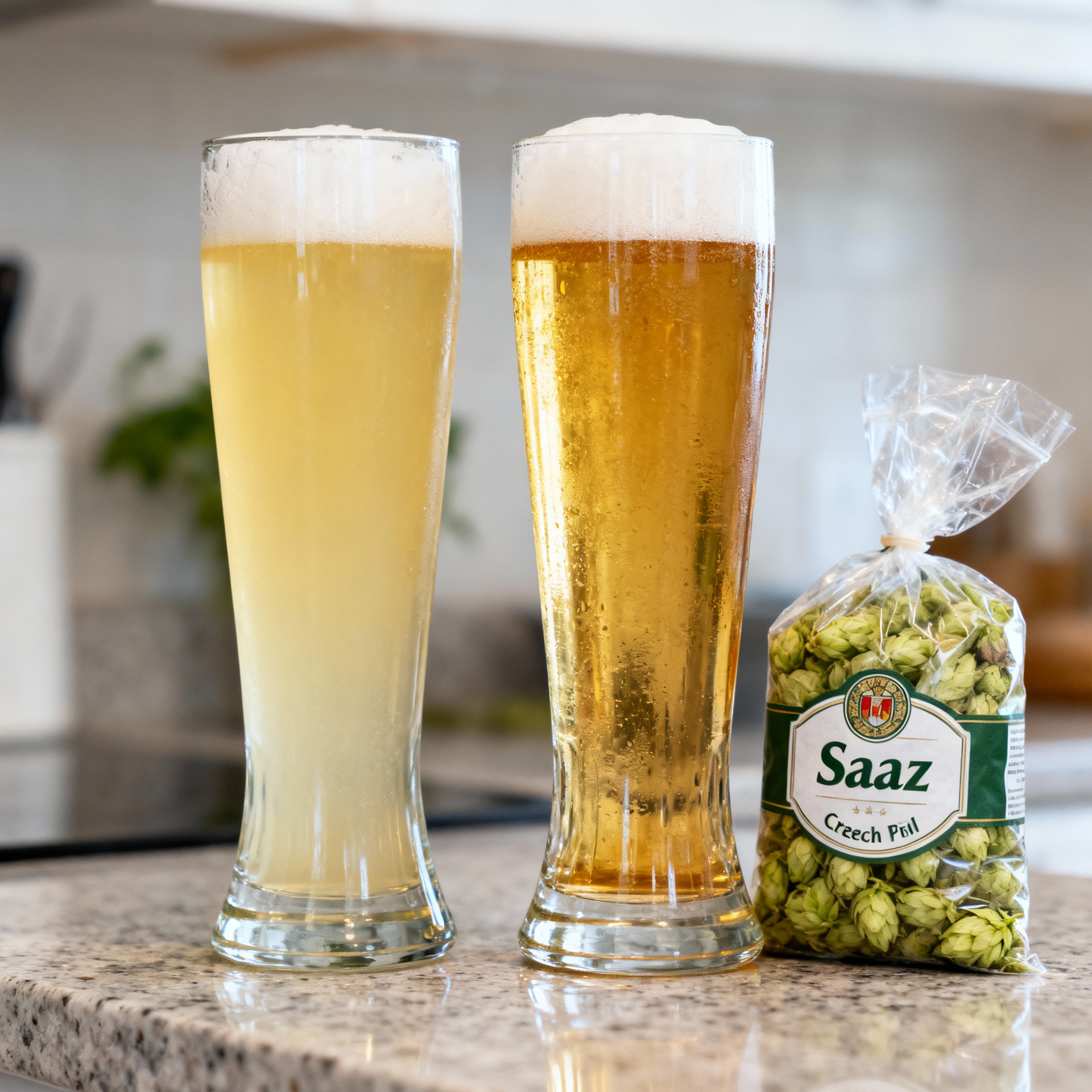
The Battle of Pilsners: German vs. Czech
I’ll never forget the moment I realized I’d been drinking the wrong beer for a decade. It was 2019, late summer in Prague, sitting in a basement pub near Wenceslas Square.
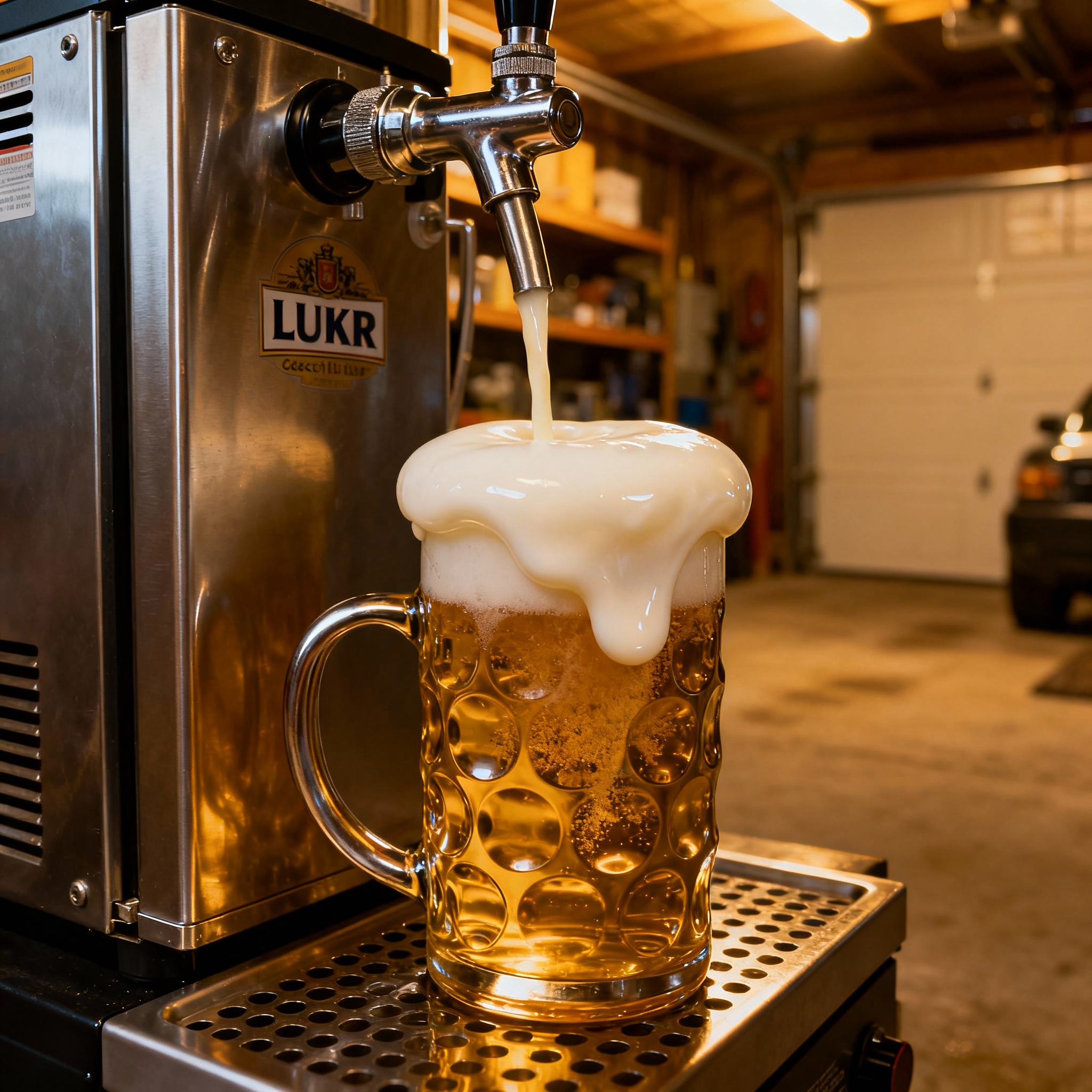
I was nursing a Pilsner Urquell pulled from a LUKR tap with a foam head that looked like whipped cream. I took a sip and stopped mid-swallow; this wasn’t the crisp lager I knew from home.
It was richer and bread-like, with a honey sweetness that dissolved into a delicate bitterness. It tasted like someone had ground up fresh hay and mixed it with warm dinner rolls.
Two weeks later, I was in Bavaria and ordered a Pilsner at a beer garden. Despite the same glassware and golden color, it was a totally different beer.
This one was lean, bone-dry, and almost austere. The bitterness hit first, sharp and clean like biting into a raw radish, with a finish crisp enough to cut glass.
Both beers were technically pilsners and both were delicious. However, they came from completely different philosophies about what a pale lager should be.
One was built for richness and drinkability, while the other was built for precision and thirst-quenching sharpness. Back home, I started digging into the chemistry to understand the split.
The answer came down to three primary factors: water, hops, and intent. This article covers two years of research into why these two identical-looking beers diverge so significantly.
Czech Premium Pale Lager: Soft Water, Big Flavor
The Czech style, technically called a Bohemian Pilsner, was invented in 1842 in the city of Plzeň. The brewers there possessed an incredible advantage: incredibly soft water with almost no dissolved minerals.
Soft water is typically poor for dark beers because it extracts harsh tannins from roasted malts. However, it turned out to be the perfect canvas for pale lagers.
Plzeň’s water has a total dissolved solids (TDS) content of approximately 30 to 50 ppm. This lack of minerality allows the delicate malt sugars and floral hop oils to express themselves without interference from sulfates or carbonates.
When you brew with soft water, the malt flavors come through in full, unfiltered detail. There is nothing in the water to suppress sweetness or add a mineral “bite.”
Czech pilsners also utilize Saaz hops, which are the gentlest and most floral of the noble varieties. Instead of resin, Saaz provides delicate spice, black pepper, and a grassy finish.
The third piece of the puzzle is decoction mashing. Traditional Czech breweries boil a portion of the mash separately to caramelize sugars and create a deeper malt profile.
If you are brewing a Czech pilsner and your tap water is hard, dilute it with distilled or RO water. Aim for a calcium level around 10 to 20 ppm and sulfate below 10 ppm for an authentic profile.
Czech pilsners finish with a final gravity around 1.012 to 1.014. That residual sugar provides the body and slight sweetness required to balance the noble hop bitterness.
German Pils: Crisp, Dry, and Unapologetic
German pilsner, or “Pils,” evolved as northern German brewers tried to copy the Czech style using local ingredients. They had different water and a cultural preference for dry, clean finishes.
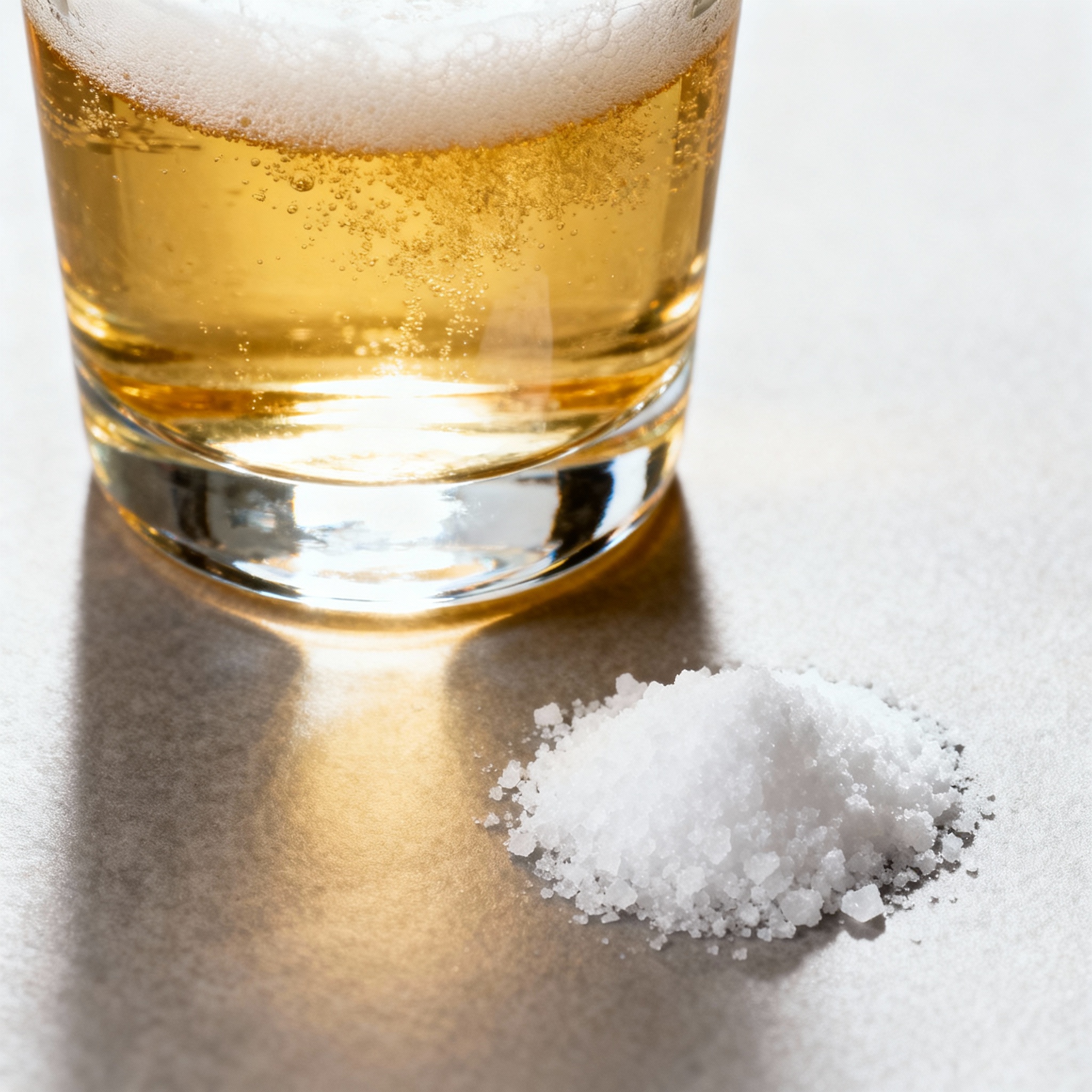
German brewing water, especially in Dortmund, is harder and contains significantly more sulfate. Sulfate accentuates hop bitterness and provides a drier, more “clipped” finish.
Typical German Pils sulfate levels range from 50 to 150 ppm. This makes the water profile hop-forward, whereas Czech water is mineral-neutral and malt-forward.
Sulfates () increase the perception of hop bitterness by making it taste “sharper” on the palate. In a German Pils, this mineral profile is essential for achieving the trademark thirst-quenching character.
German brewers also favor different hops like Hallertau, Tettnang, or Spalt. These noble hops are still floral but offer a slightly sharper and more resinous bitterness than Saaz.
German Pils is fermented to a lower final gravity, usually between 1.008 and 1.010. The yeast consumes more sugar, leaving behind a bone-dry finish that scrubs the palate.
The malt bill is simpler, often relying on a single-infusion mash. The goal is not malt complexity but rather a blank canvas for the hops to shine.
When targeting a German Pils, add gypsum (calcium sulfate) to reach a sulfate level of 100 ppm. Be conservative, as excessive sulfate can lead to a chalky or harsh metallic taste.
Yeast Selection: The Invisible Engine
Yeast is where most pilsners fail. Even with perfect water and hops, the wrong yeast or temperature will result in flavors resembling corn syrup or butter.
The most common lager yeast is Saflager W-34/70. It is reliable and ferments clean, making it an excellent choice for a neutral German Pils.
However, Czech breweries often favor strains that produce a slight buttery note called diacetyl. In small amounts, this adds a creamy richness that complements the decoction maltiness.
In most styles, diacetyl is a major flaw. In Czech lagers, a trace amount (below 0.1 mg/L) provides a perceived fullness that rounds out the bitterness of the Saaz hops.
I recommend WLP802 (Czech Budejovice Lager) or Wyeast 2001. Both strains produce the soft, malty profile required for an authentic Bohemian experience.
Lagers require roughly twice the yeast cell count of ales. I suggest using two packets of dry yeast or a 2-liter starter to ensure a healthy, off-flavor-free fermentation.
If you want a hint of Czech diacetyl, skip the diacetyl rest and let the beer free-rise to 60°F. For a clean German finish, perform a full rest at 65°F for 48 hours.
The Pour: Foam and the LUKR Tap
I didn’t understand foam until I watched a Czech bartender use a side-pull LUKR faucet. This tap creates dense, wet foam by forcing beer through a restrictor plate.
The foam comes out thick and creamy like whipped egg whites. This head traps hop aromatics and softens the perception of bitterness as you sip through it.
German pilsners are also poured with foam, but the tradition favors a drier, tighter head. The pour is quicker and often more aggressive to drive off excess carbonation.
Czech pilsners are typically carbonated to 2.3-2.5 volumes of . German Pils runs higher, around 2.5-2.8 volumes, making the German version feel more effervescent.
For Czech pilsners, use a tulip glass and pour slowly to preserve the delicate bubbles. For German Pils, pour aggressively into the center of the glass to release and build a tall head.
Brewing Techniques: Step Mash vs. Single Infusion
The mash method directly affects the body and fermentability of your beer. Czech brewers traditionally use decoction, but a step mash can also increase complexity.
A step mash involves holding the grain at multiple temperatures. I start at 144°F for 30 minutes and raise to 158°F for another 30 minutes to create a complex sugar profile.
German Pils usually relies on a single-infusion mash at 150-152°F. This is the sweet spot for maximum fermentability, resulting in a dry, attenuated beer.
The 144°F rest favors beta-amylase, producing highly fermentable maltose. The 158°F rest favors alpha-amylase, leaving behind unfermentable dextrins that provide the “chewy” mouthfeel found in Czech versions.
If your mash pH is above 5.6, you risk extracting harsh tannins from the grain husks. I target a pH of 5.3 to 5.5 and use lactic acid to adjust as needed.
If you cannot decoct or step mash, add 5 to 10 percent Munich malt to your grist. This adds the bready richness that mimics the complexity of traditional decoction methods.
Conclusion
The difference between a Czech and German pilsner is a reflection of two different brewing philosophies. One prioritizes malt richness and soft drinkability, while the other favors hop bitterness and precision.
If you are brewing your first pilsner, start with the German style as it is more forgiving. Once you have mastered water chemistry, attempt the Czech version for a true technical challenge.
Pay attention to the variables: water, hops, yeast, and temperature. Change one, and you change the beer. That is the true beauty of brewing pale lagers.
References
- Briggs, D.E., et al. Brewing: Science and Practice. Woodhead Publishing, 2004.
- Fix, G., and Fix, L. An Analysis of Brewing Techniques. Brewers Publications, 1997.
- Noonan, G. New Brewing Lager Beer. Brewers Publications, 1996.
- Palmer, J., and Kaminski, C. Water: A Comprehensive Guide. Brewers Publications, 2013.
- Ward Laboratories. “Water Report: Asheville, NC Municipal Water,” 2021.
- White Labs. “Yeast Strain Database: WLP802 Czech Budejovice Lager.” Accessed 2024.
- Wyeast Laboratories. “2001 Pilsen Lager Yeast Specification Sheet.” Accessed 2024.