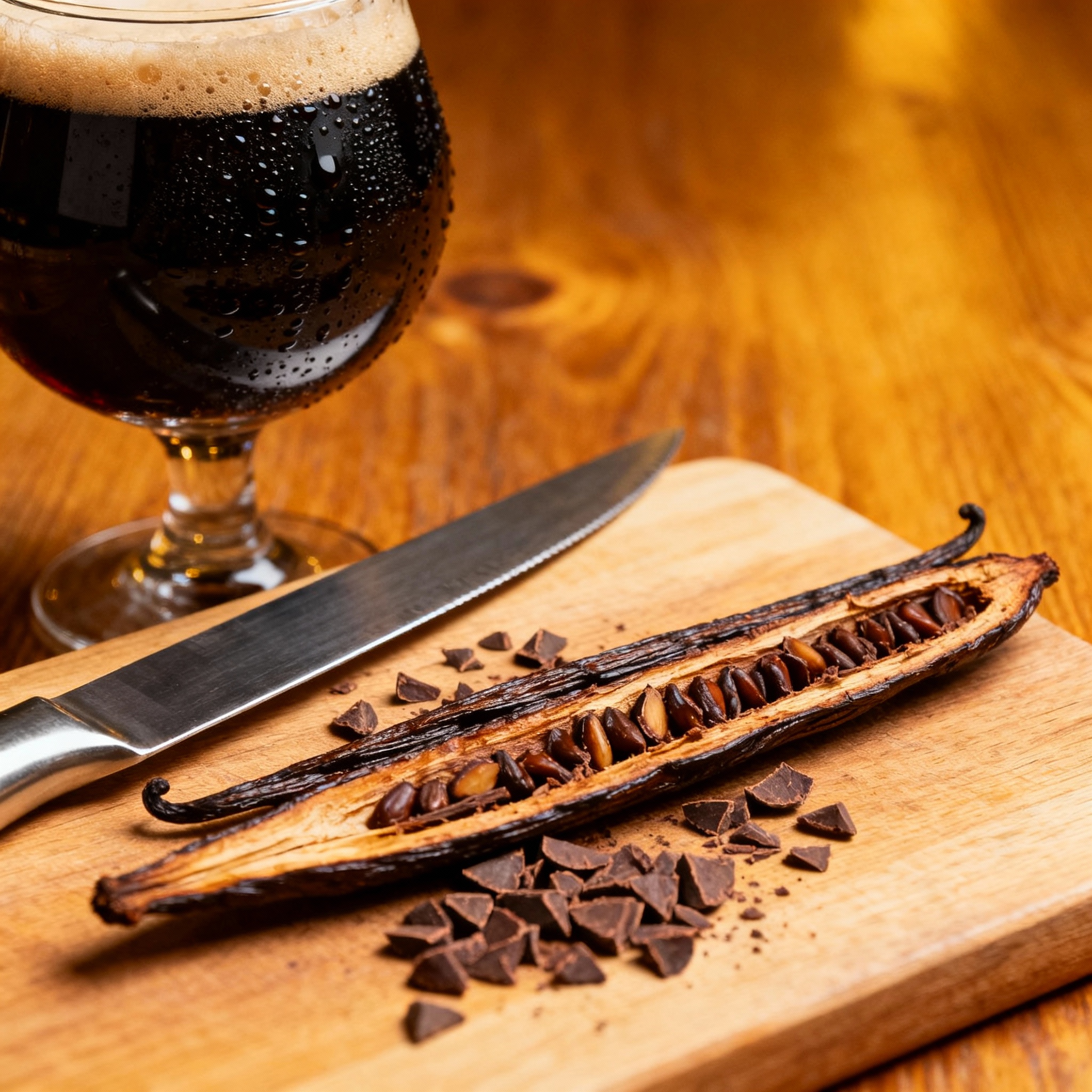
Pastry Stout Staples: Vanilla Beans and Cacao Nibs.
I killed my first pastry stout by being cheap. I used imitation vanilla extract and dumped cocoa powder straight into the fermenter, resulting in a muddy mess that smelled like a gas station candle.
My partner’s first sip said it all: “This tastes like regret.” I learned the hard way that you cannot cut corners on adjuncts if you want professional results.
Vanilla beans and cacao nibs are expensive, but using the real thing is the difference between a stout that tastes like dessert and one that tastes like a mistake. Quality ingredients matter more than fancy yeast or recipe tweaks.
Vanilla Beans: Quality Costs for a Reason
Grocery store vanilla extract is often garbage for brewing because it contains water, sugar, and artificial flavorings that leave a chemical aftertaste. Real vanilla beans provide the deep, creamy sweetness required for an authentic pastry stout.
Madagascar (Bourbon) beans are the industry workhorse, delivering the classic creamy vanilla flavor found in premium baked goods from suppliers like Beanilla or Penzey’s. Tahitian beans are lighter and more floral, while Mexican beans offer a sharper, spicier edge.
The process requires splitting the bean lengthwise and scraping out the inner paste. Both the aromatic paste and the pod itself should go into your beer for maximum flavor extraction.
Store your vanilla beans in a sealed jar with a splash of vodka or rum. This prevents them from becoming brittle and losing potency while simultaneously starting the extraction process.
Making Tinctures: Flavor Without Infection
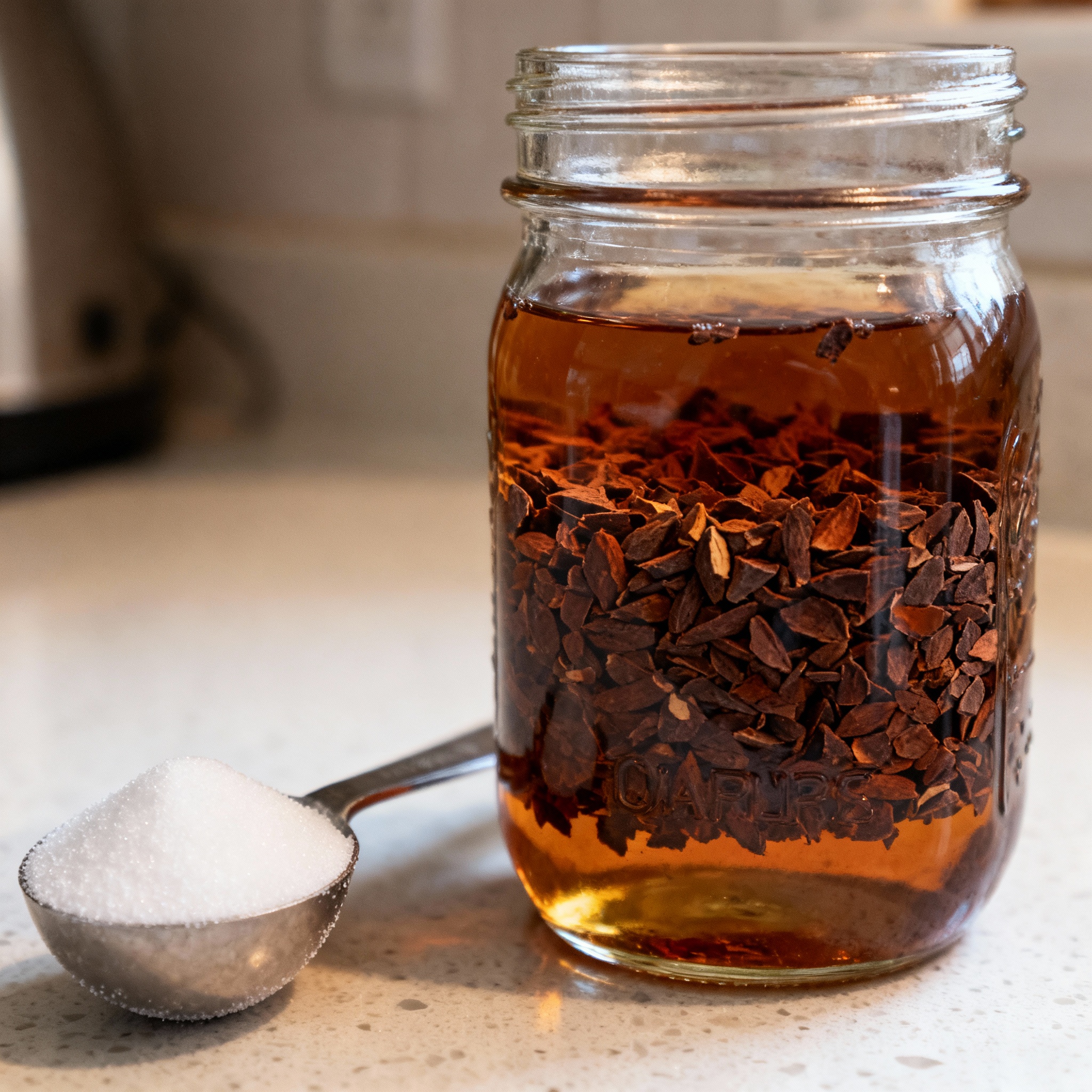
A tincture involves soaking your adjuncts in high-proof alcohol to extract flavor and ensure sanitation. Neutral vodka is best for beginners as it won’t add unintended flavors to your base beer.
Drop your split and scraped beans into a mason jar and cover them with vodka for one to two weeks. This method pulls flavor compounds more efficiently than beer alone and kills any wild yeast or bacteria on the beans.
Once ready, dose the tincture gradually into your keg or bottling bucket. Always taste as you go; it is easy to add more, but impossible to remove once the vanilla becomes overpowering.
High-proof alcohol (ethanol) acts as a solvent for vanillin and other non-polar aromatic compounds. This prevents “off-flavors” from long-term contact with vegetative matter that can occur when dry-beaning directly in the fermenter.
Cacao Nibs: Roast Them or Regret It
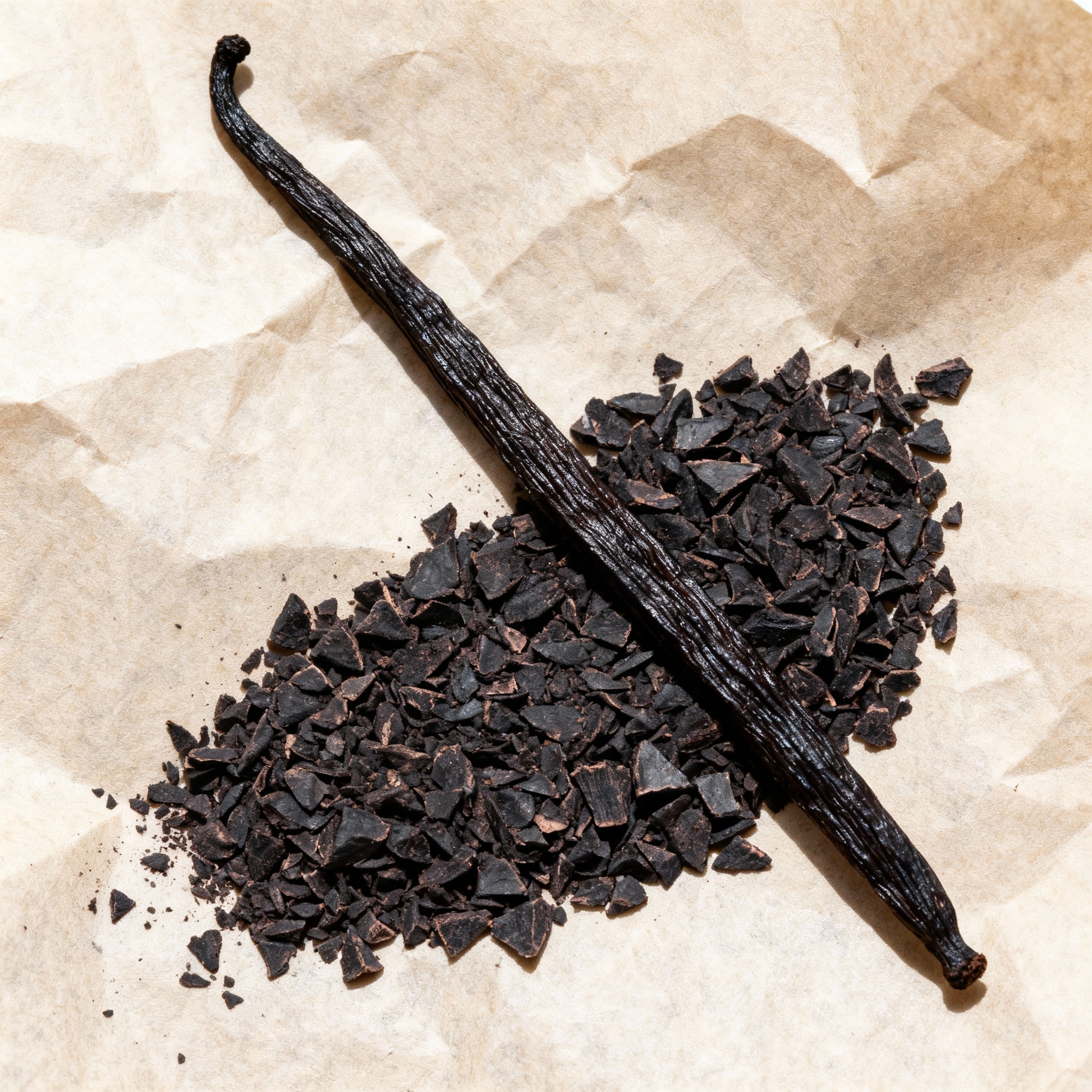
Cacao nibs provide rich chocolate flavor without the fat found in bars, which is critical because fat destroys beer foam. However, raw nibs from sources like Ghirardelli or high-quality organic brands are often bland and vegetal if not roasted.
Roasting your nibs at 300°F for 15 minutes brings out essential oils and deepens the chocolate profile. Check them frequently; they are ready when they smell like brownies, but burnt nibs will ruin a batch with acrid char flavors.
Like vanilla, roasted nibs work best as a tincture to keep the final beer clear of debris. If you add them directly to the fermenter, limit contact time to five days to prevent an oily film from wrecking head retention.
Crush your roasted nibs in a freezer bag with a rolling pin before making your tincture. This increases the surface area and significantly speeds up the chocolate extraction process.
The Cocoa Powder Trap
Avoid using cocoa powder in your fermenter as it creates a gritty, cloudy sludge that refuses to dissolve. It often settles at the bottom of bottles or kegs, leaving a bitter and chalky sediment.
Powder is also more processed and astringent than nibs. Nibs provide a rounder, richer chocolate flavor that is integrated with the roasted malts of a stout.
If you must use powder, add only a small amount at the very end of the process. However, the investment in real nibs is always rewarded with a superior mouthfeel.
While nibs are lower in fat than chocolate, they still contain cocoa butter. Tinctures help separate these fats; chilling the tincture before use allows you to skim off any solidified oils, protecting your beer’s head retention.
Dosing Rates and Timing
For a standard pastry stout, start with one Madagascar vanilla bean per gallon of beer. For a bolder “pastry bomb” profile, you can push this to two or even three beans per gallon.
Cacao nibs should start at approximately four ounces per five gallons (0.75 oz per gallon). This provides a noticeable chocolate backbone without overwhelming the base malt characteristics.
Add your adjuncts or tinctures after primary fermentation is complete. This prevents the active CO2 from scrubbing out the delicate aromatic compounds you’ve spent money to extract.
| Ingredient | Starting Rate (5 Gal) | Bold Rate (5 Gal) | Flavor Profile |
|---|---|---|---|
| Madagascar Vanilla | 5 Beans | 15 Beans | Creamy, classic, sweet |
| Tahitian Vanilla | 3 Beans | 8 Beans | Floral, fruity, delicate |
| Roasted Cacao Nibs | 4 Ounces | 8 Ounces | Rich chocolate, cocoa |
Conclusion
A world-class pastry stout requires a willingness to invest in high-quality ingredients and the patience to use tinctures. Real vanilla and roasted nibs are the only way to achieve that elusive bakery-fresh profile.
While the cost of adjuncts can be high, the result is a beer that rivals the best commercial examples. Treat your spice rack with respect, dose conservatively, and always prioritize flavor over convenience.
Once you master these staples, you can begin layering other flavors like coffee, cinnamon, or sea salt. Your home brewery is now a high-end pâtisserie; brew accordingly.
References
- User-provided article text on Pastry Stout Staples: Vanilla Beans and Cacao Nibs.