American Amber Ale: Balance in a Glass.
I brewed my first American Amber Ale on a rainy Saturday in March 2018. I didn’t have a recipe. I just knew I wanted something that tasted like the beer I drank at a dive bar in Raleigh back when I was still in the lab coat phase of my life.
The bar had one tap that never changed: an amber ale from a local brewery that shut down years ago. It wasn’t hoppy enough to scare off the Bud Light crowd, but it wasn’t boring either. It was just there, reliable, like a flannel shirt.
American Amber Ale doesn’t get much attention anymore. IPAs took over the taps, and Hazy IPAs took over the coolers.
But if you talk to anyone who started drinking craft beer in the 1990s, they’ll tell you this was the gateway. This style made people realize beer didn’t have to taste like cold carbonated water. It had color, flavor, and balance.
That last word is the key. Balance. Not a hop bomb and not a malt syrup.
It is a clean middle ground that lets you taste both sides of the equation without either one winning. If Pale Ales are the extroverts and Brown Ales are the introverts, American Amber Ale is the person who can talk to both.
The Hops: Citrusy American Hops (Cascade/Centennial) but with Restraint
The first thing you notice in an American Amber Ale is that the hops are there, but they’re not screaming at you. This isn’t an IPA. You’re not trying to wreck someone’s palate with 70 IBUs of grapefruit pith.
You’re using American hops like Cascade or Centennial to add a citrus note, a little pine, or a hint of floral character. Then you stop.
I use iconic American hops like Cascade in almost every amber I brew because it’s cheap and accessible. The alpha acid percentage is usually around 5 to 7 percent. This means you can hit 25 to 35 IBUs without dumping in half a pound of pellets.
Centennial hop profiles are another good choice. It’s a little more aggressive, so you use less, but the flavor profile is similar. Expect orange zest, light resin, and a clean bitterness that doesn’t linger.
The key is restraint. You’re not dry hopping this beer or adding whirlpool hops. You’re doing a single bittering addition at 60 minutes and maybe a small flavor addition at 15 minutes.
If you go overboard, you end up with a Pale Ale. That’s not what we’re making here.
I’ve talked to homebrewers who say they “don’t taste the hops” in their amber ales. Often, they added Cascade at flameout and dry hopped with another ounce. That’s actually the problem.
You’re not supposed to taste a hop flavor that punches you in the face. You’re supposed to taste a light citrus note that plays off the caramel malt. If the hops are the loudest thing in the glass, you made a different beer.
If you’re using whole cone hops instead of pellets, reduce your weight by about 10 percent. Whole cones have more plant material and less concentrated lupulin. You need slightly less to hit the same bitterness.
The Malt Bill: Heavy Caramel/Crystal Usage for Body and Sweetness
This is where American Amber Ale separates itself from Pale Ale. The malt bill is heavier.
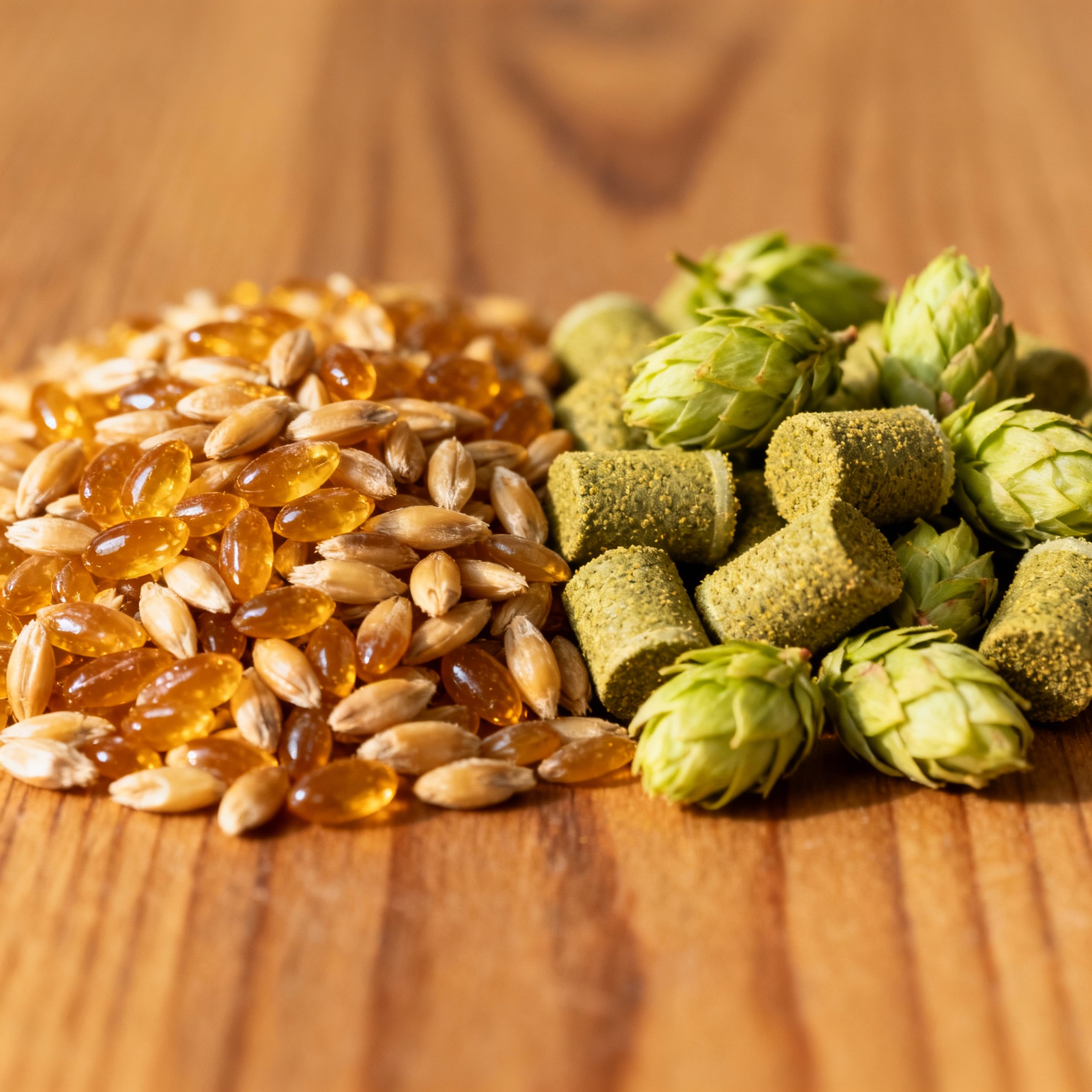
You’re using a lot of crystal malt, sometimes up to 15 percent of the total grain bill. This builds the body, sweetness, and deep copper color that defines the style.
I use a combination of Crystal 60 and Crystal 120. The Crystal 60 gives you caramel sweetness and a light toffee note. The Crystal 120 adds darker fruit flavors like raisins and prunes.
If you only use Crystal 60, the beer ends up too one-note. If you only use Crystal 120, it gets too dark and heavy. You need both to get the complexity right.
My base malt is usually Pale Ale malt from Rahr or Briess Malt products. I’ve tried Maris Otter, but it adds a biscuit note that I don’t think fits. American Amber Ale should taste like caramel and citrus, not toast and marmalade.
Some brewers add Munich malt to the base to increase maltiness without adding sweetness. I’ve done this a few times, and it works well, but it’s not required.
You don’t need specialty malts like Chocolate or Black Patent in this beer. If you add them, you’re making a Brown Ale. The darkest malt I ever use is Crystal 120, and even that stays under 5 percent.
One mistake I see often is people using too much base malt and not enough crystal. They worry about the beer being too sweet, so they back off the crystal to 5 percent. The result is a beer that tastes like a Pale Ale with food coloring.
You need that 12 to 15 percent crystal malt to build the mouthfeel. This backbone balances the hops perfectly. If you’re worried about sweetness, adjust your mash temperature instead of skimping on the crystal.
If your finished beer tastes thin, you probably mashed too low. American Amber Ale needs body. Mash at 152 to 154°F to leave behind some unfermentable sugars that give the beer weight.
The Balance: The 1:1 GU:BU Ratio
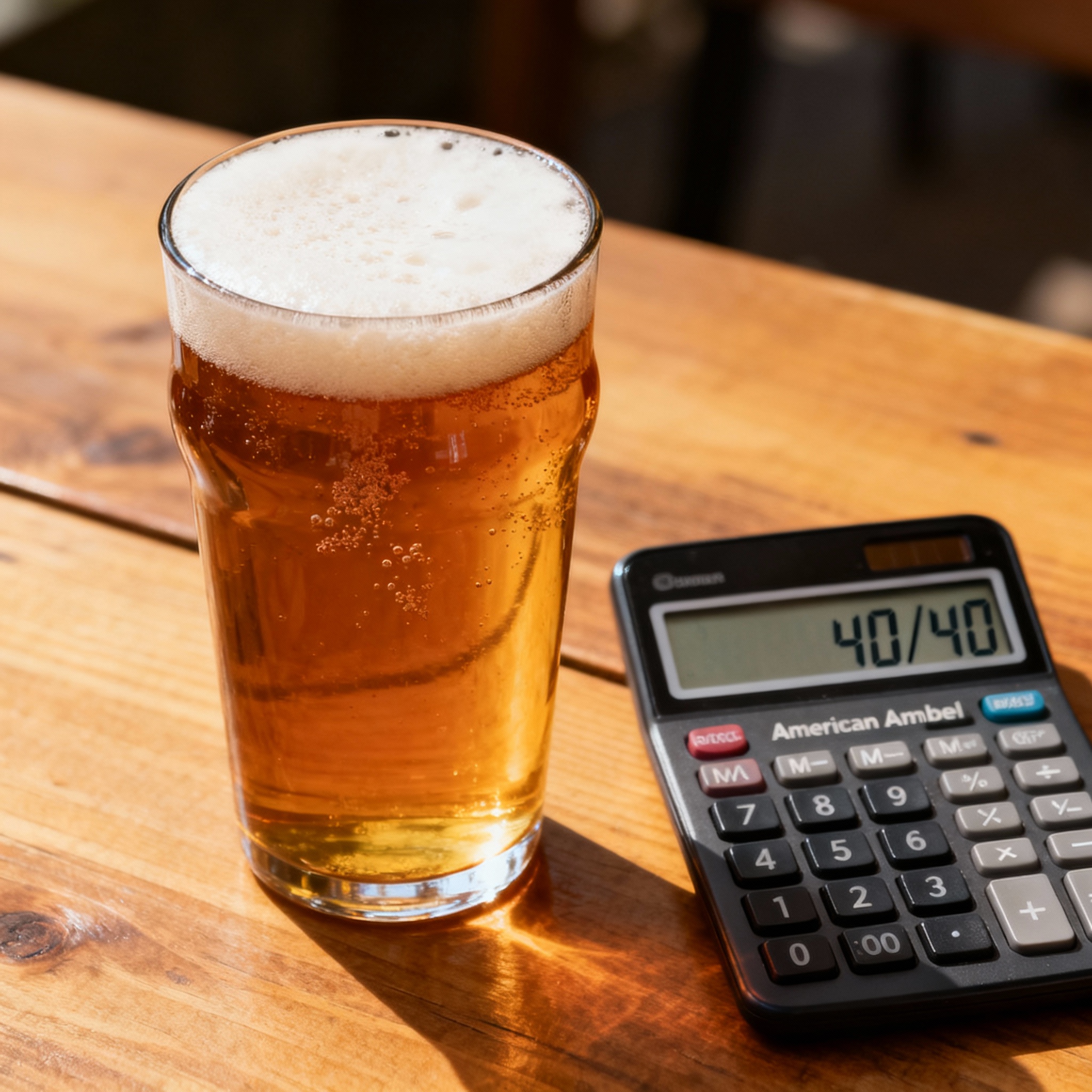
American Amber Ale is built on balance, and the easiest way to measure it is the GU:BU ratio. GU stands for Gravity Units, while BU stands for Bitterness Units (IBUs).
A 1:1 ratio means the beer is balanced. A ratio below 1 means the beer is more bitter, while a ratio above 1 means the beer is more malty.
For American Amber Ale, you want a ratio between 0.9 and 1.1 for a standard balance. However, many homebrewers prefer a slightly maltier tilt.
Let’s say you’re brewing a beer with an original gravity of 1.050 (50 GU) and aim for 30 IBUs. The ratio is around 1.7, which is slightly malty. This is exactly what you want for this style.
I usually brew my ambers to an OG of 1.052 and target 28 IBUs. This gives me a ratio of 1.86, which leans malty but not sweet. The caramel from the crystal malt balances the citrus bitterness from the Cascade perfectly.
The ratio isn’t a hard rule. Some commercial examples are closer to 1:1, and some are closer to 2:1. If you’re new to the style, start at 1.5 to 2.0 and adjust from there.
I’ve measured the GU:BU ratio of every amber I’ve brewed since 2018. My highest-ranking beers all landed between 1.6 and 2.0. The data suggests this is the “sweet spot” for drinkability.
If you don’t have brewing software, use an online calculator like Brewer’s Friend. Enter your hop variety, alpha acid, and boil time. It’ll give you an estimated IBU that’s close enough for homebrew purposes.
The Yeast: Neutral American Ale Yeast
This is the easiest part of the recipe. You don’t need a fancy yeast strain that adds phenols or esters. You need a neutral American Ale yeast that ferments clean and stays out of the way.
I use either Safale US-05 or White Labs WLP001. Both are the same Chico strain originally from Sierra Nevada. They ferment fast, flocculate well, and let the ingredients shine.
Some people use Wyeast 1056, which is also a great choice. Liquid strains give you slightly better control over viability, but dry packets are cheaper and easier to store. I keep US-05 in the fridge at all times for reliability.
Fermentation temperature matters more than the specific brand of yeast. I ferment at 66 to 68°F. Any higher and the yeast starts producing fruity esters like pear or apple.
Stick to the mid-60s and you’ll be fine. I’ve tried fermenting lower in a cold garage, but the beer took too long to finish and tasted doughy.
Don’t try to get creative with English ale strains here. That will turn your American Amber into an English Bitter. The whole point of this style is that the yeast stays invisible.
Pitch your yeast at the temperature you plan to ferment at. If you pitch warm and then cool down, the yeast will produce esters during the warm phase. Cool your wort to 66°F before you pitch.
Food Pairing: The Ultimate Pizza and Burger Beer
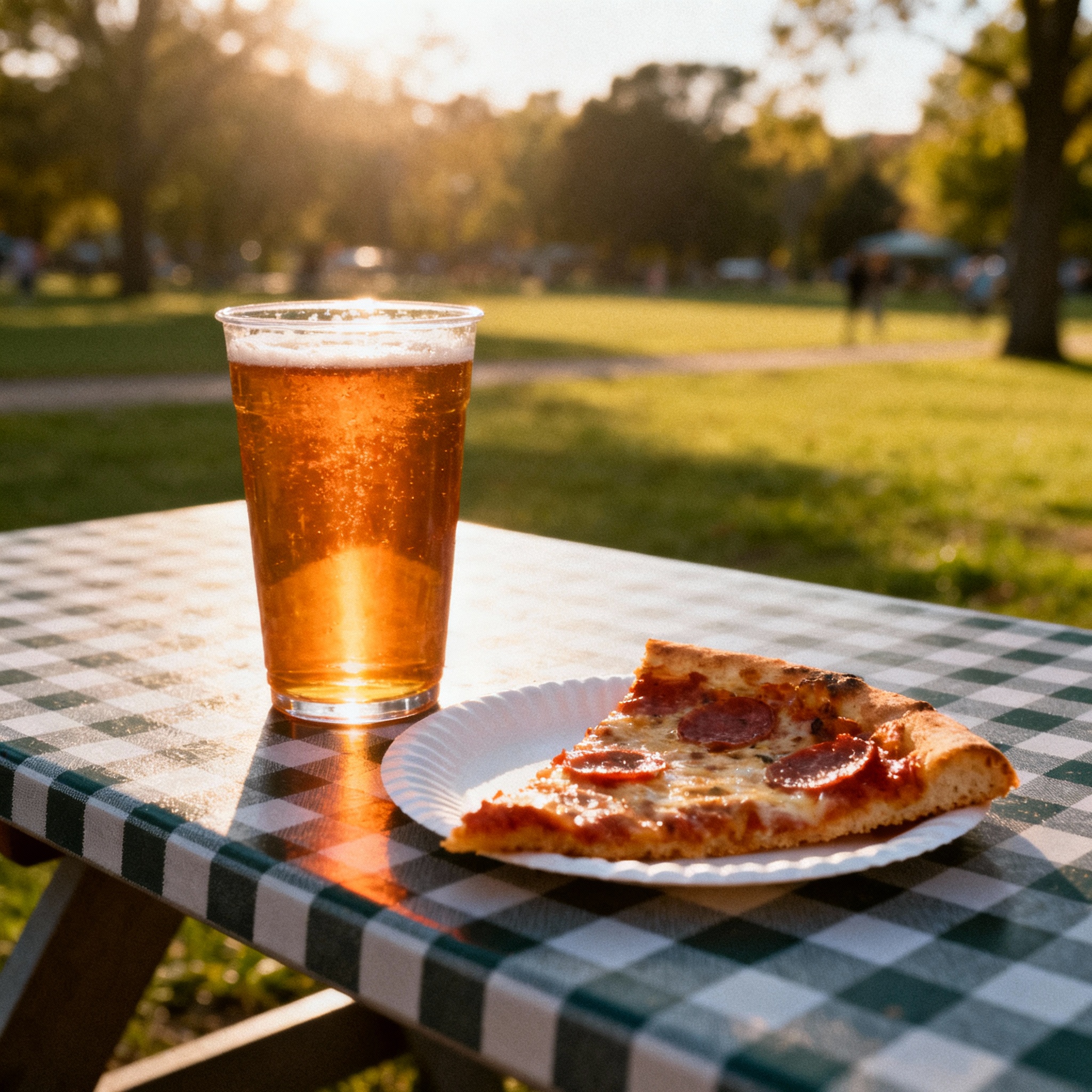
American Amber Ale was made for greasy food. The caramel malt cuts through the fat, while the citrus hops refresh your palate. The moderate carbonation scrubs your tongue clean so the next bite tastes as good as the first.
The best pairings are always simple, savory, and slightly salty. Think burgers, pizza, or roasted pork. The beer doesn’t compete with the food; it supports it.
The worst pairings are delicate dishes. If you’re eating sushi, the beer is way too heavy. The caramel malt will overpower the fish and the hops will clash with the ginger.
I once paired a keg of amber ale with smoked brisket at a homebrew club meeting. They were perfect together. The smokiness from the meat didn’t overpower the beer, and the malt backbone held its own.
Amber ales actually pair better with food than IPAs do. IPAs are often too bitter for savory dishes, and that bitterness builds up unpleasantly. Ambers have enough “cut” without ruining the meal.
If you’re serving this at a party, use a standard pint glass. The wider opening lets the caramel and citrus aromas hit your nose at the same time. This emphasizes the balance of the beer.
Conclusion
American Amber Ale is not flashy. It doesn’t win many awards or get featured in glossy magazines. But it’s still one of the most drinkable styles in the craft beer canon.
The recipe is simple. Use a base of Pale Ale malt with 15 percent crystal malt. Bitter with Cascade to roughly 30 IBUs and ferment clean.
If you follow those guidelines, you’ll end up with a beer that tastes like balance. Sometimes you don’t want a beer that challenges you. Sometimes you just want a beer that tastes good.
I still brew amber ales every few months. When I bring a keg to a party, the IPA always kicks first. But the amber is the one that gets finished to the very last drop.
Recipe Example: Garage Lab American Amber Ale
| Ingredient | Amount (5 Gallons) | Percentage |
|---|---|---|
| Pale Ale Malt | 9 lbs | 82% |
| Crystal 60L | 1 lb | 9% |
| Crystal 120L | 0.5 lbs | 4.5% |
| Munich Malt | 0.5 lbs | 4.5% |
| Cascade Hops (60 min) | 1 oz | (28 IBUs) |
| Cascade Hops (15 min) | 0.5 oz | (Flavor) |
| Safale US-05 Yeast | 1 packet | N/A |
| Original Gravity | 1.052 | N/A |
| Final Gravity | 1.013 | N/A |
| ABV | 5.1% | N/A |
| IBU | 28 | N/A |
| GU:BU Ratio | 1.86 | N/A |
Mash at 152°F for 60 minutes. Ferment at 66 to 68°F for 10 to 14 days. Carbonate to 2.4 volumes of CO2.
References
- Daniels, R. (1996). Designing Great Beers. Brewers Publications.
- Palmer, J. (2006). How to Brew. Brewers Publications.
- Brewers Association. (2021). Beer Style Guidelines.
- White Labs yeast bank. (2022). WLP001 Strain Information.
- Briess Malt & Ingredients Co. (2023). Technical Data.