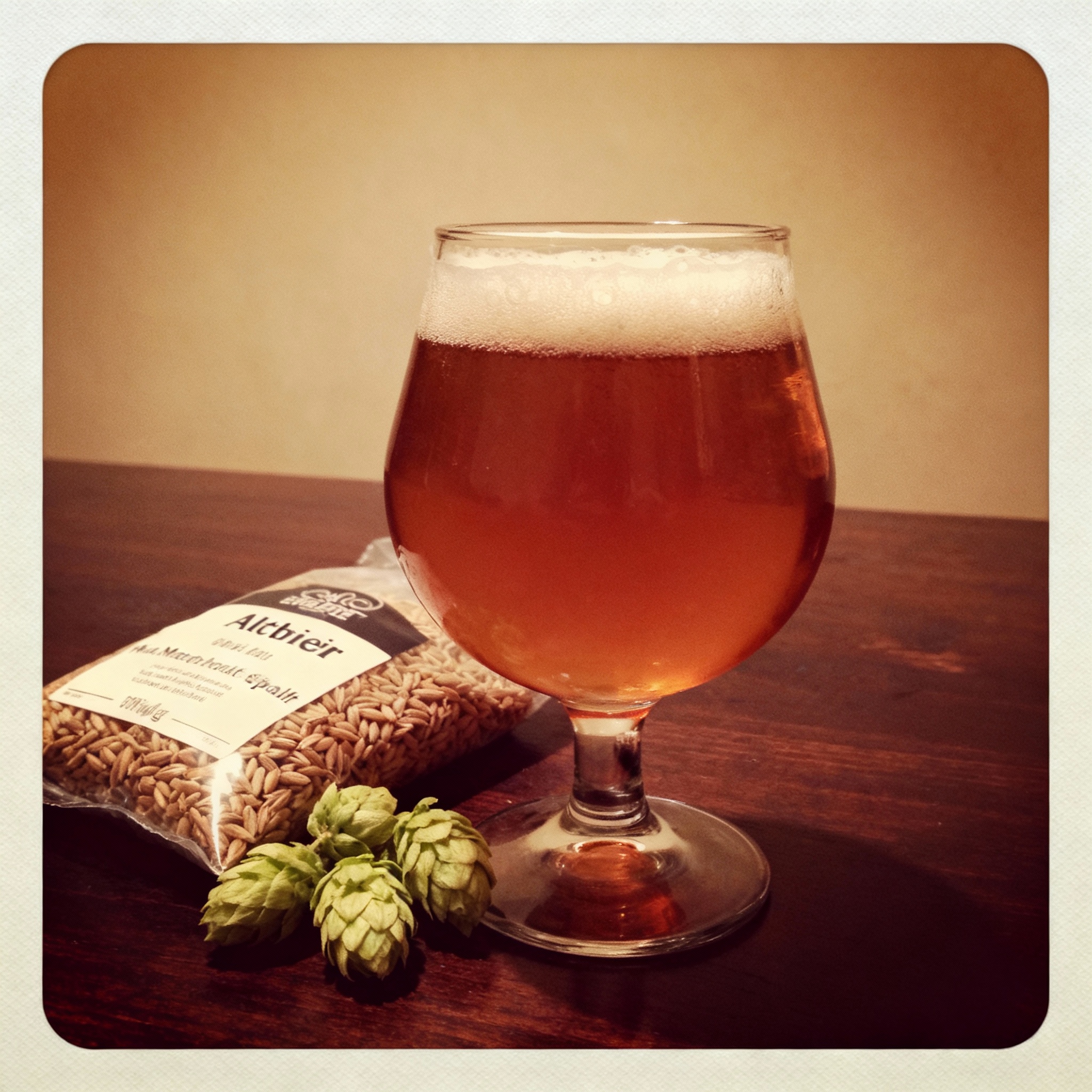
Altbier: The Dusseldorf Old School.
I once spent three weeks in Düsseldorf trying to understand why the locals were so obsessed with a beer that looked like a weak cola and tasted like toasted rye bread dipped in copper. Every brewpub (they call them “Hausbrauereien”) served it from small 200ml glasses, and the waiters replaced your glass before you even finished it.
I asked one brewer why they called it “Alt,” which literally means “old” in German. He laughed and said, “Because we never forgot how to brew properly.”
Alt doesn’t mean the beer is old. It means the method is old.
Before bottom-fermenting lager yeast took over Central Europe in the 1800s, everyone brewed ales with top-fermenting yeast. Most regions stopped using this style when Bavarian lager became fashionable.
Düsseldorf did not.
They kept brewing ales but borrowed the cold conditioning technique from lager brewers. The result is Altbier, a copper-brown ale fermented warm but aged cold, balanced between malt sweetness and firm bitterness. It tastes like what would happen if a British bitter and a German lager had a child and raised it in the Rhineland.
If you have ever seen a Kölsch, Altbier is its darker, more assertive cousin. Both are from the same region (Düsseldorf and Cologne are only 40 kilometers apart). Kölsch is light and delicate whereas Altbier is copper and muscular.
I have brewed both. Altbier is more forgiving because the malt backbone hides minor fermentation flaws. Let me walk you through how to build one from scratch.
The Grist: Munich Malt and Bread Crust
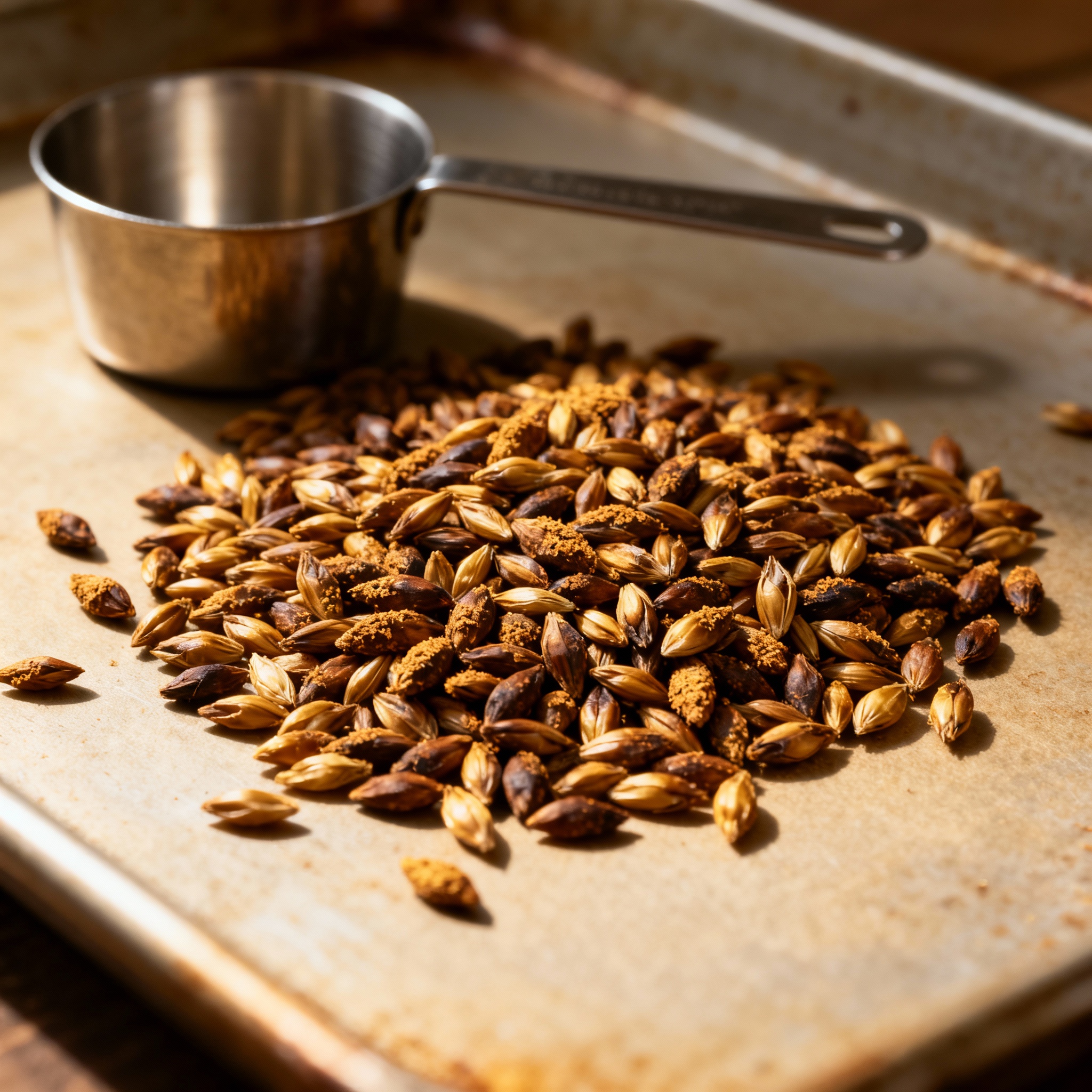
The grain bill is where Altbier separates itself from pale ales. You are building a beer that tastes like toasted bread, not caramel candy. The base is German Pilsner malt (about 60 to 70 percent of the total grain), but the character comes from Munich malt and a small percentage of roasted grains.
I use Munich malt at 20 to 25 percent of the grist. This is not the lightly kilned Maris Otter you would use in a British bitter. Munich malt is kilned longer and develops deep bread crust flavors without sweetness.
When you crack open a bag of Munich malt, it smells like a bakery at 6 a.m., not a candy shop. If you have ever eaten a German pretzel, that toasted grain flavor is what you are chasing.
For color and a slight roasted edge, I add about 5 percent Carafa Special Type II or Carafa Special Type III. Carafa is a dehusked roasted malt, meaning it adds color and a subtle coffee note without astringency.
Some German brewers use a small amount of Melanoidin malt instead, which gives a richer malt profile without roast. I have tried both. Carafa gives you a cleaner copper color. Melanoidin gives you more malt complexity but can push the beer toward amber territory.
You want the final beer to land around 15 to 20 SRM (copper to light brown). If you go darker than 22 SRM, you are making a Dunkel, not an Altbier. If you go lighter than 12 SRM, you are making a Kölsch. The copper color is not negotiable.
I mash at 152°F (67°C) for 60 minutes. This gives a moderately fermentable wort with enough body to support the hop bitterness. Some American homebrewers mash too high (156°F or higher) and end up with a sweet, cloying beer.
Altbier should finish dry. The original gravity should land between 1.044 and 1.052, and the final gravity should be around 1.010 to 1.014.
If you cannot find Carafa Special, use regular Carafa but reduce the amount by 1 percent. Regular Carafa has husks and will add astringency if you use too much. I learned this the hard way after brewing a batch that tasted like a charcoal briquette.
Bitterness: The Surprising Punch
The first time I tasted a proper Altbier at Zum Uerige in Düsseldorf, I was shocked by how bitter it was. I expected a malty, sweet brown ale.
Instead, I got a firm, earthy bitterness that lingered long after the sip. The beer had 40 to 50 IBUs, which is higher than most pale ales and on par with an IPA. But it did not taste like an IPA because the malt sweetness balanced the bitterness.
This balance is the heart of Altbier. You are not brewing a hop bomb. You are brewing a beer where the hops and malt are in a tug-of-war, and neither side wins. The bitterness should be firm and clean, not resinous or citrusy.
I target 35 to 45 IBUs depending on the malt bill. If I use more Munich malt, I push the IBUs higher. If I use less, I dial them back.
I add most of my hops at 60 minutes for clean bitterness. I do not use a flameout addition or dry hops. This is not an aromatic beer. The hop character should be earthy and herbal, not fruity or floral. If you want aroma, go brew a Kölsch.
The bitterness also helps the beer finish dry. Without enough IBUs, the Munich malt can leave the beer feeling heavy. The hops cut through the malt and make the beer drinkable.
In Düsseldorf, people drink three or four of those small glasses in a single sitting. That would not be possible if the beer was sweet and cloying.
If you are brewing a 5-gallon batch and your calculated IBUs are below 35, add another 5 to 10 grams of hops at 60 minutes. I have brewed Altbier with only 28 IBUs, and it tasted like liquid bread. Not in a good way.
Water Profile: Hard and Mineral-Forward
Düsseldorf water is hard. Very hard. The municipal water report shows calcium levels around 90 to 120 ppm and sulfate around 60 to 80 ppm. This is not soft Pilsen water. The hardness emphasizes the malt backbone and gives the beer a dry, crisp finish.
When I brew Altbier in Asheville, I start with my tap water (which is soft, around 30 ppm calcium) and add calcium sulfate (gypsum) and calcium chloride until I hit the right profile. I target 100 ppm calcium, 70 ppm sulfate, and 50 ppm chloride. The sulfate-to-chloride ratio is about 1.4:1, which leans toward dryness without being overly sulfury.
If you live in an area with soft water, you will need to add minerals. If you live in an area with very hard water (like parts of Texas or Southern California), you might not need to add anything. Check your municipal water report. You can usually find it online by searching “your city name + water quality report.”
The sulfate accentuates the hop bitterness and gives the beer a clean, dry finish. The chloride softens the malt profile slightly.
Too much chloride (above 80 ppm) and the beer starts to taste sweet and full-bodied, like an English bitter. Too much sulfate (above 150 ppm) and the beer tastes harsh and minerally.
I adjust my mash pH to 5.3 to 5.4 using lactic acid. Altbier should not have the sharp acidity of a Berliner Weisse or the roundness of a Kölsch. The pH should be neutral and clean.
If you do not have a pH meter, add 1 to 2 ml of 88 percent lactic acid per gallon of mash water. This is a rough estimate, but it works for most grain bills. I brewed for two years without a pH meter and never had a bad batch. Now I own one, and my efficiency improved by 5 percent.
Fermentation: Warm Start, Cold Finish
Altbier is an ale, but it is fermented cooler than most British or American ales. I pitch at 60°F (15°C) and let the temperature rise to 65°F (18°C) during active fermentation.
This produces a clean, neutral ester profile without the fruity esters you get from fermenting at 68°F or higher.
I use German ale yeast, specifically Wyeast 1007 German Ale™ or White Labs yeast (specifically WLP036). Both strains are clean and neutral with low ester production.
They attenuate well (75 to 80 percent) and drop clear after cold conditioning. I have also used Safale K-97, which is a dry German ale yeast. It works, but it does not attenuate as well as the liquid strains. If you use K-97, mash a degree lower to compensate.
After primary fermentation finishes (usually 5 to 7 days), I drop the temperature to 35°F (2°C) and hold it there for 3 to 4 weeks.
This is called “lagering” even though you are using ale yeast. The cold conditioning cleans up any diacetyl, drops the yeast and protein out of suspension, and smooths out the bitterness.
When I first brewed Altbier, I skipped the cold conditioning because I was impatient. The beer tasted harsh and grainy. The bitterness was sharp instead of smooth.
After I started lagering for a full month, the beer transformed. The bitterness became round and integrated. The malt flavors deepened. It tasted like the beer in Düsseldorf.
If you do not have a temperature-controlled fermentation chamber, you can brew Altbier in the winter. I have fermented batches in my garage when the ambient temperature was 40°F. It took longer (8 to 10 days for primary fermentation), but the results were excellent.
If you see diacetyl (buttery popcorn flavor) after cold conditioning, raise the temperature to 65°F for 2 to 3 days, then drop it back down to 35°F. This gives the yeast a chance to clean up the diacetyl before you keg or bottle.
Spalt Hops: The Traditional Choice
Most German brewers use Spalt hops for Altbier. Spalt is a traditional German landrace hop from the Hallertau region. It has a mild, earthy bitterness with herbal and slightly spicy notes. The alpha acid content is low (3 to 5 percent), so you need a lot of hops to hit 40 IBUs.
I add 50 to 60 grams of Spalt hops at 60 minutes for a 5-gallon batch. I do not use a 15-minute addition or a flameout addition.
The hop character should be in the background, not the foreground. If you want hop aroma, you are brewing the wrong beer.
Some American brewers substitute Tettnang or Hallertau Mittelfrüh for Spalt. Both work, but they are slightly more floral than Spalt.
I have also seen recipes that use Northern Brewer for bittering and Spalt for flavor. This works if you cannot find enough Spalt to hit your IBU target, but I prefer the cleaner bitterness of a single hop addition.
If you cannot find Spalt, use Tettnang or Perle. Do not use American hops like Cascade or Centennial. The citrus and pine notes will clash with the malt profile. I once brewed an Altbier with Cascade because I ran out of Spalt. It tasted like a brown IPA. Not terrible, but not an Altbier.
Spalt hops oxidize quickly. If your Spalt smells like cheese or grass clippings, throw it out and buy a fresh bag. I have wasted two batches using old hops that smelled fine in the bag but tasted like wet cardboard in the beer.
Bringing It All Together
Altbier is a beer for people who think lagers are too light and British bitters are too fruity. It sits in the middle, balancing malt richness with firm bitterness and a clean, dry finish.
It is not flashy and does not have tropical fruit aromas or thick mouthfeel. It tastes like bread, hops, and tradition.
If you brew this style correctly, you will end up with a copper-brown ale that finishes at 4.5 to 5.2 percent ABV, has a firm white head, and tastes like toasted grain with earthy hops.
It will be clear, dry, and drinkable. You will want to pour it into a small glass and replace it before you finish because that is how it is meant to be consumed.
The first time I nailed this recipe, I brought a growler to a local homebrew club meeting. Half the people said it was too bitter. The other half asked for the recipe. That is Altbier. If everyone likes it, you probably made a Kölsch by mistake.
References
Brewing Classic Styles by Jamil Zainasheff and John Palmer (Brewers Publications, 2007).
German Beer Institute, “Altbier,” accessed via germanbeerinstitute.com.
Water chemistry data for Düsseldorf from the Municipal Water Authority of Düsseldorf (Stadtwerke Düsseldorf), publicly available water quality reports.
Wyeast Laboratories and White Labs specifications, accessed via official strain databases.