The Clean Bittering Specialist: Magnum and Warrior.
I wasted three ounces of Citra on a 60-minute boil once. It was 2019, and I had just gotten into homebrewing.
I didn’t know any better and thought if I wanted a hoppy IPA, I should throw expensive hops at every stage.
The beer came out fine, but I realized I had burned about $12 worth of Citra for bitterness I could have achieved with 80 cents of Magnum.
That mistake taught me that not all hops are built for the same job. Using the wrong hop at the wrong time is like using a Ferrari to haul gravel.
Bitterness is not just bitterness; the chemistry behind how hops deliver IBUs matters more than most homebrewers realize.
The key variable is co-humulone, an alpha acid component that behaves differently under heat.
Hops contain several alpha acid analogues, primarily humulone, adhumulone, and co-humulone. Co-humulone is more soluble in wort and is often associated with a “harsh” or “metallic” perceived bitterness when present in high concentrations.
High co-humulone hops create a harsher, more astringent bitterness. Low co-humulone hops, like Magnum and Warrior, create a smoother and rounder profile.
They deliver high alpha acids with low co-humulone, providing efficient IBUs without a metallic edge.
If you are still using Cascade or Centennial for 60-minute additions, you are leaving efficiency on the table.
Magnum: The German Sniper
Magnum is the workhorse of German hop research for good reason. It typically clocks in at 12 to 14 percent alpha acids, which is high enough to deliver serious bitterness.
The real magic is in the co-humulone ratio, which sits around 23 to 28 percent. This is significantly lower than other common bittering hops like Nugget.
I ran a side-by-side experiment in 2021 with two identical pale ales. The Magnum batch had a smooth, almost creamy bitterness that sat in the background.
The Nugget batch had a sharper, more forward bite that was less integrated. My tasting panel preferred the Magnum batch four to one for its cleaner profile.
Magnum was bred in Germany but grows well in the Pacific Northwest too. I have used both versions and cannot tell the difference in a bittering role.
The aroma profile is minimal either way, which is exactly what you want for a base bittering addition.
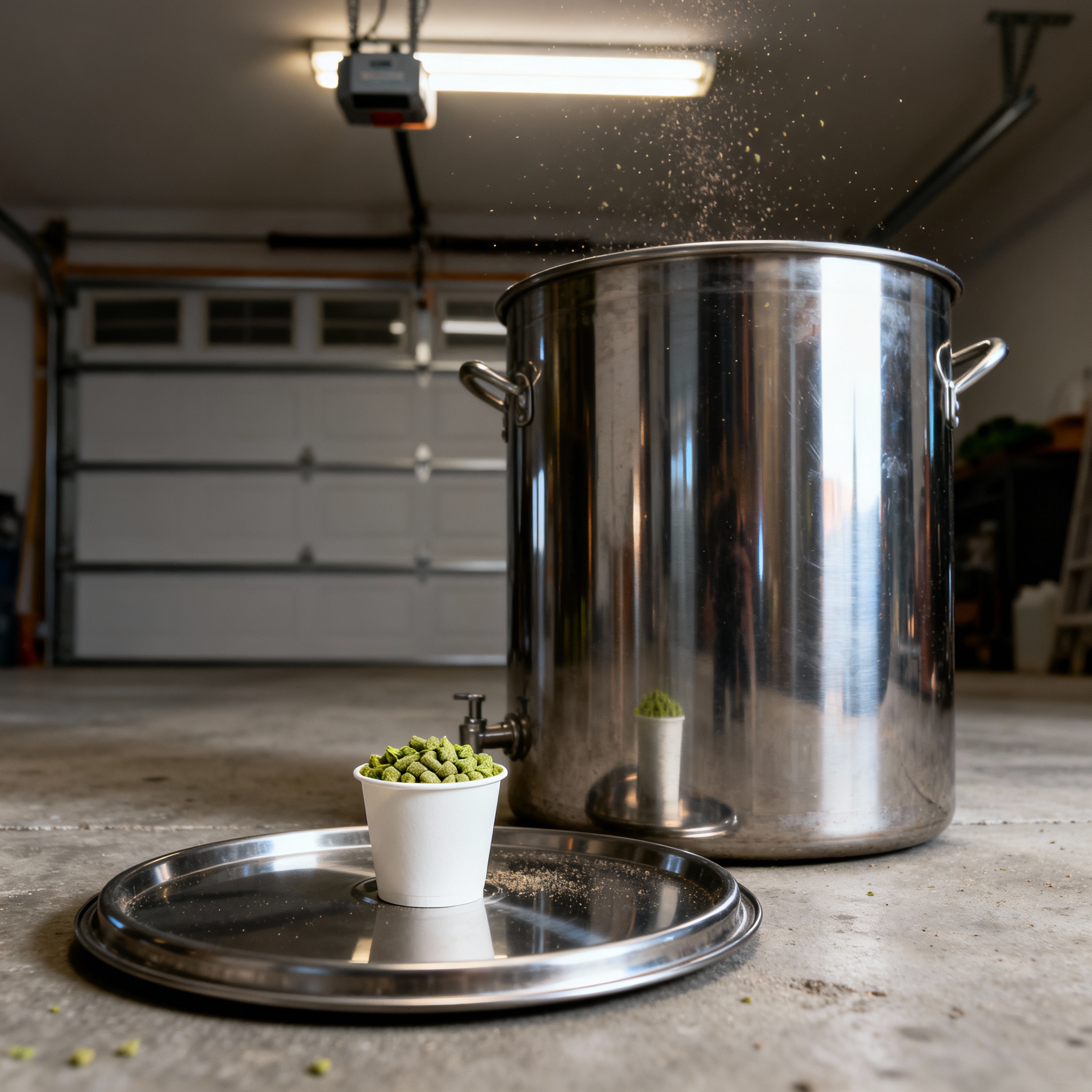
One thing I learned the hard way is that Magnum does not like to be stored warm. I once lost 25 percent of my alpha acid content by leaving a bag in a warm garage.
I now store all my hops in vacuum-sealed bags in the freezer to maintain their potency.
If you are brewing a lager or a Kölsch, use German-grown Magnum. The flavor is identical to domestic, but it feels more authentic for traditional styles.
Warrior: The American Hammer
Warrior is what happens when American hop breeders decide they want Magnum but louder. Released in 2000, it quickly became a favorite for commercial West Coast IPAs.
The alpha acid content is massive, usually between 15 and 17 percent. This allows you to hit high IBUs with less than an ounce of hops.
I use Warrior when I need a firm, structured bitterness to balance a heavy dry-hop charge. The bitterness is not harsh, but it is assertive and holds the line against tropical fruit notes.
In a double IPA I brewed last year, the Warrior bitterness stayed clean and never interfered with the Mosaic and Simcoe aromas.
The downside of Warrior is that it can be harder to find than Magnum outside the United States. I have also noticed that alpha acid content varies more between batches.
Always check your hop packaging for the specific percentage to dial in your recipe accurately. A 2 percent difference in alpha acids can significantly change your IBU calculations.
If you cannot find Warrior, CTZ (Columbus/Tomahawk/Zeus) is a solid substitute. The aroma is more pungent, but that character mostly burns off during a 60-minute boil.
First Wort Hopping with High Alpha Hops
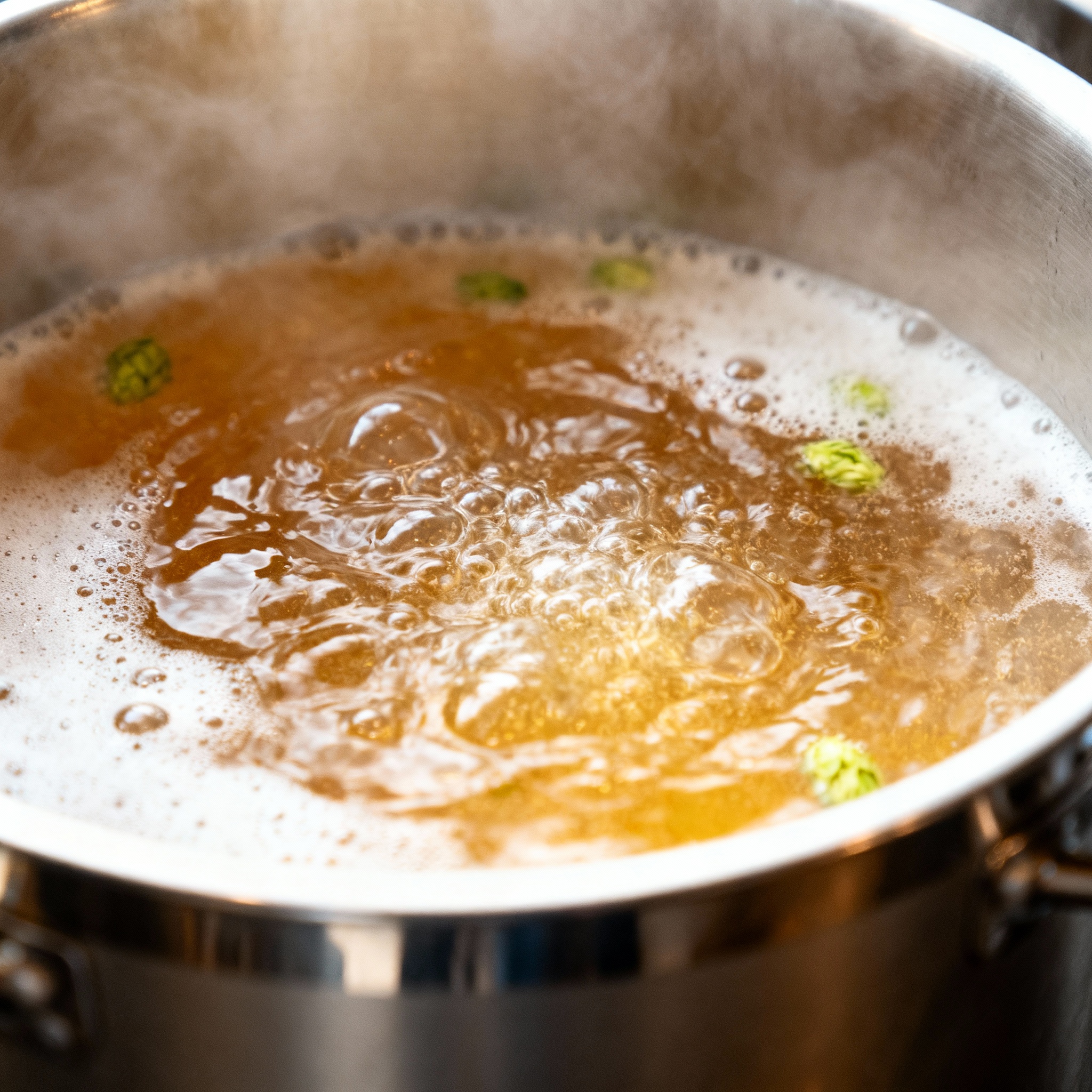
First wort hopping (FWH) involves adding bittering hops directly to the kettle during the runoff from the mash. The hops steep in the hot wort at around 170°F before the boil begins.
The result is a smoother, more integrated bitterness compared to standard boil additions.
Some research suggests that FWH increases perceived bitterness by about 10 percent. I use this technique almost exclusively for lagers and pilsners now.
I add the full bittering charge of Magnum during runoff and skip the 60-minute addition entirely. This produced the smoothest Czech pilsner I have ever made.
Be cautious, as FWH works best with low-aroma hops like Magnum and Warrior. If you try it with Citra or Amarillo, you may extract unwanted vegetal notes.
Stick to clean bittering specialists to ensure the bitterness remains refined and crisp.
First Wort Hopping allows for hop acids to be in contact with the wort at sub-boiling temperatures. This is thought to create a more stable hop-oil complex that survives the boil, leading to a more refined flavor profile.
If your brewing software doesn’t have an FWH setting, approximate it by entering the hops as a 20-minute addition. Then, increase the amount by 10 percent to compensate.
Low Aroma Contribution: Why Neutral is a Compliment
Most beers need a foundation of bitterness that does not fight with the other ingredients. This is where neutral hops like Magnum and Warrior shine brightest.
Magnum has almost no aroma, perhaps just a faint grassy smell if you rub the pellets. Warrior is slightly more earthy or spicy but still fades into the background once fermented.
I brewed a Vienna lager where I wanted the toasty malt to be the star of the show. Using Magnum for 25 IBUs provided the perfect balance without pulling focus.
This neutrality also offers great flexibility for experimental recipes. You can use Magnum as a base and then layer any trendy dry-hop combination on top.
When brewing styles like brown ales or märzens where hops are not the focus, always use a neutral hop. It saves money and lets the malt and yeast character lead the way.
Storage Stability: Alpha Acid Degradation Rates
Hops degrade over time when exposed to heat, light, and oxygen. Magnum is one of the most stable hops available, retaining 85 percent of its acids after a year at room temp.
In comparison, Cascade retains only 65 percent under the same conditions. This makes Magnum an ideal candidate for bulk purchasing.
I ran an informal test in 2022, comparing frozen Magnum to room-temperature samples. The frozen sample lost almost zero alpha acid potency over six months.
The room-temperature sample lost about 26 percent of its bittering potential. This proves that proper storage is essential even for stable varieties.
Warrior is slightly less stable than Magnum but still performs better than most aroma varieties. It usually retains around 78 percent of its alpha acids over a year.
Buying these in bulk is safe as long as you have freezer space and a vacuum sealer.
The HSI measures the ratio of alpha and beta acid degradation products. A low HSI indicates fresh, well-preserved hops, while a high HSI suggests significant oxidation and loss of bittering potential.
Always write the alpha acid percentage and purchase date on your hop bags. This allows you to adjust your recipes as the hops age over the year.
Cost Efficiency: The Math of Bittering
Let’s look at the math for a five-gallon batch targeting 40 IBUs at a 60-minute boil. Using Magnum costs roughly $1.75 per batch for that bitterness.
Using Warrior is even cheaper at approximately 4.50 per batch.
Using Citra for bittering would cost about 2.50 per brew.
Over 20 batches a year, that is $50 saved-enough for another pound of hops.
The real benefit is freeing up your expensive hops for whirlpooling and dry hopping. I would rather spend the savings on an extra ounce of Galaxy for aroma.
The beer will taste better and cost less when every hop is used for its specific strength.
Buy Magnum in bulk by the pound to bring your costs down even further. A pound can last for 20 to 30 batches and costs significantly less than buying individual ounces.
Conclusion
I keep two pounds of Magnum and one pound of Warrior in my freezer at all times. They are the foundation of almost every beer I brew at home.
I use Magnum for background bitterness and Warrior when I want the bitterness to stand up. Both are cheap, stable, and highly efficient for any style.
The next time you brew, try swapping your expensive 60-minute addition for Magnum. Save your Citra or Mosaic for the whirlpool where they can actually be smelled.
You will likely be surprised at how much cleaner your beer tastes. Every hop has a job, and these two are the best bittering specialists in the business.
Brewing is about making smart choices with limited resources. You do not need a million-dollar facility to make world-class beer.
You just need to understand your ingredients and use them wisely. Magnum and Warrior are two of the smartest choices you can make.
References
- American Society of Brewing Chemists. (2018). “Hop Storage Index: Alpha Acid Degradation Rates.” ASBC Methods of Analysis.
- Hop Research Center Hüll. (2020). Magnum Variety Profile and Breeding History.
- Hieronymus, S. (2012). For the Love of Hops. Brewers Publications.
- Palmer, J. (2017). How to Brew: Everything You Need to Know to Brew Great Beer Every Time. Brewers Publications.
- S. S. Steiner. (2021). Warrior Variety Data Sheet.