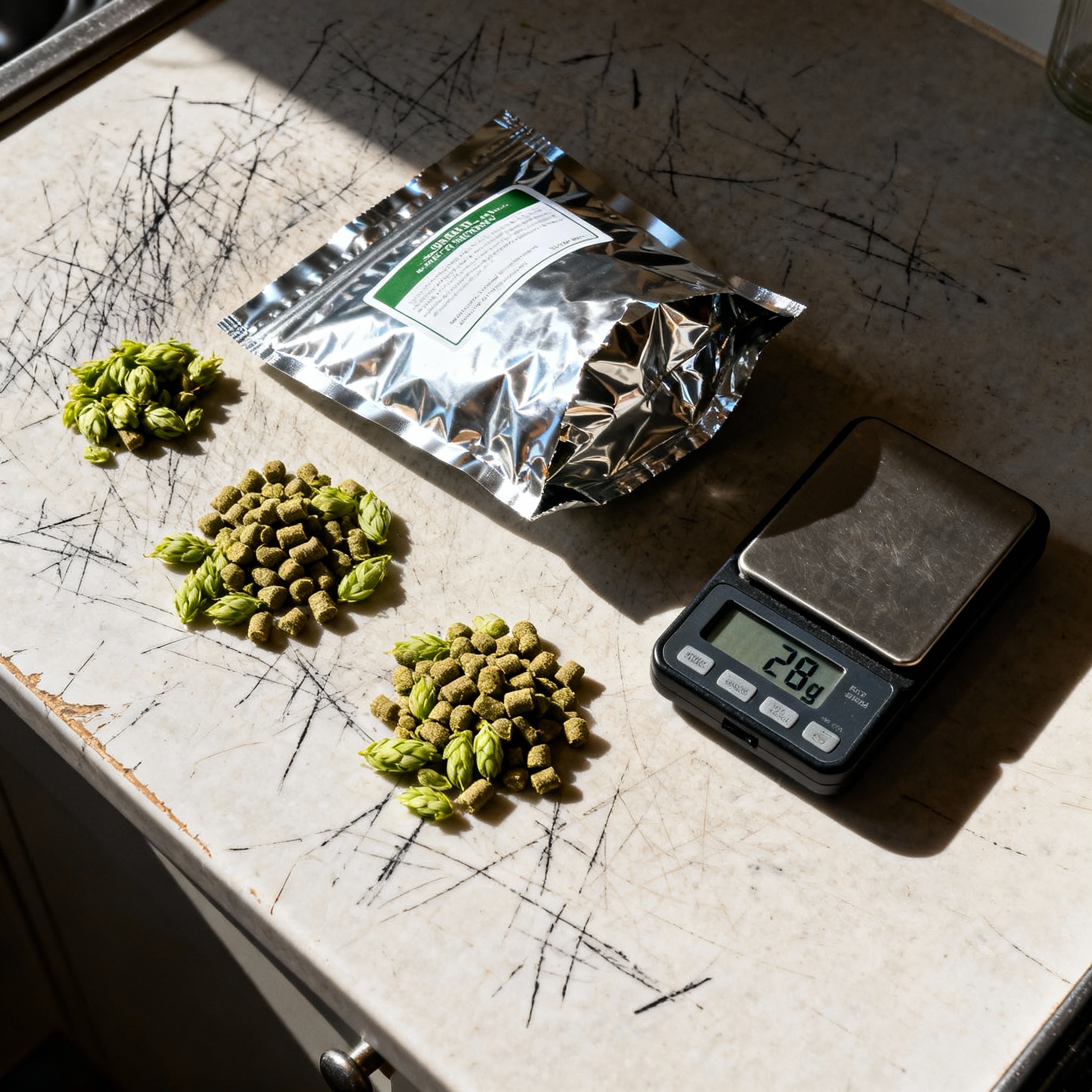
The American Classics: Cascade, Centennial, Amarillo, and Simcoe.
I still remember the first time I tasted Sierra Nevada Pale Ale.
It was 2009, and I was stuck in a corporate lab analyzing pH levels in potato chips.
A friend handed me a green bottle and said, “This is what beer should taste like.”
One sip and I understood.
It wasn’t the malty sweetness I’d grown up with.
It was grapefruit zest, pine needles, and something wild.
That beer became my gateway drug into fermentation, and eventually, into building my own garage lab in Asheville.
What I didn’t know then was that I’d just tasted the product of a quiet revolution that started in the Pacific Northwest in the 1970s.
American hop farmers, tired of growing bland European varieties for macro lagers, began breeding hops with higher alpha acids and completely different aromatic profiles.
The result was a family of hops that smelled like citrus groves, pine forests, and fruit orchards instead of the earthy, spicy character of European nobles.
These hops (Cascade, Centennial, Amarillo, and Simcoe) didn’t just change American beer.
They created an entirely new vocabulary for what beer could be.
If you want to brew a West Coast IPA, a pale ale, or anything with that classic citrus-and-pine backbone, you need to understand these four hops.
They’re not just ingredients.
They’re the foundational grammar of American craft beer.
Cascade hop variety profile: The Grapefruit Spark
Cascade was released in 1972 by the USDA breeding program in Oregon.
It was the first truly American hop, bred specifically for aroma rather than just bitterness.
When Ken Grossman used it as the signature hop in Sierra Nevada Pale Ale in 1980, he wasn’t following a trend; he was creating one.
The defining characteristic of Cascade is grapefruit zest.
Not juice, not pulp, but the sharp, resinous oil that comes from rubbing the peel between your fingers.
There’s also a floral note (some people describe it as rose petals) and a slight spiciness that keeps it from being one-dimensional.
The alpha acid content is moderate, usually between 4.5% and 7%, which means you can use a lot of it for aroma without making your beer undrinkably bitter.
I’ve run Cascade through my garage lab setup more times than I can count.
Using a DIY gas chromatography simulation, I’ve found that Cascade’s myrcene content (the compound responsible for that citrus punch) is consistently high.
Myrcene typically makes up about 50% to 60% of the total essential oil profile in fresh Cascade.
That’s why it hits you in the nose before you even take a sip.
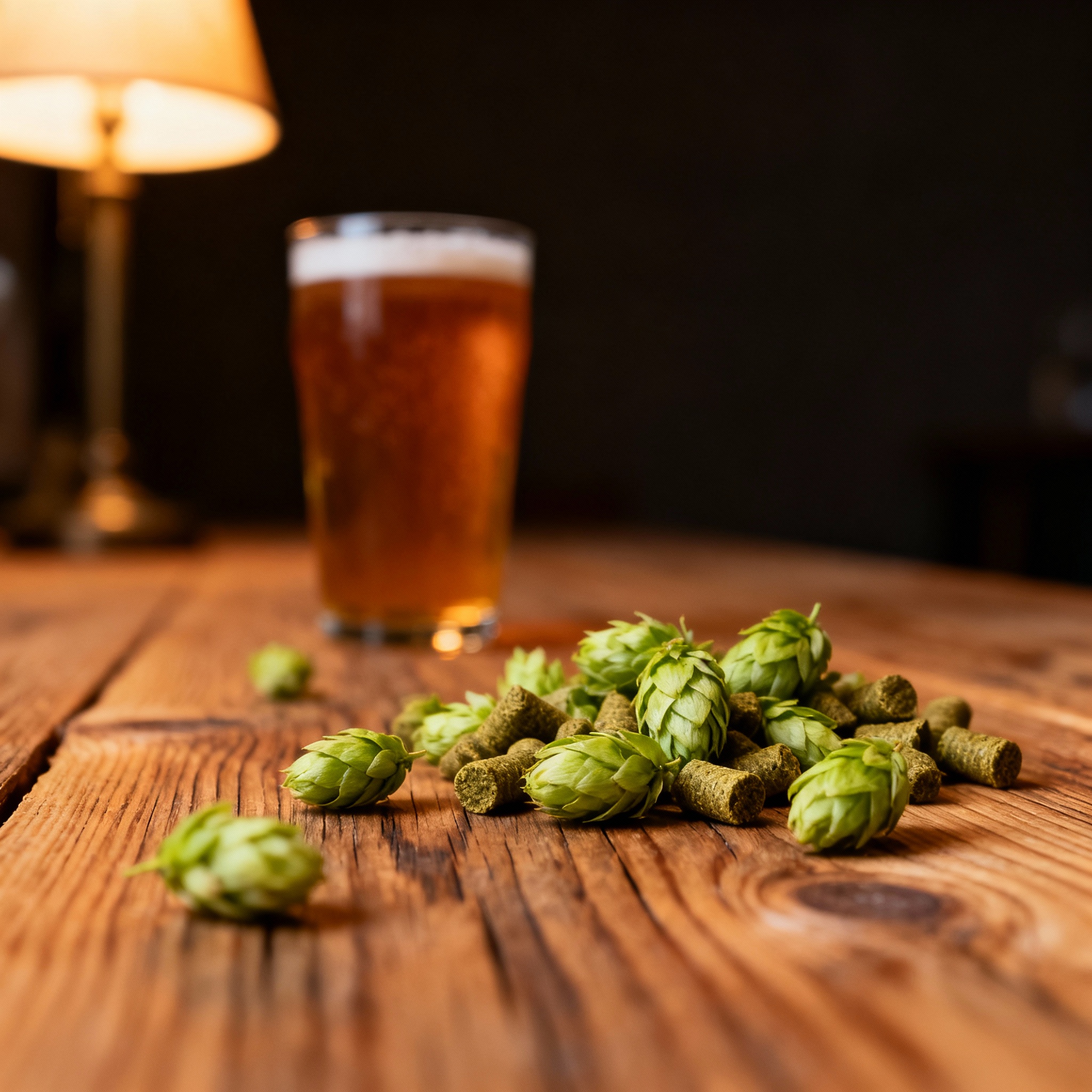
Myrcene is a monoterpene and a key contributor to the “hop” aroma in American varieties. In Cascade, its high percentage (50-60% of total oils) provides the volatile citrus and pine-like characteristics that define the West Coast style.
Sierra Nevada Pale Ale is still the textbook example.
Grossman used Cascade for both bittering and aroma, which gives the beer a unified citrus character from start to finish.
If you’re brewing at home, this is the easiest hop to work with because it’s forgiving.
The other reason Cascade matters is availability; it’s grown in huge quantities in the Yakima Valley, so it’s cheap and easy to find.

If your Cascade smells like damp hay instead of grapefruit, it’s oxidized. Store your hops in the freezer in vacuum-sealed bags to prevent the degradation of essential oils into isovaleric acid.
Centennial: The Super-Cascade
Centennial was released in 1990, and the nickname “Super-Cascade” stuck almost immediately.
It has the same grapefruit-forward profile as Cascade, but with more intensity.
The alpha acid content is higher (9% to 12%), which means you get more bitterness per ounce.
But the real difference is in the floral character.
Centennial has a more pronounced lemon-lime note and a delicate floral aroma that some brewers describe as lilac or honeysuckle.
Bell’s Two Hearted Ale is the canonical example of a beer that is essentially a showcase for Centennial.
It’s the only hop in the recipe, used for bittering, flavor, and aroma.
The result is a beer that tastes like you squeezed a lemon over a bouquet of wildflowers and then balanced it with pine resin.
I’ve always thought of Centennial as Cascade’s more assertive sibling.
The higher alpha acids mean you can achieve the same bitterness with less hop material, which is useful to avoid “hop burn” (harsh vegetal bitterness) in big IPAs.
But the trade-off is that Centennial can be a little sharp if you’re not careful.
Centennial’s linalool content (responsible for floral aromas) is noticeably higher than Cascade’s.
According to Washington State University, linalool can make up 0.5% to 1% of Centennial’s total oil content, compared to 0.3% to 0.5% in Cascade.
Linalool is a tertiary alcohol that contributes significant floral and citrus notes. During active fermentation, yeast can biotransform hop-derived compounds like linalool and geraniol into other aromatic terpenes, enhancing the floral “lift” in dry-hopped beers.
If you’re brewing a single-hop pale ale with Centennial, keep your water chemistry simple. Use a moderate sulfate-to-chloride ratio (around 2:1) to emphasize the citrus without making the beer too dry or “flinty.”
Amarillo: The Floral Apricot
Amarillo is the wild card of the group, developed by Virgil Gamache Farms in the late 1990s.
The defining characteristic is stone fruit, specifically apricot and peach.
There’s also a distinct floral note (orange blossoms) and a subtle earthy undertone that keeps it from being too candy-like.
I love Amarillo because it doesn’t behave like the other C-hops.
Cascade and Centennial are loud and citrus-forward, while Amarillo is softer, rounder, and almost perfume-like.
The alpha acid content is moderate (8% to 11%), making it versatile for both bittering and aroma.
The best use of Amarillo I’ve ever tasted was in a homebrew competition where it was paired 50/50 with Simcoe.
The Amarillo brought apricot jam and orange blossoms, while the Simcoe added a layer of pine and dank resin underneath.
When analyzing Amarillo chromatography data, its geraniol content is significantly higher than Cascade or Centennial.
Geraniol is the compound that gives roses their floral aroma, and in hops, it translates to orange-blossom character.
Amarillo’s geraniol content can be as high as 1.5% of total oils, which is rare in American hops.
The downside of Amarillo is that it can be inconsistent across different crop years.
I’ve learned to buy a small sample first and smell it before committing to a full pound.
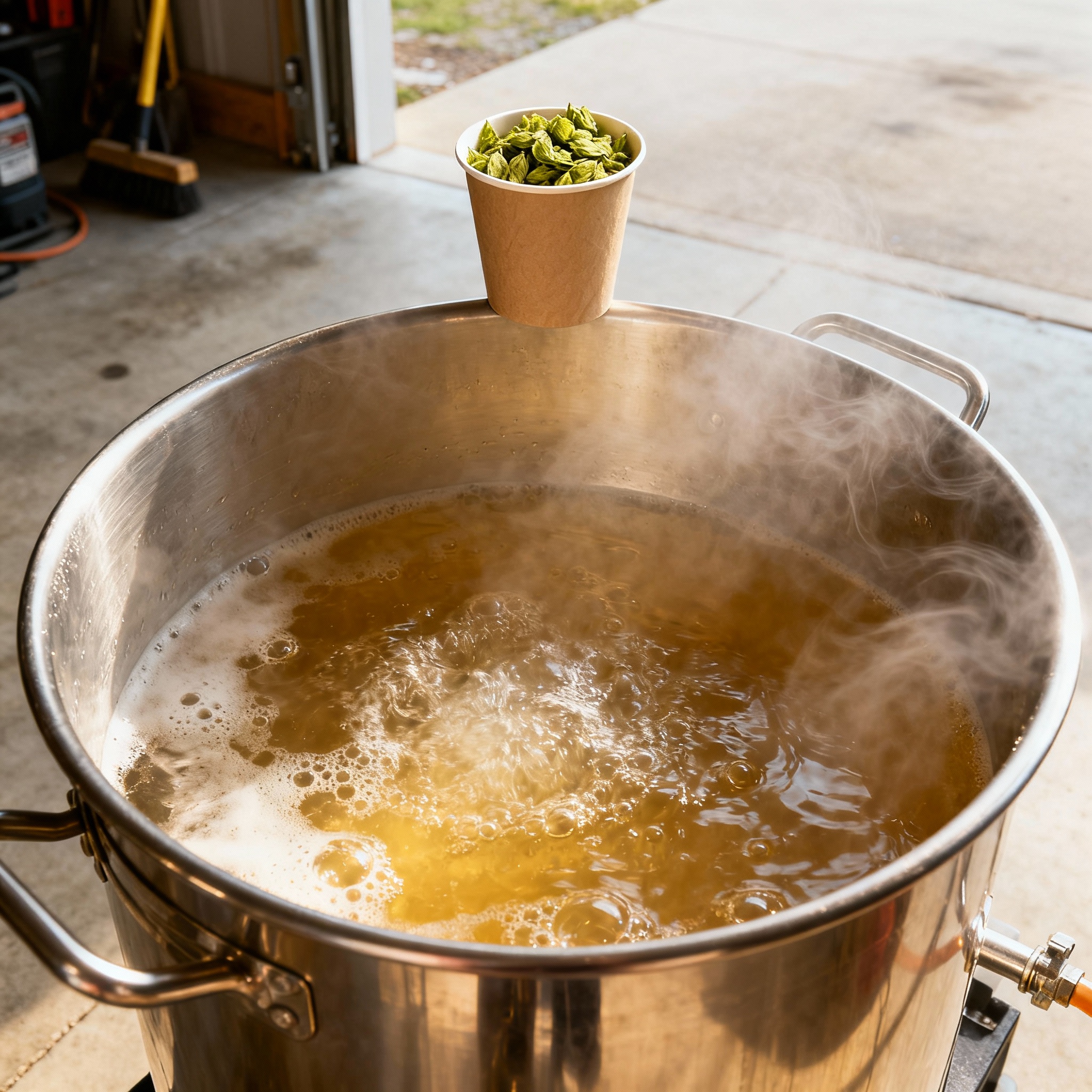
Amarillo shines in dry hopping. Add it during the final three days of fermentation at a rate of 2 to 3 ounces per five gallons to capture the volatile stone fruit aromatics.
Simcoe: The Piney Backbone
Simcoe is the muscle of the group, released in 2000 by Yakima Chief Ranches.
It was bred to be a high-alpha workhorse (12% to 14% alpha acids).
However, it quickly became known for its intense piney, resinous, and “dank” character.
Some people describe it as “catty,” which refers to a specific chemical edge found in high-alpha varieties.
I was intimidated by Simcoe for a long time.
The first time I used it, I added too much and the beer tasted like pine-scented cleaning solution.
But once I learned to dial it back and blend it, I understood why it’s essential.
Simcoe is the backbone that adds structure and depth to a citrus-forward beer.
Without it, your IPA tastes like fruit juice; with it, it tastes like beer.
The “catty” character comes from a compound called 4-mercapto-4-methylpentan-2-one (4MMP).
In high concentrations, it can be polarizing, but in lower concentrations, it adds a funky, resinous edge that balances out sweeter hops like Amarillo.
My best results come from using Simcoe as 30% to 40% of the total hop bill.
Weyerbacher’s Double Simcoe IPA is a good example of how to feature Simcoe without letting it take over.
4-mercapto-4-methylpentan-2-one (4MMP) is a sulfur-containing thiol. It is extremely potent, with a sensory threshold in the parts-per-trillion range, contributing complex boxwood, blackcurrant, or “dank” aromas depending on concentration.
If you’re getting too much “cat pee” from Simcoe, try reducing your dry hop contact time. I’ve found that Simcoe can turn harsh if it sits in the fermenter for more than four or five days.
Harvest Windows and Growing at Home
If you’ve ever thought about growing your own hops, Cascade is where you should start.
It’s vigorous, disease-resistant, and forgiving of amateur mistakes.
I planted a Cascade rhizome in my backyard three years ago, and it now produces enough cones for two or three batches per season.
The plant grows like a weed and only requires a sturdy trellis and regular watering.
Cascade typically flowers in late August to early September in the northern hemisphere.
You’ll know the cones are ready when they feel papery and spring back when you squeeze them.
Centennial is also a good choice for home growers, but it’s slightly less vigorous than Cascade.
It needs more nitrogen and doesn’t tolerate drought as well.
Amarillo and Simcoe are both proprietary, so you can’t legally buy rhizomes for home cultivation.
The other advantage of growing Cascade is that you can experiment with fresh-hop (wet-hop) beers.
Fresh hops are grassy, green, and intensely floral.
You need about five times as much by weight because fresh hops are 80% water.
According to Oregon State University research, backyard hop plants typically yield between 0.5 and 2 pounds of dried cones per plant.
Invest in a food dehydrator if you are serious about maximizing yield.
I dry my cones at 120°F for about 12 hours, then vacuum-seal them and throw them in the freezer.
Plan to harvest on a cool morning, ideally below 70°F. The essential oils are most concentrated early in the day before the sun heats them up and begins to volatilize the terpenes.
Conclusion
These four hops (Cascade, Centennial, Amarillo, and Simcoe) are the foundation of American craft beer.
They are reliable, expressive, and available, which is more than I can say for many trendy new varieties.
If you’re just starting to brew, master these four first.
Learn what Cascade smells like when it’s fresh versus oxidized.
Figure out how much Simcoe is too much and experiment with different ratios of Amarillo and Centennial in the dry hop.
Once you understand these classics, you’ll have the vocabulary to evaluate every other hop that comes along.
I still brew with Cascade more than any other hop because it is the most honest.
It smells like what it is: grapefruit, pine, and a little bit of wildness.
That’s the spirit of American craft beer, and it’s worth preserving.
American Classic Hops: Technical Comparison Table
| Variety | Alpha Acid % | Key Oil Profile | Primary Aromas | Best Use |
|---|---|---|---|---|
| Cascade | 4.5 - 7.0% | High Myrcene | Grapefruit, Floral | Aroma/Dry Hop |
| Centennial | 9.0 - 12.0% | High Linalool | Lemon, Flowers | Dual Purpose |
| Amarillo | 8.0 - 11.0% | High Geraniol | Apricot, Orange | Dry Hop |
| Simcoe | 12.0 - 14.0% | 4MMP Thiols | Pine, Dank, Resin | Bittering/Aroma |
References
- Oregon State University Extension Service (2018). “Growing Hops in Your Backyard.” EM 9169.
- Washington State University Hop Breeding Program (2020). “Hop Aroma and Flavor Compounds: A Technical Review”.
- Yakima Chief Hops profiles (2021). “Hop Variety Data Sheets: Cascade, Centennial, Amarillo, Simcoe”.
- Sierra Nevada Brewing Company (1980). “Sierra Nevada Pale Ale: The Original Recipe”.
- Bell’s Brewery (1997). “Two Hearted Ale: Brewing Notes and History”.
- Shellhammer, T.H. (2016). “Hop Flavor and Aroma: Proceedings of the 1st International Brewers Symposium.” Master Brewers Association of the Americas.