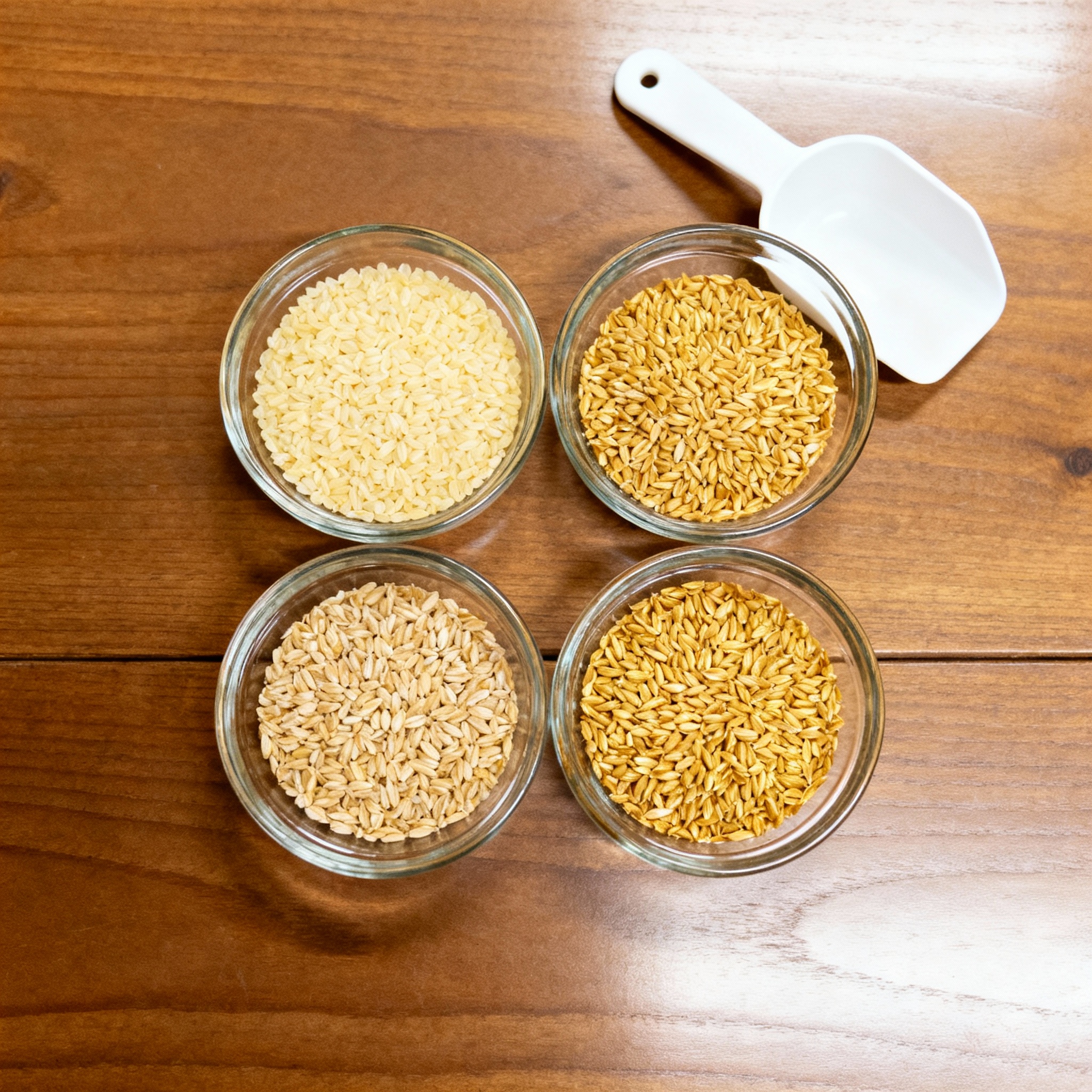
Choosing the Right Canvas: Pilsner, Pale, Munich, and Vienna.
I messed up my first saison. Not the yeast, not the water chemistry, and not even the wild fermentation I attempted in a plastic bucket I probably shouldn’t have used. The problem was the malt.
I grabbed what the homebrew shop guy handed me without asking questions. It was Munich malt, dark Munich, because it was on sale.
The beer finished at 1.008, bone dry like a good saison should, but it tasted like someone dissolved burnt toast into lemon water. The delicate, peppery yeast character I wanted got buried under this heavy, bready weight that had no place in a farmhouse ale.
That batch taught me something most brewing books bury in the appendix: base malt is not just a sugar delivery system. It is the canvas.
Ninety percent of your grain bill is base malt, and if you pick the wrong one, no amount of specialty grains, hops, or fancy yeast will save you. You can’t paint a watercolor on burlap.
Base malts seem boring compared to chocolate malt or crystal 60, but they define the backbone of every beer. Pilsner malt gives you that crackling, crisp lager base, while Pale malt builds the sturdy frame for IPAs.
Vienna adds a soft, golden warmth and Munich brings bread crust and melanoidins. Each one pulls your beer in a different direction; if you don’t know where you are starting, you will end up somewhere you didn’t plan to go.
This is not about memorization. It is about understanding what happens inside the kernel during kilning, why some malts have more enzymes than others, and how to pick the right foundation for the beer in your head.
I have spent years tracking moisture loss percentages, Lovibond readings, and diastatic power numbers in my notebook because I got tired of guessing. Let me save you some of those mistakes.
Pilsner Malt: The Blank Slate
Pilsner malt is the least modified base malt you will commonly use, and that creates both its strength and its biggest pain point. It is kilned at the lowest temperature, usually around 176 to 185°F, which preserves a light color and a clean, slightly grainy flavor.
When I smell fresh Pilsner malt, it reminds me of raw dough or unsalted crackers. There is almost nothing there, which is exactly the point.
The low kilning temperature means Pilsner malt retains high enzyme levels (diastatic power around 105 to 120 Lintner). It can convert its own starches and help out less enzymatic specialty malts.
But that low modification also means it contains more S-methylmethionine (SMM), the precursor to dimethyl sulfide, or DMS. If you have ever tasted creamed corn in a lager that should taste clean, that is DMS.
It forms when SMM breaks down during the boil. If you do not boil long enough or vent your kettle properly, the chemical sticks around in your finished beer.
I learned this the hard way with a Czech pilsner I tried to shortcut. I did a 45-minute boil instead of the usual 60 to 90 minutes because I had a work call. The beer came out tasting like canned vegetables.
Now I never cover my kettle during the boil when using Pilsner malt, and I make sure the steam can escape. The SMM needs to volatilize and leave, not condense on the lid and drip back in.
Pilsner malt works best in lagers, obviously, but also in Belgian styles where you want the yeast to shine. Saisons, tripels, and witbiers all benefit from that neutral base.
You are not adding flavor; you are adding fermentable sugar and a slight crackery backdrop that does not compete with the phenols and esters from your yeast.
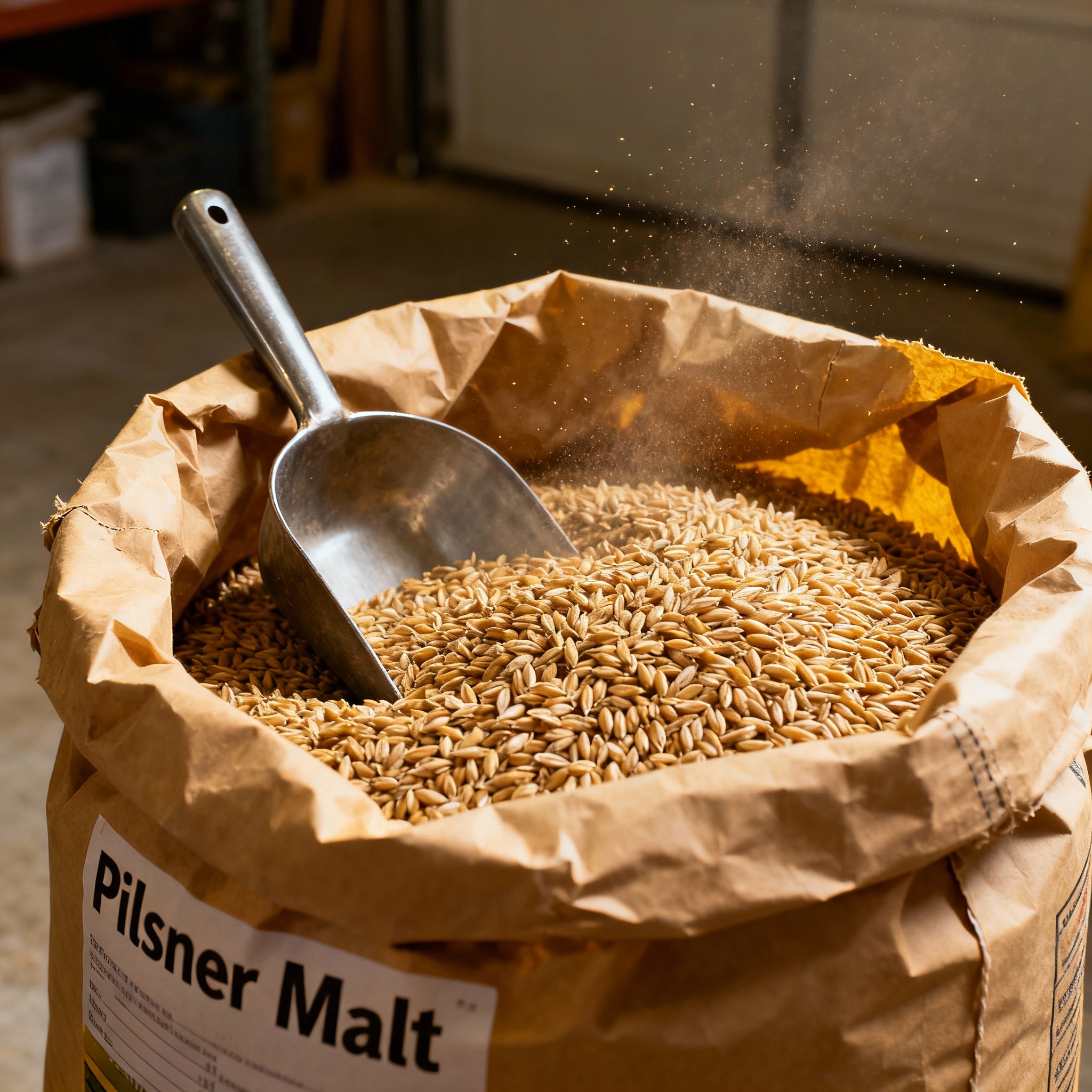
If you are using Pilsner malt, extend your boil to at least 75 minutes and do not put a lid on your kettle. I keep a small fan near my stovetop to help with steam ventilation.
Pale/2-Row: The Workhorse
Pale malt (often called 2-row in North America) is kilned slightly hotter than Pilsner, around 185 to 195°F. This bumps the color up to about 2 to 3.5 Lovibond.
Extra heat drives off more SMM, so DMS is rarely an issue. It also develops a bit more malt character, which I would describe as lightly toasted bread or plain Cheerios.
It is not assertive, but it is there, giving the beer a gentle backbone. The enzyme content is still strong (diastatic power around 130 to 160 Lintner), which makes Pale malt incredibly versatile.
You can use it in almost any style: IPAs, pale ales, stouts, porters, or even some Belgian styles if you do not want the super-clean profile of Pilsner. It is the default choice for most homebrewers because it does not create problems and it gives you a reliable base to build on.
I keep a 50-pound bag of domestic 2-row in my garage at all times. It is cheap, it stores well if you keep it dry, and it works in about 80 percent of what I brew.
When I am testing a new hop variety or trying out a different yeast strain, I use Pale malt. I know it will not add variables I did not ask for.
One thing I have noticed from tracking my own batches: beers made with Pale malt tend to finish slightly higher compared to the same recipe with Pilsner malt. I think this is because the higher kilning temperature degrades some of the beta-amylase enzymes.
It is not a huge difference, but if you are chasing a super-dry finish, Pilsner might get you there faster.
The beta-amylase enzyme, which is responsible for creating fermentable maltose, begins to denature at temperatures above 158°F. During the kilning process, higher temperatures reduce the total enzymatic potential (Diastatic Power) of the malt, which can lead to a higher terminal gravity in the finished beer.
If you are brewing an IPA and you want the hops to be the star, use Pale malt, not Pilsner. The slight bready character actually supports citrus and pine hops better than a completely blank base.
Vienna: The Golden Balance
Vienna malt sits in an interesting middle zone. It is kilned at around 210 to 220°F, which pushes the color to about 3 to 5 Lovibond and starts to develop light melanoidins.
These complex browning compounds add toasty, bready flavors. The result is a malt that contributes a soft, golden sweetness without tipping into caramel territory.
Think of lightly toasted white bread. It is not sugary or rich, just warm and slightly nutty.
Vienna malt was developed in the 1840s by Anton Dreher in Austria. It was designed to make lagers with more color and body than the pale pilsners coming out of Bohemia, but without the heaviness of darker Munich-based beers.
Vienna lagers have a beautiful amber glow and a malt presence that supports the beer without overwhelming it. The enzyme content in Vienna malt is lower than Pale or Pilsner (diastatic power around 50 to 60 Lintner).
If you are using more than 50 percent in your grain bill, you might want to add some base malt with higher enzymatic activity to help with conversion. I have made 100 percent Vienna malt beers, and they converted fine, but my mash efficiency dropped a few points.
I use Vienna malt in Oktoberfests, amber lagers, and sometimes in pale ales when I want a softer malt character than straight 2-row gives me. It also works beautifully in Belgian dubbels and some saisons if you want a hint of toastiness without going full Munich.
I made a grisette with 60 percent Vienna and 40 percent Pilsner recently. The toasted grain flavor paired perfectly with the earthy, peppery yeast.
If you are brewing a Vienna lager, do not add any crystal malt. The Vienna malt already has enough body and light sweetness. I see a lot of recipes that throw in Crystal 20 or 40, but it often makes the beer cloying.
Munich: The Bread Crust
Munich malt is where base malts start to assert themselves. It is kilned even hotter than Vienna, around 220 to 230°F, and comes in two main varieties: Light Munich and Dark Munich.
The higher kilning temperature creates a lot of melanoidins, which give Munich malt that rich, bready, almost doughy flavor. If Vienna tastes like lightly toasted bread, Munich tastes like the crust.
It is the part with a bit of char and depth. The enzyme content in Munich malt is low (diastatic power around 40 to 60 Lintner for Light Munich).
Most brewers blend it with Pale or Pilsner malt for this reason. But I have done 100 percent Munich malt beers, and they converted fine with a longer mash time and a slightly thicker mash.
Light Munich gives you a sweet, grainy richness without much color. I use it in bocks, dunkels, and Oktoberfests, usually as 30 to 50 percent of the grain bill.
It adds body and a malt-forward character that makes the beer feel substantial without being heavy. Dark Munich pushes that further, adding a deeper, almost chocolatey note.
It is not actual chocolate flavor, but more like the Maillard browning you get on the edges of baked bread. I have used Dark Munich in porters and brown ales, and it adds complexity without the roastiness of actual roasted malts.
One thing that surprised me when I started measuring: Munich malt increases the final gravity more than Pale or Pilsner. The melanoidins are less fermentable, so you end up with a fuller body and a slightly sweeter finish.
If you are brewing a bock and you want that rich, chewy mouthfeel, Munich malt is doing half the work. I made a mistake once by using 80 percent Dark Munich in a Baltic porter.
The beer finished at 1.020, and it tasted like I had dissolved a loaf of pumpernickel into it. It was not bad, but it was not what I planned.
If you want the Munich malt flavor but you are worried about enzyme levels, blend it 50/50 with Pale malt. You will still get the bread crust character, but your mash efficiency will not tank.
Maris Otter: The British Biscuit
Maris Otter is not technically a malt type like Munich or Vienna; it is a specific barley variety grown primarily in the UK. But it deserves its own section because it behaves differently than generic 2-row Pale malt.
If you are brewing English ales, it makes a noticeable difference. Maris Otter is kilned similarly to Pale malt, but the barley itself has a distinct flavor: nutty, biscuity, and almost slightly sweet.
I think of it as Digestive biscuits or Graham crackers. It is that toasted grain flavor that sits right in the middle of your palate. It is richer than American 2-row but not as assertive as Munich.
The enzyme content is moderate (diastatic power around 120 to 130 Lintner), and I have never had conversion issues with it. The bigger question is cost.
Maris Otter is usually about twice the price of domestic 2-row, so you have to decide if the flavor difference is worth it. For me, it is, but only in specific styles.
If I am brewing a proper English bitter, an ESB, or a mild, I use Maris Otter. If I am brewing an American pale ale or an IPA, I save my money and use cheaper 2-row because the hops will dominate anyway.
I ran a side-by-side test a few years ago: same recipe, same yeast, one batch with Maris Otter and one with Rahr 2-row. The Maris Otter version had a rounder, more cohesive malt character.
The 2-row version was cleaner but a bit hollow, like the middle of the flavor was missing. My tasting notes said “bready vs. bland,” which is reductive, but accurate.
One thing to watch: Maris Otter can contribute a slight haze if you do not manage your mash pH carefully. A bit of acidulated malt or a tiny dose of lactic acid usually fixes it.
If you are brewing an English ale and you cannot afford 100 percent Maris Otter, use 50 percent Maris Otter and 50 percent domestic 2-row. You will still get the biscuity character, and your wallet will not hate you.
The Real Difference: What the Data Says
I keep a spreadsheet where I track every batch I brew: grain bill percentages, mash temperature, final gravity, and tasting notes. After about 80 batches, some patterns became obvious.
First, final gravity is directly affected by base malt choice. Beers made with Pilsner malt finished an average of 2 gravity points lower than the same recipe with Pale malt.
Beers with Munich malt finished 3 to 5 points higher. This is not a huge swing, but if you are trying to dial in a specific mouthfeel, it matters.
Second, mash efficiency drops as you increase the percentage of kilned malts. My average efficiency with 100 percent Pale malt is around 75 percent.
With 50 percent Munich, it drops to about 70 percent. This is not a failure of the malt; it is just physics.
The higher kilning temperature denatures some of the enzymes, so conversion is slower and less complete. Third, flavor intensity scales with Lovibond, but not linearly.
Going from 2-row (3L) to Vienna (4L) adds noticeable toastiness. Going from Vienna (4L) to Light Munich (10L) adds even more, but going from Light Munich (10L) to Dark Munich (20L) does not double the flavor.
Base Malt Technical Comparison Table
| Malt Type | Lovibond | Diastatic Power (Lintner) | Flavor Profile | Best Use Cases | Max % in Grain Bill |
|---|---|---|---|---|---|
| Pilsner | 1.5 - 2.5 | 105 - 120 | Neutral, crackers, grain | Lagers, Belgian ales | 100% |
| Pale/2-Row | 2.0 - 3.5 | 130 - 160 | Light toast, bread, clean | IPAs, pale ales, stouts | 100% |
| Maris Otter | 2.5 - 3.5 | 120 - 130 | Biscuit, nutty, Graham cracker | English ales, bitters | 100% |
| Vienna | 3.0 - 5.0 | 50 - 60 | Soft toast, golden honey | Amber lagers, Oktoberfest | 100% |
| Munich (Light) | 7.0 - 12.0 | 40 - 60 | Bread crust, rich, doughy | Bocks, Dunkels, Marzen | 100% |
| Munich (Dark) | 15.0 - 25.0 | 20 - 40 | Deep toast, dark bread | Porters, Brown ales | 40% |
Conclusion
Choosing your base malt is the most significant decision you will make in recipe formulation. It dictates your fermentation efficiency, your final mouthfeel, and the color of your brew.
By understanding the relationship between kilning temperatures and enzymatic potential, you can precisely control how dry or bready your final product becomes. Whether you are seeking the blank slate of a Pilsner or the rich melanoidin depth of a Munich, your canvas must match your artistic intent.
References
- Palmer, J. (2017). How to Brew. Brewers Publications.
- Bamforth, C. W. (2011). Standards of Brewing. Brewers Publications.
- Kunze, W. (2014). Technology Brewing and Malting. VLB Berlin.
- Briess Malt & Ingredients Co. Malt Technical Data Sheets.
- University of California, Davis. Brewing Science Publications and Sensory Analysis.