Brewing with Coffee: Beans, Brew, and timing.
I ruined a perfectly good porter once. I dumped a pound of medium-roast coffee grounds into the boil kettle because that’s what the internet told me to do.
The result tasted like burnt rubber mixed with battery acid. My friend said it reminded him of gas station coffee sitting on a burner since 6 a.m.
I poured the whole batch down the drain. That was five years ago.
Since then, I’ve spent way too much time figuring out how to get coffee flavor into beer without the harshness or green pepper notes. Coffee and beer are both fermented products that should work together beautifully.
However, the chemistry is tricky. Add coffee at the wrong time and you extract tannins and acids that make your beer taste like a tire shop.
This guide walks through the methods I’ve tested in my garage lab. I’ll explain why whole beans beat grounds and how cold brew gives you total control.
Whole Bean vs Ground: Why Texture Matters
When you add coffee to beer, you’re doing a second extraction. The first happened when the beans were roasted, and the second happens in your fermenter.
The key difference between whole beans and grounds is surface area. Grounds release flavor fast, but that speed also pulls out unwanted tannins and bitter phenolic compounds.
I once tried adding coarsely ground coffee to a stout during secondary fermentation. I left it for three days, thinking more time equaled more flavor.
Instead, I got a beer that tasted like I’d stirred in a handful of dirt. The grounds gave up all their good flavor in 12 hours, then spent two days leaching astringency.
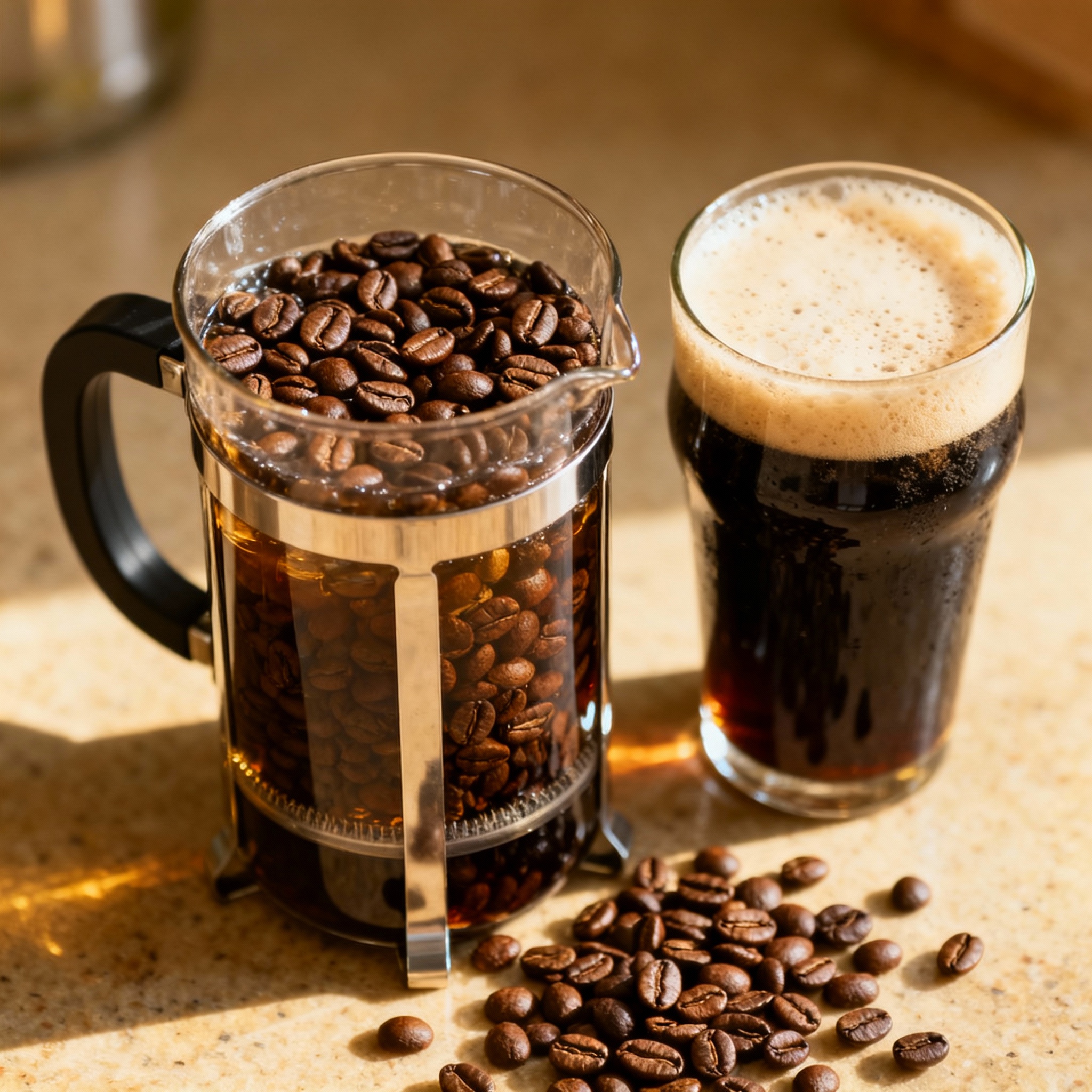
Whole beans release flavor more slowly and give you much more control. You can leave them in the fermenter longer without worrying about crossing into harsh territory.
I usually add whole beans at a rate of 1 to 2 ounces per gallon. I drop them in during the last three days of fermentation or during the cold crash.
The other advantage of whole beans is freshness. Coffee starts losing its aromatic compounds the moment it’s ground.
Whole beans protect those volatile oils until you’re ready to use them. If you’re buying pre-ground coffee, you’re starting with a stale product.
Crack the whole beans slightly before adding them to the fermenter. Just give them a light crush with a rolling pin to increase surface area without going into a full grind.
Cold Brew Addition: Precision Dosing
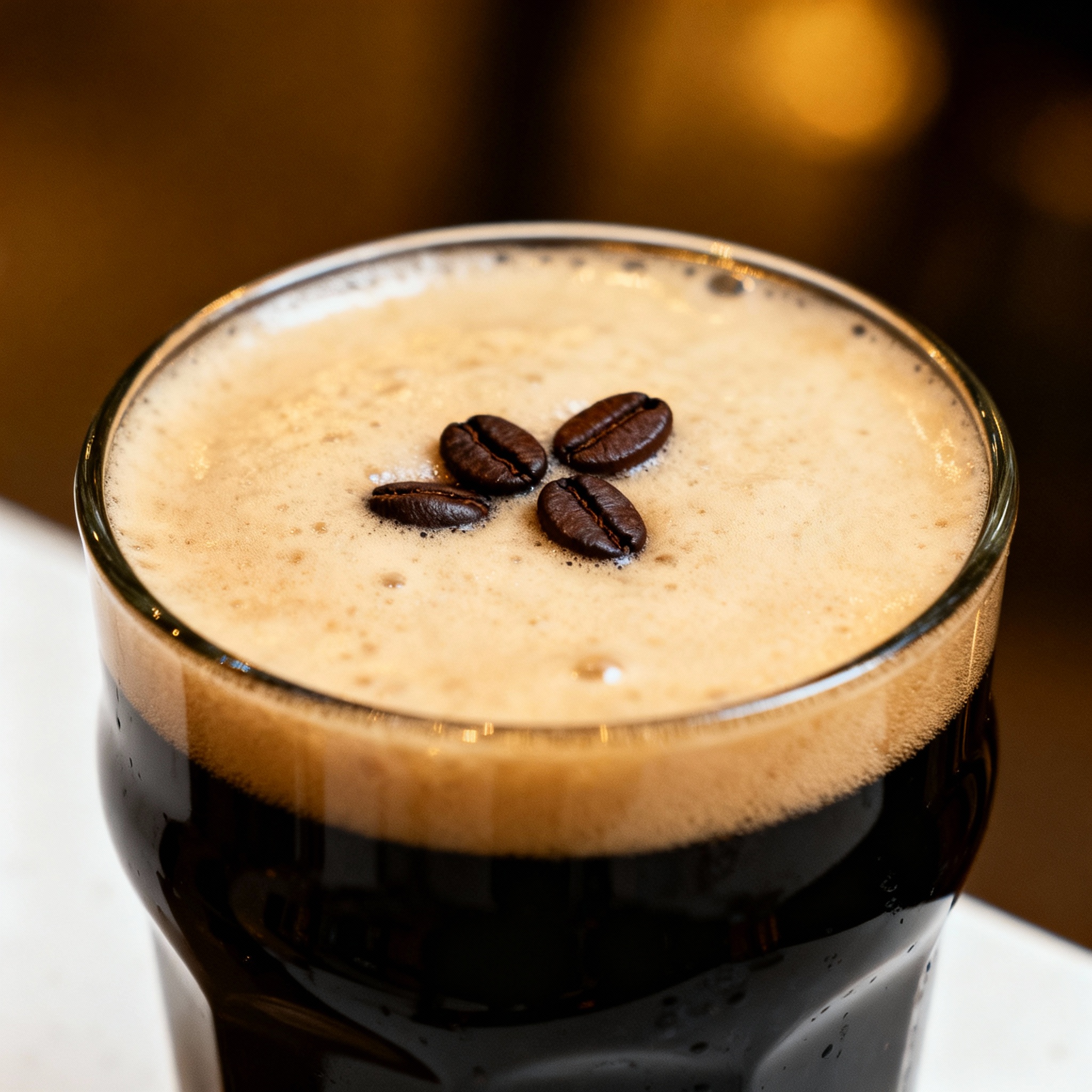
Cold brew coffee is the most controllable method I’ve found. You make a concentrated cold brew separately and dose it into the beer at packaging.
This lets you taste the brew before you commit and adjust the amount perfectly. I make my cold brew at a 1:4 ratio by weight.
I use coarsely ground coffee and let it steep in the fridge for 18 to 24 hours. After straining, I end up with a syrupy concentrate that tastes like the essence of the roast.
Dose this into the beer at a rate of 4 to 8 ounces per gallon. The beauty of this method is the precision it offers.
You can pour a small sample of your beer, add a measured amount of cold brew, and scale it up. Too weak? Add more. Too strong? Dilute it.
Cold brew also avoids the extraction problems of hot coffee. Cold water extracts more selectively, pulling out roasted flavors while leaving behind most of the harshness.
Brew your cold brew with the same water you used for your beer. Matching the mineral profiles keeps the final blend consistent and integrated.
Hot Side Additions: Why Boiling Coffee Is a Mistake
I see this in old recipes all the time: “Add coffee at flameout” or “Toss coffee into the boil.” Every time I’ve tried this, the result has been the same.
The beer tastes like stale coffee mixed with burnt toast. Boiling coffee destroys delicate aromatics and extracts every harsh compound the beans have to offer.
Coffee brewing works best between 195 and 205 degrees Fahrenheit. Wort at flameout is usually hotter than that, and the boil is even worse.
That excessive heat breaks down aromatic compounds and drives off the volatile oils. What remains is only bitterness and astringency.
There’s also the issue of oxidation. Hot coffee oxidizes quickly, especially in the presence of oxygen during the boil.
Oxidized coffee tastes stale and papery. I’ve tasted beers where the coffee flavor reminded me of wet cardboard.
If you’re brewing a recipe that calls for hot side coffee, substitute with cold brew or whole beans instead. Use the same weight of coffee but add it during the cold side.
The Green Pepper Off-Flavor
This one caught me off guard. I used a light roast for a cream ale, thinking the citrus notes would be perfect.
The result tasted exactly like green bell peppers. It was a weird, vegetal flavor that made the beer undrinkable.
Light roasts contain higher levels of compounds called methoxypyrazines. These give green bell peppers their characteristic flavor.
In darker roasts, these are masked by roasted, caramelized sugars. In a light roast, especially in a light-colored beer, they come through loud and clear.
The fix is simple: use medium to dark roasts for beer. I stick to roasts labeled as Full City, Vienna, or French.
These have enough caramelization to cover up any lingering green notes. They also provide the roasted, chocolatey flavors that pair well with malt.
Smell the beans before you add them to the batch. If they smell grassy or tea-like, they’re probably too light. Look for beans that smell like chocolate or roasted nuts.
Caffeine Content: The Buzz Factor
Everyone asks if coffee beer will actually wake you up. The answer is probably not.
Coffee beer does contain caffeine, but it is diluted across several gallons. The final concentration is much lower than a standard cup.
If I dose 6 ounces of cold brew per gallon, a 12-ounce serving would have about 14 milligrams of caffeine. That is less than a can of soda.
You would need to drink a six-pack to get the equivalent of one cup of coffee. Whole bean additions provide even less caffeine.
Calculate Your Dose
☕ Coffee Dosing Calculator
*Based on a standard 1:4 ratio cold brew concentrate.
There’s also the issue of alcohol being a depressant. It counteracts the stimulating effects of the caffeine.
I’ve tried drinking coffee stouts in the morning for research. They never woke me up better than a regular beer would.
While the buzz is low, caffeine adds a slight sharpness to the mouthfeel. In a heavy beer like a stout, this sharpness helps balance the sweetness and prevents it from feeling cloying.
Conclusion
Coffee and beer should get along better than they do. Both are complex and fermented, but combining them takes significant care.
Add coffee at the wrong time or use the wrong roast, and you’ll end up with a mess. Add it thoughtfully, and you get a beer that tastes like the best parts of both worlds.
The method I keep coming back to is cold brew at packaging. It gives me control and preserves the aromatics.
If you’re new to this, start simple. Pick a medium-dark roast, make a cold brew concentrate, and dose it into a small sample first.
| Method | Extraction Time | Flavor Profile | Risk of Off-Flavors |
|---|---|---|---|
| Whole Beans | 2-4 days | Smooth, integrated | Low |
| Cold Brew | 18-24 hours | Bright, aromatic | Very Low |
| Grounds | 1-2 days | Aggressive, harsh | High |
| Flameout | 10-30 minutes | Bitter, oxidized | Very High |
References
- Specialty Coffee Association. (2021). Sensory Lexicon and Flavor Chemistry.
- Yeretzian, C., et al. (2012). From the Roaster to the Cup.
- Palmer, J. (2017). How to Brew. 4th Edition.
- Bamforth, C. (2018). “Beer and Coffee: A Study in Flavor Compatibility.”