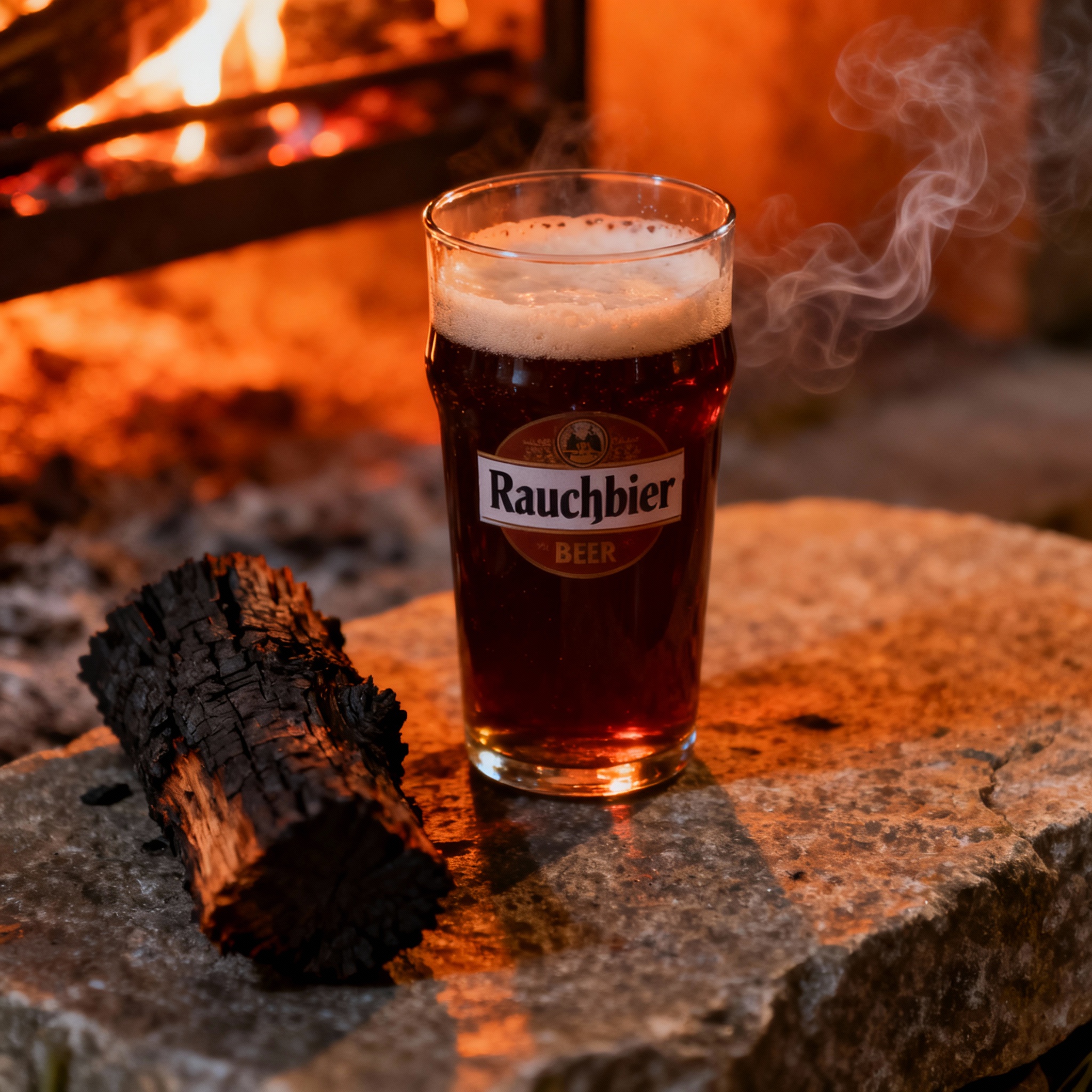
Smoked Beers: Lichtenhainer, Gotlandsdricka, and Rauchbier
Introduction: The Original Flavor of Malt
Before electricity and thermostats, every beer made before the 1800s had some degree of smokiness because malt was dried over open flames. This flavor, now considered a specialty style, was actually the default setting for thousands of years.
I became obsessed with smoked beers after a trip to Bamberg, Germany. Most American craft drinkers avoid smoke because they’ve had poorly made versions that taste like licking a BBQ grill.
However, when dialed in correctly, smoke adds a deep, primal layer that pairs with food better than almost any other style. The trick is restraint; treating smoke like a spice ensures a balanced, complex profile rather than an ashtray character.
German Classics: Rauchbier and Lichtenhainer
Bamberg is the smoke capital of the beer world, where brewers never abandoned the old ways of drying malt over beechwood. Rauchbier translates to “smoke beer,” and it serves as a window into how beer tasted before indirect kilning became the industry standard.
The flagship Schlenkerla Rauchbier gives off a meaty, bacon-fat quality often described as ham hock in a glass. Beechwood is the cleanest smoke wood for brewing because it lacks the phenolic bite of peat or the heavy sweetness of fruit woods.
Lichtenhainer is the forgotten cousin: a low-alcohol sour wheat beer that is lightly smoked. Traditional versions are kettle-soured with Lactobacillus to around 3.4 pH, providing a sharp tang that cuts through the savory smoke notes.
Smoking malt introduces guaiacol and syringol, which provide the campfire aroma. If Lactobacillus is introduced to a heavily smoked wort too early, the bacteria can metabolize certain smoke phenols into 4-vinylguaiacol, potentially creating medicinal or “Band-Aid” off-flavors.
If you’re brewing Lichtenhainer, start with 15 percent smoked malt in the grist. Sour the wort first, then add the smoked components to prevent the bacteria from producing unintended medicinal off-flavors.
Ancient Smoke: Gotlandsdricka
Gotlandsdricka is a Viking-era ale from the island of Gotland that utilizes birchwood smoke and juniper. It predates modern brewing laws and relies on a farmhouse tradition of using whatever materials were locally available.
Birch smoke is lighter and more floral than beech, resembling the aroma of burning autumn leaves. When paired with the resinous, gin-like flavor of juniper, the result is a beer that tastes like drinking a forest.
Traditional Gotlandsdricka often uses Norwegian Kveik yeast, which thrives at temperatures up to 95°F (35°C). This high-heat fermentation allows the beer to finish in as little as 72 hours while producing subtle orange-peel esters that complement the juniper.
The juniper is traditionally used as a filter bed in the mash tun. If branches are unavailable, crushed juniper berries can be added to the mash to achieve a similar medicinal, menthol balance against the malt.
If you don’t have access to birchwood, alderwood is an excellent substitute for its light, sweet smoke. Avoid mesquite or hickory, as they are too aggressive and will completely overpower the delicate juniper aromatics.
Peat vs. Cherrywood: Managing Phenolics
The wood source determines whether your beer tastes like savory bacon or a hospital waiting room. Peat is not wood, but decomposed plant matter, and it releases medicinal flavors that can easily ruin a batch.
I once used peated malt in a porter and it tasted like spilled iodine. Peat is loaded with guaiacol; if you use it, keep it under 5 percent of the total grist to avoid the “Band-Aid” effect.
Cherrywood and other fruit woods like apple or maple are much more forgiving. They offer a sweet, fruity smoke that integrates well with darker, malty beers without the aggressive phenolic punch of peat or hickory.
Check the wood source on your malt label from suppliers like Weyermann and others within the industry, as some maltsters use inconsistent blends. Freshly smoked malt can have harsh, acrid flavors; let it rest in a sealed bag for a week before brewing to allow the harsher volatiles to mellow.
Grist Percentages: Total vs. Accent
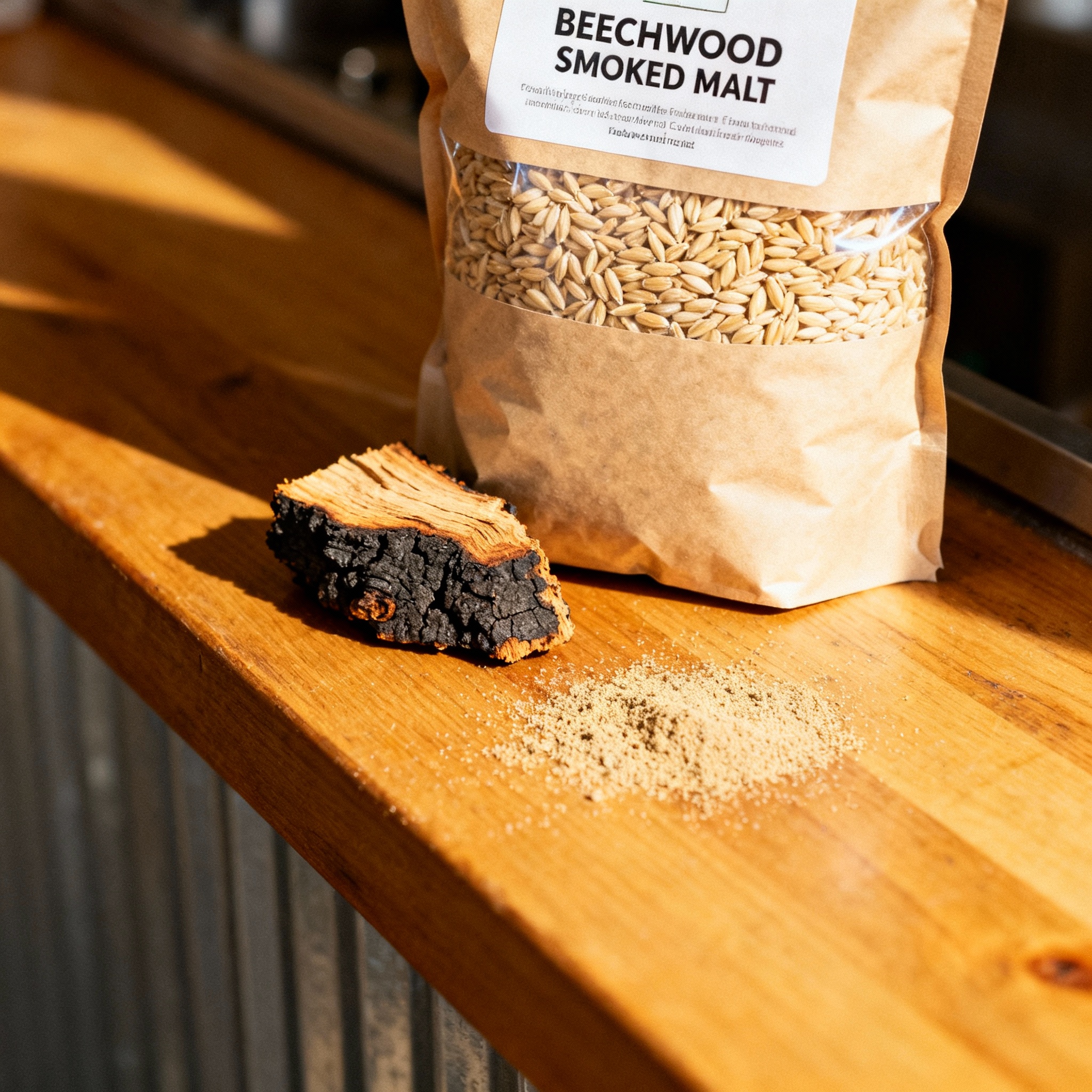
Grist percentage dictates the intensity of the experience. Traditional Bamberg Rauchbier often uses 100 percent beechwood-smoked malt, resulting in a beer that smells and tastes like a smokehouse.
While 100 percent smoked grists are glorious, they can be exhausting to drink. For higher drinkability, most brewers target 20 to 40 percent smoked malt, integrating the smoke with the base malt rather than letting it dominate.
Smoke compounds are primarily surface-bound on the malt husks. Research from the American Society of Brewing Chemists (ASBC) indicates that during the mash, these phenols are extracted into the wort; however, a vigorous boil can drive off some of the more volatile smoke aromas, which is why some brewers prefer a shorter boil for smoked styles.
Lichtenhainer usually stays in the 10 to 20 percent range because the acidity provides the primary character. For a smoked brown ale, 30 percent smoke is the “sweet spot” for a bacon-on-toast profile.
Brew a small test batch with 20 percent smoked malt. Use a spreadsheet to log the wood type and grist percentage so you can accurately scale the intensity in future batches.
Food Pairing: Savory Synergy
Smoked beers are the ultimate food beers. The smoke in the liquid amplifies the smoke in the dish, creating a layered experience that enhances both.
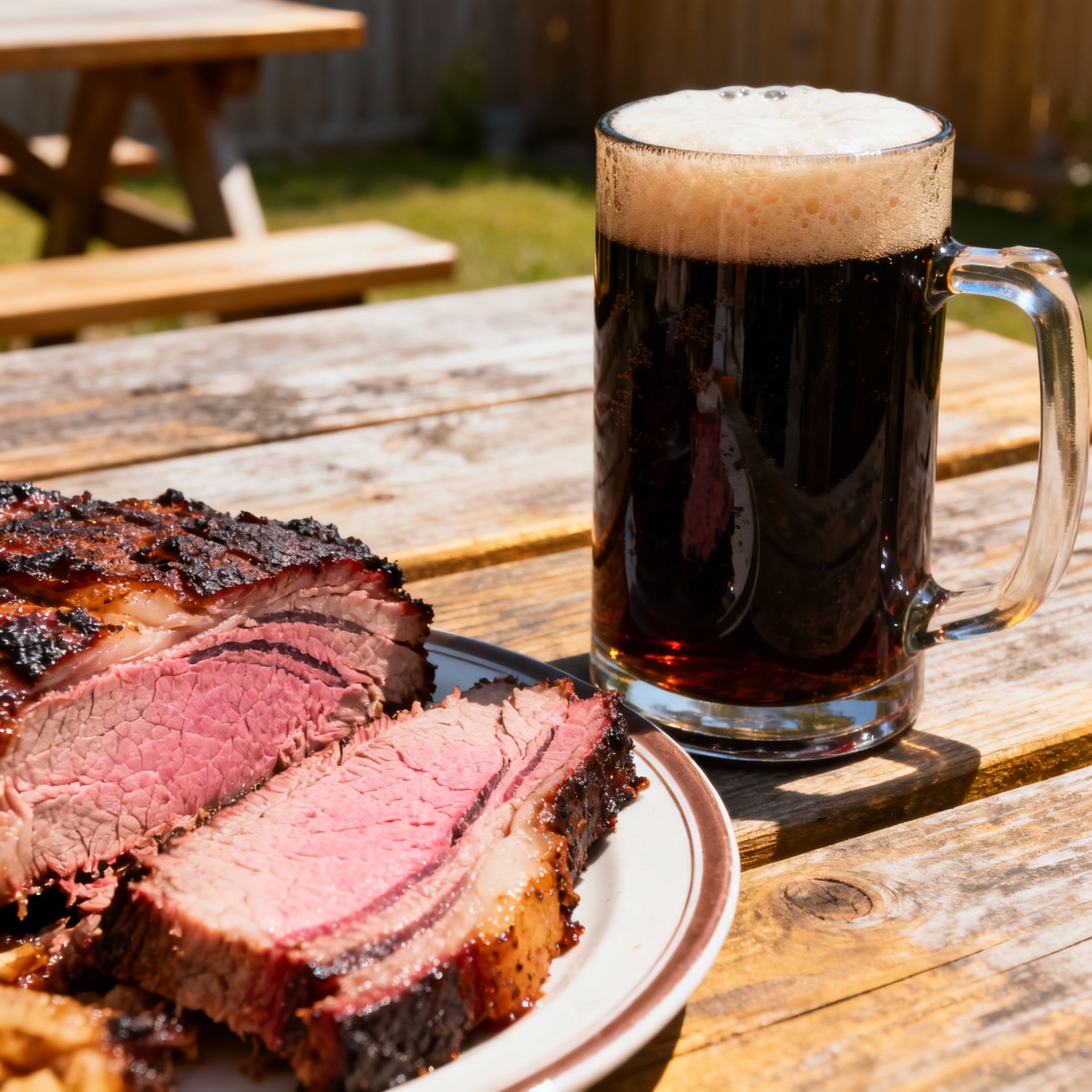
BBQ is the classic pairing, as the malt sweetness in a Rauchbier cuts through the fat of a brisket while the smoke mirrors the oak-fired meat. Lichtenhainer, with its sharp acidity, is better suited for fatty smoked fish or sauerkraut.
Game meats like venison or wild boar pair well with the piney juniper of Gotlandsdricka. For a simpler pairing, try smoked gouda or cheddar; the cheese’s caramel notes perfectly match the Maillard products in the beer.
Serve smoked beers in smaller 4-ounce portions during dinner. This allows the smoke to act as a palate cleanser between bites without overwhelming the diner’s senses.
Conclusion
Smoked beers are unapologetically old-school and demand the brewer’s respect for balance. Whether you are brewing a tart Lichtenhainer or a meaty Rauchbier, the key is managing the phenolic intensity.
Experiment with wood types, trust your grist percentages, and always pair these beers with a savory dish. When done right, smoke is not a gimmick-it is a return to the very roots of brewing.
References
- Bamberg Brewing History. Aecht Schlenkerla Rauchbier Archive. 2024.
- Garshol, Lars Marius. Historical Brewing Techniques: The Lost Art of Farmhouse Brewing. Brewers Publications, 2020.
- Weyermann Malting. Technical Specifications for Beechwood and Oak Smoked Malts. 2025.
- Journal of the ASBC. “Phenolic Compound Extraction in Smoked Wort.” Vol. 72, 2019.