Wood Aging: Oak Chips, Spirals, and Cubes
I ruined a Belgian quad once. After six months of careful fermentation, I dropped in a handful of oak chips and a week later, it tasted like I’d brewed it inside a 2x4.
Wood aging isn’t just about throwing oak in and waiting; it is a matter of surface area physics. If you don’t respect the extraction rates, you can waste months of work in just a few days.
Barrels work because of a specific ratio of surface area to liquid. When using chips, cubes, or spirals, you are increasing that ratio significantly, which means extraction happens much faster.
Forms of Oak: Chips, Cubes, and Spirals
The geometry of the wood determines the velocity of flavor extraction. The difference between chips and cubes is functionally the difference between steeping tea for 30 seconds versus several minutes.
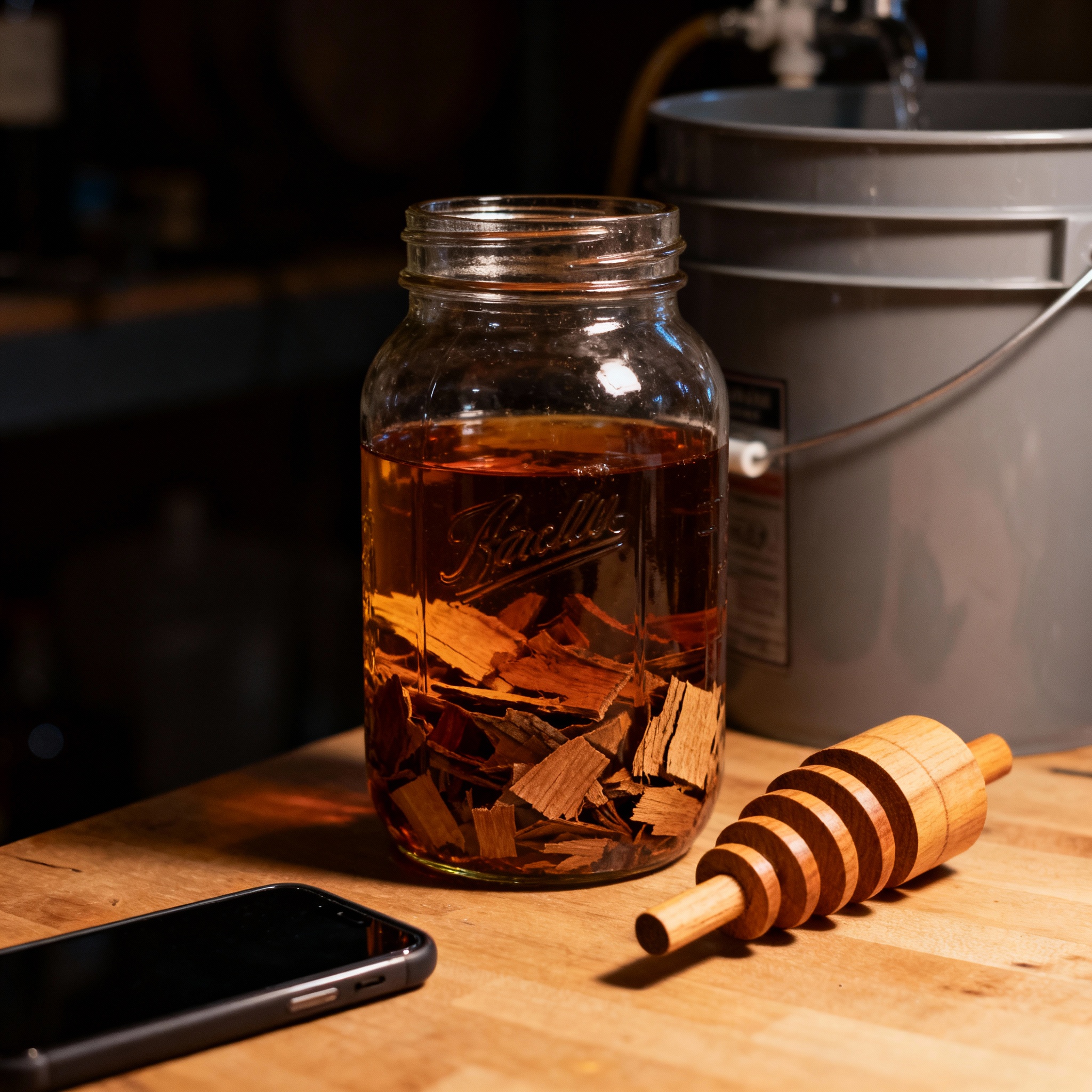
Chips provide a huge amount of surface area relative to their mass, making them aggressive and fast-acting. I use chips only when I want a light oak presence in a beer that will only sit for one to two weeks.
Cubes are my default choice because they release flavor slowly, allowing a batch to sit for four to eight weeks without becoming over-oaked. The extraction curve is gentler, providing vanilla and caramel notes early on, followed by deeper spice.
A 5-gallon batch aged with 1 ounce of oak chips has roughly 10 times the wood-to-liquid contact surface of a standard 60-gallon wine barrel. This explains why homebrew “barrel aging” takes weeks rather than the years required for commercial barrels.
Spirals represent a middle ground, increasing surface area via their corkscrew shape without the erratic extraction of chips. They are ideal for meads and ciders where a noticeable oak profile is desired within a two-to-three-week window.
If you’re new to wood aging, start with cubes and taste every three days after the first week. Write down what you taste each time to learn your personal tolerance for oak intensity.
Oak Origins: American, French, and Hungarian
The botanical and geographical origin of the oak creates distinct chemical profiles. American oak (Quercus alba) is structurally different from the European varieties used in French and Hungarian wood.
American oak is bold and high in lactones, which provide coconut and vanilla flavors. It is assertive and sweet, pairing perfectly with high-alcohol beers like imperial stouts or barleywines.
French oak is more restrained, containing fewer lactones but higher tannin levels. It contributes spice notes like clove and allspice, providing structure to delicate styles like sours or saisons without dominating.
Hungarian oak is a wildcard, sitting between American and French in terms of tannin and lactone content. It frequently adds savory notes of leather and black pepper, which work exceptionally well in Baltic porters.
Go with American oak for high-ABV beers (barleywines, stouts) and French for anything sour or fruit-forward. Hungarian is best for when you want a savory, peppery complexity.
Toast Levels: Engineering the Flavor
Toasting triggers chemical changes in the wood. Heat caramelizes sugars, breaks lignin into vanillin, and transforms hemicellulose into toasted flavor compounds.
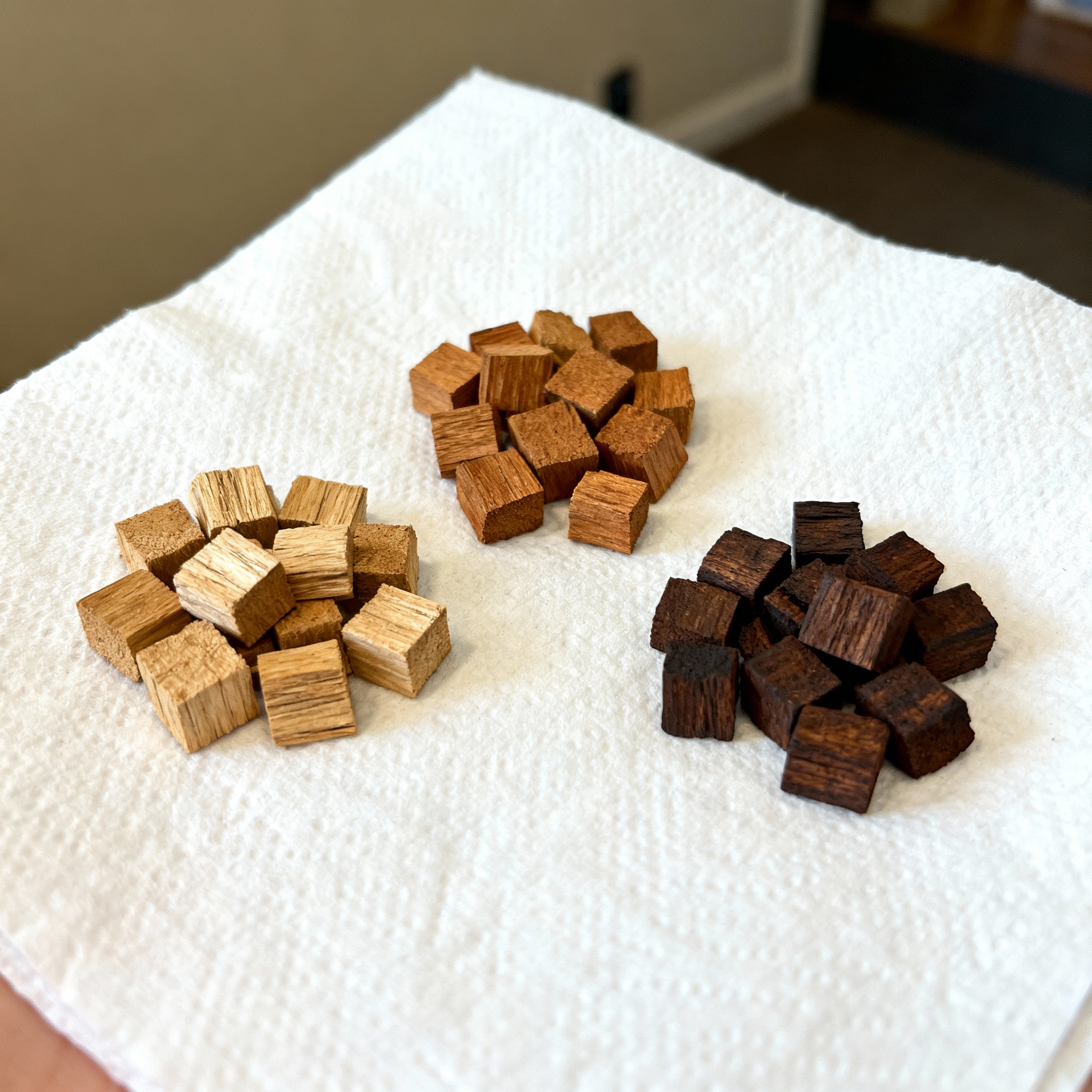
Light toast retains more raw wood character and firm tannins. It works well in saisons where you want a dry, tea-like quality that doesn’t mask the yeast esters.
Medium toast is the versatile “sweet spot,” providing vanilla, caramel, and toffee. This is the profile most drinkers associate with “barrel-aged” flavor and it works in almost every style.
Heavy toast pushes into coffee, dark chocolate, and smoke. The sugars have been carbonized past the sweet phase, making this ideal for adding depth to porters and imperial stouts.
At medium toast levels (approx. 390°F), hemicellulose breaks down into furfural, providing a caramel-like aroma. As temperatures exceed 430°F (heavy toast), those compounds degrade further into smoky phenols and roasted aromas.
If you want complexity and don’t have a single target flavor, try a mix of medium and light French oak. The combination provides layers of spice and structure.
Sanitization: Steaming vs. Soaking
Oak is porous and can harbor wild yeast or mold spores, making sanitization mandatory. Boiling is not recommended, as it leaches out the very compounds you are trying to extract.
Steaming for 10 to 15 minutes is effective at killing surface microbes while preserving flavor. However, I prefer soaking the wood in high-proof spirits for 24 hours.
Soaking in vodka or bourbon sanitizes the wood while “pre-loading” it with spirit flavors. Drain the liquid and add the wood directly to the fermenter for a clean, controlled aging process.
When soaking in spirits, use the same type you want the beer to taste like. Don’t soak in cheap vodka if you are aiming for a premium bourbon barrel profile.
Tasting Frequency: The Point of No Return
You cannot un-oak a beer once the tannins have dissolved. extraction speed varies by temperature, and warmer spaces will accelerate the process significantly.
I taste every three days after the first week, pulling a two-ounce sample and focusing on the finish. Oak flavor usually presents itself at the end of the sip.
If I detect vanilla or pleasant toast, I continue; if I taste raw wood or excessive puckering astringency, I pull the wood immediately. Keeping a notebook helps track exactly how many days specific wood types take in your environment.
Set a phone reminder to taste your oak-aged batch every three days. If you get busy and forget for a month, you’ll likely end up with a batch that tastes like a fence post.
Conclusion
Wood aging is a technical tool that rewards precision. By matching wood form to your timeline and origin to your flavor goals, you can elevate a good beer into something exceptional.
Start small, use cubes for their predictable extraction curve, and never skip the sanitization step. With a bit of data and a lot of tasting, you can replicate barrel character in any garage-scale batch.
Oak Extraction Reference
| Oak Form | Surface Area | Typical Timeline | Best Use Case |
|---|---|---|---|
| Chips | High | 7-14 Days | Light beers, quick presence |
| Cubes | Medium | 28-56 Days | Most styles, complex extraction |
| Spirals | Med-High | 14-28 Days | Mead, Cider, moderate oak |
| Oak Origin | Primary Flavors | Lactone Content | Best Pairing |
|---|---|---|---|
| American | Coconut, Vanilla | High | Stouts, Barleywines |
| French | Spice, Clove, Tannin | Low | Sours, Saisons |
| Hungarian | Pepper, Leather | Medium | Porters, Dark Ales |
References
- Scott Laboratories. “Oak Product Guide: Toast Levels and Flavor Compounds.” 2019.
- UC Davis. “Oak Aging: Chemistry and Sensory Impact.” Department of Viticulture and Enology.
- Mosher, Randy. Radical Brewing. Brewers Publications, 2004.
- White Labs. “Oak Aging in Beer: Best Practices.” Technical Bulletin, 2021.