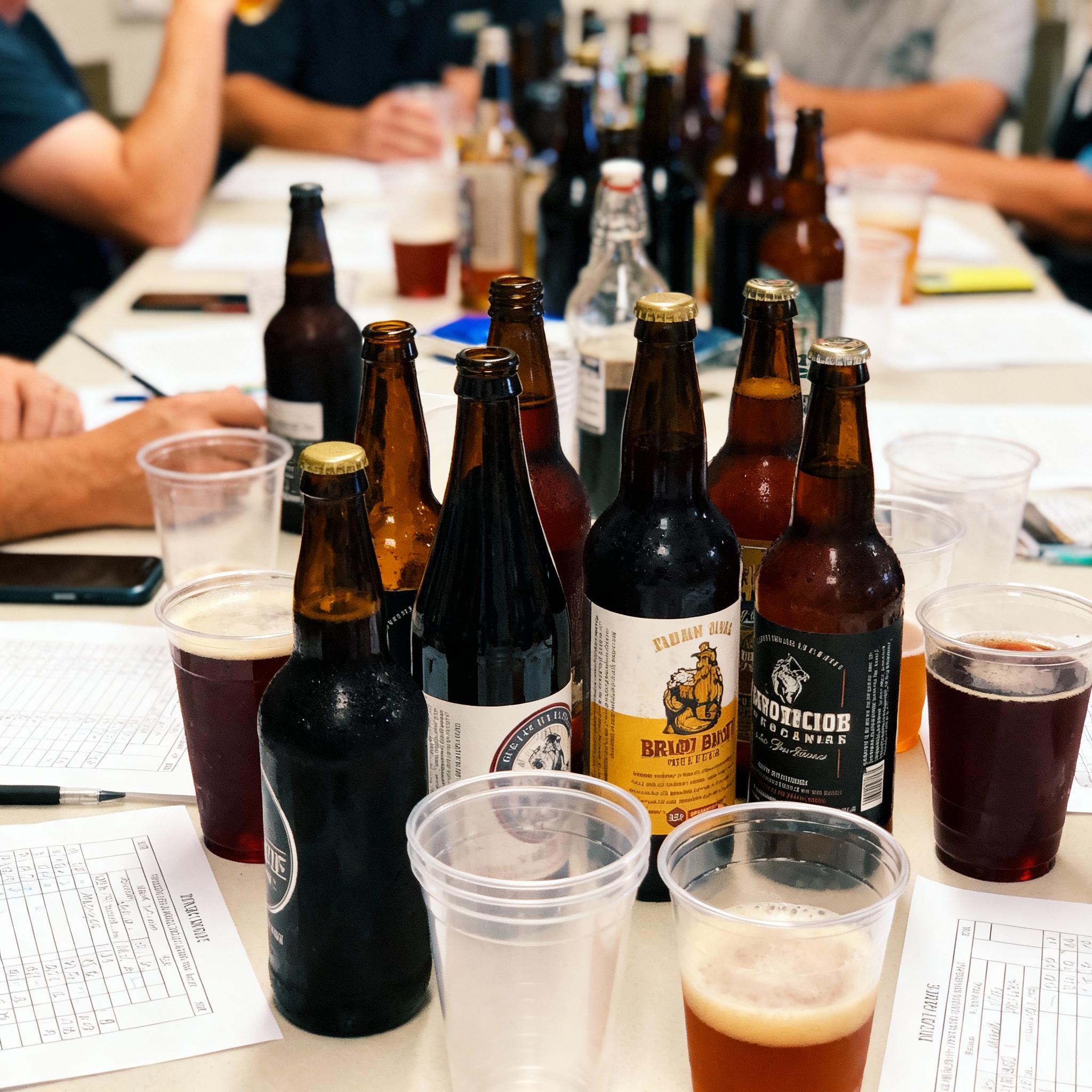
The Brewer's Community: Forums, Clubs, and Competitions
I initially thought homebrewing was a solo pursuit-just me, some buckets, and a corner of the garage. However, three months into my first experiments, I realized I was stuck with a cider that smelled like Band-Aids and no one to ask for help.
Finding a local homebrewing club changed everything. I walked in with a flawed pale ale and left with a diagnosis, three new friends, and a bulk grain order form.
Homebrewing is often marketed as a DIY craft, but the community is what makes it sustainable. Experienced brewers have already made the mistakes you’re about to make, and they are usually eager to help you avoid them.
Homebrew Clubs: Bottle Shares and Bulk Buys
Homebrew clubs are not exclusive societies; they are groups of obsessive personalities looking for new members to talk shop with. Within minutes of my first meeting, I had tasting notes on five IPAs and an invitation to a group brew day.
The real value of a local club lies in its infrastructure. Most organize bulk grain buys that cut base malt costs in half and maintain equipment libraries for tools like oxygen tanks or plate chillers.
Bottle shares allow you to swap your five-gallon batch for a variety of styles you’d never make yourself. I’ve tasted everything from hickory-smoked porters to sea-bean goses through these exchanges.
If your town doesn’t have a homebrew club, start one using local subreddits or Facebook groups. You only need three or four people to begin trading jars of fermented goods and troubleshooting batches.
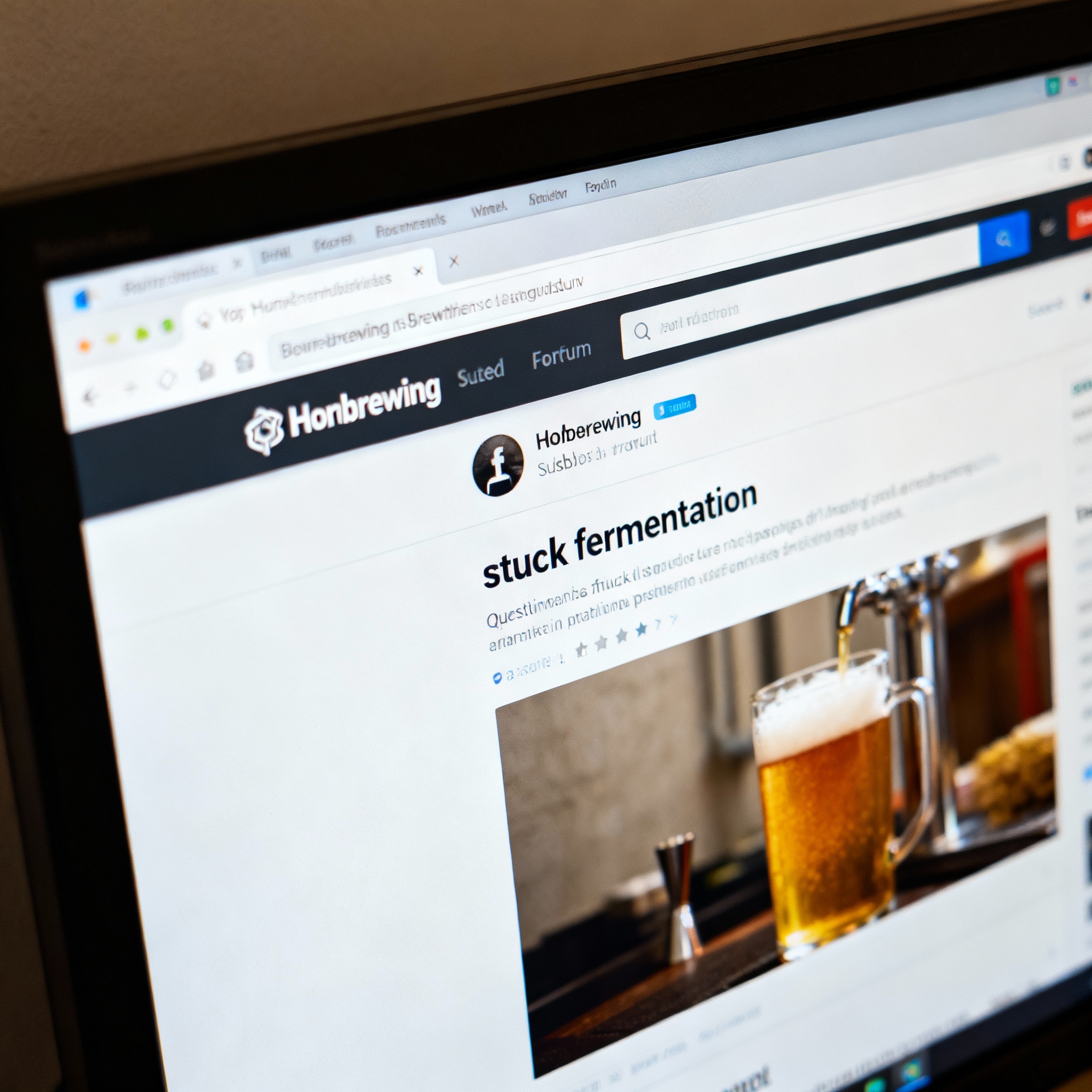
Online Forums: Navigating the Digital Front
When you can’t wait for a local meeting, the internet provides a 24/7 fallback. Reddit (r/Homebrewing) offers speed, while Homebrewtalk provides deep, archived threads on complex mash chemistry.
The key to online forums is providing detail. Don’t just say your beer tastes bad; specify the gravity, yeast strain, and fermentation temperature to give the community data to work with.
Always search the archives before posting a basic question. Most standard queries about table sugar or dry hopping have been answered dozens of times over the last decade.
When posting a question online, always include a photo of your fermenter or krausen. People are significantly more likely to respond accurately if they can visually inspect the problem.
Competitions: The Peer-Review Cycle
I avoided competitions for years out of fear of negative feedback, but entering a regional event eventually changed how I brewed. Competitions force you to brew to style, hitting specific gravity, color, and flavor targets.
The American Homebrewers Association (AHA) maintains a calendar of sanctioned events ranging from local meetups to the National Homebrew Competition. Start small to ensure you receive more detailed, personalized feedback.
The score sheet is the most valuable part of the entry fee. Judges provide a standardized breakdown of aroma, appearance, flavor, and mouthfeel, offering actionable advice on how to improve your process.
BJCP judges are trained to identify specific chemical compounds like diacetyl (2,3-butanedione) at thresholds as low as 0.1 mg/L. A competition scoresheet provides a professional-grade audit of your fermentation health that is difficult to achieve alone.
Enter the same beer in multiple competitions. Judging is subjective, and seeing a pattern across different scoresheets-like a consistent note on under-attenuation-is more useful than a single judge’s opinion.
The BJCP: Critical Tasting
The Beer Judge Certification Program (BJCP) sets the standards for competitions and trains the people who evaluate your beer. Becoming a judge is one of the fastest ways to level up your own palate and brewing discipline.
The process involves passing a rigorous exam covering historical methods and off-flavor identification. Even if you don’t judge professionally, the training helps you identify oxidation or stressed yeast in your own garage lab.
Critical tasting allows you to move beyond “I like this” to “this has excessive isoamyl acetate.” This vocabulary is essential for communicating with other brewers and fixing technical flaws in your recipes.
To study for the BJCP exam, join a tasting group. Blind-taste commercial variety packs and compare your notes to the official style guidelines to calibrate your palate.
Pro-Am: From Garage to Commercial Scale
Pro-Am competitions allow medal-winning homebrewers to scale their recipes for production at professional breweries. This is a unique opportunity to see your “garage lab” creation on a commercial tap handle.
Scaling a five-gallon recipe to 500 gallons is a technical challenge. Hop utilization and yeast behavior change at scale, requiring you to trust the professional brewer to adjust your recipe for their specific system.
Most Pro-Am slots go to clean, well-executed versions of classic styles rather than wild experiments. If you want to stand out, focus on nailing a perfect hefeweizen or a textbook Irish red ale.
If you ever go Pro-Am, treat your homebrew logs as critical data. Having consistent gravity readings and temperature notes from previous batches gives the commercial brewer the best chance of success.
Conclusion
Homebrewing in isolation is fine for a while, but you eventually hit a wall that only a community can break. Local clubs provide bulk resources, while competitions provide the peer review necessary for technical growth.
I still enjoy the quiet focus of my garage lab, but my best batches are often the result of ideas shared over a bottle swap or a forum thread. Brewing is a solo craft, but it is also a community effort.
References
- American Homebrewers Association. “Competition Calendar and Sanctioned Events.”
- Beer Judge Certification Program. “BJCP Style Guidelines.”
- HomebrewTalk. “Recipe Database and Troubleshooting Archive.”
- Palmer, J., & Kaminski, C. Water: A Comprehensive Guide. Brewers Publications.
- Reddit r/Homebrewing. “Community Guidelines and Wiki.”