The Brewer's Pantry: Cooking and Baking with Beer.
I seared a pork chop in my cast iron skillet last Tuesday. The brown bits stuck to the pan looked too good to waste, so I grabbed a bottle of my barrel-aged porter and poured half a cup into the screaming-hot pan.
The kitchen filled with malt steam and a little smoke from the alcohol burning off. Thirty seconds later, I had a sauce that tasted like caramel, coffee, and something faintly smoky.
Beer isn’t just for drinking; it’s a fat-free stock, instant yeast food, and a source of acid and sugar. When you understand what beer does chemically in a recipe, you stop guessing and start controlling the outcome.
Reduction Sauces: Malty Syrups
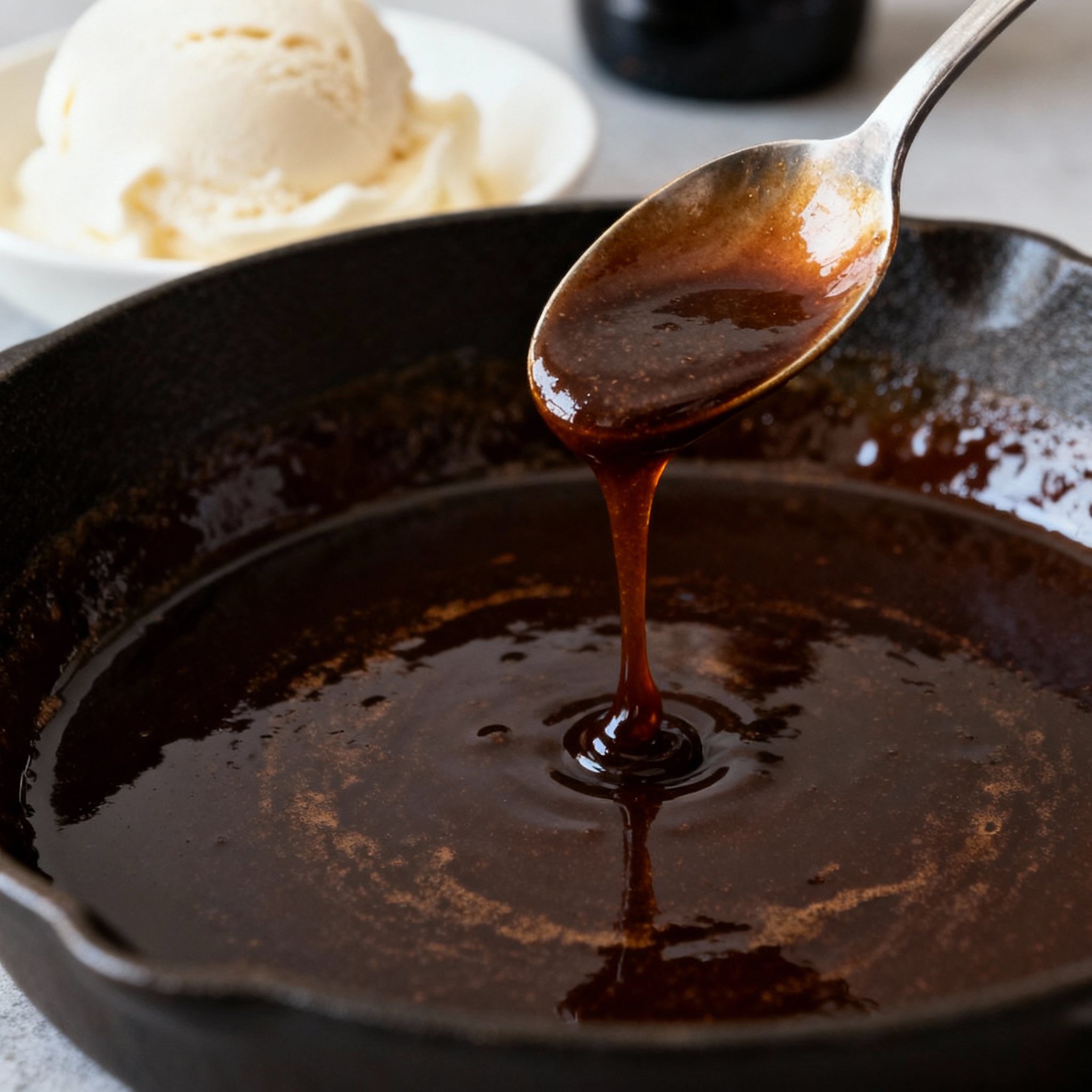
High-alcohol stouts and porters give the best results for reductions because they’re loaded with residual sugars. The process is simple: pour beer into a saucepan, turn the heat to medium-high, and wait.
Water evaporates first, followed by alcohol at 173°F. What remains are malt sugars and Maillard reaction byproducts from the roasted grains.
I usually reduce a 12-ounce bottle down to about two tablespoons of syrup. This takes 15 to 20 minutes, but you must watch it closely as it can burn in under a minute once it hits the syrup stage.
As the water volume decreases, the concentration of non-volatile compounds like melanoidins and complex sugars increases exponentially. This creates a highly viscous fluid where the bitterness of hops is also concentrated, which is why malt-forward styles are preferred for reductions.
The syrup works perfectly on vanilla ice cream or as a glaze for ribeye steaks. Brushing it onto beef in the last 30 seconds of cooking allows the sugars to caramelize and cut through the fat.
Add a tablespoon of butter to the reduction in the last minute of cooking. The fat emulsifies with the malt sugars to create a glossy sauce that coats a spoon, following classic French gastrique techniques.
Beer Can Chicken: Physics vs. Myth
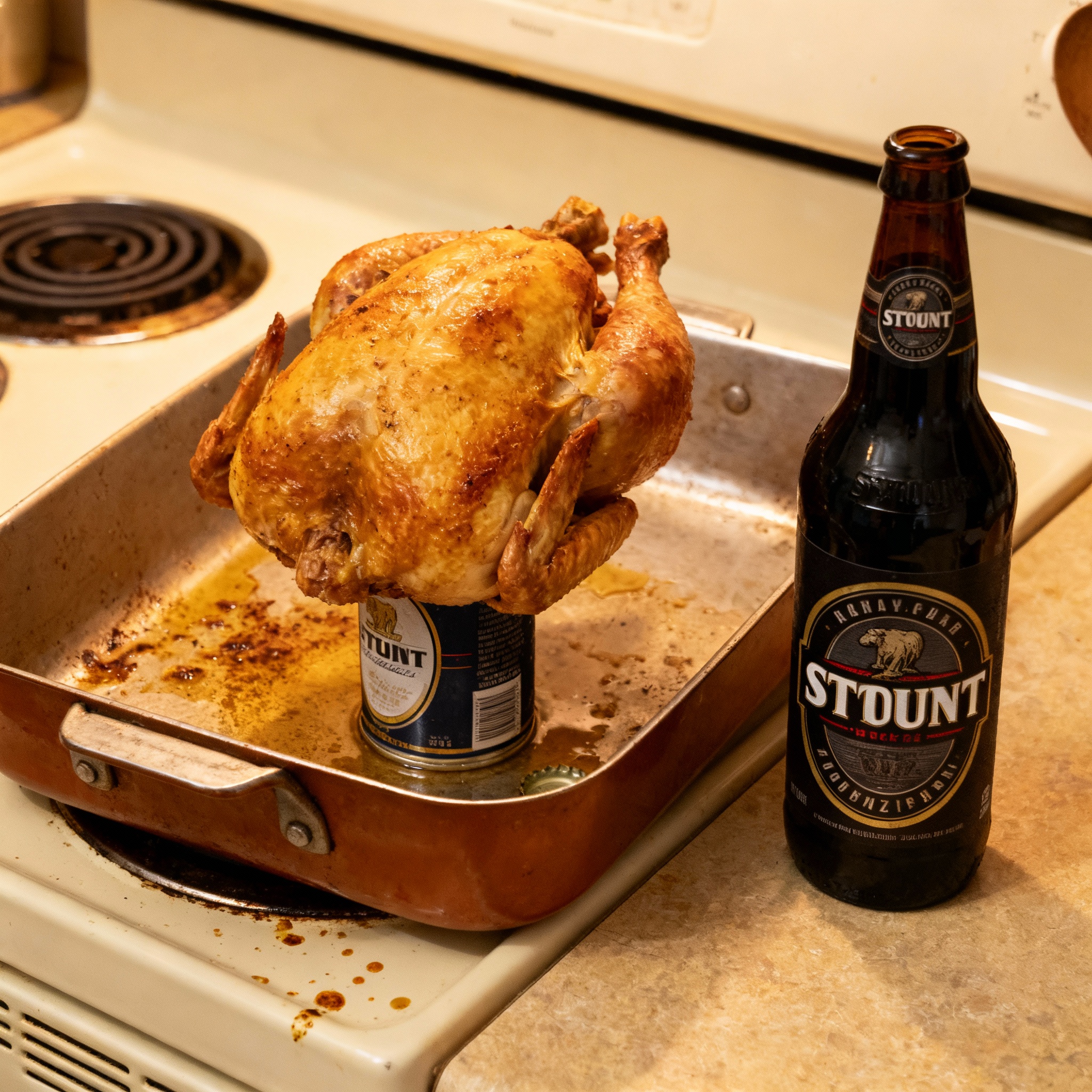
Beer can chicken involves shoving a half-full can into a chicken’s cavity and standing it upright on the grill. While it is a popular method, the beer allegedly steaming the bird is mostly a myth.
I tested this with a probe thermometer and found that the beer never gets hot enough to produce significant steam until late in the cook. Most of the juiciness comes from the upright position, which lets fat render down through the meat.
There is also a safety concern regarding the plastic resin lining inside aluminum cans. Heating these cans to high temperatures may leach chemicals into the vapor.
A liquid inside a chicken cavity is shielded by meat and bone, which act as insulators. Because the chicken is pulled at an internal temperature of 165°F, the beer rarely reaches its boiling point, resulting in minimal steam production.
I now use a stainless steel roaster instead of a can. It provides the same vertical benefits without the risk of ink or plastic leaching into the poultry.
Use a light lager or pilsner if you decide to try this. You want a neutral profile; aggressive hop bitterness from an IPA does not steam well into the meat.
Beer Bread: The 12-Ounce Leavener
Beer bread requires only three cups of self-rising flour, 12 ounces of beer, and three tablespoons of sugar. It is the fastest bread you can make because the chemistry of the beer does the work of yeast.
The self-rising flour contains baking powder which is activated immediately by the beer’s acidity. Furthermore, the dissolved CO2 in the carbonated beer provides an instant physical lift to the dough.
Darker beers add a malty sweetness while lighter pilsners create a neutral-tasting bread. I mix the batter with a wooden spoon for only 20 seconds to avoid developing too much gluten, which would make the bread tough.
If your beer has gone flat, add half a teaspoon of baking soda to the batter. The soda will react with the beer’s natural acidity to create the bubbles needed for a proper rise.
Mussel Steaming: The Belgian Witbier Method
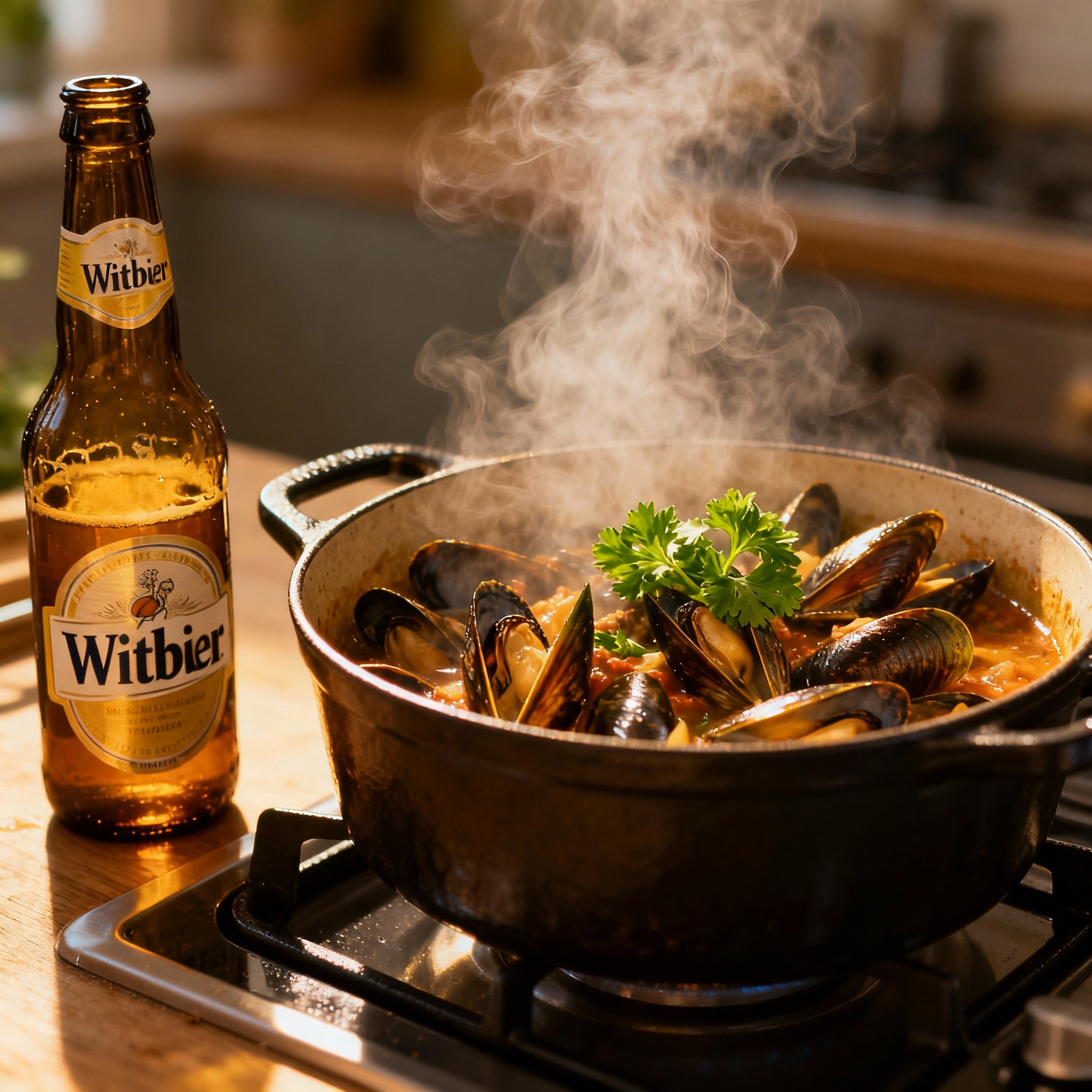
The traditional Belgian method for steaming mussels uses witbier, butter, garlic, and parsley. Witbiers are brewed with coriander and orange peel, aromatics that transfer directly into the seafood broth.
The technique involves simmering the beer and garlic, then steaming the mussels under a lid for five to seven minutes. Mussels are finished when they open; you should always discard any that remain tightly closed.
The butter is essential because it emulsifies with the beer to create a rich sauce. I’ve tried this with saisons and pilsners, but nothing matches the citrusy spice profile of a classic witbier.
Alcohol acts as a bridge between water-soluble and fat-soluble flavor compounds. In this recipe, the ethanol helps the aromatic oils from the coriander and orange peel bind with the butter fats, resulting in a more intense flavor.
Beer Cheese Soup: Salvaging Oxidized Batches
Beer cheese soup is the best way to salvage a homebrew batch that has oxidized. The rich cheddar and cream base masks the wet cardboard or sherry-like off-flavors common in older beers.
The process starts with a roux made of butter and flour, followed by stock and room-temperature beer. Adding the beer at room temperature prevents the roux from shocking and forming lumps.
You must add the shredded cheese in handfuls over low heat. If the soup boils after the cheese is added, the fat will separate and create a greasy texture.
If your soup is too thick, thin it with more stock or milk rather than more beer. Adding extra beer at the end can make the final soup unpleasantly bitter.
Conclusion
Beer is a versatile kitchen tool with sugars, acids, and aromatics built into a single bottle. Understanding what it contributes to a recipe allows you to use it intentionally as an ingredient rather than a gimmick.
The technique matters more than the price of the label. I’ve made excellent reductions with cheap stouts and incredible mussels with grocery store witbiers.
Whether you are baking bread or making a cheese soup, brewing and cooking are simply two versions of the same art. You are taking raw materials and using heat and time to create something better than the sum of its parts.
| Beer Style | Starting Volume | Final Syrup Yield | Reduction Time | Best Use |
|---|---|---|---|---|
| Imperial Stout | 12 oz | 2 tbsp | 18-20 min | Ice cream, steak glaze |
| Milk Stout | 12 oz | 2.5 tbsp | 16-18 min | Desserts, pancakes |
| English Barleywine | 12 oz | 2 tbsp | 20-22 min | Glazes, caramel |
| Baltic Porter | 12 oz | 2 tbsp | 18-20 min | Beef glazes |
Would you like me to help you draft a specific “Beer Gastrique” recipe for your next dinner party?