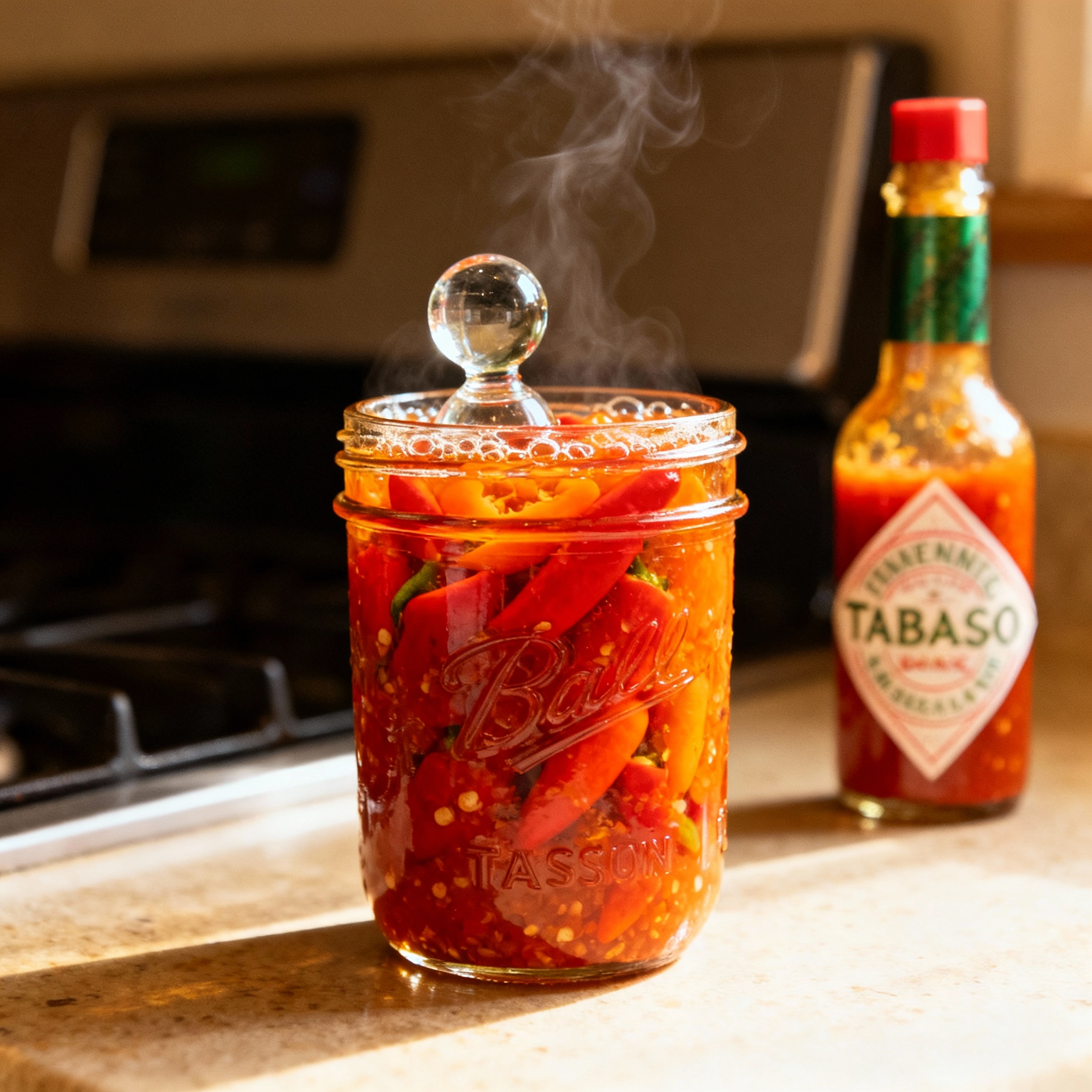
Fire in the Jar: Fermenting and Aging Hot Sauce.
I ruined my first hot sauce by trying to be clever. I’d read that Tabasco aged their peppers in oak barrels for three years, so I figured I could skip the vinegar and try wild fermentation by throwing habaneros in a jar with salt.
Two weeks later, a white film coated the top like someone had spilled milk into my peppers. I panicked, dumped the batch, and went back to buying store-bought sauce like a defeated chemist.
That white film wasn’t mold; it was Kahm yeast, a harmless surface dweller. The difference between vinegar-based and fermented hot sauce is slow, complex chemistry earned through lactobacillus bacteria converting sugars into lactic acid.
The Fork in the Road: Mash vs. Brine Fermentation
When you ferment peppers, you have two primary paths: making a mash or a brine ferment. Both methods produce lactic acid, but they behave differently and yield distinct textures and flavors.
Mash fermentation involves mixing chopped or pureed peppers with salt (usually 2% to 3% by weight). The salt pulls moisture from the peppers to create its own brine, resulting in a thick, chunky profile.
In a mash, the high surface area allows salt to immediately penetrate the pepper cell walls. This creates a highly concentrated environment that accelerates the metabolic activity of lactobacillus, often reaching a stable pH faster than brine ferments.
Brine fermentation involves submerging whole or halved peppers in a 3% to 5% saltwater solution. This method is slower but offers more control, allowing you to taste the brine as it develops and pull the peppers when the acidity feels right.
I prefer brine for pourable sauces or delicate peppers like Fresnos that turn to mush if chopped too early. The downside of mash is that it’s harder to keep oxygen out, while the downside of brine is that floating peppers risk molding.
Weigh your peppers and salt on a digital scale-do not guess. Aim for 2.5% salt by weight for mash and 4% for brine. For 500 grams of peppers, you would need exactly 12.5 grams of salt for a mash.
Kahm Yeast: The White Film
Kahm yeast is the most misunderstood character in fermentation. It looks like a thin, wrinkled white film floating on the surface, sometimes with trapped bubbles.
While it smells like old gym socks, it is not harmful and won’t make you sick. It just tastes bad if you let it sit too long, as it competes with the bacteria for oxygen. (Using yeast nutrient is not necessary here).
I’ve had Kahm show up on almost every pepper mash I’ve made. The fix is simply to skim it off with a spoon and wipe down the sides of the jar with a clean paper towel.
If Kahm keeps returning, your ferment might not be acidic enough yet. Use pH test strips to check your progress; once the pH drops below 4.0, Kahm usually gives up.
Adding Depth: Aging with Oak Chips
Tabasco ages their mash in white oak barrels for three years to add tannins and vanilla notes. You can borrow this concept by using medium-toast American oak chips sold for homebrewing.
After two to four weeks of fermentation, transfer the mash to a clean jar and add one tablespoon of oak chips per quart. This adds a subtle woody complexity that makes the sauce taste significantly more expensive.
I let the sauce sit with the oak for another two to four weeks, tasting frequently. If you leave it too long, the tannins can make the sauce taste woody and astringent like a pencil.
During aging, the lactic acid in the sauce helps extract vanillin and lignin from the oak. These compounds provide a rounded, smoky undertone that balances the sharp, fruity heat of the fermented peppers.
Blending and Binding: Xanthan Gum Stability
Fermented hot sauce has a separation problem because peppers are mostly cellulose and water. Over time, the solids settle and leave a layer of watery brine on top.
Xanthan gum is a polysaccharide that acts as a binder, suspending the solids so the sauce stays smooth. You only need a quarter teaspoon per cup of sauce to achieve professional results.
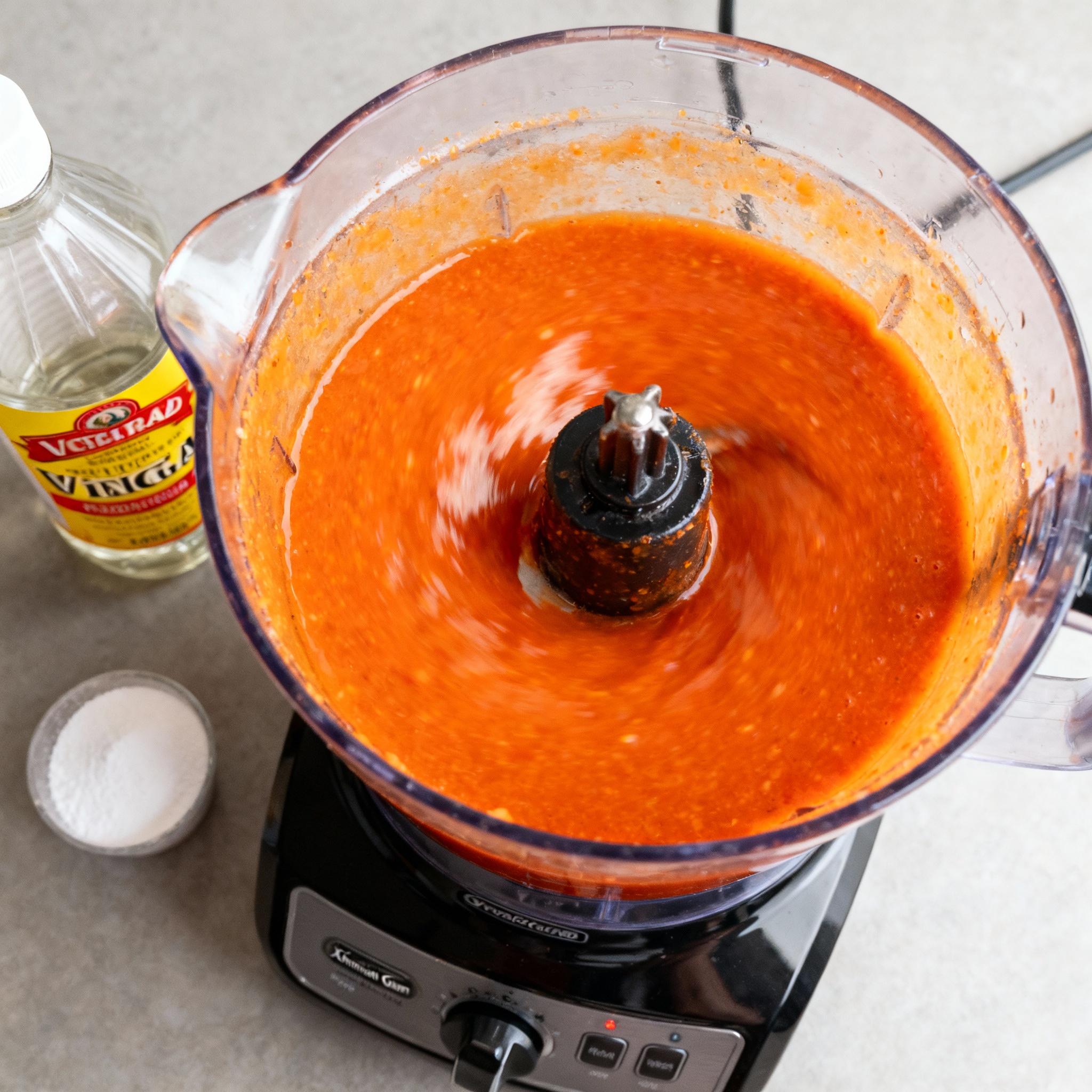
Sprinkle the xanthan gum in slowly while the blender is running to avoid clumping. The gum hydrates almost immediately, though the texture improves over the next few hours.
Do not dump xanthan gum in all at once, or it will clump like cornstarch. Sprinkle it gradually and blend for 60 seconds to ensure a stable, silky suspension.
Stopping the Clock: Pasteurization
Fermented hot sauce is alive, meaning the bacteria will continue to produce CO2 in the bottle. If you don’t stop the ferment, the pressure will build until the cap leaks or pops off.
Pasteurization involves heating the sauce to 180°F for 10 minutes. This kills the lactobacillus without driving off the delicate fruity aromatics of the peppers.
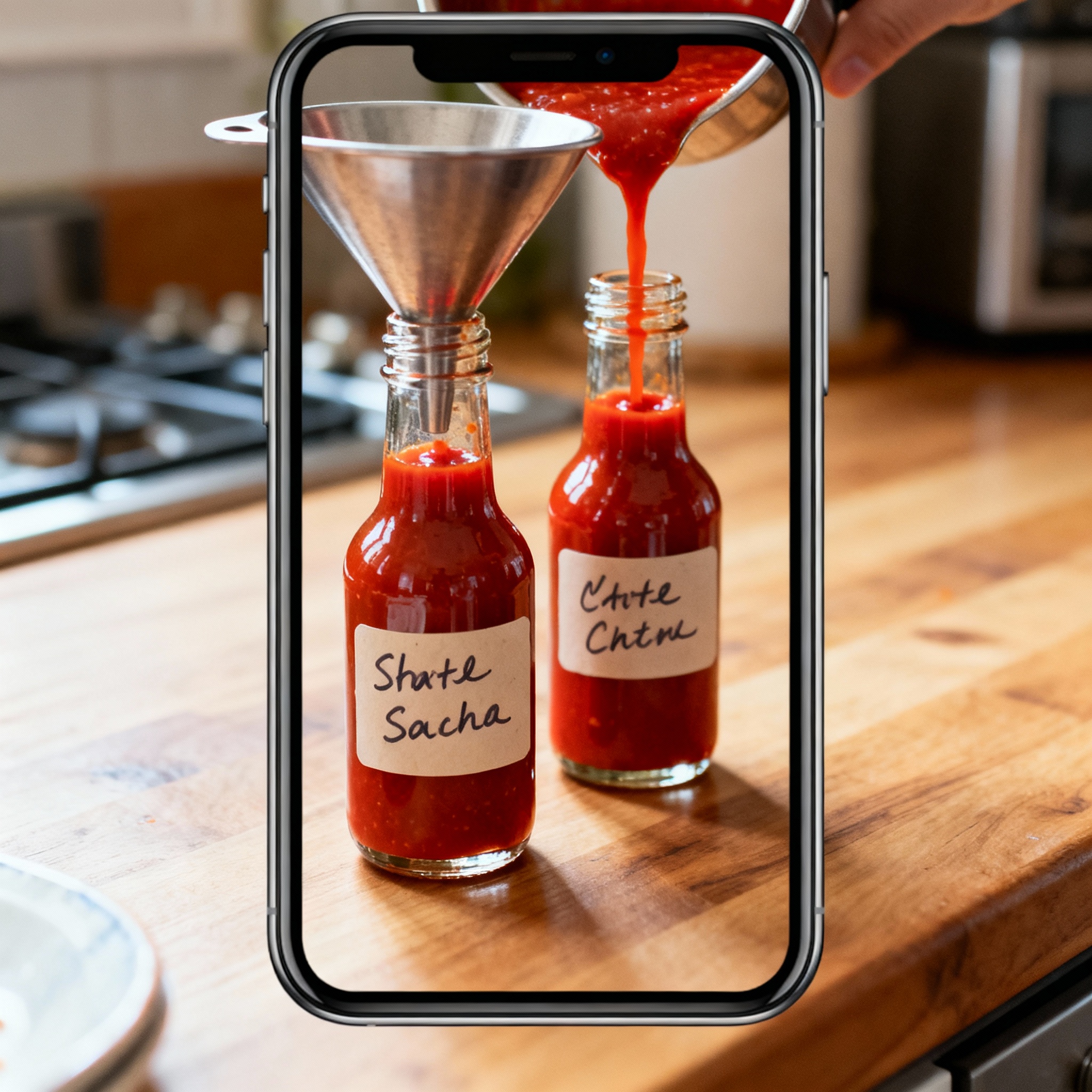
Pour the sauce into a non-reactive pot and heat slowly while stirring constantly. Cap the sterilized bottles while the sauce is still above 160°F to create a vacuum seal as it cools.
Maintaining 180°F for 10 minutes ensures that you reach the thermal death time for common spoilage organisms. This temperature is high enough to stabilize the sauce for pantry storage without “cooking” the fresh pepper flavor. (Prevents off-flavors from unwanted microbes).
Fermentation and Aging Parameters
| Parameter | Mash Fermentation | Brine Fermentation | Target Range |
|---|---|---|---|
| Salt Concentration | 2-3% by weight | 3-5% solution | 2.5% (mash), 4% (brine) |
| Fermentation Time | 2-4 weeks | 3-6 weeks | pH 3.5-4.0 |
| Oak Aging Time | 2-4 weeks | 2-4 weeks | Taste every 3-5 days |
| Pasteurization | 180°F for 10 min | 180°F for 10 min | Do not exceed 185°F |
Conclusion
Fermented hot sauce requires more patience than vinegar sauce, but the creamy, rounded acidity is worth the wait. The oak aging and xanthan gum stability result in a product that rivals high-end commercial brands.
Start with a simple 4% brine ferment and halved jalapeños. Once you master the basics of skimming Kahm yeast and managing pH, you can experiment with complex blends and long-term aging.
References
- Katz, S. E. (2012). The Art of Fermentation. Chelsea Green Publishing.
- Nummer, B. A. (2002). “Fermentation and Pickling.” Utah State University Extension.