Sensory Training: Palate Development and Triangle Tests.
I used to drink my homebrew and think, “Yeah, tastes like beer.” My wife would ask if the latest batch turned out good, and I’d say, “It’s fine.”
Then I entered a competition, and the judge wrote five lines of feedback about phenols, esters, and mouthfeel that I didn’t understand. I realized I wasn’t even tasting my own beer; I was just drinking it.
Learning to taste like a judge isn’t about snobbery; it’s about control. If you can’t identify what you’re tasting, you can’t replicate or fix it.
The primary secret to sensory training isn’t a “super-palate,” but a willingness to slow down. Dedicate ten minutes of quiet focus to every new batch before you start social drinking.
The Flavor Wheel: Finding the Words
The hardest part of tasting is finding the words for a specific sensation. Your brain recognizes the flavor, but it doesn’t have a label for it yet.
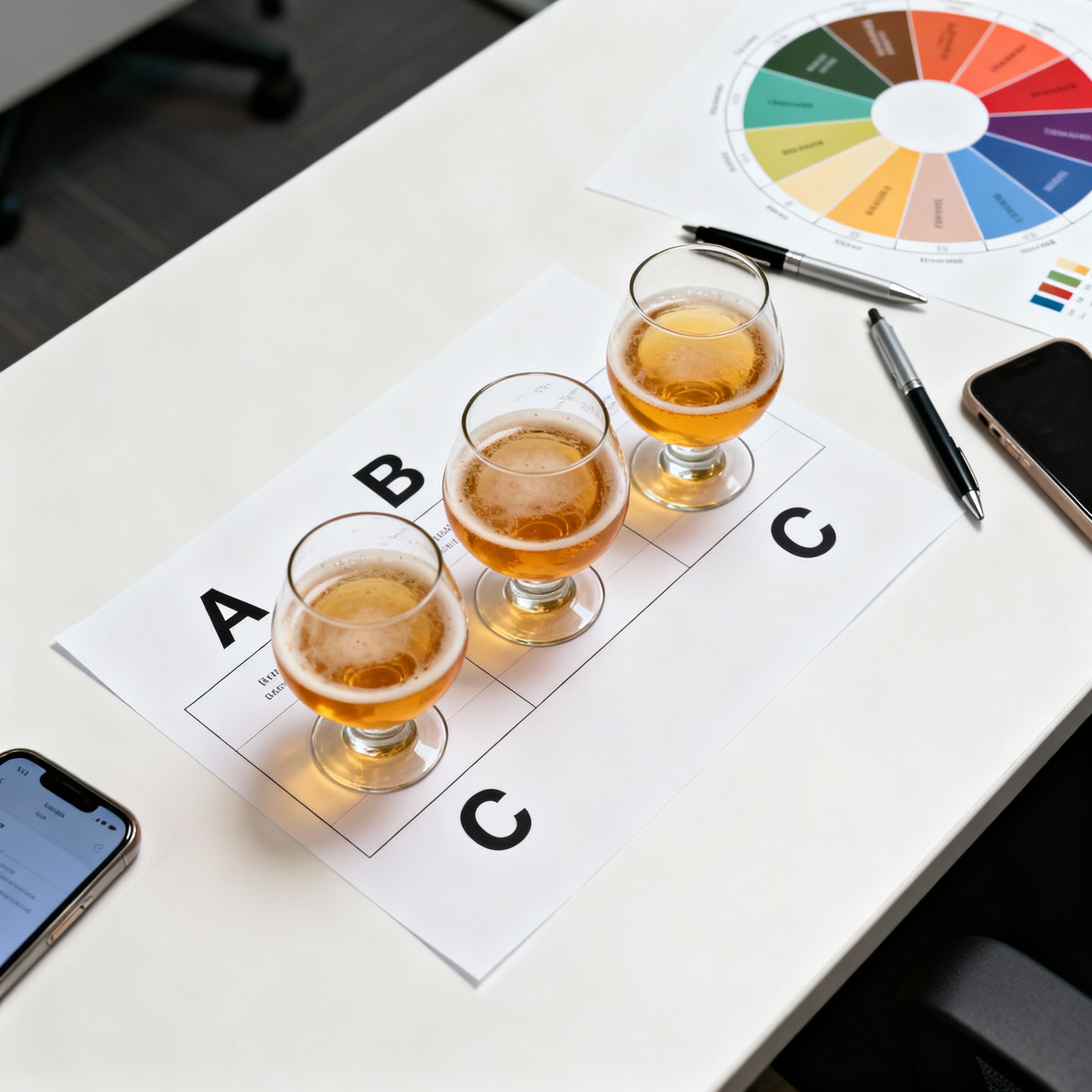
Flavor wheels, like the BJCP or Meilgaard wheel, act as maps for your vocabulary. They start with broad categories at the center and move toward specific descriptors on the outer edges, a concept central to the Beer Judge Certification Program (BJCP).
I keep a printed flavor wheel next to my tasting setup and write down three descriptors for every beer. Over time, your brain builds a library that recognizes diacetyl (buttery) or acetaldehyde (green apple) instantly.
Flavor kits from companies like FlavorActiv or Aroxa allow you to spike clean beers with specific off-flavor compounds. This “targeted exposure” is the fastest way to lock a flavor’s chemical signature into your long-term memory.
The Triangle Test: Eliminating Bias
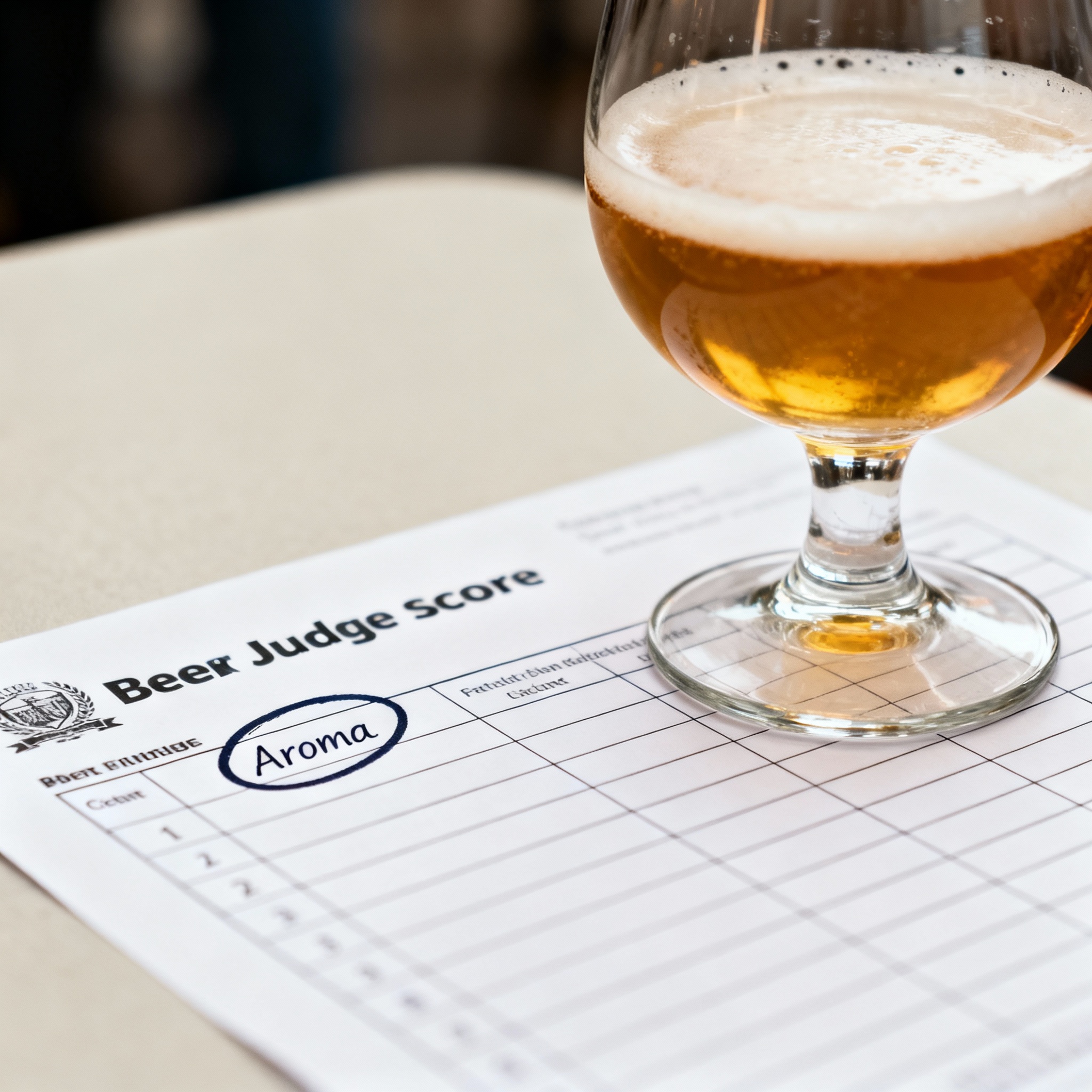
Triangle tests are the most honest way to check if a process change actually matters. You pour three samples where two are identical and one is the “variable” beer.
The taster must pick out the odd sample without knowing which is which. This effectively kills confirmation bias, where you convince yourself a change worked just because you spent money on it.
I once switched from distilled water for a saison, convinced it tasted “cleaner.” I failed my own triangle test, proving the water change was effectively unnoticeable in that specific recipe.
To prove a change is statistically significant, you need more than just a lucky guess. For a panel of 10 people, at least 7 must correctly identify the odd sample to reach a 95% confidence level.
| Number of Tasters | Correct Answers Needed (95% Confidence) |
|---|---|
| 6 | 5 |
| 10 | 7 |
| 12 | 8 |
| 20 | 11 |
Palate Fatigue and Threshold Shifts
Your palate is not a machine and it gets tired over time. In the brewing world, this is known as a lupulin threshold shift.
If you taste too many hoppy beers in a row, your receptors get overwhelmed and bitterness begins to feel flat. You are no longer tasting the beer; you are tasting fatigue.
I avoid this by limiting tasting sessions to five samples. Between beers, I rinse with water and eat a plain cracker to “scrub” the previous flavor off my tongue.
If you are judging heavy sours or stouts, try eating a slice of green apple between flights. The sharp acidity and crisp texture act as a powerful reset for overwhelmed taste buds.
Glassware and Aroma Perception
The shape of the glass controls how volatile compounds reach your nose. A narrow top concentrates aromas, while a wide glass allows them to disperse quickly.
I tested this with a Belgian dubbel and found that a tulip glass revealed dark fruit and clove notes that were completely missing in a standard shaker pint.
I keep three main types in my lab: tulips for IPAs, snifters for barrel-aged beers, and Willi Bechers for lagers. I never use a towel to dry them, as towels can leave oils or lint that kill the head.
Serving Temps: Revealing the Flaws
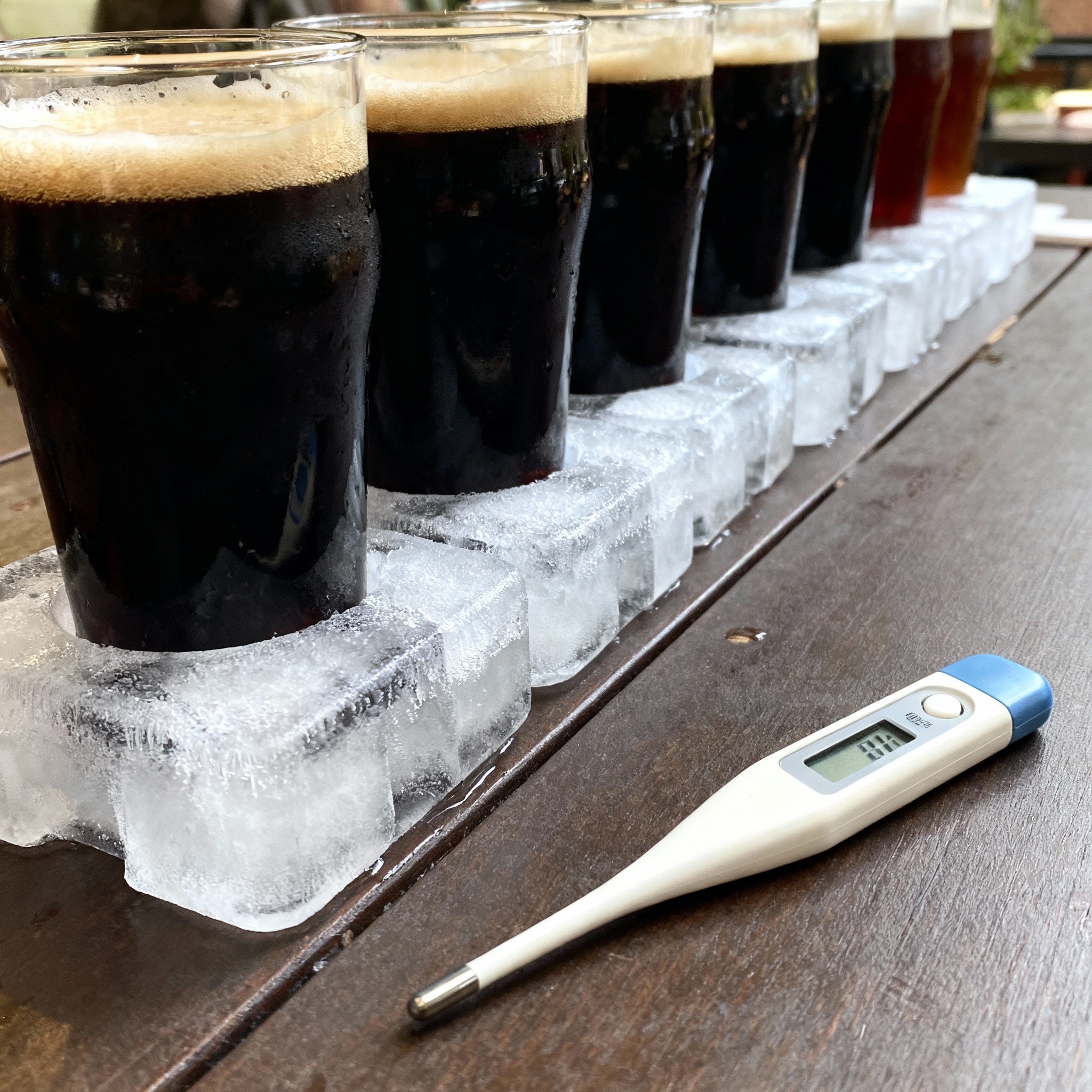
Cold beer is refreshing, but it hides problems by numbing your tongue and suppressing aromas. If you want to evaluate a beer’s true quality, you have to let it warm up.
I evaluate samples at cellar temperature (50 to 55°F). At this range, esters, phenols, and even subtle off-flavors like diacetyl become much more apparent.
A beer that tastes fine at 35°F might taste cloying or thin at 55°F. If your beer tastes bad when it is warm, it is likely a bad beer with balance issues.
Vapor pressure increases as temperature rises, causing aromatic compounds to “off-gas” from the liquid. The Siebel Institute of Technology teaches that serving at cellar temperature ensures you are capturing the full spectrum of fermentation byproducts.
Pour two glasses: drink one cold for enjoyment, and let the other sit for 20 minutes. Compare them to see which flavors emerge as the temperature stabilizes.
Conclusion
Training your palate is about moving from guesswork to data-driven brewing. When you can name a flavor, you can control it in your next batch.
Use the flavor wheel to build your vocabulary and the triangle test to validate your process. These aren’t just for judges; they are the most important tools in a homebrewer’s kit.
Keep practicing, stay humble, and remember that every beer-good or bad-is a chance to learn something new about your senses.
References
- BJCP (Beer Judge Certification Program). “BJCP Flavor Wheel.”
- Meilgaard, M.C., et al. “Sensory Evaluation Techniques.” CRC Press, 2015.
- UC Davis Department of Food Science. “Sensory Evaluation of Beer.”
- Siebel Institute of Technology. “Glassware and Aroma Perception.”
- Institute of Food Technologists. “Triangle Test Statistical Methodology.”