Shipping Beer: Packing for Competitions and Trades
Last April, I sent four bottles of a Belgian dark strong ale to a competition in Colorado. I’d spent three months getting the recipe right, using a yeast strain I’d cultured from a bottle I smuggled back from Chimay (long story). The beer scored in the mid-30s, which isn’t great, but when I got the score sheets back, one judge had written: “Oxidized. Possible bottle shock. Hard to evaluate true character.”
The beer wasn’t oxidized when it left my garage. It got destroyed somewhere between Asheville and Denver because I didn’t pack it right. That was expensive stupidity.
I’d like to save you from the same mistake. Now, before we go any further, let’s talk about the thing nobody says out loud.
Shipping beer without a license is technically illegal in most states. The ATF doesn’t care about shipping your saison, but FedEx and UPS care a lot.
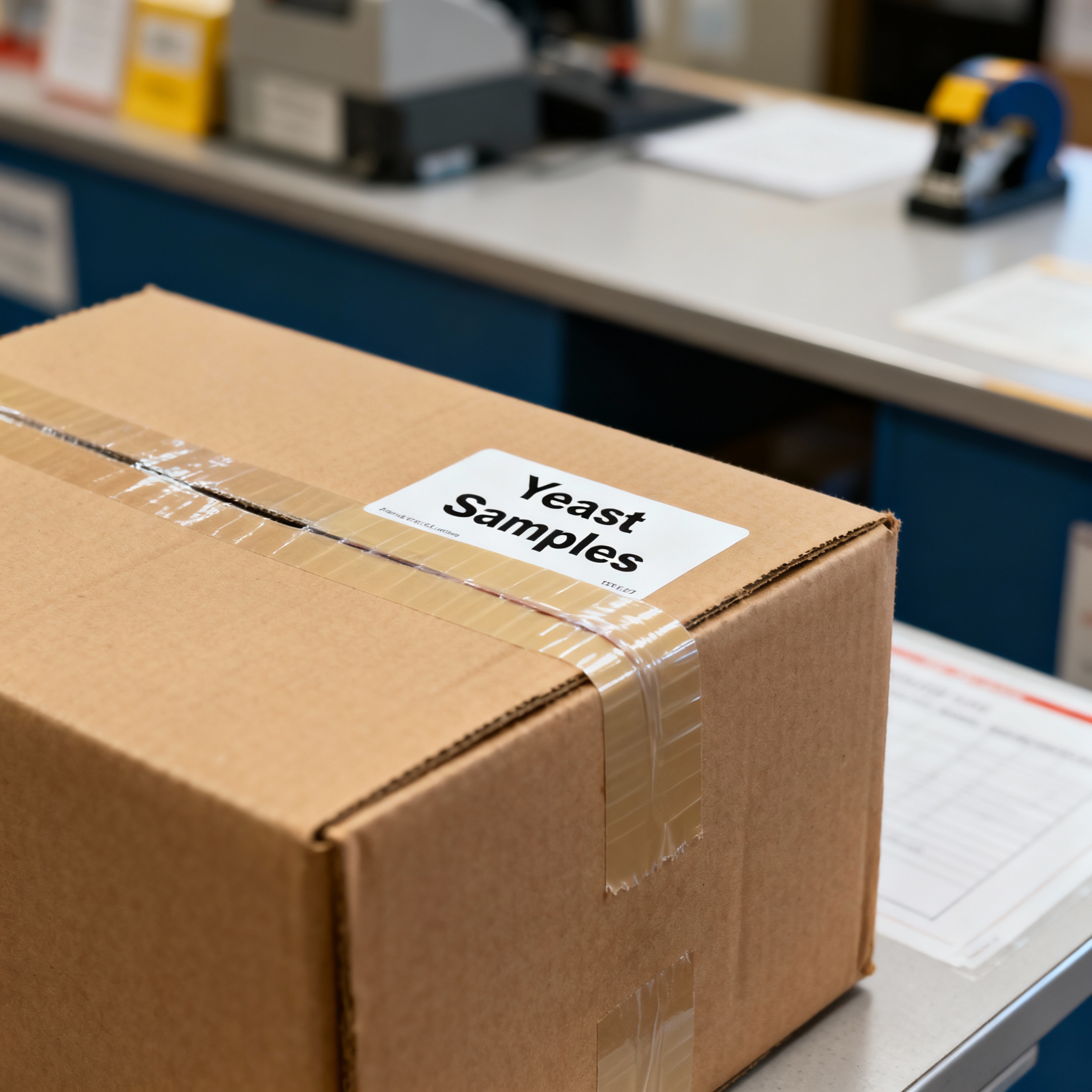
So if anyone asks, you’re shipping “yeast samples” or “olive oil” or “glass-bottled hot sauce.” I’m not saying lie. I’m saying don’t volunteer information.
Competitions usually provide instructions that avoid the word “beer” entirely. Trades between homebrewers exist in a grey area that everyone pretends doesn’t exist until a bottle explodes in a sorting facility.
Then it becomes everyone’s problem. The goal here is simple.
Get your bottles from point A to point B without leaks, breaks, or awkward conversations with a courier. I’ve shipped beer about 40 times now and I’ve had two failures.
Both were my fault. Both were packing errors. Here’s what I learned.
The Box: Double Boxing Is Mandatory
Single boxing doesn’t work. I don’t care how much bubble wrap you use.
A single cardboard box will flex under pressure, and once it flexes, the bottles inside start moving. Movement equals breakage.
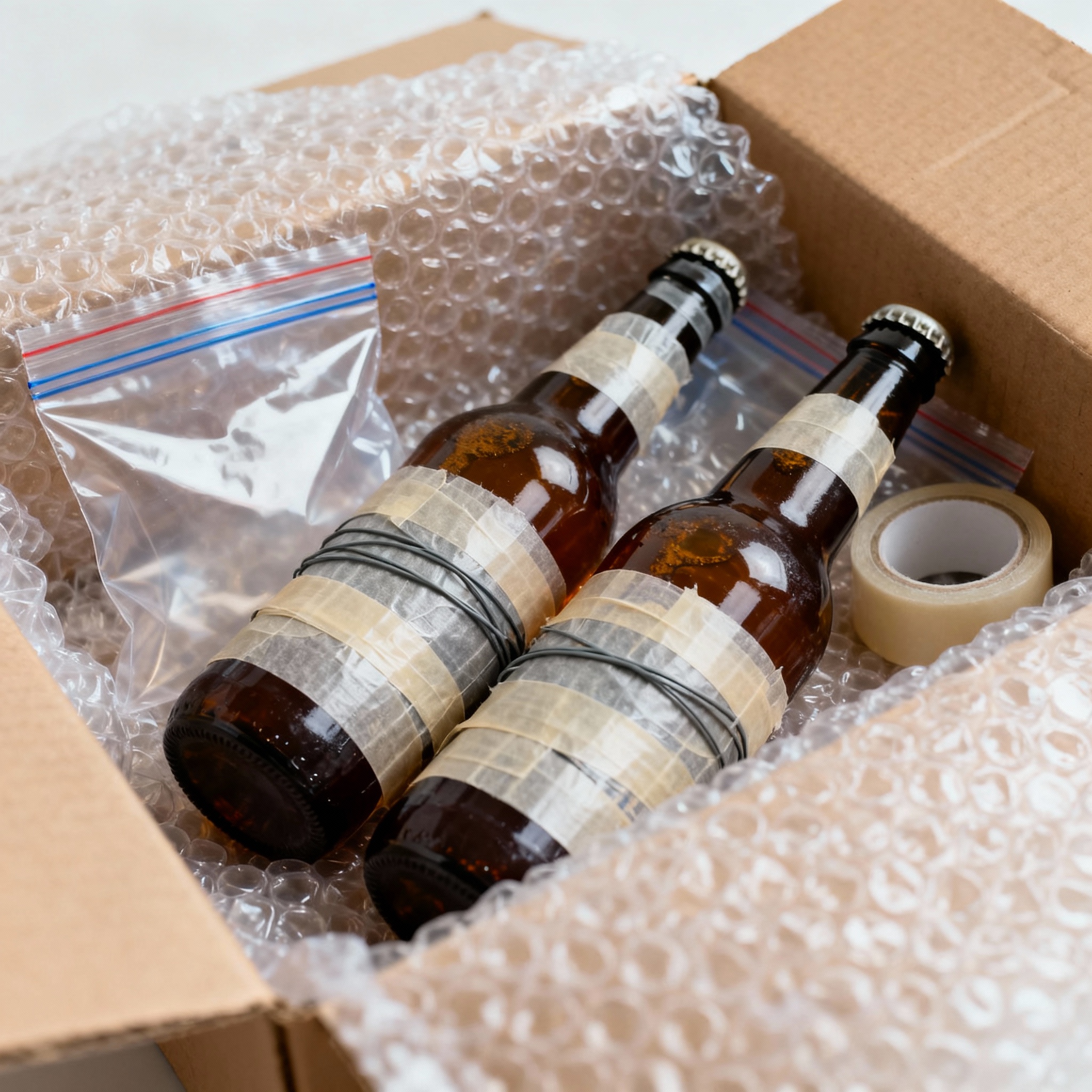
Double boxing means you put your wrapped bottles in a smaller inner box, then put that box inside a larger outer box with cushioning between the two.
The inner box holds everything rigid. The outer box absorbs impacts.
This is how commercial breweries ship their bottles, and it’s how you should too. For the inner box, I use a standard 12-bottle wine shipper box.
You can buy these online for about two dollars each, or sometimes liquor stores will give them to you for free if you ask nicely.
For the outer box, I go to the post office and grab a flat-rate box or buy a generic cardboard box from a shipping store. The outer box should be at least two inches larger than the inner box on all sides.
The padding between the two boxes is where people screw up. I’ve seen folks use crumpled newspaper. Don’t.
Newspaper compresses. You need something that holds its shape under pressure.
I use those foam sheets you can buy at hardware stores (the kind contractors use for insulation, about half an inch thick). Cut them to size and line the bottom, sides, and top of the outer box.
Write “FRAGILE” and “THIS SIDE UP” on the outer box in two places (top and one side). Couriers ignore these labels about 60% of the time, but the 40% success rate is better than nothing.
Bottle Protection: Wrapping and Bagging
Every bottle gets wrapped individually. No exceptions.
I’ve tried wrapping two bottles together to save time. Bad idea.
If one breaks, the jagged edge of the broken bottle cuts into the second bottle. Then you lose both.
Start with bubble wrap. The big bubbles, not the small ones.
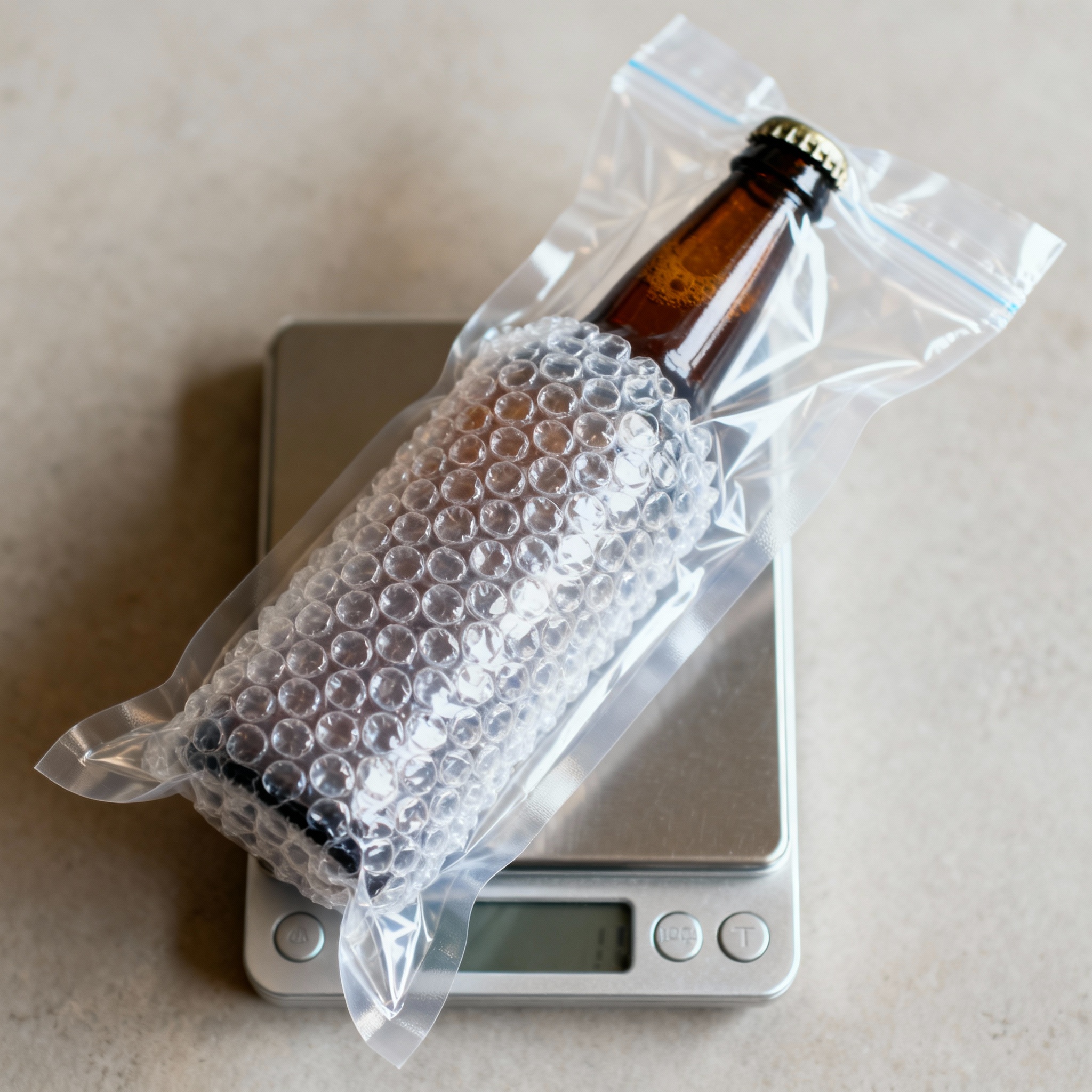
Wrap each bottle with at least two layers, starting at the bottom and spiraling up. Use packing tape to hold the wrap in place.
Once the bottle is wrapped, put it in a plastic bag. I use one-gallon freezer bags.
Squeeze out as much air as possible and seal it. This is your leak protection.
If the bottle breaks, the bag contains the liquid and the glass. Without the bag, beer soaks into the cardboard, the box falls apart, and the courier knows exactly what you shipped.
At high altitudes or during air transport, the pressure differential can stress the crown seal. While the “shock” is debated, the mechanical agitation of transit can temporarily knock hop volatiles out of solution, making the beer taste “dull” until it rests for 48 hours.
If you’re shipping bottle-conditioned beer, leave about a week after bottling before you ship. The yeast needs time to settle. Shipping fresh bottles increases the chance of leaks from over-carbonation or refermentation during transit.
Filler: Preventing the Shift
Packing peanuts are terrible. They shift. They compress. They create voids.
A void is a gap where a bottle can move, and movement is the enemy. I use one of two things: crumpled kraft paper or foam inserts.
Kraft paper is cheap and works well if you pack it tight. The trick is to crumple it into dense balls and jam those balls into every gap.
You want resistance. When you press down on the paper, it should push back.
The goal is to fill the inner box so tightly that nothing can shift. I pack the bottles, then fill the gaps, then press down on the top.
If I feel any give, I add more filler. I’ve started doing recently is using cardboard dividers between bottles, even if the box already has dividers.
I cut strips of corrugated cardboard and wedge them between each bottle. This creates a rigid grid.
If you’re in a pinch and don’t have kraft paper or foam, use clean shop rags or old t-shirts. Fabric works better than newspaper because it doesn’t compress as much. Just make sure it’s clean.
The Shake Test: If It Rattles, It Breaks
Before you seal the outer box, do the shake test. Close the inner box and tape it shut if you’re confident.
Hold the inner box in both hands and shake it gently in all directions. Listen.
If you hear rattling, something is moving. Open the box and add more filler.
Once the inner box passes the test, place it inside the outer box with the padding on all sides. Close the outer box and do the shake test again.
Pretend you’re a courier throwing it onto a conveyor belt. If it rattles, add more padding between the boxes.
If you’re shipping multiple boxes at once, number the boxes on the outside (“1 of 3,” “2 of 3,” etc.). This helps if one box gets delayed or lost and makes it easier for organizers to track entries.
Couriers: UPS vs FedEx Policies
Let’s talk about who actually ships your beer. The United States Postal Service (USPS) is out.
They’re a federal agency, and shipping alcohol via USPS is a federal crime. Don’t do it.
That leaves UPS and FedEx. Both companies prohibit shipping alcohol unless you’re a licensed shipper.
From my experience, UPS is slightly more relaxed. I’ve shipped about 25 boxes via UPS, and I’ve never been questioned.
FedEx is pickier, especially at corporate FedEx Office locations. I’ve had clerks ask what’s in the box.
My standard answer: “Homebrew supplies like yeast. Glass bottles and yeast.” That’s technically true.
Always ship ground. Air shipping involves more handling, more temperature swings, and more scrutiny.
If you’re shipping to a competition, check the competition rules for courier recommendations. Some competitions have deals with specific stores and will give you a list of “friendly” drop-off points.
Conclusion
Shipping beer isn’t hard, but it requires patience and a little bit of paranoia. Double box everything.
Wrap every bottle like it’s made of porcelain. Fill every void and test for rattles.
If you’re entering a competition, your beer deserves to be judged in the condition you intended. If you’re trading, you owe them a bottle that isn’t a pile of glass and foam.
Pack it right.
References
- BJCP. “Competition Best Practices: Shipping Entries.” 2023 edition.
- AHA. “Homebrew Competitions: Packaging and Shipping Tips.” 2022.
- UPS. “Official Shipping Policy: Prohibited Items.” 2023.
- FedEx. “Service Guide: Shipping Alcoholic Beverages.” 2023.
- TTB. “Federal Alcohol Administration Act: Shipping Regulations.” 2021.