The Chemist's Cellar: Acidity, pH, and Sulfites.
I once ruined 5 gallons of blackberry wine because I thought “acidity” was just about how sour it tasted. I added sugar to balance the tartness, bottled it, and three weeks later, the corks started popping out like a slow-motion celebration.
The wine had refermented because I didn’t understand the chemistry of stability. Wine is chemistry you can drink, and without understanding the numbers, you are essentially gambling with your ferments.
This guide is for those who want to stop guessing and start measuring. I will walk you through the core chemistry that keeps your wine from spoiling, exploding, or tasting like battery acid.
Understanding pH vs Total Acidity
When I first started, I thought pH and acidity were the same thing. They are not. pH measures the strength of the acid, while Total Acidity (TA) measures the amount of acid present.
pH is a scale from 0 to 14. In winemaking, you care about the range between 3.0 and 4.0. Because the scale is logarithmic, a pH of 3.0 is ten times more acidic than 3.5.
Total Acidity (TA) is measured in grams per liter (g/L), typically aiming for 6 to 8 g/L. This represents the total mass of acid in your juice, expressed as tartaric acid equivalents.
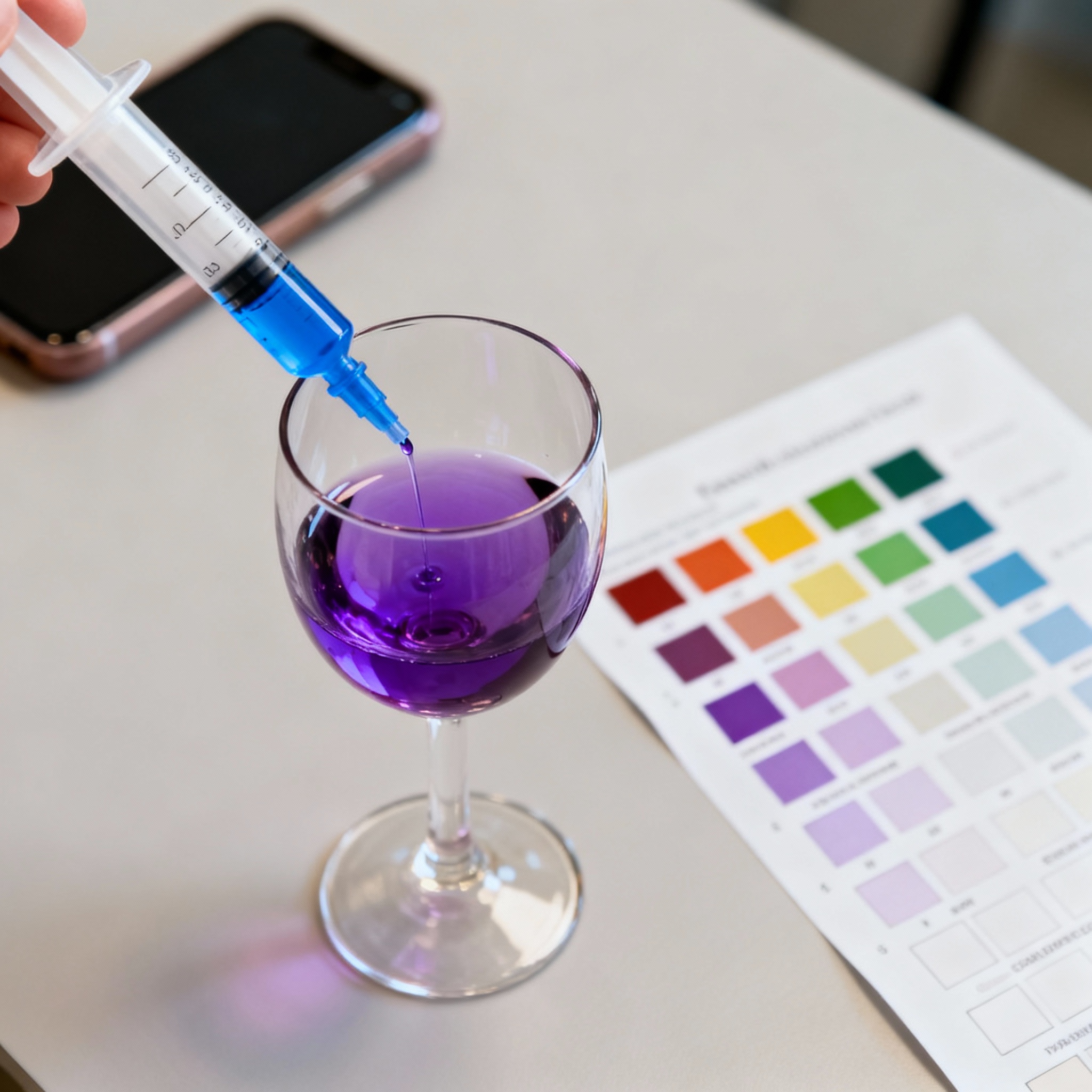
You measure it via titration, adding a base like Sodium Hydroxide (NaOH) to a sample until the color shifts.
Always measure pH and TA before fermentation. If your pH is above 3.6, add tartaric acid in small increments (1 g/L at a time), then retest. Do not guess.
Campden Tablets: Antioxidants and Control
Campden tablets are compressed Potassium Metabisulfite or Sodium Metabisulfite. When dissolved, they release Sulfur Dioxide (SO2), which stuns wild yeast and prevents browning.
One tablet in 1 gallon releases roughly 65 parts per million (ppm) of SO2. This is enough to knock out wild yeast while leaving your cultured yeast with a 24-hour head start.
pH significantly affects how much SO2 you need for stability. At a pH of 3.0, you only need 15 ppm of free SO2. At a pH of 3.5, that requirement jumps to 35 ppm to maintain microbial stability.
Crush your Campden tablets into powder before adding them. Whole tablets dissolve slowly and unevenly. A mortar and pestle works best, but a spoon and bowl are sufficient.
Potassium Sorbate: The Reproductive Inhibitor
Potassium Sorbate does not kill yeast or stop an active fermentation. Instead, it prevents yeast cells from reproducing.
If you add sugar to a finished wine (back sweetening), you must use sorbate to prevent refermentation.
Sorbate only works if the wine is already stable and the yeast count is low. I learned this the hard way: if you have live yeast and skip the Campden tablet, the yeast can still ferment the new sugar.
This leads to the bottle bombs I experienced with my blackberry wine. The standard dose is 0.5 grams per liter.
Always use it alongside a Campden tablet to suppress lactic acid bacteria, which can otherwise metabolize the sorbate and create a geranium off-flavor.
Confirm fermentation is done by checking the specific gravity (SG) two days in a row. If the SG hasn’t changed, fermentation is finished and you are safe to add sorbate and back sweeten.
Malolactic Fermentation: From Sharp to Creamy
Malolactic Fermentation (MLF) is a bacterial conversion, not a yeast fermentation. The bacterium Oenococcus oeni converts sharp Malic Acid into soft Lactic Acid.
This reduces the total acidity and changes the flavor profile from “green apple” to “buttery.” MLF is standard for most red wines but must be carefully managed to avoid accidental fermentation in the bottle.
To induce MLF, the wine must have a pH above 3.3 and a temperature around 68-72°F. Once complete, you must add SO2 immediately to kill the bacteria and prevent the production of volatile acidity.
MLF consumes nutrients. I add a pinch of Diammonium Phosphate (DAP) and some yeast hulls when I pitch the MLF culture to keep the bacteria happy.
Degassing: Removing Dissolved Gas
Fermentation produces Carbon Dioxide (CO2). While beer brewers want this, winemakers do not.
Dissolved CO2 makes still wine taste sharp, prickly, and prevents it from clearing properly.
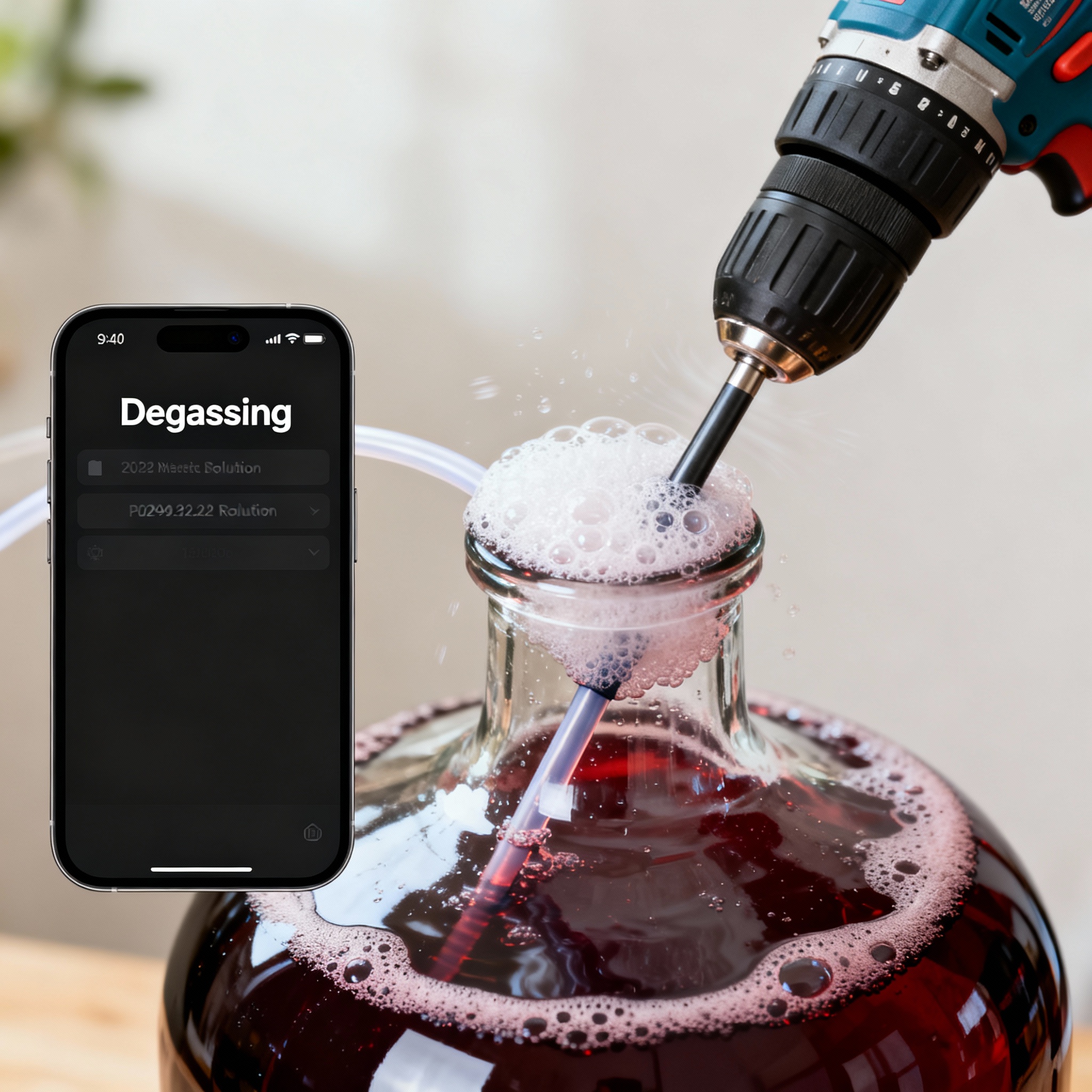
The gas will eventually leave on its own, but a degassing wand attached to a drill can speed this up significantly. Use 30-second bursts to avoid a “foam volcano.”
Degassing should always be done before bottling. I once degassed a blueberry wine that tasted thin and bitter; the difference was night and day as the fruit flavors opened up once the gas was removed.
Degas in a cool room (below 65°F). While warm wine releases gas easier, it also oxidizes faster. I find 60°F to be the ideal compromise.
Target Reference Table
| Variable | Target Range | Purpose |
|---|---|---|
| pH | 3.2 - 3.6 | Microbial stability and safety |
| Total Acidity (TA) | 6.0 - 8.0 g/L | Balanced mouthfeel and structure |
| Free SO2 | 30 - 50 ppm | Antioxidant and preservative |
| Temp (MLF) | 68 - 72°F | Optimal bacterial conversion |
| Residual Sugar | < 2.0 g/L | Definition of a “dry” wine |
Conclusion
Wine is a series of chemical reactions you can control if you measure and adjust. pH determines safety, TA determines balance, and sulfites provide the shield that allows your wine to age gracefully.
The difference between a stable, drinkable wine and a bottle bomb in your closet is not luck; it is data. Start by getting a pH meter and a TA test kit to prevent failures before they happen.
References
- American Academy of Allergy. “Sulfite Sensitivity.”
- University of California, Davis. “Wine Chemistry and Analysis.”
- Palmer, J., & Kaminski, C. Water: A Comprehensive Guide.